
UN reaches consensus on autonomous weapons definition as military AI deployment grows

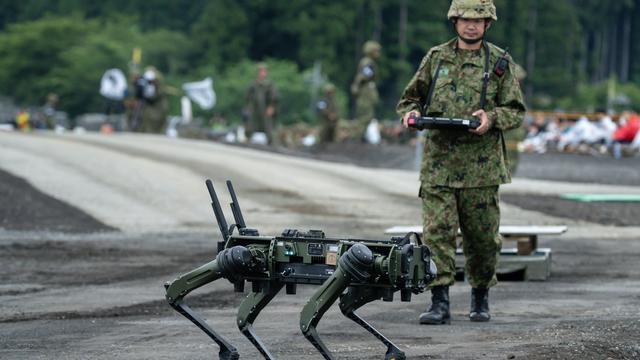
128 UN states agreed on defining autonomous weapons while Germany updates rules for semi-autonomous military systems and NATO aids Ukrainian AI tools.
Global efforts to regulate and integrate artificial intelligence in defense are moving forward simultaneously. In Geneva, 128 United Nations member states agreed on a standard definition for autonomous weapon systems. However, the UN and the International Committee of the Red Cross cautioned that automated targeting risks crossing an ethical threshold.
At the national level, practical deployment is accelerating. Germany’s defense ministry acknowledged that certain weapon systems may execute semi-autonomous functions without real-time human interaction, though human oversight remains mandatory for overall decisions to use force. Berlin also rejected commercial software from US firm Palantir, opting to build an independent AI data analysis platform. Meanwhile, Ukraine and NATO have jointly developed two operational AI tools to predict hostile drone trajectories and coordinate artillery strikes.
Sources: Correctiv, Der Spiegel, Der Standard, Die Zeit, Hartpunkt.
How outlets assessed this
- Correctiv Critical Emphasizes domestic scrutiny over German military guidelines permitting weapon execution without continuous human involvement.
- Der Spiegel Alarmed Focuses on global humanitarian warnings against allowing automated machines to autonomously target human beings.
- Hartpunkt Supportive Highlights practical military advantages of NATO and Ukraine jointly developing AI targeting tools.
- Die Zeit Supportive Framed the Geneva agreement among 128 states on defining autonomous weapons as an important first success for international regulation.
- Der Spiegel Alarmed Emphasized urgent warnings from the UN and Red Cross about machines autonomously targeting humans.
- Der Spiegel Alarmed Emphasized warnings from the UN and Red Cross regarding moral risks of automated human targeting.
- Die Zeit Neutral Highlighted the UN agreement on defining autonomous weapons as a key regulatory milestone.
- Correctiv Cautious Scrutinized new German military guidelines permitting weapon execution steps without human intervention.
- Nov 4, 2026, 02:00 AM UTC
- Die Zeit Supportive Framed the Geneva agreement among 128 states as an important initial success toward regulating autonomous weapons.
- Der Spiegel Alarmed Emphasized urgent warnings from the UN and Red Cross regarding the moral danger of machines autonomously targeting humans.
Sources
- Der Spiegel — KI: Uno und Rotes Kreuz befürchten eine Zukunft der »Killer-Roboter«
- Die Zeit — Autonome Waffensysteme: UN erzielen Einigung über Definition autonomer Waffensysteme
- Der Standard — Deutsche Bundeswehr arbeitet auf Palantir-Alternative hin
- Correctiv — Autonome Waffen: Deutschland will Einsatz ohne menschliche Interaktion teils erlauben
- Hartpunkt — Ukraine und NATO entwickeln gemeinsame KI-Lösungen zur Drohnenabwehr und Feuerunterstützung
Earlier coverage
- Nov 3, 2026, 09:30 PM UTCGlobal rules for autonomous weapons take shape as military AI deployments expand
- Nov 3, 2026, 07:00 PM UTCGermany permits semi-autonomous weapon functions as UN moves on AI standards
- Nov 2, 2026, 07:00 PM UTCUN reaches landmark definition on autonomous weapons as defense AI expands
- Nov 2, 2026, 02:30 PM UTCUN defines autonomous weapons as Germany and NATO advance military AI
- Nov 2, 2026, 12:00 PM UTCUN reaches consensus on autonomous weapons definition amid ethical warnings
- Nov 1, 2026, 10:00 PM UTCUN and ICRC warn against moral red lines in autonomous warfare as military AI adoption expands
- Nov 1, 2026, 02:00 PM UTCUN states define autonomous weapons as European military AI adoption grows
- Nov 1, 2026, 08:00 AM UTCUN reaches accord on autonomous weapons as European militaries expand AI integration
- Oct 31, 2026, 05:00 PM UTCUN reaches accord on autonomous weapons as militaries expand AI integration
- Oct 31, 2026, 01:30 AM UTCUN agrees on autonomous weapons definition as European militaries expand AI integration