
Putin Rejects Concessions as Trump’s Russia Policy Weakens Western Pressure

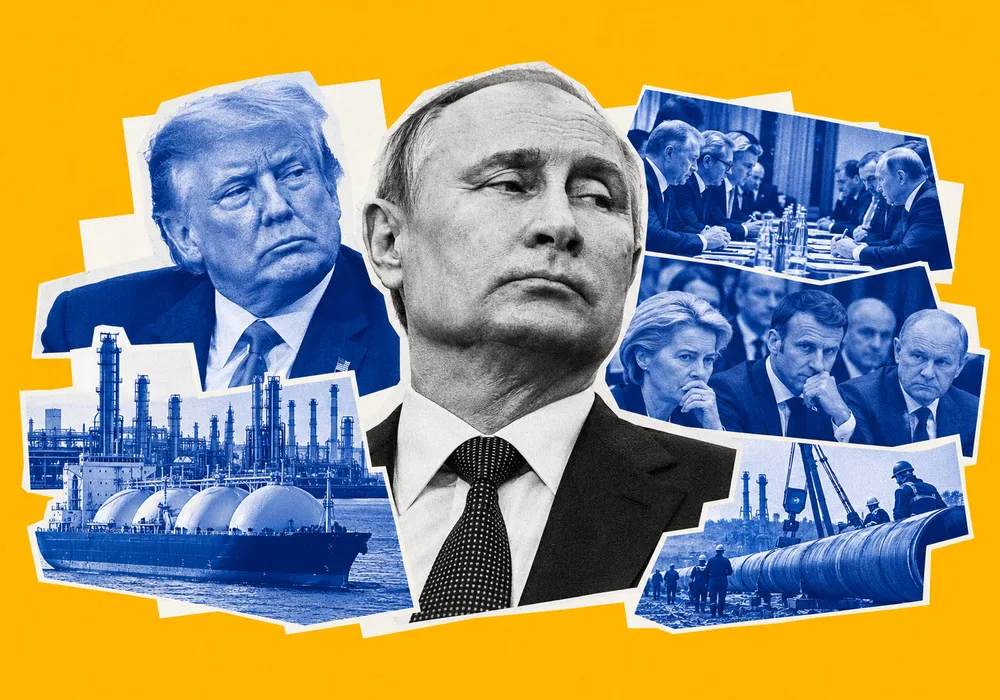
Vladimir Putin remains unwilling to compromise on Ukraine despite renewed US-led diplomatic efforts. As Washington pursues closer economic ties with Moscow, the Kremlin is seeking to negotiate from a position of strength, raising questions about the effectiveness of Western pressure and Europe’s role in securing a lasting peace.
Russia’s war against Ukraine continues to expose the limits of diplomatic efforts that are not accompanied by sufficient pressure on the Kremlin. A meeting between Russian President Vladimir Putin and US special envoy Steve Witkoff in Saint Petersburg on October 21 ended without any Russian concessions, despite renewed attempts to advance negotiations. The meeting lasted approximately two and a half hours, but Moscow remained unwilling to accept a truce on terms that would require it to change its current position on the war.
The encounter came amid Washington’s efforts to restart trilateral negotiations involving Ukraine, Russia and the United States. Although the Kremlin subsequently indicated that it was prepared in principle to resume the talks, the proposed diplomatic process remains constrained by fundamental disagreements over the terms of a settlement. Russia has continued to pursue its territorial and strategic objectives, while Ukraine requires credible guarantees that any agreement will not simply provide Moscow with an opportunity to prepare for renewed aggression.
The distinction between agreeing to negotiations and agreeing to compromise is central to understanding the Kremlin’s approach. Moscow can participate in diplomatic discussions while maintaining demands that Kyiv considers unacceptable. Without a meaningful change in Russia’s calculations, the resumption of talks does not necessarily bring the parties closer to a sustainable settlement.
Trump’s Engagement Changes the Incentives
The US administration’s approach has created additional uncertainty over the extent to which Washington is prepared to use its economic and diplomatic leverage to secure Russian concessions. President Donald Trump has pursued direct engagement with Putin while seeking arrangements that could generate economic benefits from renewed US-Russian cooperation. The agreement announced in October concerning Russian diesel supplies, alongside the temporary easing of relevant US sanctions, has become a particularly contentious element of this policy.
The proposed supply arrangement, which Trump presented as a means of increasing fuel availability and easing market pressures, has raised concerns among Ukraine’s European partners. Sanctions on Russian energy revenues have formed part of the broader effort to limit the resources available to finance the war. Relaxing restrictions while Moscow continues its military campaign risks weakening the coherence of that strategy, particularly if economic benefits are offered without reciprocal steps towards ending the aggression.
The diplomatic significance extends beyond the immediate commercial arrangements. By pursuing economic cooperation and maintaining a favourable public tone towards Putin, Washington risks reducing the incentives for Moscow to make concessions before negotiations begin. If the Kremlin expects that engagement will bring commercial opportunities and relief from economic pressure regardless of its conduct in Ukraine, it has less reason to alter its negotiating position.
This does not establish that US engagement alone determines Russia’s decisions. Moscow has pursued its objectives in Ukraine despite extensive international sanctions and military assistance to Kyiv. Nevertheless, the relationship between diplomatic incentives and economic pressure remains important: negotiations are more likely to produce substantive results when participation is accompanied by credible consequences for continued obstruction.
The Transatlantic Divide Complicates European Security
The divergence between Washington’s approach and Europe’s policy towards Russia is becoming increasingly consequential. European governments continue to regard sanctions, military assistance to Ukraine and restrictions on Russian energy revenues as essential instruments for constraining Moscow. The European Council reaffirmed this position at its October 15–16 meeting, reiterating support for Ukraine’s sovereignty and territorial integrity while calling for stronger pressure on Russia and robust security guarantees in any future settlement.
The temporary easing of US sanctions related to Russian diesel has nevertheless highlighted the limits of transatlantic coordination. European governments must now consider how to sustain pressure on Moscow if Washington prioritises bilateral economic arrangements or seeks to accelerate negotiations through incentives that European partners do not share.
The challenge is not simply diplomatic disagreement. A fragmented sanctions policy can create opportunities for Russia to redirect trade, obtain additional revenue and exploit differences between Western governments. Diverging approaches also complicate the task of agreeing on the security arrangements required to prevent another Russian attack after a ceasefire or peace agreement.
Europe therefore has a direct interest in maintaining its own capacity to support Ukraine, including through military procurement, defence-industrial cooperation, financial assistance and the enforcement of existing sanctions. European Council conclusions have already stressed the need to address Ukraine’s financing requirements for 2026 and 2027, strengthen its resilience ahead of winter and develop security guarantees in cooperation with willing partners, including the United States.
Ukraine Faces the Cost of Uncertain Diplomacy
For Kyiv, the immediate concern is that negotiations could develop into a process in which Ukraine is pressed to accept concessions while Russia faces insufficient pressure to abandon its objectives. Ukrainian President Volodymyr Zelensky has repeatedly stressed the need for security guarantees and sustained international assistance, arguing that the conditions of a settlement must prevent Russia from resuming its aggression.
The consequences of uncertainty over American support are particularly serious as Ukraine prepares for another winter of war. Continued Russian attacks on energy infrastructure and other critical facilities increase the demands on air defence, emergency repairs and international financing. On October 22, Russia launched another missile and drone attack on Kyiv, killing one person and injuring 22, according to the Associated Press. The strikes came as the Kremlin was signalling its readiness to resume US-mediated negotiations, illustrating the gap between diplomatic declarations and the continuing military campaign.
This contradiction matters for the credibility of any future settlement. A negotiating process that proceeds without an effective mechanism to deter further attacks risks leaving Ukraine exposed during and after the talks. Security guarantees, therefore, cannot be treated as a secondary issue to be resolved only after agreement on territorial questions. They are central to determining whether a ceasefire could become a lasting peace.
For European governments, the danger is that an agreement focused primarily on ending active hostilities could leave the underlying security problem unresolved. If Russia retains the ability and intention to renew its offensive, a ceasefire could freeze the conflict without removing the threat to Ukraine or the wider European security order.
Europe Must Preserve Its Leverage
The latest diplomatic developments leave European governments with two connected priorities: maintaining support for Ukraine and ensuring that negotiations do not become a substitute for pressure on Russia. The European Union has continued to expand sanctions targeting Russia’s military-industrial complex and individuals involved in its war effort, while committing to further measures against sanctions evasion and the Russian shadow fleet. These policies are intended to constrain Moscow’s resources over time, although their effectiveness depends on consistent implementation and coordination with international partners.
Europe’s capacity to sustain this approach will depend on whether member states can translate political commitments into predictable financial and military assistance. Continued investment in air defence, ammunition production and defence-industrial capacity would help reduce Ukraine’s vulnerability to fluctuations in US policy. A more reliable European contribution would also strengthen Kyiv’s position in negotiations by reducing the possibility that Moscow could exploit uncertainty over future assistance.
The central issue is not whether diplomacy should continue, but whether it can deliver an agreement that addresses the reasons the war persists. Russia’s willingness to attend talks is not equivalent to a willingness to end its aggression on acceptable terms. Until the Kremlin faces credible incentives to compromise and meaningful costs for refusing to do so, negotiations risk remaining a mechanism for managing the conflict rather than resolving it.
For Europe, the outcome will shape more than Ukraine’s immediate future. It will help determine whether territorial conquest can be followed by economic normalisation without a durable settlement, and whether European governments can protect their security interests when their largest transatlantic ally pursues a different approach. The effectiveness of Western policy will ultimately be measured not by the frequency of diplomatic meetings, but by whether Russia’s capacity and willingness to continue its war are meaningfully constrained.
Sources: Le Monde, The Washington Post