
Trump’s Russian Diesel Deal Tests Western Sanctions Unity

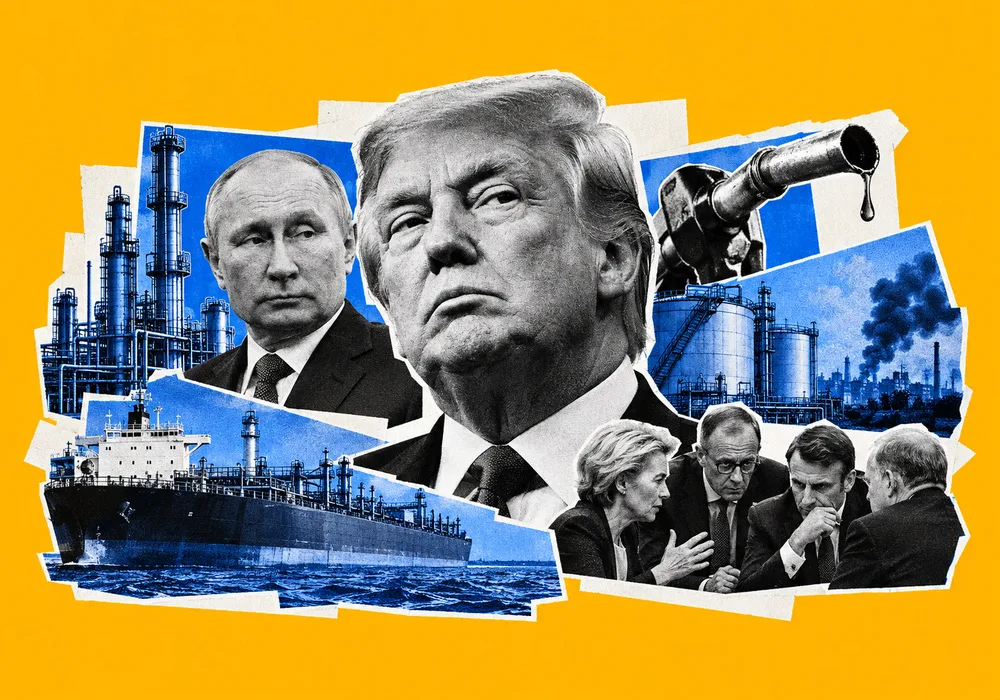
Donald Trump’s agreement with Vladimir Putin to bring Russian diesel into US and global markets marks a sharp reversal in Washington’s policy towards Moscow. Presented as a response to soaring fuel costs, the decision risks weakening sanctions pressure on Russia, complicating transatlantic coordination and raising questions about the balance between domestic economic priorities and support for Ukraine.
US President Donald Trump’s announcement on 9 October that Russia would supply diesel to the American and global markets has raised questions about the consistency of Washington’s sanctions policy and the future of its economic pressure on Moscow. Presented by the White House as a measure to ease high fuel prices, the arrangement comes less than a month after Trump signed new sanctions legislation targeting Russia’s energy sector and other sources of revenue supporting its war against Ukraine.
Trump said Russia would immediately supply more than 300,000 tonnes of diesel, with another 500,000 tonnes expected during November. The US Treasury subsequently issued a temporary licence allowing Russian diesel to enter global markets. However, the White House did not immediately clarify who would purchase the fuel, how payments would be arranged or when the shipments would arrive. The announced volumes therefore represent a commitment rather than independently verified deliveries. Euronews reported that the arrangement could also complicate the implementation of recently enacted sanctions legislation.
The timing makes the agreement particularly significant. The US is dealing with elevated energy costs amid the war involving Iran, while Russia has faced pressure on its domestic fuel market following Ukrainian strikes on oil refineries and restrictions on diesel exports. The deal creates an opportunity for Moscow to resume or expand some sales at a moment when its energy revenues remain central to its ability to finance the war.
For Washington, the immediate objective is economic. Diesel is essential to American freight transport, agriculture, construction and industrial logistics. Higher prices increase operating costs for businesses and can feed through into consumer prices. Trump has repeatedly presented reducing fuel costs as a priority, particularly for farmers, ranchers and truckers.
Yet the economic and political consequences extend beyond the price of fuel. By allowing a category of Russian energy exports back into the market, the administration has introduced an exception to the broader policy of restricting Moscow’s access to Western markets. Even if the measure remains temporary, it raises questions about whether sanctions will continue to be applied consistently when domestic economic pressures intensify.
Why Trump is turning to Russia now
The agreement comes less than a month before the US midterm elections on 3 November, when voters will determine control of the House of Representatives and a number of Senate seats. Fuel prices are politically sensitive because they affect both household budgets and the cost of transporting goods across the country.
The administration can argue that allowing additional diesel supplies is a pragmatic response to an immediate market problem. If Russian deliveries increase available supply and contribute to lower prices, the White House could present the arrangement as evidence that it is prioritising the cost of living over ideological restrictions.
However, the relationship between additional imports and lower prices is not straightforward. Diesel prices depend on refinery capacity, inventories, transport costs, international demand and the availability of alternative suppliers. A shipment announced by two presidents does not automatically translate into cheaper fuel at American filling stations.
The agreement also comes against a difficult political backdrop for Trump. A Pew Research Center survey of 5,062 US adults conducted from 28 September to 4 October found that 30% approved of his performance as president, while 68% disapproved. The approval figure was the lowest recorded during his second term in the survey’s series. The poll was conducted before the diesel agreement was announced and therefore cannot measure the public reaction to the deal itself.
The findings nevertheless illustrate the political environment in which the decision was made. The economy remains a central issue for voters, while dissatisfaction with the president’s handling of economic and foreign policy matters has increased. If fuel prices fall, the administration may be able to point to a tangible benefit. If they remain high, critics could question why Washington eased restrictions on Russian energy exports without delivering clear relief to consumers.
New polling conducted after the announcement will be important in determining whether the deal affects public perceptions of Trump. Until such evidence becomes available, the agreement should be understood as a decision made against a backdrop of weak approval ratings, rather than one that has already changed them.
The political cost for Ukraine
Ukrainian President Volodymyr Zelenskyy criticised the announcement, arguing that allowing Russia to sell petroleum products would provide resources for a war that Moscow continues to wage against Ukraine. He described the decision as a gift to Russian President Vladimir Putin and called for genuine de-escalation based on reciprocal steps.
Zelenskyy’s objection reflects a fundamental disagreement over the relationship between energy markets and military pressure. For Kyiv, Russian oil and petroleum exports are not simply commercial activities. The revenues help sustain the Russian economy, while the fuel itself supports transport, industry and military logistics. Allowing additional exports can therefore provide Moscow with economic opportunities even if the stated objective is to stabilise global markets.
The disagreement became more serious after Axios reported on 10 October that a US official attributed Trump’s decision partly to Ukrainian attacks on Russian oil refineries. According to the official, Washington had repeatedly asked Kyiv to stop those strikes because of their impact on fuel prices. The same report said Ukraine had proposed a reciprocal arrangement under which it would stop attacking Russian refineries if Russia halted strikes on Ukrainian power plants.
These accounts indicate that the diesel agreement is connected to a broader dispute over the conduct of the war and the conditions Washington expects Ukraine to accept. However, the reported discussions do not establish that a formal agreement requires Ukraine to stop its attacks in exchange for Russian fuel supplies.
The distinction matters. If the US uses its economic leverage to discourage Ukrainian strikes without securing equivalent restraint from Russia, Kyiv could face pressure to limit one of its instruments for disrupting Moscow’s wartime economy. Conversely, Washington may argue that attacks affecting global energy markets impose costs on American consumers and complicate its domestic economic priorities.
The immediate concern for Ukraine is therefore not only the value of the diesel exports, but whether the deal signals a shift in Washington’s willingness to prioritise domestic energy costs over Ukrainian military objectives.
Does Russia actually have enough diesel to deliver?
Russia’s ability to fulfil the announced volumes is a central question. Ukrainian strikes on Russian refineries have disrupted processing capacity, while Moscow has imposed restrictions on diesel exports to protect domestic supplies. These measures suggest that the Russian fuel market has been under pressure, but they do not by themselves establish that the country lacks the stocks needed for the proposed deliveries.
There are several possible ways Russia could meet its commitments. It could redirect existing exports from other markets, release stocks held at terminals and storage facilities, increase refinery output as facilities return to service, or redistribute supplies between domestic and export markets. The actual outcome will depend on production levels, inventories, export restrictions and the timing of shipments.
Redirecting existing exports would not necessarily add the full announced volume to the global market. If Russian diesel previously destined for other countries is instead sent to the US, those buyers may seek replacement supplies elsewhere. The result could be a redistribution of trade rather than a substantial increase in total global availability.
Using domestic stocks would create a different set of pressures. Diesel is essential to Russian agriculture, freight transport, industry and military logistics. If export commitments compete with domestic demand, the government would have to balance foreign-currency earnings against the risk of shortages or higher prices at home.
Increasing production could ease that tension, but refinery recovery takes time and depends on the condition of damaged facilities, access to equipment and the availability of components. Without reliable, current data on Russian inventories and refinery utilisation, it is not possible to establish how much additional fuel Moscow can supply without affecting domestic consumers.
The announced volumes are not inherently beyond the capacity of a major oil-producing country. The unresolved issue is whether Russia can deliver them on the proposed schedule while maintaining domestic supply. Verified shipping records, refinery statistics and export data will be more informative than political statements alone.
For the US, the distinction is equally important. If Russia can supply the fuel quickly from existing stocks, the agreement may provide some immediate market relief. If deliveries require a lengthy recovery in production or merely redirect cargoes from other buyers, the effect on American prices could be limited.
A temporary licence is not the same as lifting sanctions
The legal implications of the agreement require a distinction between authorising specific transactions and dismantling the wider sanctions regime. The US Treasury’s temporary licence permits a defined category of Russian diesel operations. It does not automatically remove all restrictions on Russian energy exports, financial transactions or sanctioned entities.
Nevertheless, the decision comes at a sensitive moment. According to Euronews, Trump signed new sanctions legislation targeting Russian energy revenues and other sectors in September. The diesel arrangement now raises questions about how the administration intends to reconcile that legislation with its decision to facilitate additional Russian exports.
The precise scope of the licence is critical. Its terms determine which transactions are authorised, which parties can participate and whether additional restrictions remain in place. The existence of an exception does not mean that every Russian petroleum shipment, financial payment or related commercial service is now permitted.
The wider political issue is whether a temporary exception becomes a precedent for additional exemptions. If the administration concludes that Russian energy supplies can help control domestic prices, similar arguments could be made for extending the licence or permitting other categories of trade. That outcome is not inevitable, but the decision establishes a concrete example of economic considerations influencing the application of sanctions.
For European governments, the concern is that a policy intended to reduce Russia’s ability to finance the war could become more conditional on short-term market needs. Even without a formal change in US sanctions legislation, the willingness to authorise exceptions could affect expectations among energy companies, traders and financial institutions.
The distinction between a narrow licence and a broader sanctions rollback will therefore be central to assessing the deal’s longer-term consequences.
Can Congress block a broader sanctions rollback?
The US Congress has potential tools to scrutinise or constrain the administration’s sanctions policy, but the legal position depends on the specific action taken by the president.
Section 10817 of Title 22 of the US Code, introduced through the 2026 sanctions legislation, sets conditions for terminating sanctions under the relevant statutory framework. For sanctions concerning Russia, the law requires the president to certify that Russia has signed a peace agreement accepted by Ukraine’s free and independent government and has ceased military hostilities and specified activities against the Ukrainian government. It also establishes a period for congressional review and provides for a joint resolution of disapproval.
These provisions are relevant to a broader termination of sanctions covered by the law. They should not, however, be interpreted as an automatic prohibition on every temporary licence or narrowly defined authorisation. The legal question is whether the diesel measure falls within the president’s authority to permit particular transactions or amounts to a termination of sanctions subject to the statute’s additional requirements.
Congress could demand explanations, hold hearings, investigate the administration’s decision or pursue legislation to narrow executive discretion. Whether lawmakers could successfully block the licence would depend on the precise legal basis, the wording of the authorisation and the legislative mechanism used to challenge it.
The document reportedly circulated by Ukrainian politician Dmytro Yarosh on Facebook may be relevant to this debate, but its specific contents need to be checked against the original text before drawing conclusions about its effect. The statutory provisions governing a broad sanctions termination cannot simply be assumed to invalidate the diesel licence.
The distinction also matters for Europe. If the measure is a temporary authorisation under existing executive powers, its immediate legal consequences may remain limited. If the administration attempts a more extensive rollback of sanctions, the statutory restrictions and congressional review process could become much more significant.
Why Europe cannot simply follow Washington
The European Union operates its own sanctions regime, which is legally separate from that of the United States. An American licence does not automatically authorise European companies to participate in the same transactions, nor does it remove restrictions applying to EU-based banks, insurers, ports or other service providers.
This creates practical complications for international fuel trading. A shipment might be permitted under US rules while certain payments, insurance arrangements or related transactions remain restricted under European law. Companies involved in the supply chain would need to assess the applicable rules independently rather than treating Washington’s decision as a general exemption.
The political implications are equally important. European governments have invested in reducing their dependence on Russian energy and restricting the revenue available to Moscow. If the US makes further exceptions for Russian petroleum products, EU member states could face pressure to reconsider their own approach, particularly if energy prices remain elevated.
However, there is no legal requirement for the EU to mirror the American decision. European governments can continue to use alternative suppliers, coordinate the management of reserves, support refinery operations and pursue other measures to stabilise supply without restoring broad access to Russian fuel.
The issue is not whether Europe must choose between affordable energy and sanctions. It is whether the EU can manage energy-market pressures while maintaining a coherent policy towards Russia. A unilateral American exception could complicate that effort, especially if it encourages businesses to expect further changes in sanctions enforcement.
For countries in Central and Eastern Europe, the stakes are particularly high. Their security concerns are closely linked to the prospect of Russia converting energy exports into resources for continued military operations. A broader relaxation of restrictions without a corresponding change in Russian behaviour could undermine confidence in the long-term direction of Western policy.
Three possible paths for the sanctions regime
The first possibility is that the arrangement remains a limited energy measure. The US permits the specified transactions, Russia delivers some of the announced volumes, and the licence expires or is reviewed without a broader change in sanctions policy. In this scenario, the main consequences would be additional Russian revenue and a temporary disagreement between Washington and its European allies.
A second possibility is that the licence becomes a starting point for further exemptions. If the administration considers the arrangement useful for managing fuel prices, it could face pressure to extend the authorisation or permit other transactions. Such a move would not automatically dismantle the sanctions regime, but it could make enforcement more fragmented and create additional tensions with the EU.
A third possibility is that domestic political opposition and legal scrutiny constrain the arrangement. If the shipments fail to deliver noticeable price relief, or if Congress challenges the administration’s approach, the deal could become a source of political controversy rather than a model for future cooperation. European governments could then use the episode to reinforce the separation between short-term energy management and the broader policy of economic pressure on Russia.
The available evidence does not establish which path will prevail. The outcome will depend on actual deliveries, the effect on prices, the response of Congress and whether the administration seeks to expand the scope of the exemption.
What to watch in the coming days
The first indicator will be whether the announced deliveries materialise. Shipping records, confirmed volumes and information about the buyers will help establish whether the deal creates additional supply or redirects existing Russian exports. Without that evidence, it will be difficult to assess the agreement’s real economic impact.
The second will be the reaction in Washington. New polling conducted after the announcement could show whether voters view the arrangement as a practical response to fuel costs or as an unjustified concession to Moscow. The Pew survey published on 8 October provides a baseline, not a measure of the deal’s effect on Trump’s approval.
Congressional scrutiny will be another important indicator. Hearings, statements from lawmakers and any legislative action could clarify how much room the administration has to extend or expand the exemption. The precise wording of the Treasury licence will also determine which transactions are permitted and how long the authorisation remains in force.
European responses will reveal whether the arrangement remains a bilateral US-Russia measure or becomes a broader dispute over sanctions coordination. Statements from the European Commission and national governments will be important, but practical decisions on financial services, shipping and trade will matter more than rhetoric alone.
Finally, developments on the battlefield and in diplomatic negotiations will shape the political interpretation of the agreement. If the US seeks reciprocal de-escalation, the key question will be whether Russia is expected to make comparable concessions. If the arrangement proceeds without changes in Russian military behaviour, critics will argue that Moscow has secured an economic benefit without a corresponding political commitment.
An economic exception with strategic consequences
Trump’s diesel agreement illustrates the growing tension between domestic economic priorities and the strategic objective of limiting Russia’s ability to finance its war against Ukraine. The administration is seeking relief from high fuel prices, while Moscow has an opportunity to restore part of its export revenue and present itself as an indispensable energy supplier.
The scale of the actual economic benefit remains uncertain. Russian deliveries may contribute to supply, but the effect on American prices will depend on volumes, timing, logistics and wider market conditions. Russia’s ability to fulfil the announced commitments without putting additional pressure on its domestic market also remains to be demonstrated.
For Europe, the central issue is whether the US decision remains a narrowly defined exception or becomes the beginning of a wider shift in sanctions policy. American authorisations do not automatically change European law, and the legal barriers to a broader rollback remain relevant. Nevertheless, repeated exceptions could weaken the consistency of the international pressure applied to Moscow.
The coming days will show whether the agreement produces tangible benefits for American consumers, prompts a stronger response from Congress or leads to further divergence between Washington and its European partners. Its significance will ultimately depend not only on how much diesel Russia delivers, but on whether the transaction changes the conditions under which the West is prepared to trade with Moscow while the war continues.
Sources: US Department of the Treasury, Euronews, S&P Global, Axios, US Senate Committee on Foreign Relations