
Trump’s Russia Policy Deepens Rift With Ukraine as Sanctions Pressure Weakens

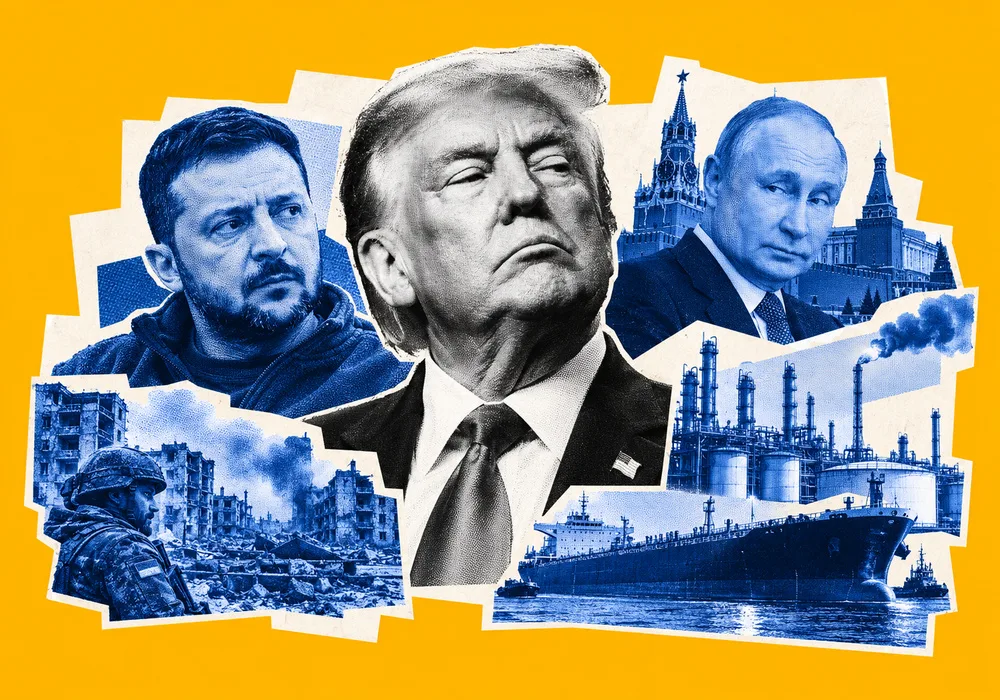
Donald Trump has accused Volodymyr Zelenskyy of resisting peace while defending his decision to suspend new sanctions on Russia. The dispute exposes growing uncertainty over Washington’s commitment to pressuring Moscow and raises questions about the reliability of US support for Ukraine as Russia continues attacks on critical infrastructure.
US President Donald Trump has renewed his public attacks on Ukrainian President Volodymyr Zelenskyy, accusing Kyiv of lacking the will to end Russia’s war against Ukraine. The remarks came as Trump defended his decision to put a new package of sanctions against Russia on hold, arguing that additional economic pressure could undermine negotiations with Moscow. In a post on Truth Social, he claimed that Zelenskyy did not want the war to end despite the substantial financial assistance Ukraine receives from European partners.
The accusation shifts attention away from Russia’s responsibility for continuing its full-scale invasion and towards Ukraine’s willingness to negotiate. Kyiv has repeatedly expressed readiness to pursue diplomacy, but maintains that a sustainable settlement cannot be achieved by allowing Moscow to continue its attacks or by weakening the measures intended to constrain its war effort. The dispute therefore concerns more than the tone of relations between the two presidents: it reflects competing approaches to how the war should be brought to an end and what concessions, if any, should be expected from Russia.
Trump argues that preserving Moscow’s participation in negotiations requires restraint from Washington. His critics, however, warn that suspending sanctions while Russia continues military operations risks reducing the pressure that might otherwise encourage the Kremlin to make meaningful concessions. The central question is whether diplomatic engagement can produce results when the economic and military costs imposed on the aggressor are simultaneously being reduced.
Sanctions Relief Raises Questions About Leverage Over Moscow
The decision to delay new restrictions has intensified concerns in Kyiv and among supporters of Ukraine in the United States and Europe. Zelenskyy has warned that easing sanctions strengthens Russia’s ability to sustain its war, while the Trump administration has presented the move as part of its effort to keep negotiations open. These positions reflect a fundamental disagreement over whether economic pressure obstructs diplomacy or provides the leverage necessary to make it effective.

Sanctions are not an immediate substitute for military support, but they can constrain access to revenue, technology and international markets. Their impact depends on enforcement, coordination between Western governments and the ability to prevent Russia from circumventing restrictions. A pause in additional measures can therefore carry political significance beyond its immediate economic consequences, particularly if Moscow interprets it as evidence that continued aggression will not prevent the gradual normalisation of economic relations.
The dispute also intersects with Washington’s approach to Russian energy exports. Plans for Russian diesel supplies to international markets have added another layer of tension, as Ukraine fears that commercial arrangements could provide Moscow with revenue while its forces continue attacking Ukrainian cities and infrastructure. For European governments, this creates a difficult strategic environment in which efforts to secure a negotiated settlement may conflict with the objective of maintaining sustained pressure on Russia.
Ukraine Seeks to Preserve US Support Amid Growing Friction
Despite the public confrontation, diplomatic communication between Kyiv and Washington continues. Zelenskyy has spoken with US presidential envoys Steve Witkoff and Jared Kushner, indicating that Ukraine is still seeking opportunities to advance negotiations and maintain American engagement. The Ukrainian president has emphasised that Kyiv is prepared to work towards peace, while insisting that US policy must contribute to a settlement that does not reward Russian aggression.
The relationship remains particularly consequential because American assistance extends beyond direct military supplies. Intelligence sharing and satellite communications are important components of Ukraine’s ability to anticipate Russian attacks, coordinate operations and protect its forces. Recent disputes over intelligence cooperation and access to Starlink have highlighted how quickly disagreements at the political level can create uncertainty around capabilities that Ukraine relies on in wartime.
The reported resumption of US intelligence sharing offers some reassurance, but it does not resolve the broader question of how dependable American support will be as negotiations continue. If assistance becomes increasingly conditional on Kyiv accepting Washington’s preferred approach to ending the war, Ukraine could face additional pressure to make decisions under difficult military and diplomatic circumstances. European governments would then have to consider whether their own capabilities and commitments are sufficient to compensate for any reduction in US engagement.
Europe Faces a More Uncertain Strategic Environment
For Europe, the growing rift between Washington and Kyiv creates a challenge that extends beyond the immediate negotiations. European states have provided Ukraine with substantial financial, military and political support, but the effectiveness of their efforts remains closely connected to US intelligence, military capabilities and diplomatic influence. A prolonged deterioration in relations between the two governments could increase the burden on European allies precisely when Russia continues to threaten Ukraine’s energy infrastructure ahead of winter.
The dispute also raises questions about the balance between diplomatic flexibility and deterrence. European leaders may support negotiations without accepting that Ukraine should bear the principal costs of securing an agreement. If sanctions are weakened before Russia demonstrates a willingness to halt its aggression, maintaining a common Western position could become more difficult. Diverging approaches would give Moscow additional opportunities to exploit differences among its opponents and seek bilateral arrangements that undermine collective pressure.
Trump’s latest remarks do not establish that negotiations have failed, nor do they mean that US support for Ukraine has ended. They do, however, underline the uncertainty surrounding Washington’s strategy. The outcome will depend not only on whether talks continue, but also on whether the parties can establish terms that address Ukraine’s security and give Russia a clear incentive to stop its war. Until that happens, public accusations and changes in sanctions policy risk weakening confidence among allies without producing a durable settlement.