
Trump’s Ukraine Peace Plan: Fears Grow in Europe Over a Deal Without Kyiv

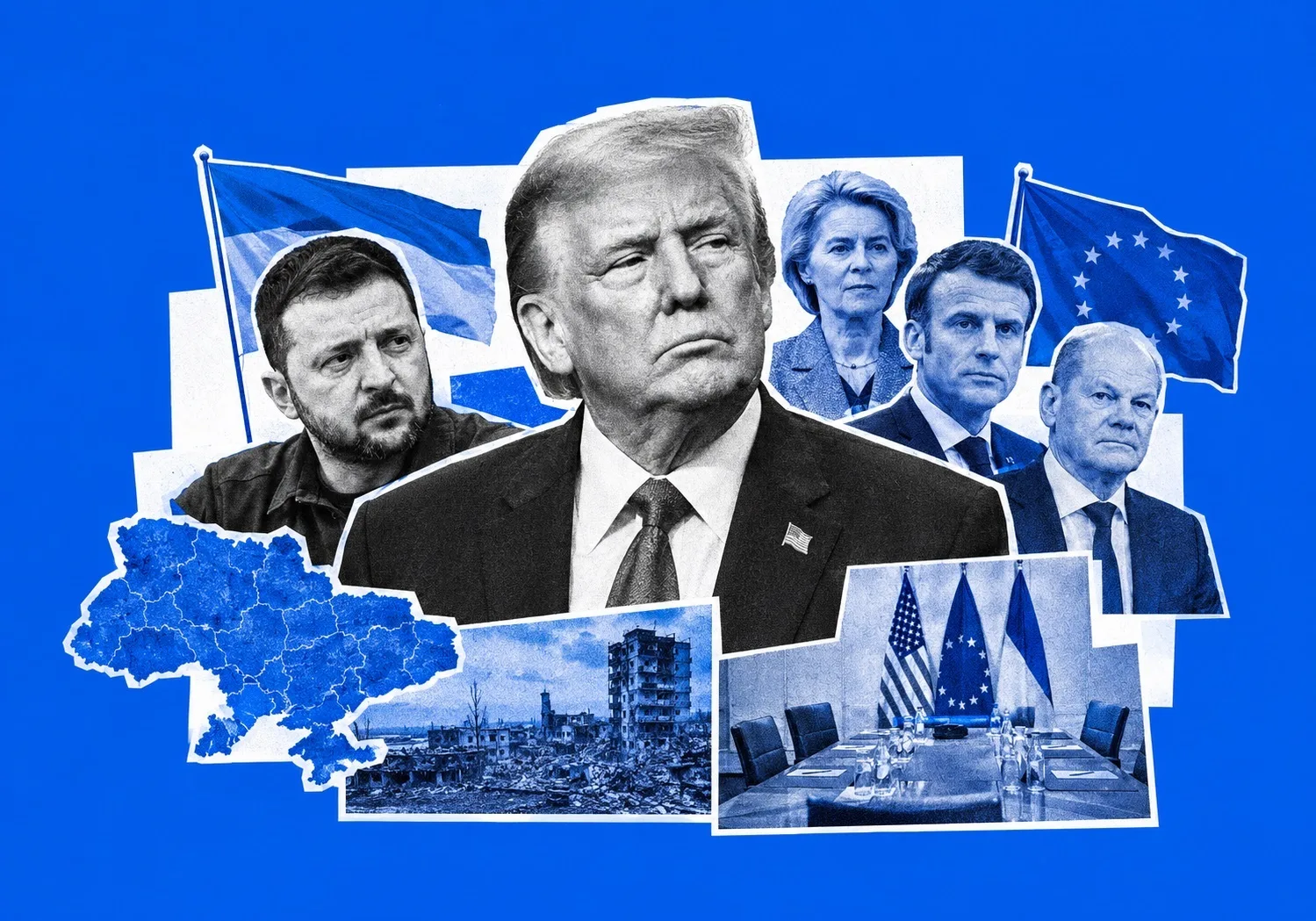
As Donald Trump pushes for a US-Russia-Ukraine peace deal before December, European capitals fear Kyiv could be forced into a settlement made without its full consent. Despite a tentative agreement in Saint Petersburg to resume trilateral negotiations after November 10, Russia is intensifying attacks on Ukraine's energy grid, raising doubts about Moscow's true intent.
The question troubling Kyiv and European capitals is what happens if Ukraine refuses the terms Washington considers acceptable.
Moscow can afford to keep talking
The meeting between Witkoff and Russian officials delivered a modest diplomatic result. Kremlin aide Yuri Ushakov announced an agreement "in principle" to restart trilateral discussions, and American citizen Stephen Hubbard was released.
Beyond that, little is settled.
There is no ceasefire, no agreed negotiating framework and no indication that Russia has accepted Ukraine's demands over sovereignty and security. The detailed proposals exchanged in Saint Petersburg have not been made public.
For Putin, that leaves considerable room to manoeuvre. He can welcome American diplomacy without making concessions on territory or interrupting military operations. Renewed contact with Washington also gives Moscow something it has sought throughout the war: the opportunity to negotiate directly with the United States rather than deal exclusively with a broader Western coalition.
The distinction matters to Ukraine. Zelensky has insisted that Kyiv must participate in any trilateral format and that Russia must, at a minimum, agree to freeze hostilities.
Neither condition can be taken for granted simply because Moscow has accepted another round of talks.
The Kremlin's position is strengthened by the approaching winter. Russia plans to intensify missile and drone attacks against Ukraine's electricity and heating infrastructure as temperatures fall below freezing. Such attacks place pressure on civilian life and the economy while forcing Ukraine to devote resources to keeping essential services operating.
Moscow may calculate that another difficult winter will improve its negotiating position. Whether that calculation proves correct is another matter. Ukraine has endured previous attacks on critical infrastructure without accepting Russia's political demands.
Still, the prospect of prolonged disruption complicates Kyiv's decisions at precisely the moment Washington wants negotiations to accelerate.
A peace process built around Trump's calendar
Three dates now dominate the diplomatic planning.
The United States holds its midterm elections on 3 November. A fresh round of US-Russian-Ukrainian talks could follow after 10 November. Putin is also seeking a meeting with Trump and Chinese President Xi Jinping in China around the middle of the month.
Then comes the G20 summit at Trump's Florida golf club in December.
There is no confirmation that Beijing has agreed to the proposed meeting involving all three leaders. Nor has an agenda been established. Nevertheless, the possibility is significant because it would place negotiations affecting European security within a much wider conversation between major powers.
Putin would have an opportunity to discuss Ukraine directly with the leaders of the United States and China. European governments, despite their proximity to the conflict and their responsibilities for regional security, might have little influence over those exchanges.
The December summit presents a different problem. A target date can concentrate diplomatic efforts, but it can also encourage negotiators to treat unresolved disagreements as matters to be settled under political pressure.
The fundamental differences between Moscow and Kyiv have not disappeared. Russia has not accepted the minimum conditions outlined by Zelensky. Ukraine has not indicated that it would agree to a settlement negotiated without its full participation.
Trump's preferred timetable therefore depends on changing at least one side's position.
Washington has more immediate means of pressuring Kyiv than Moscow. American military assistance, intelligence cooperation and decisions over advanced weapons directly affect Ukraine's ability to defend itself. Any threat to reduce that support would carry considerable weight in negotiations.
Putin's calculations are less straightforward. Russia may welcome economic concessions or renewed diplomatic engagement, but neither necessarily requires Moscow to abandon its territorial demands.
That imbalance could become the defining feature of the negotiations.
Sanctions are already dividing Washington
A dispute over Russian diesel has exposed disagreements within the United States over how much economic pressure Moscow should face while negotiations proceed.
On 13 October, twelve senators, six Democrats and six Republicans, urged Trump to reverse the easing of restrictions on Russian diesel. The bipartisan group, which included Richard Blumenthal, argued that the measure would help finance Russia's war.
Three days later, Trump temporarily paused new sanctions, citing national interests.
The decisions point in different directions. The administration is seeking a diplomatic opening while facing demands from Congress to maintain economic restrictions that could strengthen its negotiating position.
For Moscow, even limited relief has value. Russia's ability to sustain the war depends partly on maintaining revenue and access to international trade. Exceptions affecting energy exports can help preserve that capacity.
There is also a negotiating advantage in receiving economic benefits before making military concessions.
The senators' intervention shows that the White House cannot assume unanimous domestic support for its approach. It does not, however, establish that Congress can prevent a future agreement. The extent of its legal authority would depend on the measures involved, including whether sanctions were imposed by legislation or executive action.
Political resistance is easier to identify than an effective mechanism for stopping a deal.
For European governments, the sanctions dispute is particularly uncomfortable. They have argued that economic pressure should remain tied to Russian conduct, while Washington appears increasingly willing to consider concessions as part of a broader diplomatic bargain.
The difference is not merely tactical. It concerns whether Russia should first demonstrate a willingness to change its behaviour or whether concessions might persuade it to do so.
Europe is defending rules it may not control
The European Council tried to establish clear boundaries on 16 October. Its conclusions rejected changes to borders by force, reaffirmed Ukraine's sovereignty and insisted that aggression must not be rewarded.
European leaders also called for long-term security guarantees and a continuing European role in diplomacy.
Those commitments leave little room for an agreement that formally accepts Russian territorial gains or deprives Ukraine of a meaningful say in its future.
But European governments face an uncomfortable limitation: they cannot dictate the terms of American engagement with Moscow.
Previous diplomatic initiatives, including negotiations in Oslo and discussions involving European and NATO representatives, sought to preserve a coordinated Western position. Trump's current approach gives greater prominence to direct contact between Washington and Moscow, with the possibility of additional talks involving Beijing.
For Kyiv, this has revived fears of a settlement resembling the great-power arrangements associated with the 1945 Yalta Conference.
The comparison does not mean that a new division of Europe has already been agreed. It expresses a concern about who will exercise authority over the eventual settlement.
If the United States and Russia establish the main terms before Ukraine participates meaningfully, Kyiv could find itself negotiating over how to implement decisions rather than whether to accept them.
Europe faces a related risk. Any agreement would affect the security environment along the EU's eastern neighbourhood, the future of sanctions and the requirements for supporting Ukraine's defence.
Yet the governments expected to manage many of those consequences might have had only a limited role in shaping the agreement.
That would mark a departure from the transatlantic coordination European leaders have sought to preserve throughout the conflict.
The unanswered question of security guarantees
Even a successful ceasefire negotiation would leave one of the hardest issues unresolved: what would prevent another Russian attack?
Zelensky has demanded robust long-term guarantees. The European Council has endorsed arrangements capable of providing Ukraine with substantial protection.
No concrete package has emerged from the current diplomatic contacts, however.
A freeze in fighting without credible guarantees could leave Ukraine facing a heavily armed neighbour while uncertainty persists over future Western assistance.
This is why the debate over American military and intelligence support cannot be separated from the peace initiative itself.
Michael Froman, president of the Council on Foreign Relations, has warned that weakening support for Kyiv would undermine deterrence. His concern goes beyond the immediate battlefield. If military assistance becomes a means of compelling an ally to accept an unfavourable agreement, other governments may question how dependable American commitments would be under similar pressure.
Trump's administration could argue that a negotiated settlement would reduce the need for continued military assistance. But that depends on the durability of the settlement, something the present talks have yet to establish.
A signed agreement and a secure peace are not interchangeable.
The winter campaign against Ukraine's energy infrastructure will make this distinction more urgent. Continued attacks would test Kyiv's capacity to withstand both military and diplomatic pressure while negotiators work towards the December deadline.
For Putin, there is no obvious reason to surrender that leverage before the terms become clearer. For Trump, the political attraction of a rapid agreement creates pressure to keep the process moving. Zelensky must assess whether the cost of refusing an American proposal would be greater than the risks of accepting it.
European leaders can insist that Ukrainian sovereignty is non-negotiable. Their difficulty is translating that position into influence over discussions increasingly conducted outside their institutions.
If negotiations reach the Florida summit without an agreed ceasefire or credible security guarantees, Kyiv may face a choice between accepting a settlement whose durability it cannot trust and rejecting a proposal backed by its most important military partner.
The decisive negotiation may then concern not what Russia is prepared to concede, but how much pressure Washington is willing to place on Ukraine to secure an agreement by December.
Read also:
- In Saint Petersburg, talks between Vladimir Putin and US envoy Steve Witkoff are currently underway at the Konstantinovsky Palace. As negotiations began, Moscow announced the dispatch of its first tanker carrying 40,000 tonnes of diesel directly to the United States - a commercial delivery explicitly tied to recent understandings between Donald Trump and Vladimir Putin, with regular shipments projected to follow.
Sources: The Atlantic, Reuters, France24, ITV