
Trump’s Ukraine Peace Plan Could Force Europe Back onto Russian Gas

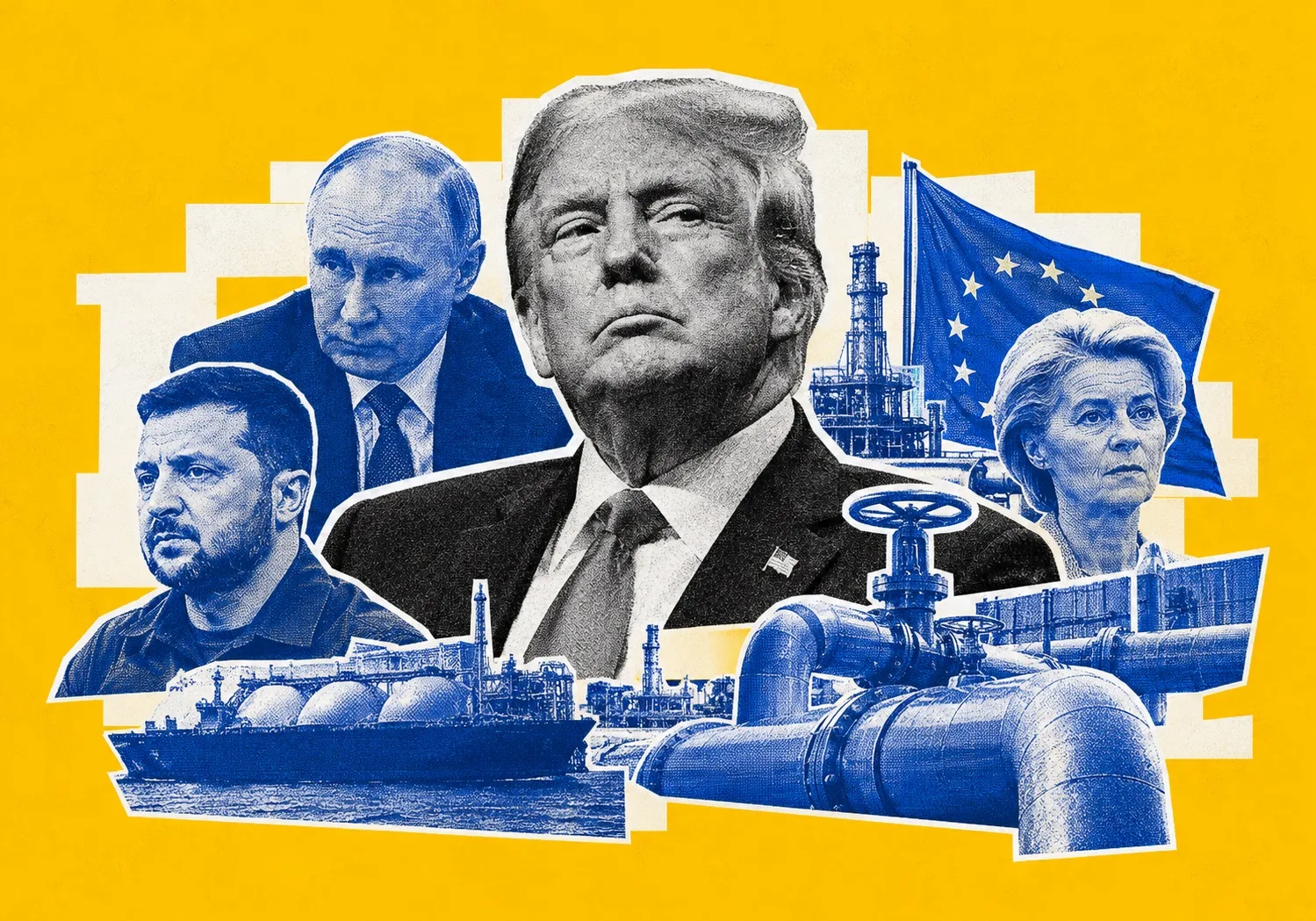
As US, Russian, and Ukrainian negotiators prepare to meet in Abu Dhabi, Donald Trump’s proposed peace framework is exposing a major split between Washington and Brussels. The draft proposals could force European governments to face an unwelcome prospect: restoring Russian pipeline gas imports and reactivating Nord Stream - reversing nearly five years of EU efforts to dismantle its energy dependence on Moscow.
The diplomatic effort gathered momentum after a three-hour meeting in St. Petersburg between Vladimir Putin and US special envoy Steve Witkoff. Putin subsequently indicated that Russia was prepared in principle to resume trilateral discussions after 10 November. Ukrainian President Volodymyr Zelenskyy has supported the proposed timetable.
The negotiations remain preliminary. Kremlin spokesman Dmitry Peskov has said the Abu Dhabi meetings will involve technical delegations, not national leaders. Even so, the proposals circulating ahead of the talks have already exposed differences between Washington, Kyiv and European capitals over what a workable peace agreement should contain.
Washington Is Putting Russian Energy Back on the Table
The most contentious element of the American initiative may not be the proposed ceasefire arrangements. It is the economic settlement that could accompany them.
According to a framework reported by The Economist and European media, Washington is considering a package that would combine territorial compromises in Ukraine with sanctions relief for Russia and the gradual restoration of political and commercial relations.
The reported proposals include establishing a demilitarised zone in Ukrainian-controlled parts of Donetsk oblast. Kyiv would also abandon its ambition to join NATO, receiving instead a major investment package and the prospect of eventual European Union membership.
For Moscow, the incentives could be considerable. Alongside sanctions relief, the framework envisages renewed agreements with American businesses and the possible return of Russian pipeline gas to Europe.
The discussions focus on two key routes - Ukraine's gas transit system and the surviving line of Nord Stream - both of which carry political significance well beyond the energy market.
Europe's response to the 2022 invasion was built partly around reducing its exposure to Russian oil and gas. The reasoning was straightforward. Commercial dependence had given Moscow influence over European energy supplies, while hydrocarbon revenues helped sustain the Russian state.
Restoring those relationships would therefore mean reconsidering a central part of Europe's policy towards Russia.
The American approach appears to treat renewed energy trade as an incentive that could help persuade Moscow to accept a negotiated settlement. European governments have spent years treating that same trade as a vulnerability.
Those positions are difficult to reconcile.
The Commercial Appeal Comes With Political Costs
The prospect of Russian gas returning to European markets would inevitably attract commercial interest. Pipeline supplies could provide additional options for buyers, while restored export revenues would benefit Moscow.
But the question for European policymakers is whether any short-term economic advantage would justify rebuilding a relationship they have deliberately tried to reduce.
The proposed revival of Nord Stream is particularly sensitive. The pipeline became closely associated with Europe's earlier dependence on Russian energy and the political disputes surrounding that dependence.
Reactivating its surviving line would not simply add another source of gas. It would reopen a commercial relationship whose strategic risks have dominated European energy policy since the invasion.
Ukraine's position is even more complicated.
Under the reported framework, Kyiv could be asked to accept limits on its future military alignment and changes affecting territory it currently controls. Yet its infrastructure might also be used to transport Russian gas westwards.
Such an arrangement could generate economic activity, but it would leave difficult questions about control, security and the durability of any agreement.
There is also the question of who gets to make these decisions.
European leaders have expressed concern that Washington is discussing the future of European energy supplies and regional security with Moscow without sufficient involvement from Brussels or Kyiv.
The United States can negotiate changes to its own sanctions. It cannot, however, unilaterally commit European governments to restoring energy relationships or reversing their existing restrictions.
That distinction could become a serious obstacle if the talks advance beyond preliminary proposals.
Russia's Battlefield Problems Give Diplomacy Added Value
Moscow has reasons to welcome renewed negotiations, even without making substantial concessions.
Russian forces have struggled to translate continued military operations into sustained territorial gains. According to the Institute for the Study of War, they have lost a net 241 square kilometres of territory since 1 September 2026.
The institute also points to high personnel losses and declining rates of monthly advancement. Ukrainian forces have disrupted planned Russian offensives in the Donbas, limiting Moscow's ability to improve its negotiating position through battlefield gains.
None of this means the Kremlin has abandoned its territorial objectives.
It does mean that economic relief could become increasingly attractive.
Restrictions on Russian oil and fuel exports have been part of the West's attempt to constrain Moscow's capacity to finance the war. European media and diplomatic sources indicate that Washington has considered easing American restrictions affecting diesel exports and providing relief to Russia's oil sector.
For the Kremlin, securing such concessions through negotiations could be valuable even if the political disagreements remain unresolved.
The ISW assesses that Moscow's diplomatic engagement is aimed largely at obtaining economic benefits and strengthening its ability to finance continued military operations.
Recent Russian attacks reinforce the difficulty of separating diplomatic statements from military intentions.
On 23 October, a large-scale missile assault on Ukraine's energy infrastructure left more than 500,000 people without electricity.
Zelenskyy pointed to the strikes as evidence that Russia's underlying objectives had not changed.
The timing is significant. Moscow is expressing willingness to discuss peace while continuing attacks that place considerable pressure on Ukraine's civilian population and infrastructure.
For American negotiators, the challenge is determining whether Russia is prepared to exchange meaningful military and political concessions for economic relief, or whether it is seeking the benefits of negotiations without changing its conduct.
Kyiv Is Being Asked to Trade Certainty for Promises
Ukraine has not rejected negotiations. Zelenskyy has expressed readiness to discuss an immediate ceasefire, a humanitarian truce and a freeze along the existing front lines.
But those options are not equivalent to the territorial and security compromises contained in the reported American framework.
A freeze would suspend fighting along current positions without necessarily settling questions of sovereignty. A demilitarised zone in Ukrainian-controlled territory would require a different set of commitments, including arrangements governing military presence and enforcement.
The proposed abandonment of NATO membership raises a still larger problem.
Ukraine has sought binding security guarantees capable of deterring another Russian attack. The prospect of EU accession and a substantial investment package would offer economic and political benefits, but neither automatically provides the collective defence protection associated with NATO.
The reported framework has yet to establish what specific, enforceable security guarantees Kyiv would receive in return for relinquishing its NATO ambitions.
That uncertainty goes to the centre of the proposed bargain.
Ukraine would be expected to make concessions affecting its future defence policy. Whether the corresponding guarantees would prevent renewed Russian aggression remains unclear.
The Kremlin has offered little indication that its own demands have softened. Putin's foreign policy adviser Yury Ushakov dismissed the initial American proposals as lacking substance.
Previous attempts to narrow the differences between Moscow and Kyiv, including US-Russian meetings in Alaska, failed to resolve the dispute over Russian territorial demands and Ukrainian sovereignty.
Adding investment and energy incentives may give negotiators more room to manoeuvre. It does not necessarily make the underlying security disagreements easier to settle.
Europe Wants a Say in a Settlement It May Have to Implement
The prospect of technical talks in Abu Dhabi has brought an old European concern into sharper focus: Washington and Moscow could negotiate arrangements affecting the continent's security without European institutions exercising meaningful influence over the terms.
The Trump administration has made a rapid negotiated settlement a priority. European governments have generally placed greater emphasis on the conditions under which a settlement would hold.
Those differences matter when the proposed agreement reaches beyond a ceasefire.
Sanctions policy, future energy imports, Ukraine's European integration and the broader security relationship with Russia all involve decisions that European governments would have to support or implement.
EU foreign policy chief Kaja Kallas has been among those resisting proposals that would require Ukraine to accept terms amounting to capitulation.
Yet Brussels has not secured a defined place in the emerging negotiating format. Peskov's comments indicate that European representation remains an open question.
That leaves the EU in an awkward position.
It could be expected to contribute to Ukraine's reconstruction and eventual European integration while having limited influence over the security arrangements that determine whether either objective is sustainable.
The same problem applies to sanctions and energy policy. If Washington offers Russia economic concessions involving European markets, the agreement would depend partly on decisions made outside Washington.
The difficulty is not merely procedural. European governments have pursued policies intended to reduce Moscow's influence over their economies. A settlement that restores Russian access to those markets could leave them reconsidering the assumptions behind years of investment and political decisions.
The Limits of a Transactional Settlement
Witkoff's diplomatic efforts have involved discussions with Ukrainian leaders in Norway and Russian officials in St. Petersburg, part of a wider American attempt to find terms acceptable to both sides.
The approach gives Washington considerable influence over the negotiating agenda. It also concentrates attention on what each party might receive in exchange for compromise.
Russia could gain sanctions relief and renewed energy revenues. Ukraine could receive investment and a path towards EU membership. The United States could secure a diplomatic settlement to a war Trump has made a priority to end.
What remains less clear is how the proposed arrangement would deal with the possibility of renewed conflict.
A demilitarised zone would require monitoring and enforcement. Security guarantees would need to be credible to Kyiv. Any return of Russian energy supplies would have to be acceptable to European governments that have spent years reducing their dependence on Moscow.
Those issues cannot be resolved through economic incentives alone.
The planned Abu Dhabi talks may establish whether the parties can agree on technical arrangements. They will also begin testing how far Washington can advance a settlement whose economic provisions depend on European cooperation.
For Brussels, the most difficult decision may arise only after American and Russian negotiators have identified terms they consider acceptable: whether Europe should restore commercial ties with Moscow before it has sufficient confidence that the security threat which prompted their reduction has been addressed.
Sources: The Telegraph, ISW, The Economist, AP, The Moscow Times, AFP, CNN