
Ukraine–Russia Peace Talks in Abu Dhabi: First Day Ends Without Breakthrough

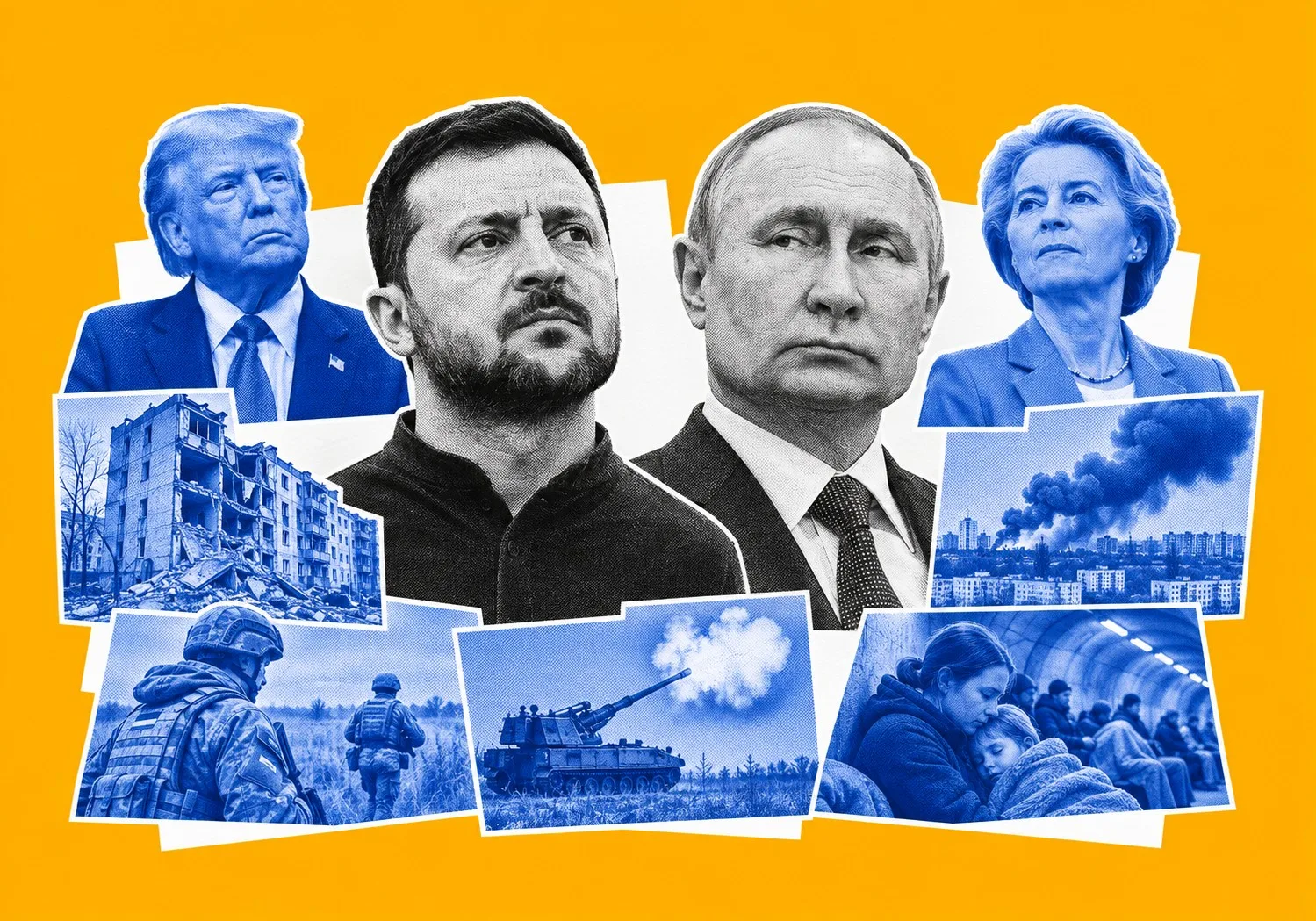
Ukraine and Russia ended their first US-mediated peace talks in nine months on Tuesday without announcing a ceasefire, a territorial compromise or agreed security guarantees, despite positive assessments from President Volodymyr Zelenskyy and US Secretary of State Marco Rubio. After almost four hours of talks in Abu Dhabi, Zelenskyy called the meeting constructive and Rubio said it had been “very productive”. Ukrainian outlets reported that a large-scale prisoner exchange had been agreed, citing sources close to Kyiv's delegation. No date or number of prisoners has been made public, and the arrangement has not been jointly confirmed by the governments involved.

The negotiating teams will meet again on Wednesday, 11 November. Their discussions have exposed a dispute not only over territory, but over what should come first: an end to the fighting or new security arrangements between Russia and the rest of Europe.
Major Prisoner Swap Reported
The accounts emerging from Tuesday's meeting offered more detail about the agenda than about any decisions taken. Zelenskyy, briefed by his negotiators afterwards, said they had examined humanitarian steps, ways to prevent another invasion and possible measures to reduce the fighting. Prisoners were a priority, he said, and he gave the delegation instructions for the next round.
Interfax-Ukraine and Ukrainska Pravda both reported an understanding on a major exchange, drawing on sources close to the Ukrainian team. Their reports did not establish how many people would be returned or when an operation could take place.
Zelenskyy confirmed discussion of releases but did not publicly announce an exchange deal. Russian and American officials had not supplied matching confirmation by Tuesday evening.
The distinction matters.
Kyiv is seeking the return not only of captured soldiers, but also of Ukrainian civilians detained by Russia and children taken to Russian-controlled territory.
Prisoner exchanges have gone ahead during previous periods of diplomatic deadlock, so a humanitarian arrangement would not, by itself, signal progress on a political settlement.
Washington's public response was upbeat but qualified. Rubio, speaking in Paris rather than Abu Dhabi, said there was still a great deal of work ahead and cautioned against expecting the conflict to be resolved within a day. Jared Kushner, President Donald Trump's son-in-law and one of the American negotiators, had told delegates at the opening session that recent contacts with both countries had narrowed some differences. He offered no examples of positions that had changed.
Kushner is working alongside US envoy Steve Witkoff.
Ukraine's team is led by foreign intelligence chief Rustem Umerov and includes presidential chief of staff Kyrylo Budanov.
Russia sent a delegation headed by Kremlin aide Vladimir Medinsky, supported by senior diplomatic, military and intelligence officials.
US General Alexus Grynkewich, NATO's senior military commander in Europe, was also at the opening session, as possible ceasefire-monitoring arrangements formed part of the discussions.
The Donetsk Deadlock
A claim from Washington before the meeting has drawn particular attention. An unnamed senior US official told reporters on Monday that both sides had shown “a little bit of flexibility” privately on territory. Neither had changed its public demands, the official conceded. No concrete proposal was disclosed.
The most immediate obstacle lies in Donetsk, where Russia holds most of the region but not all of it.
Moscow wants Ukrainian troops to leave the remaining territory under Kyiv's control. Ukrainian officials reject a withdrawal and have discussed taking the present line of contact as a starting point for talks, without recognising Russia's claims to the land it occupies.
A senior Ukrainian official disputed suggestions that Kyiv was preparing to give up territory. Zelenskyy has consistently rejected a voluntary withdrawal from positions his forces still hold. Trump, by contrast, has spoken of Ukraine ending up with a different territorial shape, without explaining what that would entail or whether Ukraine would accept it.
The American official linked any eventual decision on territory to what happens after a ceasefire. There is little prospect of settling where forces would stand, the official argued, without knowing who would guarantee Ukraine's security or how a renewed attack would be answered. That is Washington's assessment, rather than evidence of an accepted formula from Kyiv or Moscow.
US negotiators are exploring protections for Ukraine resembling parts of NATO's collective-defence system, even if the country remains outside the alliance. The discussion has included provisions akin to Article 4, which allows consultations when an ally faces a threat, and Article 5, under which members agree to assist an ally under attack. Article 5 does not, however, prescribe an automatic military response by every member.
Rubio said on Monday that Ukrainians needed to feel secure after the war, but that any guarantees would also have to be acceptable to Russia. He did not rule out a treaty, while stressing that there was no agreed plan and that Senate ratification could be difficult. What military support the United States might commit, and under which circumstances, has not been specified.
For Kyiv, that uncertainty is inseparable from the territorial argument. A frozen front line without credible protection would leave the possibility of renewed fighting. Russia, meanwhile, opposes Ukrainian NATO membership and has sought restrictions on the size and capabilities of Ukraine's armed forces.
Moscow's Wider Demands
Russia wants Abu Dhabi to address more than the war it launched in Ukraine. A source in Moscow's delegation told Reuters that a European security framework was the principal purpose of the talks, with the Ukrainian settlement forming part of that wider discussion.
Foreign Minister Sergei Lavrov reinforced the position on Tuesday.
Moscow would not agree to an immediate ceasefire simply to allow negotiations to proceed, he said, accusing European governments of seeking time for Ukraine to rebuild its forces. Kyiv and its partners have called for a halt to hostilities before bargaining over Europe's longer-term security arrangements.
The difference reaches back to Russia's proposals in December 2021, when it demanded limits on NATO deployments in eastern Europe and assurances that Ukraine would never join the alliance. Western governments rejected those restrictions. Moscow continues to seek Ukrainian neutrality, territorial concessions and limits on Kyiv's military capabilities.
The Trump administration has nevertheless raised the prospect of talks about military transparency, direct crisis communications and reciprocal steps to reduce the risk of confrontation. US officials have also floated restoring the largely suspended NATO–Russia Council. Possible sanctions arrangements have been mentioned, including measures that could be reapplied if a future agreement were breached. These are ideas under consideration, not provisions accepted by the parties.
Lavrov made Moscow's position on European participation unusually clear. Officials from European capitals who had travelled to Abu Dhabi could remain in their hotel, he said, while the three delegations negotiated.
There was no indication on Tuesday that Russia would meet those representatives directly.

Europe Pushes Back
Europe's place at the table has become a dispute of its own. Britain, France, Germany, Italy, the European Union and NATO sent representatives for separate consultations with the Ukrainian and American teams ahead of the trilateral meeting. In a joint statement, they insisted that any arrangement respect sovereignty, territorial integrity and countries' right to make their own decisions. NATO, they said, would remain central to European collective defence.
The statement pledged continued work towards broader talks involving European partners but did not say when they might take part directly. Rubio acknowledged that European voices would eventually have to be included. Sanctions, military deployments and the wider security structure cannot all be decided by Washington, Moscow and Kyiv alone.
EU foreign policy chief Kaja Kallas was notably sceptical before the talks. Russia had shown no goodwill, she told Reuters on Monday, and was continuing attacks on civilians while claiming to negotiate. She also challenged the case for creating an entirely new European security architecture: agreements guaranteeing borders and sovereignty already existed, but Moscow had violated them.
European Commission President Ursula von der Leyen has argued that a ceasefire should precede negotiations on wider security questions. German Chancellor Friedrich Merz, speaking to ZDF on Monday, said he did not have high expectations of the Abu Dhabi meeting. He had previously urged Moscow to show it was serious about a ceasefire, saying he had seen no such indication.
European officials are also wary of the territorial language coming from Washington. Responding on Tuesday to Trump's suggestion that Ukraine might emerge from a deal with altered borders, the European Commission pointed to the joint statement's commitment to territorial integrity and said Ukraine's position would be decisive. That did not amount to European endorsement of the compromises implied by the US official's account.
The talks have left Europe in an awkward position: its representatives can coordinate with the mediators and Kyiv, but Moscow is resisting their presence at the negotiating table even as it seeks changes to the continent's security rules.
Russian Strikes Shadow Talks
While delegates gathered in Abu Dhabi, Ukraine was dealing with another night of Russian strikes.
Officials reported attacks across 10 regions, with five major electricity substations hit and homes left without power in several parts of the country. Two people were killed in the Vinnytsia region, according to the authorities. The damage came as winter approached and Ukraine struggled to protect an already battered power network.
Kyiv has proposed a halt to attacks on energy facilities, alongside measures to protect Black Sea shipping. Neither was agreed publicly on Tuesday. Russia's refusal to accept an immediate ceasefire leaves those smaller steps uncertain as well.
Sources: Reuters, AP, AA, The KyivIndependent