
Europe’s Electricity Prices Surge as Dunkelflaute Cuts Wind and Solar Power

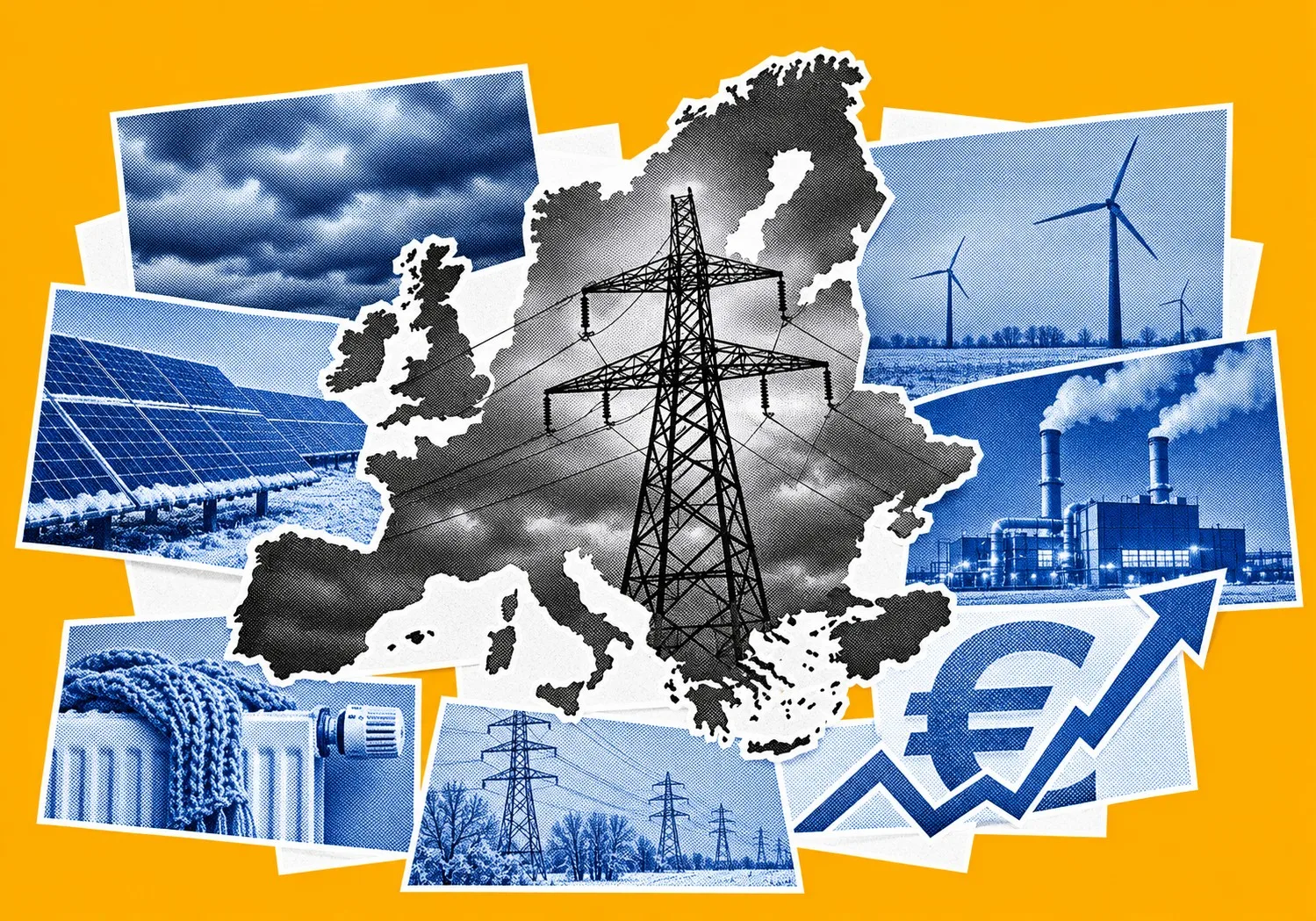
In just four days, Germany’s average wholesale electricity price jumped from €13 to €315 per megawatt-hour. The trigger was a spell of cloudy, windless weather that sharply reduced renewable power generation across parts of Europe. Known as Dunkelflaute, the phenomenon is forcing electricity markets to rely more heavily on expensive gas-fired generation as winter demand begins to rise. With wholesale prices still elevated across much of Europe on 8 November and gas reserves unusually low, analysts are assessing the risk of further price spikes in the coming weeks.

What Is Dunkelflaute?
The German word combines Dunkel, meaning dark, and Flaute, a lull in the wind. It describes periods when wind turbines and solar panels simultaneously produce unusually little electricity.
The phenomenon typically occurs between October and February, when shorter daylight hours restrict solar production. Persistent high-pressure weather systems can also bring thick cloud and weak winds across large parts of northern and central Europe.
When these conditions affect several countries at once, Germany has fewer options for importing replacement electricity. Neighbouring markets may be experiencing the same shortfall, while colder weather increases demand for lighting and heating.
Europe's rapid expansion of solar power has made the seasonal contrast more visible. Solar accounted for 25.4% of EU electricity generation in June 2026, according to figures cited by Euronews. By October, its share had fallen to 13.2%.
Solar panels can operate efficiently in cold temperatures, but shorter days and persistent cloud restrict output.
One British homeowner interviewed by Euronews has 12 rooftop panels and a household battery. On 5 November, the installation generated just 2.4 kilowatt-hours of electricity, forcing the household to purchase another 20.6 kilowatt-hours from the grid.
The battery allowed electricity bought at cheaper overnight rates to be used during the day. It could not compensate for several consecutive days of poor solar production.
National electricity networks face the same problem on a much larger scale. Operators must replace missing renewable generation with hydropower, nuclear electricity, conventional power stations, imports or stored energy.
Most batteries installed today can supply electricity for several hours. A prolonged Dunkelflaute requires backup generation or much larger energy reserves to sustain supplies until wind and solar output recover.
Prices Swing Across Europe
The late-October weather pattern produced some of Germany's most extreme wholesale electricity prices in years.
During the evening peak on 29 October, hourly prices exceeded €500/MWh, reaching approximately €574/MWh.
The shock spread to southern Europe. On 30 October, Spain and Portugal recorded their highest daily wholesale prices since April 2022, at approximately €245/MWh and €249/MWh respectively.
According to GMK Center, Germany's average wholesale electricity price rose by 16.6% in October to €169.5/MWh. France recorded a 15.8% increase to €165.9/MWh, while Italy remained among the continent's most expensive markets, averaging €230.7/MWh.
Prices continued to fluctuate during the first week of November. In France, day-ahead electricity prices approached €279/MWh on 6 November before falling to €242/MWh on Sunday, 8 November.
Germany, Belgium and the Netherlands also recorded daily averages of around €242/MWh on 8 November. Italy stood at €243/MWh, compared with approximately €200/MWh in Spain and Portugal.
The differences between individual markets were striking. Finland's average wholesale price was below €10/MWh that Sunday, while Lithuania's approached €294/MWh.
The gap reflects differences in electricity generation, available imports and transmission capacity. Hydropower and nuclear generation can help offset weak renewable output, although their availability varies considerably between countries.
These are wholesale day-ahead prices, rather than the tariffs households pay directly. Consumers on fixed contracts are generally protected from immediate market fluctuations. Industrial customers whose electricity costs follow wholesale markets can face much faster increases.
For those businesses, the price of natural gas has become particularly important.
Gas Makes the Shortfall More Expensive
Under Europe's marginal electricity pricing system, the wholesale price is generally determined by the most expensive accepted generating unit needed to meet demand.
During Dunkelflaute, gas-fired power stations often fill the gap left by wind and solar generation. When gas becomes more expensive, electricity prices can rise sharply even in countries producing substantial amounts of cheaper renewable or nuclear power.
Energy consultancy Kpler estimates that gas will set marginal electricity prices in more than 70% of German winter trading hours. Britain, Belgium and the Netherlands face similarly high exposure, while the proportion in Italy exceeds 95%.
European gas prices have risen substantially since the conflict involving Iran disrupted energy shipments from the Persian Gulf earlier this year.
On 28 October, Europe's benchmark Dutch TTF gas futures closed above €100/MWh for the first time since the 2022 energy crisis. Shipping disruptions through the Strait of Hormuz have constrained liquefied natural gas exports from Qatar, one of the world's largest suppliers.
The market subsequently eased. The December TTF futures contract closed at approximately €85.59/MWh on Friday, 6 November, still far above pre-conflict levels.
Europe is entering the heating season with less gas in storage than usual. According to Gas Infrastructure Europe, underground storage facilities across the EU were 74.62% full on 1 November. Germany's reserves stood at just 61.03%, their lowest level on record for the start of November.
Patrick Pouyanné, chief executive of TotalEnergies, said on 2 November that he did not expect an outright gas shortage this winter. He warned, however, that European buyers would have to pay more to secure sufficient supplies.
Pouyanné criticised the relaxation of EU storage requirements, arguing that the decision had left the continent more exposed to international competition for LNG.
"We will pay more than others," he told reporters.
Industrial consumers are already responding to higher costs.
French energy group Engie's chief financial officer, Pierre-François Riolacci, said on 5 November that gas demand had weakened among large customers during the third quarter. He expected higher prices to reduce European consumption further during winter.
Chemicals, fertiliser and steel manufacturers are particularly vulnerable because fuel and electricity represent a substantial share of production costs. Some companies can reduce output when energy prices become uneconomic, adding pressure to industries already struggling with weak demand.
Lower industrial consumption may help ease pressure on gas supplies, although it comes at an economic cost.
Will Prices Rise Further This Winter?
The latest surge has pushed electricity futures sharply higher, but energy analysts see several possible outcomes for the coming months.
In an assessment published on 29 October, Kpler suggested that markets might already be pricing in an unusually difficult winter. French and German electricity contracts for the first quarter of 2027 had approximately doubled in recent months, with French contracts trading around €190/MWh.
Kpler believes these prices could fall if winter temperatures remain relatively mild, reducing heating demand and the amount of gas required for electricity generation.
Early seasonal indications from the European Centre for Medium-Range Weather Forecasts pointed towards above-average temperatures across much of continental Europe during the first quarter of 2027.
Under average weather conditions, Kpler estimates that French electricity demand could increase by 5.5% year on year. A warmer scenario would reduce that growth to just 0.3%.
French nuclear generation could provide additional relief. Several reactors are expected to return from maintenance and refuelling outages, improving electricity availability during the first quarter.
Hydropower presents a less favourable picture.
Nordic reservoirs were approximately 10 terawatt-hours below their ten-year average at the end of October. Low water levels in parts of Norway and the Alps could restrict generation precisely when European markets need alternatives to expensive gas-fired electricity.
Goldman Sachs Research has also outlined sharply different scenarios for gas prices.
Its analysts warned that prices could exceed €100/MWh during peak winter if Persian Gulf LNG exports remained severely restricted. A substantial recovery in shipments through the Strait of Hormuz could instead bring prices towards €50/MWh.
Both estimates depend on developments in the Middle East and the ability of European buyers to secure additional LNG supplies.
Wind generation will be another decisive factor.
Kpler estimates that German wind output running 10% above average during the first quarter of 2027 could displace approximately 3 terawatt-hours of gas-fired electricity. A prolonged spell of weak winds would push demand for conventional generation in the opposite direction, increasing pressure on gas reserves that are already unusually low.
After October's extraordinary price swings, electricity traders will be watching weather forecasts and LNG deliveries for signs of the next squeeze.
Sources: Euronews, Bloomberg, European Electricity Prices, Kpler