
European Security: What Trump’s Envoys Will Discuss With Putin in Moscow

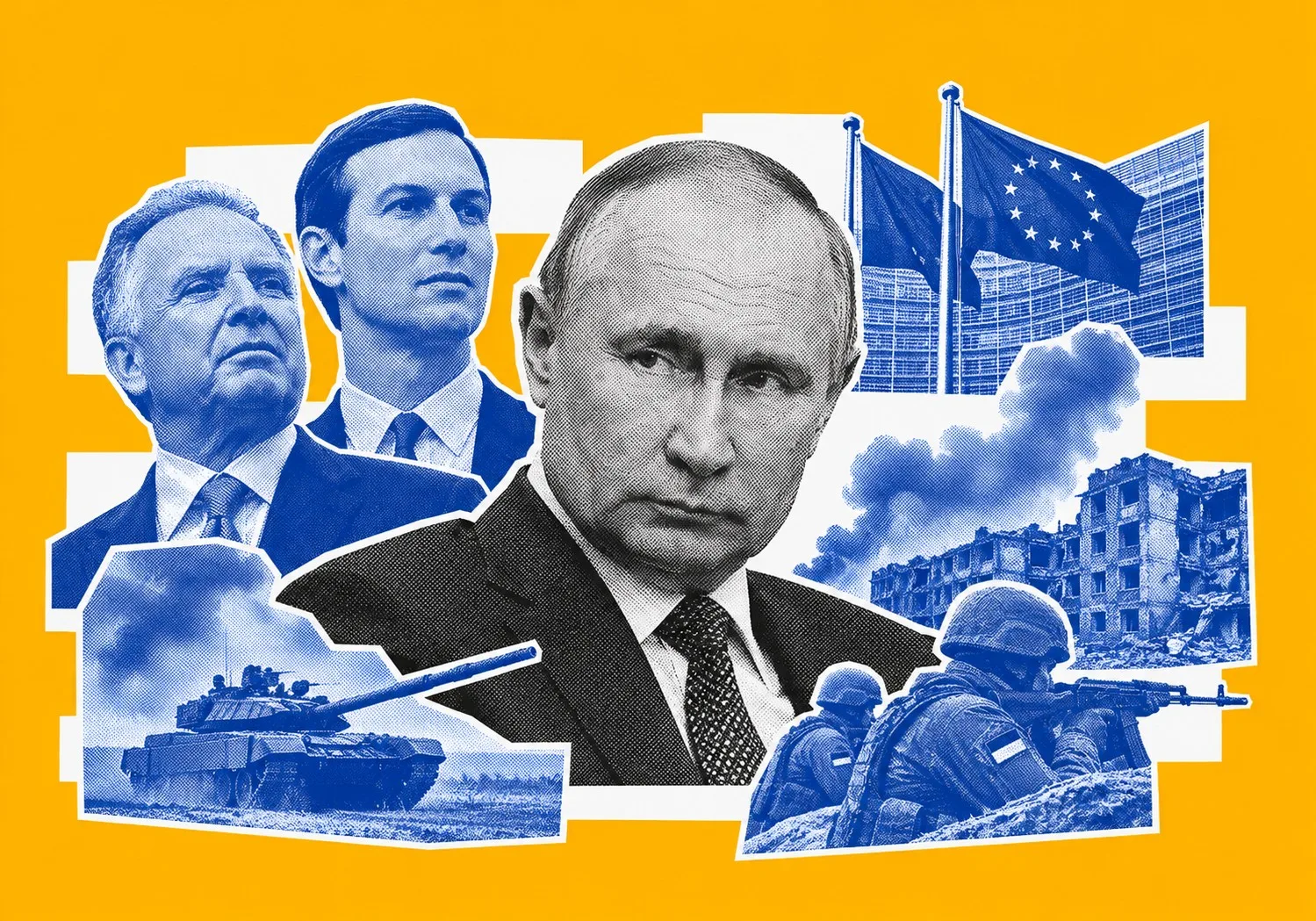
European security and NATO's military presence in Eastern Europe are expected to feature prominently in talks between US envoys Jared Kushner and Steve Witkoff and Russian President Vladimir Putin in Moscow on Thursday. Washington wants the Kremlin to spell out what it expects from NATO — and what Russia would offer in return. The meeting follows two days of negotiations in Abu Dhabi that produced a tentative prisoner exchange agreement but no ceasefire in Ukraine. European governments fear Moscow could use the peace process to revive demands for restrictions on NATO expansion and Western military deployments.

Putin’s NATO demands
Moscow has yet to publish its terms for a new European security agreement. But the demands it made two months before invading Ukraine offer a clear indication of what Putin might bring to the table.
In December 2021, Russia presented Washington and NATO with draft agreements calling for sweeping changes to Europe's post-Cold War security arrangements. It wanted a legally binding halt to NATO enlargement, particularly Ukraine's membership, and restrictions on allied troops and military activity in Eastern Europe. Some provisions would have effectively rolled back NATO's military presence to its position in 1997, before Poland, Hungary and the Czech Republic joined the alliance.
The proposals would have limited NATO's ability to reinforce its eastern members and restricted military cooperation with countries outside the alliance.
Russian negotiators returned to those demands during this week's talks in Abu Dhabi. According to Axios, they argued that Putin had invaded Ukraine because the Biden administration failed to address Moscow's security concerns in 2021. In fact, Washington and NATO had delivered written responses on 26 January 2022, offering talks on arms control, missile deployments and military transparency while rejecting any limits on countries' freedom to choose their alliances.
The Americans reportedly told their Russian counterparts that much had changed since then. They asked Moscow to prepare fresh proposals, this time including steps Russia itself would take to ease tensions and reassure European governments that it had no intention of attacking them.
One possible approach emerged on Wednesday. Senior Russian Foreign Ministry official Alexey Drobinin suggested Moscow could negotiate separate non-aggression agreements with individual NATO members.
He outlined three options: mutual-assistance treaties similar to Russia's agreements with Belarus and North Korea, political pledges not to support each other's adversaries during a conflict, and bilateral non-aggression pacts. Under the last option, individual NATO countries could receive additional security assurances from Russia.
Drobinin did not say which governments Moscow might approach or what it would demand in exchange. Such deals could prove contentious if they limited assistance to other NATO members or conflicted with the alliance's collective-defence commitments.
Washington appears willing to discuss a wider settlement, although there is no indication it has accepted Russia's earlier demands. According to Axios, the Trump administration wants talks on Ukraine and European security to run in parallel, with any broader agreement taking effect only after a peace settlement.
American officials have assured European governments that Washington would not conclude a deal without their consent and Ukraine's, or give Moscow a veto over Europe's defence decisions. They also want Putin to agree to European representatives joining the next round of negotiations.
Abu Dhabi hits a wall
The Moscow visit follows two days of US-mediated negotiations in Abu Dhabi on 10 and 11 November, the first direct talks between Ukrainian and Russian delegations in nine months.
Ukraine sent a team led by Rustem Umerov, head of its Foreign Intelligence Service, while presidential aide Vladimir Medinsky represented Moscow. Kushner and Witkoff mediated alongside General Alexus Grynkewich, commander of US European Command.
The main result was an agreement in principle on a large prisoner exchange. Kushner said it could become the biggest humanitarian release since Russia's full-scale invasion began. Zelenskyy had earlier mentioned exchanging 1,000 prisoners from each side, potentially rising to 1,500. The final figures and timetable remained unconfirmed.
On the issues that could end the war, there was little movement.
Russia still demands that Ukrainian forces withdraw from all of Donbas, including areas Moscow has failed to capture. Kyiv refuses and wants the fighting to stop along the current front line before talks on occupied territories proceed.
Kushner acknowledged the difficulty, saying there was "no trust right now between the sides". He likened attempts to arrange a direct meeting between Putin and Zelenskyy to "pushing a boulder uphill".
Ukrainian negotiator Davyd Arakhamia told Axios that the Russian delegation had arrived with strict instructions, making the opening exchanges difficult. Discussions eventually became more constructive, but neither side shifted its position on territory.
European involvement proved another source of friction. Diplomats from Britain, France, Germany and Italy, joined by EU and NATO representatives, held separate consultations with American and Ukrainian officials. The Russians refused to meet them.
Medinsky accused European governments of encouraging Ukraine to keep fighting. Yet he also argued that Europe's security arrangements, established after the Second World War, were no longer working and needed to be reconsidered.
Kremlin spokesman Dmitry Peskov subsequently suggested European representatives might eventually join the negotiations, although he criticised their positions on the war. Kushner intends to raise their participation with Putin.
Meanwhile, Russian attacks have continued. Ukrainian officials reported strikes on six electricity substations during the Abu Dhabi talks, while an attack on a market in the Odesa region killed three people.
Donbas for guarantees?
In an interview with Danish broadcaster DR Nyheder this week, Zelenskyy revealed that American negotiators had asked whether Ukraine could give up Donbas in exchange for security guarantees resembling NATO protection.
His response was to question what those guarantees would mean in practice.
"What will you do if we have security guarantees, but not NATO?" Zelenskyy asked, recalling his conversation with US officials.
Washington wanted a clear answer about territory, he argued, while leaving the proposed protection insufficiently defined. Kyiv has repeatedly asked Western governments to specify what they would do if Russia attacked again: which countries would provide military assistance, how quickly they would respond and whether they would help defend Ukrainian airspace.
Ukraine has reasons to be wary of promises without clear enforcement mechanisms. Under the 1994 Budapest Memorandum, Russia, the United States and Britain provided security assurances in connection with Kyiv's decision to relinquish the nuclear weapons it had inherited from the Soviet Union. Those assurances included commitments to respect Ukraine's sovereignty and borders.
Russia subsequently occupied Crimea in 2014 and launched its full-scale invasion in 2022.
Zelenskyy has also warned that surrendering the remaining Ukrainian-held parts of Donbas would mean abandoning established defensive positions without any certainty that Moscow would honour a future agreement. Putin could use a settlement to rebuild his forces, the Ukrainian president fears, before attempting another offensive.
He has pointed to the Kremlin's earlier claims that it merely wanted to protect Donbas, which preceded the Russian attempt to capture Kyiv.
Ukraine's preferred starting point remains a ceasefire along the existing front line. Territorial disputes could then be addressed through diplomacy, without requiring Ukrainian troops to withdraw from areas they still control. Questions about sovereignty, monitoring and the future of occupied territories would remain unresolved.
Kyiv also wants Europe involved in drawing up any security guarantees.
Speaking in Dublin alongside Irish Prime Minister Micheál Martin on Wednesday, Zelenskyy said ending the war without European participation would be both unjust and impossible. He urged European leaders to choose someone authorised to represent them before the end of November.
Zelenskyy is expected to meet Kushner and Witkoff in Dublin after their discussions with Putin. Much will depend on whether the Americans return with anything beyond Moscow's existing territorial demands.
Who speaks for Europe?
Leaders from more than 45 countries are gathering in Dublin on Thursday for the European Political Community summit, where Ukraine and the wider threat from Russia are high on the agenda.
For Poland and the Baltic states, the prospect of revisiting Moscow's 2021 demands is particularly troubling. These countries have spent years strengthening their defences and seeking a larger NATO presence. Any restrictions on allied troops, exercises or military infrastructure could directly affect their security.
European officials also reject the Kremlin's argument that the continent needs an entirely new security system.
"We have European security architecture in place," EU foreign policy chief Kaja Kallas said during this week's G7 meeting in Paris.
Russia, she argued, was the country violating the existing arrangements. Any negotiations must therefore involve concessions from Moscow.
German Foreign Minister Johann Wadephul has taken a similar line, calling for renewed respect for agreements including the 1975 Helsinki Final Act, the 1990 Charter of Paris and the 1994 Budapest Memorandum. These documents affirm principles such as territorial integrity, sovereign equality and the peaceful settlement of disputes — commitments Russia breached by invading Ukraine.
European Commission President Ursula von der Leyen has insisted that substantive negotiations on Europe's future security should follow an agreement ending the war and include European governments.
There is, however, some flexibility over when discussions can begin. According to Axios, European officials in Abu Dhabi accepted that preliminary talks on Ukraine and wider security could take place simultaneously, provided no final decisions affecting Europe were made before a peace settlement.
The more immediate problem is finding someone who can speak for the continent.
Italian Prime Minister Giorgia Meloni recently complained to European Council President António Costa that the competing diplomatic initiatives were making the EU look "all over the place". Her criticism followed separate contacts with Moscow by Finnish President Alexander Stubb and Norwegian Prime Minister Jonas Gahr Støre, alongside talks involving Washington, European capitals and the Coalition of the Willing.
Kushner acknowledged the problem after the Abu Dhabi negotiations. He joked that choosing a single European representative might be harder than persuading Russia to accept one.
Costa is expected to discuss the issue with EU leaders in Dublin on Friday. Whoever takes the role would need to account for the interests of countries outside the EU, notably Britain and Norway, as well as NATO's existing commitments.
Polish Foreign Minister Radosław Sikorski has warned against Washington and Moscow deciding Europe's future without European involvement.
There are areas where an agreement with Russia might be possible. Reciprocal limits on missile deployments, greater transparency over military exercises and measures to prevent dangerous incidents have all featured in previous arms-control discussions.
A permanent ban on NATO enlargement or restrictions on allied deployments in Eastern Europe would be far harder to accept. Such conditions would limit defence choices that European governments consider their own to make.
Natia Seskuria, a senior research fellow at the Royal United Services Institute, has warned that Moscow could use the debate over European security to push Ukraine into the background and exploit differences between Washington and European capitals.
Putin has yet to publish his latest demands or publicly agree to European representatives joining future negotiations. Those are among the questions Kushner and Witkoff are expected to raise in Moscow before briefing Zelenskyy in Dublin.
Sources: Reuters, Axios, Euronews,Zelenskyy/Official, The Kyiv Independent