
Ukraine Peace Talks: Europe Seeks Role as Trump Predicts Border Changes

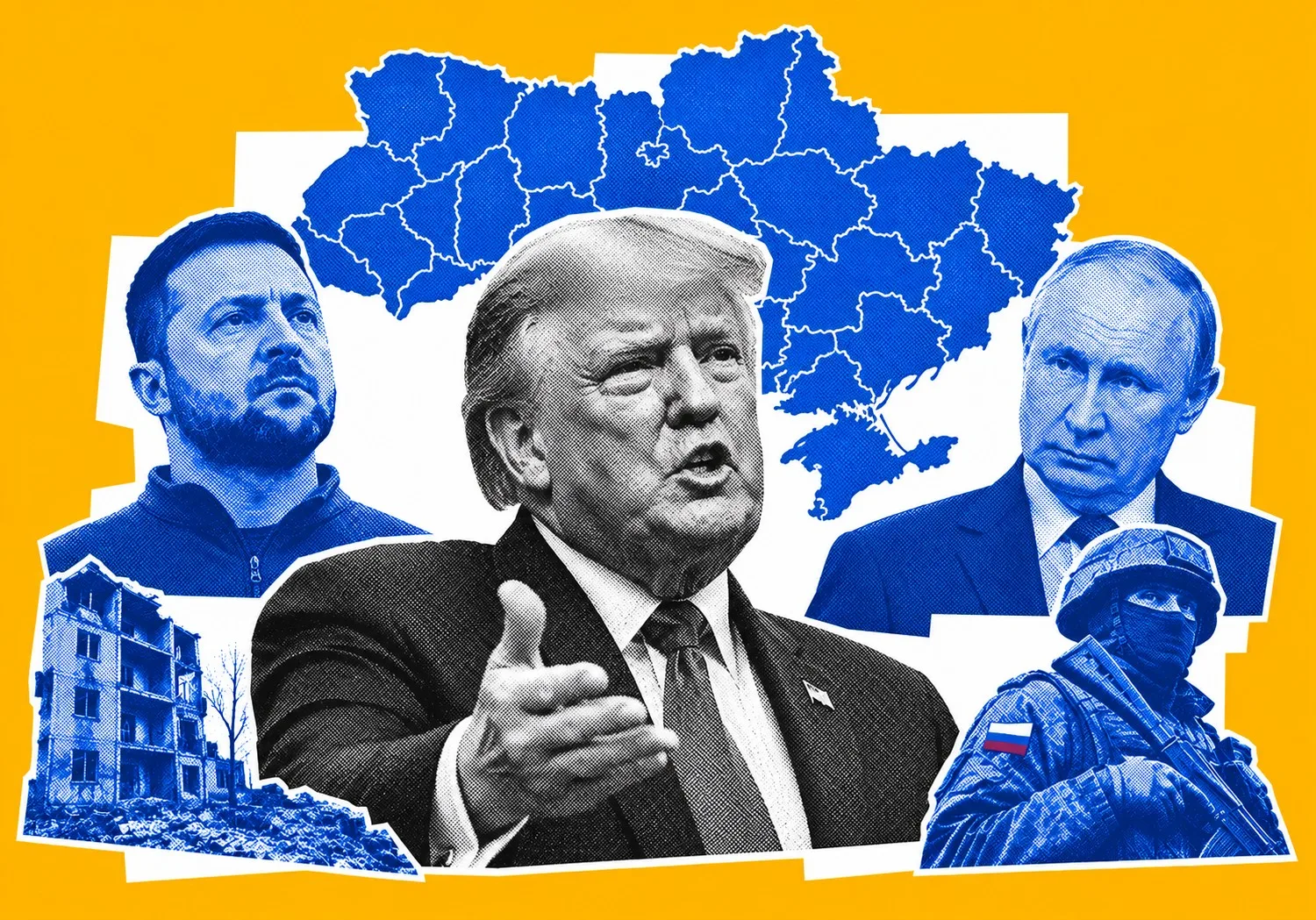
European governments are seeking greater influence over US-led Ukraine peace talks as G7 foreign ministers meet in Paris on Monday, ahead of negotiations between Kyiv, Moscow and Washington in Abu Dhabi on 10–11 November. Donald Trump has predicted that Ukraine could emerge from the war with altered borders and raised the prospect of a wider security agreement with Russia, fuelling European concerns about being sidelined.
US Secretary of State Marco Rubio has arrived in Paris on his first overseas trip since last week's midterm elections, in which Donald Trump's Republican Party suffered heavy losses and lost control of both houses of Congress.
The defeat has left Washington's allies wondering whether the administration might change course. Four G7 diplomats told Reuters that the meeting would provide an early opportunity to assess Trump's approach to Ukraine, the Middle East and transatlantic relations after the electoral setback.

The Democrats' gains could make it harder for the White House to secure funding for some of its priorities. But foreign policy remains largely under presidential control, and European diplomats see little reason to expect Trump to abandon his approach to international negotiations.
Rubio offered a reminder of the administration's difficulties before leaving Florida for Paris on Sunday. Asked about efforts to end the war with Iran, he acknowledged that diplomatic contacts had made little progress.
“I wouldn’t say we’re on the verge of a breakthrough,” he told reporters, accusing Tehran of making unrealistic demands. Trump would prefer a diplomatic solution, Rubio said, although that might not always be possible.
The Iran conflict has disrupted shipping through the Strait of Hormuz and pushed up energy prices. It has also become a contentious issue in American politics following the Republican election defeat.
Ukraine and Iran are among the main subjects of the two-day G7 meeting, attended by ministers from Britain, Canada, France, Germany, Italy, Japan and the United States, alongside EU representatives. Ukrainian Foreign Minister Andrii Sybiha is expected to join a dedicated session on Tuesday, focusing on military assistance, air defence and financial support.
The gathering comes as Washington prepares another attempt to broker an end to Russia's war in Ukraine. This time, the American initiative extends beyond a ceasefire or territorial settlement. Trump has begun speaking about an agreement that could affect the security of the entire European continent.
Trump sees a deal — and a different Ukraine
Trump has suggested that Ukraine will emerge from the war with different borders, although he has offered no details of the territorial changes he envisages.
In an interview with CBS's 60 Minutes, broadcast on Sunday, the American president was asked whether he expected the conflict to end with Ukraine remaining free and independent.
He predicted that Ukraine would have a “little bit different shape” after the war.
The remark came days before the next round of negotiations between Ukraine, Russia and the United States in Abu Dhabi. Trump again expressed confidence that the fighting could end soon and claimed that his involvement would make the difference.
He also suggested that personal hostility between Volodymyr Zelenskyy and Vladimir Putin was a major obstacle to peace. When asked whether the Russian president might be deliberately prolonging negotiations, Trump dismissed the possibility.
That assessment contrasts with the substantial differences between Kyiv and Moscow over territory, military capabilities and Ukraine's future relationship with NATO.
The president's latest remarks followed an announcement on 5 November, after he met Russian envoy Kirill Dmitriev at the White House.
Trump said Washington and Moscow could reach a “big, beautiful agreement” that might extend beyond Ukraine and involve all of Europe.
He gave no indication of what concessions Russia might offer or what commitments would be expected from European governments.
The announcement caught the attention of NATO allies, many of whom had not been briefed on the details of the proposed arrangements.
Some elements of Washington's approach emerged from consultations held in Brussels last week. American, Ukrainian, European and NATO representatives discussed possible post-war security guarantees and a broader framework intended to prevent renewed conflict.
Jared Kushner, one of Trump's principal negotiators, subsequently outlined five objectives: permanent security consultations, reliable crisis communications, greater military transparency, reciprocal measures to reduce the risk of escalation and a lasting framework for European security.
Kushner said the proposals would respect national sovereignty and territorial integrity. Countries would retain the right to choose their own alliances, with no other state able to exercise a veto. NATO would remain central to Europe's collective defence.
The principles appear compatible with positions long defended by European governments. Yet Washington has not explained how they would be enforced or whether Russia would accept them.
Several particularly sensitive questions remain unanswered. Would Ukraine receive binding American security guarantees? Could a future agreement place restrictions on NATO deployments? Would Moscow seek changes to European arms-control arrangements or the lifting of sanctions?
Nor has the administration disclosed whether the territorial issues raised by Trump form part of a proposal already presented to Kyiv.
Rubio sought to clarify the American position before travelling to Paris. He said negotiators had made progress in discussions about the security arrangements that Ukraine and the wider continent would need after the war.
Nothing had been finalised, however, and further advances might come in Abu Dhabi, he said.
The distinction between a proposed security framework and an agreed peace settlement matters. Trump has spoken confidently about an approaching deal, but Washington has not released a comprehensive document setting out its terms.
For European governments, the concern is that negotiations with Russia could begin to shape the continent's security arrangements before the countries expected to implement them have agreed to the terms.
Europe wants more than a seat at the table
The Abu Dhabi negotiations were initially organised as a trilateral process involving Washington, Kyiv and Moscow. European governments have now secured a role in accompanying discussions, although they will not be full participants in the main negotiating format.
According to the Financial Times, officials from France, Germany, Britain, the European Commission and NATO will join parts of the talks on 10–11 November.
Their immediate aim is to strengthen Ukraine's position and prevent Russia from using the negotiations to secure restrictions on Europe's defence arrangements.
French Foreign Minister Jean-Noël Barrot confirmed on Sunday that France would send a representative.
Speaking to RTL and Public Sénat, he said European governments had made their expectations clear to the American mediators. Discussions about the continent's future could not ignore the interests of those who would live with the consequences.
“No one will speak in our name,” Barrot said.
His announcement followed objections from Moscow, which had insisted that the talks should remain limited to Ukraine, Russia and the United States.
The European role has therefore changed, but its limits remain unclear. Officials will be present for consultations, without necessarily having a say in every stage of the negotiations.
That creates a practical problem for Washington. The United States can negotiate its own security commitments, but it cannot independently decide where NATO members deploy their forces or make binding promises about EU sanctions and European defence spending.
Europe, meanwhile, has struggled to agree on who should represent it.
Italian Prime Minister Giorgia Meloni addressed the issue in a letter to European Council President António Costa last week. She warned that overlapping national diplomatic initiatives were weakening the continent's credibility and called for a single representative with a clear negotiating mandate.
Meloni wants EU leaders to discuss the proposal at their informal meeting in Dublin on 13 November. A formal decision could follow at the December European Council, after consultations with Britain, Norway and other European partners.
The proposal has exposed a tension between Europe's determination to influence the talks and the difficulty of coordinating its own governments. NATO, the European Commission and individual countries have different powers, while states bordering Russia are particularly sensitive to any discussion of military restrictions.
Polish Foreign Minister Radosław Sikorski has warned that an agreement concerning Europe's security reached without European governments would be impossible to implement.
The concern goes back to the period immediately before Russia's full-scale invasion.
In December 2021, Moscow demanded sweeping restrictions on NATO's military activities and future enlargement. It also called for allied deployments to be rolled back to the positions held before 1997, when many countries in eastern Europe had yet to join the alliance.
Such restrictions would directly affect Poland, the Baltic states and other NATO members along Russia's western borders.
The alliance rejected the proposals. Its position was that sovereign states must remain free to choose their security arrangements and that Moscow had no authority to determine NATO membership or deployments.
Russian officials have recently returned to arguments about the need to address what they describe as the underlying causes of the conflict. Kremlin foreign-policy adviser Yuri Ushakov has again referred to NATO's pre-1997 military posture, according to Radio Free Europe/Radio Liberty.
That prospect has drawn a firm response from Brussels.
Speaking in Warsaw on Friday, EU foreign policy chief Kaja Kallas argued that Europe already had established security institutions, including NATO and the European Union. The problem, she said, was Russia's repeated violation of the agreements underpinning European security.
“Putin does not have a veto over European security,” Kallas said.
She also insisted that Ukraine should be integrated into the continent's existing security arrangements rather than treated as a separate question to be settled between Washington and Moscow.
Sikorski supported that position, while Ukrainian Foreign Minister Sybiha warned against creating new spheres of influence in Europe.
European officials are not ruling out talks with Russia about preventing future military confrontation. But they reject the idea that Moscow should be able to dictate the defence choices of NATO members or determine Ukraine's place in the European security system.
Barrot has acknowledged that he does not know precisely what Trump envisages. With the American president speaking about a deal that could extend across Europe, France and its partners want to establish the boundaries of the negotiations before any commitments are made.
Kyiv warns against another Yalta
Zelenskyy has his own concerns about the order in which Washington is pursuing a settlement.
In an interview with CNN on Friday, the Ukrainian president said he had not received all the details of Trump's proposed European security framework. He warned that negotiating a new arrangement between Russia and Europe before ending the war in Ukraine could be dangerous.
Zelenskyy invoked the possibility of “Yalta 2.0”, a reference to the February 1945 conference at which the leaders of the United States, Britain and the Soviet Union discussed the shape of post-war Europe.
For Kyiv, the historical comparison carries a warning about major powers negotiating the future of smaller countries without their meaningful participation.
Zelenskyy wants the talks to follow a different order. The first task should be to agree on how to end the fighting. The next should be to establish credible security guarantees for Ukraine. Only then, he argues, should the parties consider wider arrangements involving Russia and European security.
Moscow wants a comprehensive settlement before agreeing to a ceasefire, while Ukraine favours an immediate halt to hostilities as a starting point for negotiations.
The territorial dispute remains particularly difficult.
Putin has repeatedly demanded that Ukraine withdraw from the remaining areas of four regions that Russia claims to have annexed, despite never having established full control over them.
The Kremlin also wants Ukraine to abandon its NATO ambitions and accept restrictions on its armed forces.
Kyiv rejects surrendering territory that Russian troops have failed to capture. It argues that any settlement leaving Ukraine militarily weaker, without reliable protection from its partners, could expose the country to another invasion.
There is no agreement on what those guarantees should look like.
Zelenskyy wants commitments comparable in strength to NATO's collective-defence provisions, with clear obligations for Ukraine's partners if Russia launches another attack.
France and Britain have discussed the possibility of an international military presence after the war. Moscow opposes the deployment of foreign forces in Ukraine, and no agreement has been reached on their mandate, size or location.
These disagreements have frustrated previous attempts at American mediation.
The Abu Dhabi meeting will be the first trilateral negotiating round since February, following an interruption as Washington became increasingly occupied with the war involving Iran.
Russia is sending a delegation that includes senior military and diplomatic officials. Kremlin aide Vladimir Medinsky will lead the team, joined by Deputy Foreign Ministers Sergei Ryabkov and Mikhail Galuzin and military intelligence chief Igor Kostyukov.
Ryabkov's participation is especially notable because he oversees relations with the United States and arms-control issues. He was also closely involved in Moscow's earlier demands for changes to NATO's security arrangements.
Ukraine's delegation is expected to be led by Rustem Umerov, head of the country's Foreign Intelligence Service, alongside senior presidential officials.
The Institute for the Study of War has drawn attention to the Russian delegation's composition, noting that several members have previously reiterated the Kremlin's extensive demands during negotiations.
Their presence suggests that wider security questions may be discussed in Abu Dhabi. It does not establish that Moscow is ready to compromise over territory or Ukraine's future defence arrangements.
Who would guarantee the peace?
The question of security guarantees is closely linked to Europe's military and financial role in Ukraine.
European governments have taken on a growing share of the cost of supporting Kyiv, but several critical capabilities remain dependent on American equipment and production.
Air defence is an immediate concern.
According to diplomats cited by Reuters, Russia has intensified attacks on Ukraine's energy infrastructure ahead of winter. Kyiv is seeking additional Patriot interceptors and other equipment to protect cities, power stations and essential services.
The G7 meeting in Paris is expected to address military, financial and energy assistance, with a separate session devoted to Ukraine on Tuesday.
Such support would still be needed after a ceasefire. An end to active fighting would not automatically protect Ukraine from another Russian attack, particularly if Moscow retained substantial military forces near the border.
Any credible security arrangement would therefore need to specify which countries would provide weapons, intelligence and other assistance, and how they would respond if Russia broke the terms of a settlement.
Washington's willingness to make binding commitments is especially important because European governments cannot readily replace every American military capability on which Ukraine depends.
There is also the cost of rebuilding the country.
A joint assessment by the Ukrainian government, the World Bank, the European Commission and the United Nations estimated Ukraine's recovery and reconstruction needs at almost $588 billion over ten years, based on damage recorded by the end of 2025.
European institutions would be central to financing that recovery and connecting reconstruction with Ukraine's integration into the EU.
Last week, representatives from Ukraine, the United States, Britain, France, Germany and European institutions held further consultations on post-war investment and recovery.
The discussions covered financing mechanisms, reconstruction priorities and ways to attract private investment.
These commitments give European governments a direct stake in the outcome of the peace process. They would be expected to help finance Ukraine's recovery, sustain its defence capabilities and, potentially, contribute personnel to a post-war security arrangement.
The negotiations in Abu Dhabi will bring those questions closer to the diplomatic table.
American envoys Steve Witkoff and Kushner are expected to meet the Ukrainian and Russian delegations, while European representatives take part in accompanying consultations.
Trump has predicted that an agreement could come soon. Yet the positions disclosed by Kyiv and Moscow remain far apart, particularly over territory, military restrictions and the guarantees Ukraine would receive.
The first indication of meaningful progress will be whether negotiators can move from broad security proposals to specific terms for ending the fighting — and establish which countries would be prepared to guarantee that an agreement holds.
Sources: Reuters, AP, CBS News,Euronews, Finantial Times, World Banc Group