
Trump’s Russian Diesel Deal Sparks Backlash from EU Allies

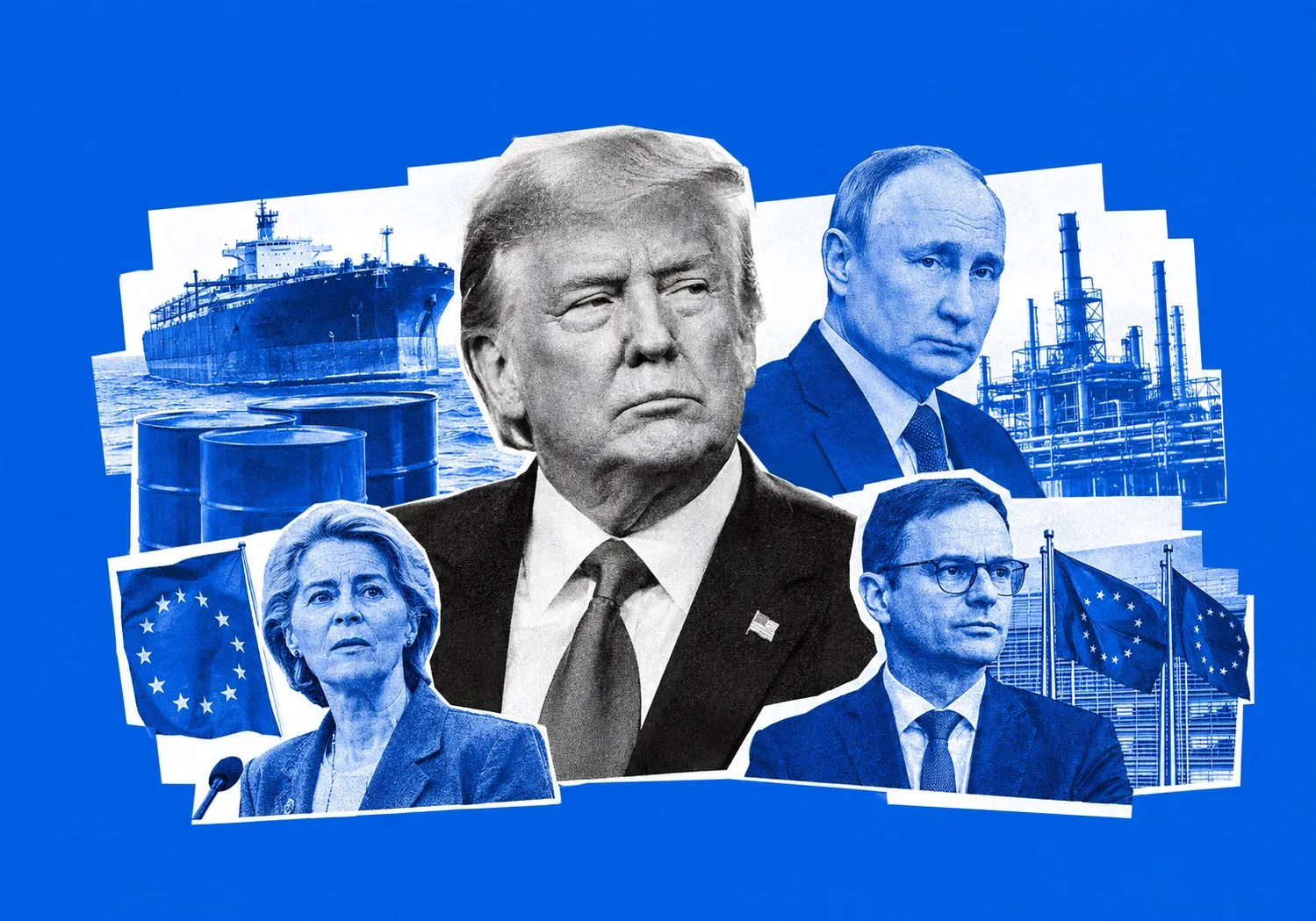
Donald Trump’s decision to reopen US markets to Russian diesel has triggered severe pushback from European allies and Kyiv. Agreed during Miami talks on October 10–11, the move breaks a unified Western sanctions policy, leaving Europe to defend energy restrictions against Moscow on its own.
Under the announced terms, Russia will supply 300,000 tonnes of diesel immediately, followed by 500,000 tonnes in November and an estimated one million tonnes thereafter. A US Treasury licence will facilitate the imports.
For the Kremlin, the arrangement offers something beyond an additional export market. It shows that Washington is prepared to ease economic pressure without first securing a Russian commitment to stop fighting.
Cheaper fuel, at what cost?
The White House is betting that access to Russian diesel will help ease pressure on American consumers. With the midterms approaching, fuel prices offer Trump a straightforward domestic political argument: if sanctions contribute to higher costs, relaxing them can be presented as a matter of economic common sense.
But the promised shipments do not, on their own, establish how much Americans will save at the pump. The announcement provides no figures on the expected retail price reduction, and the volumes involved are not enough to calculate the effect on the wider fuel market without further information.
The political benefits for Trump are easier to identify than the economic ones. He can point to a new supply arrangement and argue that he is putting American consumers first. The strategic cost, meanwhile, falls partly on Ukraine and its European partners.
Since 2022, restrictions on Russian energy exports have been a central part of the Western effort to limit Moscow’s ability to finance its war. Allowing Russian diesel back into the US market weakens that approach, even if Washington presents the decision as a limited commercial measure.
There is a further complication. Ukrainian attacks on Russian refineries have put pressure on the country’s refining capacity, disrupted exports and strained domestic fuel markets. Kyiv regards these operations as a way to damage the infrastructure supporting Russia’s military campaign. Trump is now treating the same attacks as a threat to American economic interests.
The disagreement is no longer simply about how far Ukraine should go in targeting Russian infrastructure. It is about whose priorities determine Western policy towards the war.
Moscow gets relief without offering peace
The Kremlin has given Washington little reason to portray the agreement as a breakthrough in diplomacy. Dmitry Peskov confirmed the diesel deal but said there would be no immediate resumption of peace talks.
That leaves Russia with an economic concession and no corresponding commitment to de-escalation.
President Volodymyr Zelenskyy called the arrangement a “birthday gift to Putin”, arguing that easing sanctions would help prolong the war. His criticism came as Russian forces launched heavy attacks on Ukrainian cities, including Zaporizhzhia, using glide bombs, Shahed drones and ballistic missiles.
The timing is politically damaging for Washington. The administration is arguing that Ukrainian strikes on Russian oil infrastructure threaten fuel supplies, while Russia continues to attack Ukrainian cities. For Kyiv, accepting restrictions on its military operations while Moscow faces fewer economic constraints would mean fighting under increasingly unequal conditions.
The financial consequences of the diesel deal remain difficult to quantify. The announced shipments do not establish how much additional revenue Russia will receive or how much of it could be directed towards military procurement. Nor is there enough information to link the agreement directly to the scale of Russian air attacks.
Still, energy exports remain an important source of income for the Russian economy. Access to another market can help Moscow offset some of the pressure created by Western restrictions, even if the precise benefit depends on prices, costs and the terms of the arrangement.
There is also a diplomatic advantage. Russia has secured an agreement with the US without making progress on negotiations. That may reinforce the Kremlin’s belief that it can pursue separate economic deals with Washington while keeping its military objectives unchanged.
Trump’s criticism puts Zelenskyy under pressure
The energy agreement was accompanied by a direct intervention in Ukrainian politics. Trump claimed that Zelenskyy had repeatedly had opportunities to settle the war and declared that Ukraine needed a new president. Elon Musk publicly echoed the call for a change in Ukrainian leadership.
For Kyiv, the combination of economic concessions to Moscow and criticism of its president creates a problem that extends beyond the immediate dispute over sanctions.
Ukraine depends on external support to sustain its defence. A deterioration in relations with Washington could therefore affect not only diplomatic negotiations but also the broader political environment in which military assistance is secured. The briefing does not establish that the diesel agreement itself will change the level of American military support, but the public pressure on Zelenskyy adds to the uncertainty surrounding the relationship.
Trump’s intervention also blurs the distinction between seeking an end to the war and demanding political changes from the country under attack. His remarks do not amount to a formal mechanism for replacing Ukraine’s president, but they place the US administration openly at odds with Kyiv’s leadership.
The disagreement over Russian refineries exposes the underlying divide. Ukraine sees attacks on oil infrastructure as a way to impose costs on an adversary that continues to bombard its cities. Trump has linked those operations to American fuel prices and the interests of domestic industries.
For Kyiv, the concern is that decisions central to its defence will increasingly be judged according to their economic and electoral consequences in the United States.
Europe is left to defend the sanctions policy
European institutions have reacted with alarm. EU foreign policy chief Kaja Kallas and the European Commission have condemned the easing of restrictions, warning that it gives Russia additional resources to sustain its war. Germany, under Chancellor Friedrich Merz, has said it will maintain sanctions and refuse Russian fuel.
British Prime Minister Andy Burnex has held urgent talks with Zelenskyy and pledged stronger sanctions against Russia alongside diplomatic support for Ukraine.
These responses suggest that Europe intends to preserve pressure on Moscow even as Washington changes course. But maintaining that position will require more than statements of opposition. European governments must be prepared to carry the economic and security costs of a policy that the US administration is no longer treating as a shared priority.
The immediate problem is coordination. Sanctions work partly by restricting the markets and revenues available to the target country. When one of the coalition’s largest economies makes an exception, the collective policy becomes harder to sustain. Russia gains a commercial opportunity, but it also gains evidence that Western governments disagree over how much economic pressure Moscow should face.
Germany’s refusal to resume Russian fuel imports provides a clear contrast with Washington. British support offers Kyiv another diplomatic partner. Neither, however, removes the uncertainty created by the shift in American policy.
The longer-term question is whether Europe can sustain its approach to Russia with less predictable support from the United States. That means greater responsibility for defence, closer coordination among European partners and the capacity to maintain economic restrictions even when they conflict with short-term commercial interests.
The divide is particularly uncomfortable because Europe cannot insulate itself from American decisions. Washington’s policy affects the wider sanctions coalition, the political standing of Ukraine and the credibility of Western commitments to European security.
A legal dispute with wider consequences
Trump’s decision has also drawn criticism in Washington. Democratic figures including Senate Minority Leader Chuck Schumer, Senator Jeanne Shaheen and Senator Elizabeth Warren have denounced the agreement. Former vice-president Mike Pence has also criticised the move, bringing objections from outside the Democratic Party.
Their concerns include US law, national security and the country’s relations with European allies.
The legal mechanism behind the agreement remains an important unanswered question. The sanctions imposed after Russia’s 2022 invasion included congressional restrictions on Russian petroleum imports, while the new arrangement relies on a Treasury licence. The available details do not establish the precise statutory authority for the licence or explain how the administration intends to reconcile the arrangement with the existing restrictions.
That distinction matters. A clearly defined, limited exception would have different implications from a broader attempt to bypass restrictions established by Congress. Without further detail, it is difficult to assess the legal durability of the deal or whether it could become a model for additional exemptions.
Bipartisan criticism may increase the political cost for the White House, but it has not prevented the announcement from creating a new problem for European governments. They must now decide how to maintain sanctions pressure when Washington is prepared to make its own economic calculations.
The immediate dispute concerns diesel. The larger issue is whether the Western response to Russia’s invasion can survive a change in American priorities.
For Moscow, the agreement offers a chance to earn additional revenue without making concessions at the negotiating table. For Kyiv, it raises the prospect of continued Russian attacks alongside growing pressure from its most important historic ally. For Europe, it creates a test of whether the sanctions regime can remain credible when the United States is willing to trade part of its leverage over Russia for relief from domestic economic pressures.
Read also:
- Donald Trump’s agreement with Vladimir Putin to bring Russian diesel into US and global markets marks a sharp reversal in Washington’s policy towards Moscow. Presented as a response to soaring fuel costs, the decision risks weakening sanctions pressure on Russia, complicating transatlantic coordination and raising questions about the balance between domestic economic priorities and support for Ukraine.
Sources: BBC, The Washington Post, The Hill, The Kyiv Independent, DW