
Trump’s Russian Diesel Deal Sparks Backlash in Europe and Fractures Western Sanctions

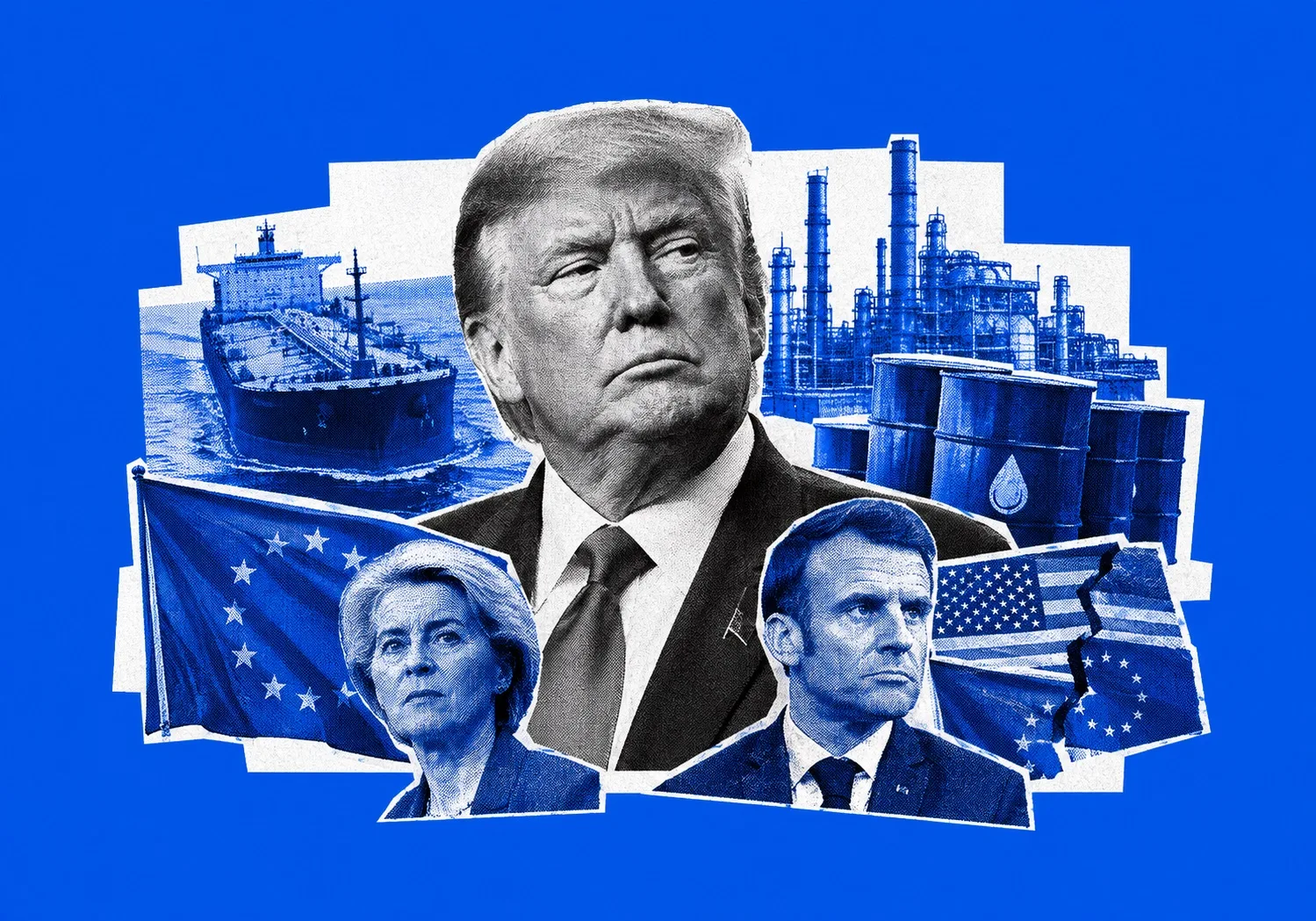
Donald Trump’s agreement to buy 1.8 million tonnes of Russian diesel to ease US gas prices has triggered severe backlash from European allies and exposed a dangerous rift within NATO. While Washington seeks immediate relief ahead of the midterm elections, European leaders warn the move directly undermines global sanctions and risks funding Moscow’s war against Ukraine.
The commercial arrangement came with a political demand. Trump declared an “ENERGY CEASEFIRE” between Russia and Ukraine, calling on both sides to stop attacks on energy infrastructure. But his public message was directed particularly at Kyiv. He warned Volodymyr Zelensky to stop striking Russian oil facilities and suggested Ukraine needed a different leader capable of making a deal.
For European governments, the problem is not difficult to identify. Russia launched the war against Ukraine, yet Washington is now asking the Ukrainian government to restrain its attacks while arranging a purchase that would bring Russian fuel revenues back into the American market.
Moscow gets more than a customer
The agreement offers Putin something that cannot be measured in tonnes alone. Russia has spent years facing restrictions designed to limit its energy income and reduce its ability to finance the war. A direct deal with the US administration would give Moscow a commercial opening in a market from which Western sanctions have sought to exclude it.
There is also a military dimension. Ukrainian attacks on Russian oil infrastructure put pressure on facilities that support the country's energy exports and, indirectly, its war effort. A halt to those operations would remove one source of pressure on Moscow.
Russia, meanwhile, has shown little sign of accepting the ceasefire on the terms Trump announced. Russian forces struck a power plant in Kyiv shortly after the declaration, then attacked energy infrastructure in the Kharkiv region. At least three people, including a child, were killed in the Kharkiv attacks.
The timing makes it difficult to see how a unilateral announcement could provide a workable basis for de-escalation. Kyiv was not part of the initial arrangement, and the subsequent strikes demonstrated that Washington's declaration was no guarantee of Russian restraint.
Zelensky initially said the ceasefire announcement was news to him and called the fuel deal a gift to Putin. He later said Ukraine was prepared to support a 60-day ceasefire if Russia agreed to the same terms and observed them. He also indicated that elections could be organised under those conditions.
That leaves a potential diplomatic opening, but not an agreement. Ukraine is offering conditional participation in a ceasefire; Washington has already announced one without securing reciprocal commitments from Moscow.
A sanctions policy with two sets of rules?
The deal is also provoking a fight in Washington. Congress recently passed the Graham Act, giving the White House authority to impose tariffs of up to 100 per cent on major purchasers of Russian oil and gas. The legislation was intended to increase the cost of buying Russian energy, including for countries such as China and India.
Now the administration wants to buy Russian fuel itself.
The precise legal position remains unclear. The available details do not establish whether the proposed imports would breach the Graham Act's provisions, rely on a specific exemption, or proceed under another legal authority. The fact that Congress authorised tariffs against third-country buyers does not, on its own, settle the legality of a US purchase.
Politically, however, the contradiction is harder to avoid. Washington is asking other countries to accept the costs of restricting Russian energy while seeking access to the same supplies when American consumers face higher prices.
Several Republican senators, including Tom Tillis, Susan Collins, Lisa Murkowski and John Curtis, have joined Democrat Jeanne Shaheen in urging the administration to reverse course. They argue that the agreement conflicts with sanctions law. Former vice president Mike Pence has called it a betrayal of the legacy of the late Senator Lindsey Graham, whose name the legislation bears.
Senate Majority Leader John Barrasso has defended the deal as a necessary response to inflation.
The split is revealing. One side sees cheaper fuel as an immediate domestic priority; the other argues that restrictions on Russian energy cannot remain credible if Washington abandons them whenever the economic pressure becomes politically costly.
Sanctions depend on more than the formal wording of legislation. They also depend on the expectation that governments enforcing them will not quietly change direction when circumstances become difficult. If the US makes an exception for itself, other buyers have a reason to question why they should continue to bear the costs.
Britain refuses to follow Washington
The strongest response has come from the UK, where the agreement has drawn criticism across party lines.
Boris Johnson, the former prime minister who visited Kyiv shortly after Russia's full-scale invasion in 2022, called the deal “sickening” and “outrageous”. He accused the White House of making American drivers bankroll Russia's war and called on the Royal Navy to intercept Russian fuel tankers passing through the English Channel.
Conservative leader Kemi Badenoch has also criticised Trump's decision to ease pressure on Moscow. Defence Secretary Wes Streeting has reiterated Britain's support for sanctions and said London is trying to bring Washington and Kyiv back together. Prime Minister Andy Burnham has spoken to Zelensky to express Britain's solidarity and arrange further meetings.
Britain has already sanctioned nearly 600 vessels associated with Russia's shadow fleet, which helps Moscow circumvent restrictions on its oil exports. The government therefore has an established role in maritime enforcement, but Johnson's proposal would represent a far more confrontational step.
Sanctioning a vessel and intercepting it are not the same thing. Any attempt to board or seize a tanker would require a clear legal basis, taking account of the ship's status and the circumstances of its passage. Johnson's demand does not establish that such authority exists in every case, nor does it amount to a commitment by the British government to carry out interceptions.
Still, the fact that a former British prime minister is openly calling for naval action against shipments linked to a US-Russian agreement illustrates how far the dispute has travelled. What began as an attempt to address American fuel prices now threatens to become a disagreement over the enforcement of sanctions between two NATO allies.
Europe's problem is bigger than diesel
Britain can maintain its own restrictions, support Ukraine and work with European partners to limit Russia's energy revenues. What it cannot easily replace is consistent American backing.
That matters beyond the immediate transaction. The US remains central to Western security coordination, while Ukraine depends on continued cooperation with Washington. Concerns have already emerged over the possibility of a US intelligence-sharing cutoff, adding another source of uncertainty to Kyiv's calculations.
The White House's approach puts Ukraine in a difficult position. Continuing attacks on Russian refining facilities may preserve pressure on Moscow, but doing so against Trump's explicit demands could further strain relations with Washington. Complying without a credible Russian commitment, on the other hand, would risk surrendering leverage without securing a lasting reduction in attacks on Ukrainian infrastructure.
European governments face a related choice. They can continue enforcing sanctions even if US policy diverges, but the effectiveness of that effort becomes harder to sustain when Washington offers Russia a route back into Western energy markets.
For Putin, the immediate gain is both financial and diplomatic. For Trump, the calculation is more immediate: more fuel supply may help ease pressure on American consumers before the elections. The longer-term costs are less easily contained.
The US administration is treating access to Russian diesel as a response to a domestic economic problem. Its European allies must consider what that decision means for the credibility of sanctions, the security of Ukraine and their own ability to act collectively.
If Washington is prepared to make Russian energy acceptable when American prices demand it, London and other European capitals may have to enforce a policy that the United States itself is no longer willing to uphold.
Sources: BBC, The Daily Mail, Unilad