
Russia Continues Strikes on Ukraine Despite Trump’s Energy Truce Announcement

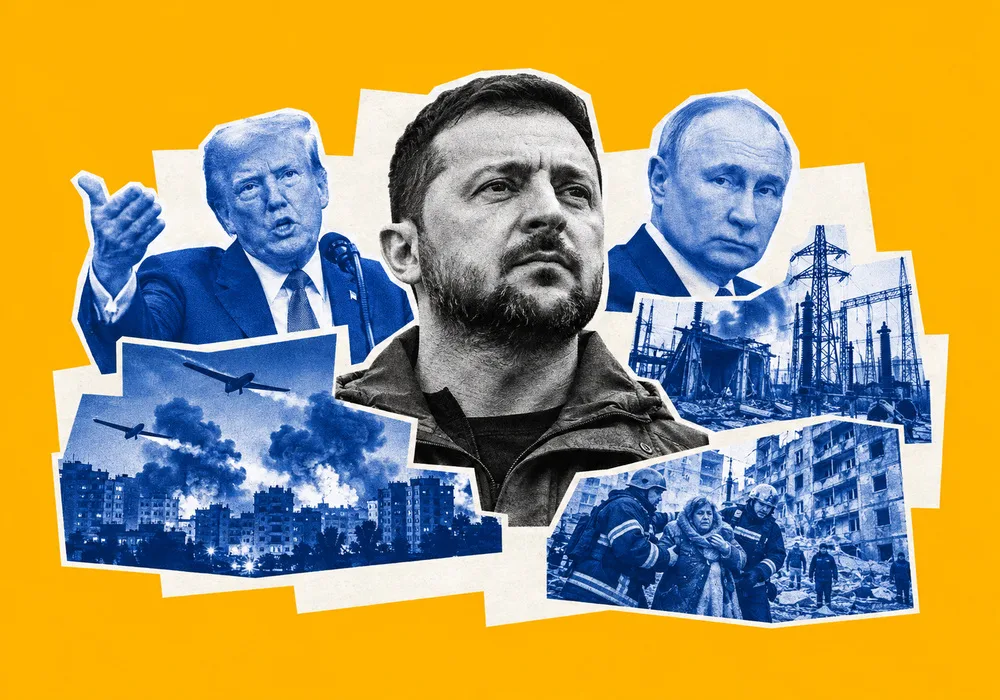
Russia continued striking Ukrainian energy infrastructure and residential areas after Donald Trump announced an energy ceasefire. The failure to establish clear terms has exposed divisions between Washington and European capitals over sanctions, military support for Kyiv and the prospects for meaningful de-escalation.
Russia has continued attacking Ukraine’s energy infrastructure and residential areas despite US President Donald Trump’s announcement that Moscow and Kyiv had agreed to an immediate ceasefire targeting energy facilities. The lack of a confirmed agreement from the Kremlin, combined with further Russian strikes, has raised doubts about Washington’s ability to secure even a limited de-escalation.
The announcement has also exposed growing differences between the United States and its European allies over how to deal with Russia. While Washington has presented the proposed truce as a diplomatic breakthrough, Kyiv says it was not consulted before the announcement, and European governments have signalled that they are not prepared to abandon sanctions pressure on Moscow.

Energy Infrastructure Remains Under Attack
On Monday, 12 October, Ukrainian President Volodymyr Zelenskyy said Russian forces had attacked at least six energy facilities across Ukraine. The targets reportedly included a gas facility and a petrol station, while strikes also damaged infrastructure in Kyiv and Kharkiv.
The attacks came after Trump announced over the weekend that Russia and Ukraine had agreed to stop targeting each other’s energy infrastructure. His declaration offered few details about the terms, implementation or monitoring of the proposed arrangement. Neither Moscow nor Kyiv had publicly confirmed a fully defined agreement before the attacks continued.
Zelenskyy said Ukraine remained ready to observe an energy ceasefire but insisted that Russia must demonstrate a genuine willingness to halt its attacks. He called on Washington to use its influence to secure compliance, arguing that the United States had the means to make a meaningful de-escalation possible.
Moscow, however, has not clearly confirmed that it has accepted the proposed terms. Kremlin spokesperson Dmitry Peskov said contacts were ongoing without providing a definitive commitment to stop attacks on energy targets.
The distinction between a public announcement and an operational agreement is significant. A ceasefire requires more than political statements: both sides need clarity over which facilities are covered, when restrictions take effect and how violations are identified. Without those elements, the declaration offers little immediate protection to Ukraine’s energy system or civilian population.
Civilian Areas Remain Vulnerable
The continued attacks have also demonstrated that the threat extends beyond power plants and other energy facilities. Russian strikes on residential areas have caused further casualties, including in Kyiv, where a high-rise apartment building in the Darnytskyi district was hit by a drone on Monday night.
The combination of attacks on civilian areas and energy infrastructure complicates the prospects for a limited ceasefire. Even if restrictions on energy targets were eventually implemented, their practical value would depend on whether they were respected and whether the wider pattern of Russian attacks changed.
For Ukraine, damage to energy facilities carries consequences beyond immediate outages. Electricity and gas supplies are essential to homes, hospitals, industry and municipal services, while repeated strikes increase the cost and complexity of repairs. Sustained pressure on the energy system also leaves the country more exposed as it prepares for colder weather.
A ceasefire limited to energy infrastructure could reduce some of these risks, but only if it were implemented consistently. The latest attacks have instead left Kyiv questioning whether the announcement has produced any tangible change on the ground.
Europe Rejects a Shift Away from Sanctions
The uncertainty surrounding the truce has coincided with renewed friction between Washington and European capitals over the broader approach to Russia. Trump’s announcement came alongside a reported agreement involving Russian diesel imports, prompting concerns that the United States could ease economic pressure on Moscow while European governments continue to support Ukraine.
French President Emmanuel Macron said there was no factual basis for changing Europe’s position. German Chancellor Friedrich Merz likewise rejected the prospect of following the US approach, arguing that Russia would negotiate seriously only under sustained pressure. His position reflects a wider European concern that economic concessions could strengthen Moscow’s ability to finance its war against Ukraine.
EU foreign ministers reaffirmed that sanctions would remain central to the bloc’s policy. The European Union also announced additional restrictive measures covering 1,600 people and entities, reinforcing its position despite the growing divergence between Washington and Brussels.
The disagreement goes beyond the immediate question of energy supplies. European governments must weigh the importance of maintaining cooperation with the United States against the risk that unilateral American decisions could undermine the sanctions framework they have built since Russia’s full-scale invasion in 2022.
For European leaders, openly breaking with Washington could weaken their influence over negotiations concerning Ukraine’s future. Yet accepting a policy that provides economic benefits to Moscow without verifiable concessions would create its own political and strategic costs.
Pressure on Kyiv Raises Wider Security Concerns
The proposed ceasefire has emerged amid signs of increasing pressure on the Ukrainian government. US media reports have indicated that American officials discussed the possibility of restricting Ukraine’s access to US intelligence and suspending weapons deliveries through the NATO procurement mechanism known as PURL during talks in Miami.
Neither measure was presented as an implemented policy in the reporting surrounding the discussions. Nevertheless, the possibility of such restrictions highlights Ukraine’s vulnerability to changes in Washington’s political calculations.
US intelligence remains important for identifying Russian missile launch sites and supporting Ukraine’s air-defence operations. Meanwhile, the PURL mechanism provides a channel for NATO allies to finance the procurement of American weapons for Ukraine. Any disruption could therefore affect both Kyiv’s ability to anticipate attacks and its capacity to sustain military operations.
These developments also place European governments in a difficult position. Although European countries have increased their military and financial support for Ukraine, replacing all American intelligence capabilities and weapons supplies would be difficult, costly and time-consuming.
The uncertainty surrounding US policy consequently affects more than the immediate prospects for a ceasefire. It raises questions about the long-term reliability of Ukraine’s security arrangements and the extent to which Europe can compensate for a reduction in American support.
A Ceasefire Without Enforcement Guarantees
Trump’s announcement has not yet established a reliable mechanism for protecting Ukraine’s energy infrastructure. Russia’s continued strikes, the Kremlin’s lack of a clear public commitment and the absence of publicly defined implementation arrangements leave the proposed truce without demonstrated effectiveness.
For Kyiv, the immediate priority remains stopping attacks rather than securing a declaration of intent. For European governments, the challenge is to preserve transatlantic cooperation without allowing diplomatic announcements to substitute for verifiable changes in Russian behaviour.
The episode also illustrates the limits of a ceasefire negotiated without clear participation from the parties expected to observe it. Unless Russia confirms the terms and demonstrates compliance, the announcement risks remaining a political claim rather than an operational agreement.
Europe’s response is therefore likely to remain centred on supporting Ukraine and maintaining pressure on Moscow while continuing engagement with Washington. The central question is not whether an energy truce has been announced, but whether it can be translated into a sustained reduction in attacks and a credible basis for wider negotiations.
Sources: President of Ukraine, Radio Free Europe/Radio Liberty