
Russian Diesel Tankers Turn Away from US

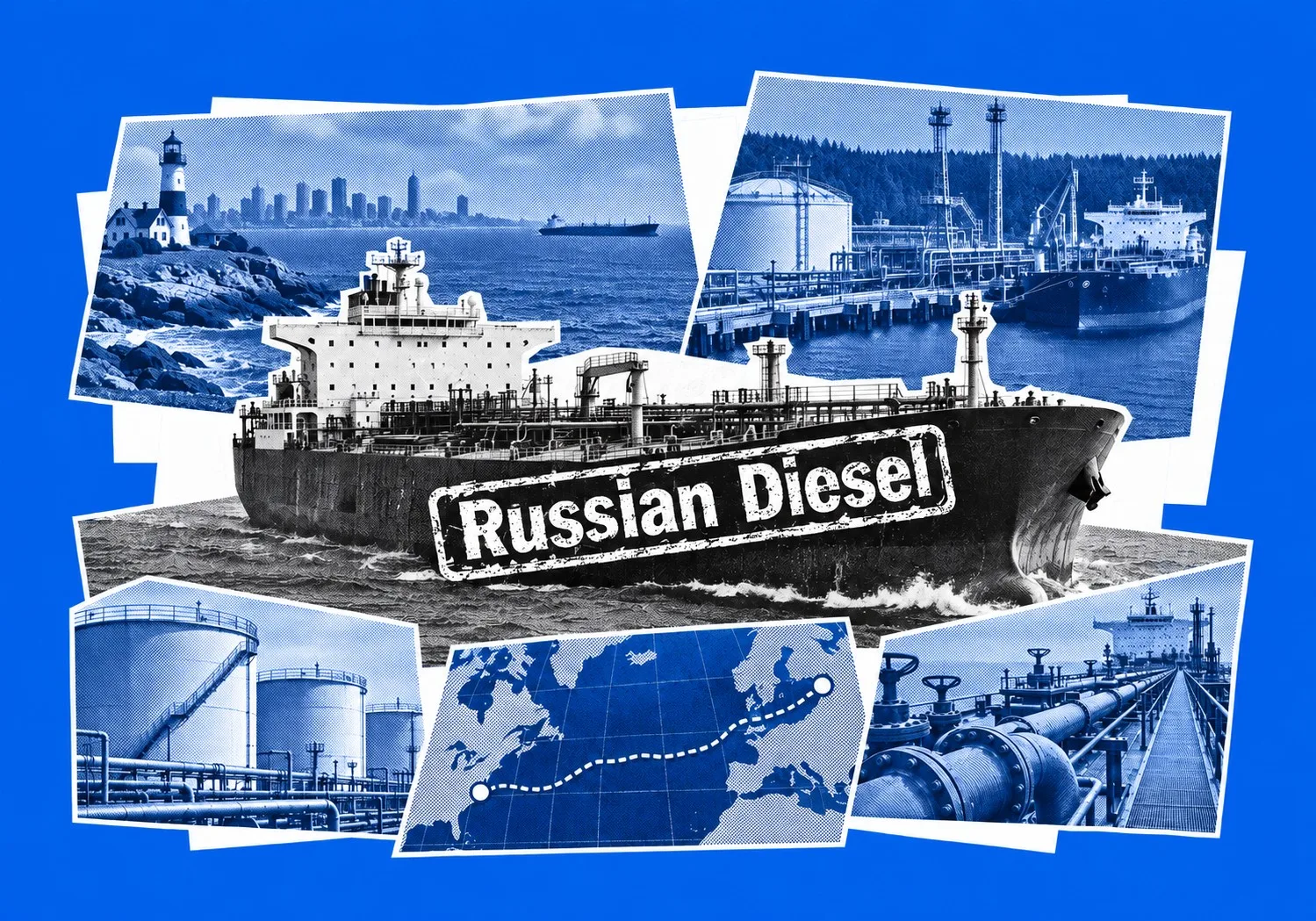
A third tanker carrying Russian diesel has turned away from the US coast about 740 kilometres from New York, after two earlier vessels abandoned their American routes — one heading towards Brazil and the other entering the Mediterranean. None has delivered its cargo to the United States, raising doubts about Donald Trump’s fuel agreement with Vladimir Putin as potential buyers face warnings over legal risks.

The Malta-flagged Agioi Fanendes, carrying 40,000 tonnes of ultra-low-sulphur diesel, began moving away from the US East Coast after repeatedly changing direction, Bloomberg reported on Tuesday, 10 November, citing port documents and vessel-tracking data.
The tanker loaded its cargo at Russia’s Baltic port of Primorsk on 22 October and was expected to arrive in New York on 7 November. Instead, it changed its declared destination to “for orders”. Its Greece-based manager, Eastern Mediterranean Maritime, told Reuters that the vessel was still awaiting instructions because no unloading port had been confirmed.
The reasons for the changes in course have not been established.
Tankers regularly change destinations during commercial negotiations, but the absence of confirmed US deliveries comes amid growing resistance to Trump's decision to allow Russian diesel imports.
Matt Smith, an analyst at shipping intelligence company Kpler, told the Associated Press that it remained unclear whether the shipments had secured American buyers. He cited regulatory and sanctions concerns as possible reasons for traders' reluctance to receive the fuel.
Why Buyers Are Hesitating
The legal dispute dates back to April 2022, when Congress adopted the Ending Importation of Russian Oil Act following Moscow's full-scale invasion of Ukraine. The legislation prohibits imports of Russian oil and petroleum products, including diesel.
On 9 October, the US Treasury's Office of Foreign Assets Control issued General Licence 135, temporarily authorising transactions involving the sale, delivery, unloading and importation of Russian diesel. The exemption remains valid until 7 April 2027.
New Jersey Governor Mikie Sherrill challenged the decision in a letter to port and terminal operators dated 2 November, warning that accepting Russian fuel could violate federal law.
She argued that the Treasury licence conflicts with the 2022 legislation, which does not give the administration unrestricted authority to suspend the import ban.
Under the law, Sherrill said, the prohibition can be lifted only after the president certifies that Russia has met specified conditions, including agreeing to withdraw its forces from Ukraine. No such certification has been issued.
The governor also questioned whether the Treasury had complied with requirements for congressional review of licensing decisions that substantially change American policy towards Russia.
Sherrill cited federal customs legislation allowing penalties equal to the value of goods imported unlawfully. For a tanker carrying tens of thousands of tonnes of diesel, potential liability could run into millions of dollars.
She also pointed to a five-year limitation period for enforcement, meaning companies might face penalties after the current administration leaves office.
Sherrill urged ports, terminal operators, intermediaries and potential buyers to reject the cargoes. She said New Jersey would use its legal and regulatory powers to prevent Russian diesel from entering through facilities under its jurisdiction.
Federal lawmakers have raised similar concerns. In late October, a group of senators and representatives sent letters to six major American banks, including JPMorgan Chase, Citigroup and Goldman Sachs, as well as several port authorities.
According to Axios, the lawmakers requested that the institutions preserve documents relating to Russian diesel transactions, including contracts, shipping records and communications with government officials. They warned that companies facilitating the imports could face legal action and congressional investigations.
The Treasury Department maintains that its exemption is lawful. No court has ruled on the competing interpretations of the legislation.
Importers must nevertheless consider the possibility of future enforcement. Purchasing fuel requires financing, insurance, transport and a terminal prepared to unload it. Each business must assess its own exposure to possible penalties.
There are commercial concerns too. Reuters reported in October that some shipowners were wary of carrying Russian diesel because future customers might avoid vessels associated with sanctioned cargoes. Other Western countries continue to restrict Russian petroleum trade, while higher freight rates have made shipments more expensive.
None of these concerns establishes why the tankers changed course. They do, however, help explain why American companies may hesitate to buy fuel that Washington has temporarily authorised but state officials and lawmakers say should remain prohibited.
Trump's Pre-Election Deal
Trump announced his agreement with Putin on 9 October, less than four weeks before the 3 November congressional midterm elections. Diesel prices had risen to record levels during the US-Israeli war with Iran, which disrupted petroleum supplies from the Middle East.
Higher diesel costs had become a political problem for Republicans. The fuel powers lorries, agricultural machinery and industrial equipment, making its price an important factor in transport costs and household inflation.
Trump said Russia would immediately make more than 300,000 tonnes of diesel available to American and global markets, followed by 500,000 tonnes in November and another million tonnes shortly afterwards. He also mentioned a further three million tonnes, depending on Russian refinery capacity.
The announcement allowed the president to present an agreement with Moscow as a response to rising living costs before the elections. Russia, meanwhile, gained an opportunity to resume exports that had been restricted by sanctions and its own domestic fuel shortages.
Neither government publicly identified buyers, agreed prices or payment arrangements. Trump subsequently clarified that Russian diesel would be released to global markets rather than necessarily shipped directly to the United States.
Ukraine opposed the agreement, warning that renewed Russian energy revenues could help finance Moscow's war. American lawmakers also questioned the decision to ease restrictions that had been introduced to reduce the Kremlin's income.
Moscow has defended the deal despite the tankers' movements. On 10 November, Russian Foreign Minister Sergei Lavrov said the arrangement was already working and had contributed to lower fuel prices.
Reuters reported that US diesel futures had fallen by approximately 11% since the agreement was announced. Lavrov provided no figures showing how much of the decline resulted from additional Russian supplies.
Even if American companies eventually accept the cargoes, analysts doubt the promised volumes would make a substantial difference to the global shortage.
US Energy Information Administration figures show that the average retail diesel price fell from $6.352 per gallon on 26 October to $6.127 on 9 November. With no confirmed Russian deliveries to American ports, the decline cannot be attributed to imported Russian fuel under the agreement.
Michelle Brouhard, head of policy and geopolitical risk at Kpler, told Reuters in October that global markets would need approximately 400,000 additional barrels of diesel per day for a meaningful reduction in prices.
Caspian Conran, lead economist at consultancy Baringa, estimated that an immediate easing would require another 850,000 barrels daily.
Trump's initial promise of 300,000 tonnes represented approximately 2.25 million barrels. Spread across a month, that amounts to roughly 73,000 barrels per day, considerably below either estimate.
Much of the Russian diesel being offered may already have been destined for other countries. Redirecting those exports to American customers would not increase global production. Buyers elsewhere would need replacement supplies.
The International Energy Agency warned in October that easing Russian export restrictions would have little effect while refinery output remained constrained. It reported that disruptions to Russian and Middle Eastern exports had removed 1.3 million barrels per day from international diesel flows in September compared with a year earlier, partly offset by supplies from elsewhere.
The agency expects diesel markets to remain tight well into 2027, with recovery dependent partly on the restoration of Middle Eastern exports.
Russia's production difficulties have since worsened. On 10 November, Reuters reported that renewed Ukrainian drone attacks had affected refineries representing approximately 30% of the country's nominal oil-processing capacity.
Industry sources estimated that actual crude processing could fall by as much as 200,000 tonnes per day. Russia has also faced domestic fuel shortages, limiting its ability to expand exports.