
Trump’s Russian Diesel Deal Sparks EU Backlash and Sanctions Rift as US Fuel Prices

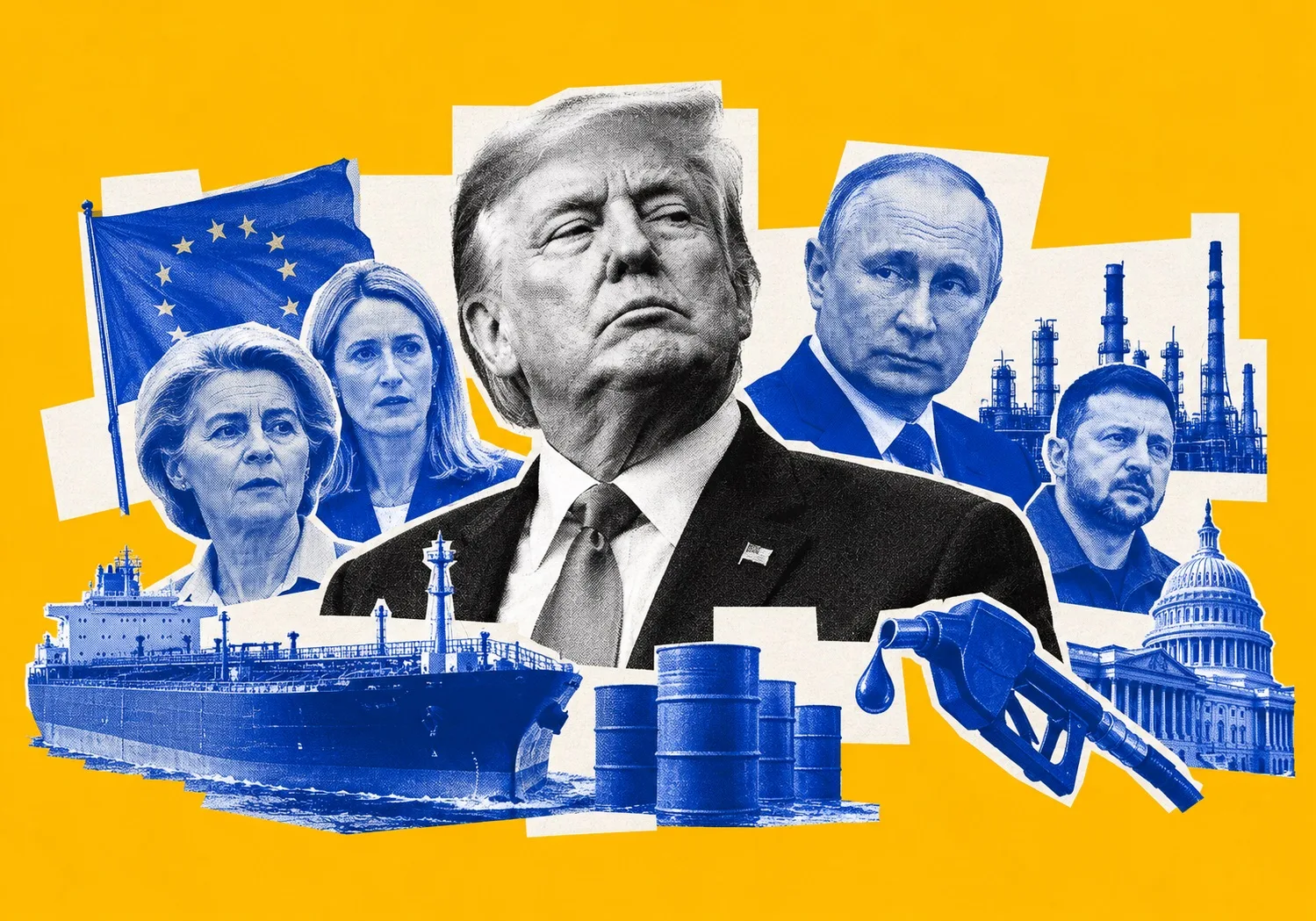
Washington’s attempt to secure cheaper diesel through Russian imports has run into fierce opposition from European allies, US congressional resistance, and a fundamental logistics barrier: Moscow may lack the refining capacity to deliver what it promised.
On 28 October, average US diesel prices reached $6.35 per gallon, compared with $6.28 on 9 October. The increase is modest, but politically awkward for an administration seeking to demonstrate that a direct arrangement with Moscow can deliver economic relief.
The problem extends beyond the price at the pump. The agreement has created a confrontation between the White House and Congress, exposed commercial operators to conflicting legal signals and provoked unusually direct criticism from European allies.
Even if the political dispute were resolved, the economics remain difficult.
A cargo without a confirmed destination
The first test of the agreement is taking place at sea.
On 22 October, the Maltese-flagged Agioi Fanendes, managed by Greece’s Eastern Mediterranean Maritime, loaded approximately 40,000 metric tonnes of ultra-low-sulphur diesel at the Russian port of Primorsk. The cargo is equivalent to roughly 300,000 barrels.
The tanker initially indicated New York as its destination, with an expected arrival around 7 November. Its automatic identification system was subsequently changed to “for orders” at the customer’s instruction.
That designation does not establish that the voyage has been cancelled or that the cargo has been rejected. It does, however, leave the unloading port unconfirmed at a moment when the transaction is attracting considerable legal and political scrutiny.
The uncertainty matters because transporting Russian diesel is only one part of the operation. A shipment also requires financing, insurance, port access and a receiving party prepared to accept the associated compliance risks.
The Trump administration has sought to create a legal opening through General License 135, a temporary authorisation intended to permit transactions under the arrangement. But the United States has prohibited imports of Russian crude oil and petroleum products since 2022.
That leaves companies navigating a difficult distinction between an executive authorisation and the wider sanctions framework.
For commercial operators, permission from Washington does not necessarily eliminate the possibility of investigations, regulatory disputes or future legal exposure.
The voyage of the Agioi Fanendes has therefore become an early indication of whether the agreement can function beyond the political level.
Congress moves into the supply chain
Opposition in Washington is no longer confined to criticism of Trump's approach to Russia.
Bipartisan groups of senators, including Mitch McConnell, John Cornyn and Richard Blumenthal, have issued warnings to financial institutions and port authorities that could become involved in the diesel trade.
JPMorgan Chase, Bank of America, Citigroup, Wells Fargo, Goldman Sachs and Morgan Stanley are among the institutions targeted by congressional correspondence.
Port authorities in New York and New Jersey, Houston, Corpus Christi and Beaumont have also received warnings against facilitating or unloading Russian fuel.
The letters include demands to preserve relevant records dating from 1 September 2026, potentially making commercial decisions taken around the agreement subject to subsequent examination.
This is a significant intervention in the practical operation of sanctions.
Congressional opposition is not merely directed at the administration's diplomatic decision. It is reaching into the private infrastructure required to implement that decision, placing banks, shipping companies and port operators under pressure before the first cargo has been discharged.
A preservation request does not establish wrongdoing, nor does a congressional warning automatically prohibit a transaction covered by a valid licence. But the prospect of investigations changes the commercial calculation.
Banks may be reluctant to provide services for transactions whose legal treatment could become politically contested. Port operators face similar concerns over documentation, authorisation and future scrutiny.
The result is an arrangement in which the executive branch is encouraging a trade that influential legislators are simultaneously seeking to deter.
Whether General License 135 can provide sufficient reassurance depends not only on its formal scope but also on how participating institutions assess their exposure under existing law.
For a transaction intended to deliver rapid relief to consumers, that uncertainty is particularly damaging.
The supply problem Moscow cannot negotiate away
There is another reason to question whether the agreement can influence US fuel prices: the quantities involved are relatively small.
The proposed deliveries amount to slightly more than 100,000 barrels per day in October and approximately 125,000 barrels per day in November.
US diesel consumption is estimated at around 4 million barrels per day. The planned Russian supplies would therefore represent roughly 2.5 to 3.1 per cent of American daily demand, assuming the full volumes were delivered and entered the market.
Even under favourable conditions, that is a limited contribution to a market shaped by refinery output, distribution capacity and broader supply constraints.
The overall arrangement envisages approximately 4.8 million metric tonnes, or nearly 36 million barrels, through mid-April. Spread across several months, the total is too small to transform the balance of the international diesel market.
There is also considerable doubt about Russia's ability to maintain the promised export schedule.
Russian diesel exports averaged approximately 800,000 barrels per day in 2025. Since then, Ukrainian strikes against refining infrastructure, deteriorating facilities and domestic export restrictions have constrained the country's capacity.
The distinction between crude oil production and diesel availability is crucial. Having access to oil does not guarantee the ability to refine it into the required product, meet fuel specifications or deliver it consistently.
Damaged refining infrastructure cannot be restored through a diplomatic agreement.
The Kremlin may be willing to commit fuel to the American market, but willingness and industrial capability are separate questions. Export quotas and domestic requirements add further constraints.
This also helps explain why the announcement has failed to produce an immediate reduction in US prices. A promised supply increase is not the same as fuel physically entering distribution networks, particularly when the first shipment has no confirmed unloading destination.
The agreement has generated political expectations well before it has demonstrated operational capacity.
Europe refuses to follow Washington
The dispute has also opened a visible division between Washington and its European allies over the treatment of Russian energy revenues.
European Commission President Ursula von der Leyen, EU foreign policy chief Kaja Kallas and the Dutch prime minister have condemned the arrangement, warning that it undermines the collective effort to restrict Moscow's ability to finance its war.
European concerns are not limited to the specific diesel volumes. The arrangement could potentially generate as much as $4 billion for Russia's war economy, according to the figures presented in the dispute.
For governments maintaining restrictions on Russian energy, the prospect of the United States reopening a route for petroleum imports creates a difficult political contradiction.
The EU has confirmed that its restrictions will remain in place.
That position preserves the European legal framework but does not resolve the wider problem of coordination. Western sanctions have relied on overlapping measures, including G7 and Australian price caps, European maritime restrictions and controls intended to limit Russian access to international shipping services.
A unilateral American exemption introduces a different set of incentives into that system.
Companies operating internationally may find themselves dealing with transactions authorised under one jurisdiction while facing restrictions or political opposition elsewhere.
The immediate risk is fragmented enforcement rather than the automatic collapse of existing sanctions.
Yet fragmentation can be consequential. Sanctions depend partly on the willingness of financial and maritime businesses to apply restrictions consistently. When governments send conflicting signals, commercial actors must make their own assessments of which risks are acceptable.
That places an additional burden on compliance departments and creates opportunities for disputes over the interpretation and application of existing rules.
Ukraine has been equally critical.
President Volodymyr Zelenskyy described the agreement as a “weak step” and an “investment in the war”, urging Washington to reconsider its decision.
He also stated that Ukrainian forces would not target tankers carrying fuel to the United States.
That distinction matters. Kyiv is opposing the financial and diplomatic implications of the arrangement while separating that opposition from its military campaign against Russian energy infrastructure.
The Kremlin’s opportunity comes with limits
For Putin, the agreement offers potential advantages even before any substantial volume of diesel reaches American consumers.
A bilateral energy arrangement with Washington creates a possible source of hard-currency revenue and allows Moscow to test the durability of Western sanctions cooperation.
It also places European governments in the position of publicly opposing an initiative undertaken by their principal transatlantic partner.
But those gains remain conditional.
The first shipment must find a destination, commercial institutions must be prepared to service the trade and Russian refineries must produce sufficient diesel to sustain deliveries.
None of those requirements can be satisfied by political agreement alone.
Trump faces a different calculation. His administration has linked engagement with Moscow to the prospect of lower domestic energy costs, yet the initial price movement has gone in the opposite direction.
Congressional resistance now threatens to make the arrangement more difficult to implement, while European opposition increases its diplomatic cost.
The White House can temporarily ease certain restrictions through an administrative licence. It cannot compel banks to accept commercial risk, guarantee port participation or immediately expand Russian refining capacity.
That leaves the agreement caught between executive discretion and institutions whose cooperation is indispensable.
The most consequential question may not be whether the Agioi Fanendes eventually unloads its 300,000 barrels. It is whether a sanctions exemption issued by one administration can establish a functioning energy trade when lawmakers, allied governments and the companies required to execute it remain unwilling to treat political permission as sufficient protection.
Sources: Reuters, France24, The New York Times, Military Times