
Russia Dispatches First Fuel Tanker to US as Envoy Steve Witkoff Holds St Petersburg Talks with Putin

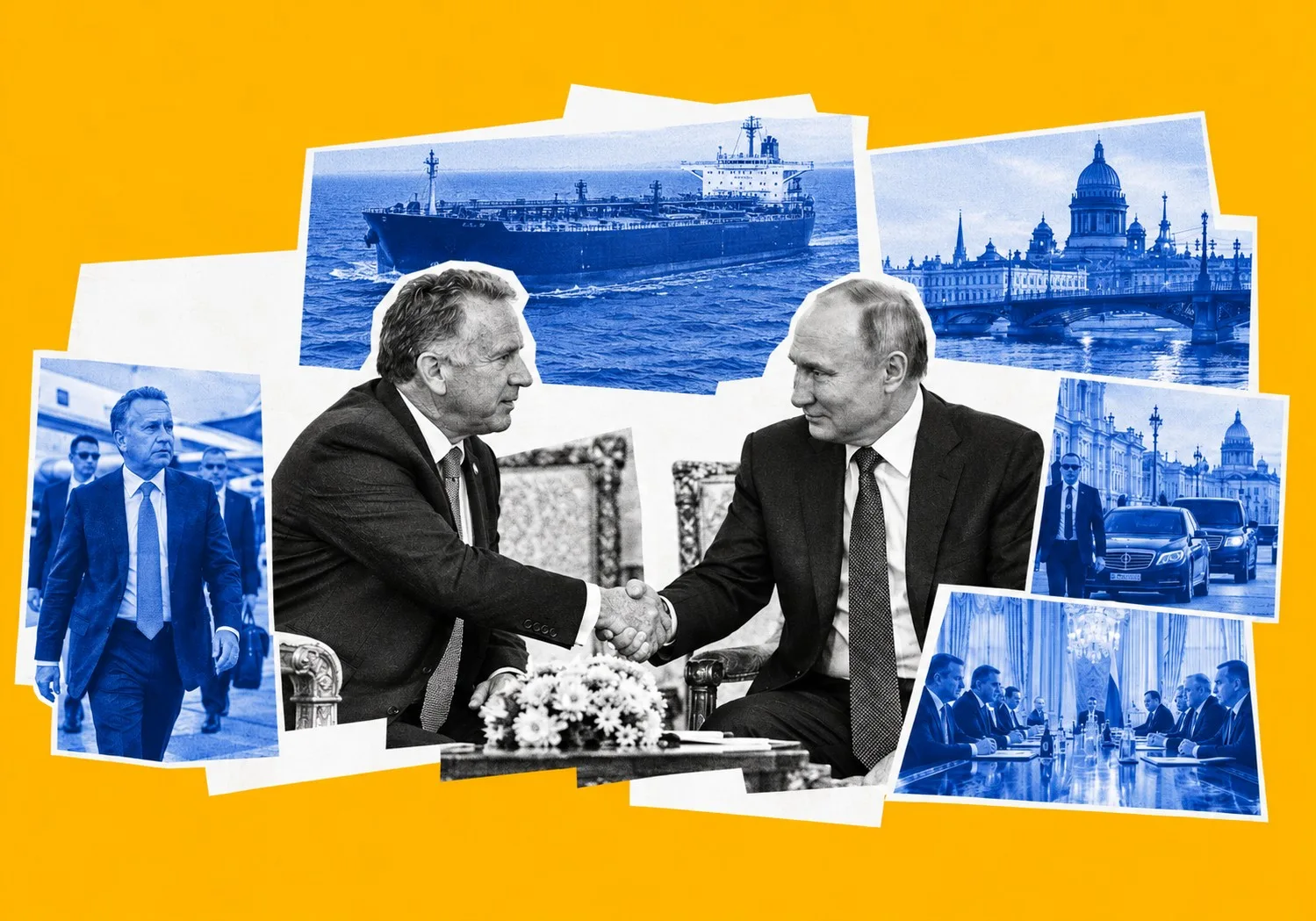
In Saint Petersburg, talks between Vladimir Putin and US envoy Steve Witkoff are currently underway at the Konstantinovsky Palace. As negotiations began, Moscow announced the dispatch of its first tanker carrying 40,000 tonnes of diesel directly to the United States—a commercial delivery explicitly tied to recent understandings between Donald Trump and Vladimir Putin, with regular shipments projected to follow.
The start of the meeting also coincided with the release of Stephen Hubbard, a 72-year-old American jailed in Russia.
Captured by Russian forces in Izyum in 2022 and sentenced in 2024 to nearly seven years for allegedly serving in a Ukrainian local defense unit, Hubbard today was transferred to Pulkovo Airport following intervention from Washington.

With the prisoner release already executed, the main agenda in Saint Petersburg centers on establishing a framework for potential ceasefire negotiations regarding Ukraine.
The meeting in Saint Petersburg follows consultations in Oslo between Witkoff and Ukrainian President Volodymyr Zelenskyy.
With Kirill Dmitriev—head of the Russian Direct Investment Fund—also participating in the Saint Petersburg talks, the dialogue combines security parameters with commercial considerations.
By pairing the completed release of a foreign detainee with oil deliveries and ceasefire talks, Moscow is seeking a direct bilateral bargaining channel with Washington alongside established multilateral formats.
Classified by the US State Department as wrongfully detained, Hubbard had remained a key focus of US consular efforts.
Public remarks by President Donald Trump earlier in the week indicating imminent progress signaled Washington's focus on securing his freedom.
Inside the palace, where discussions continue, Hubbard's release serves as an established backdrop rather than a topic of debate.

Dmitriev’s presence at the meeting underscores the commercial dimension of the ongoing exchanges. Russian state news agencies reported that Putin referenced previous trade understandings with Washington—now highlighted by the 40,000-tonne diesel shipment confirmed by Deputy Prime Minister Alexander Novak—before asking Witkoff to detail the results of his consultations in Norway.
Witkoff framed the Oslo consultations as preliminary groundwork for structured ceasefire negotiations.
For Kremlin strategists, linking these issues creates an operational track where detainee releases, energy deliveries, and battlefield parameters are discussed directly with Washington, alongside existing NATO or European Union framework mechanisms.
The Oslo Dilemma
Understanding the context of the Saint Petersburg meeting requires examining the consultations held twenty-four hours earlier in Norway.
Witkoff’s meeting with Volodymyr Zelenskyy in Oslo was intended to outline baseline parameters for a potential ceasefire.
For the government in Kyiv, any peace process must safeguard territorial sovereignty, maintain security guarantees, and ensure Ukrainian participation in strategic decisions.

The sequence connecting Oslo to Saint Petersburg illustrates the competing priorities among the parties involved. While Witkoff presented the Oslo talks as part of a broader peace initiative, the Kremlin is actively introducing economic normalization and US-Russian trade into the discussion.
Two distinct operational models have emerged on the diplomatic stage:
In Oslo, American representatives and Ukrainian leaders sought to define baseline ceasefire conditions, sovereignty protections, and long-term defense commitments. That format, however, operates alongside parallel bilateral bargaining between Washington and Moscow.
In Saint Petersburg, Washington’s envoy is meeting directly with Russian leadership and state financial officials to discuss technical channels and commercial arrangements following the completed prisoner transfer. This structure alters the positioning of Ukrainian priorities and existing sanctions frameworks in the overall negotiation process.
For Kyiv, the strategic concern centers on a potential two-tiered negotiation.
On one level, technical teams discuss front-line dispositions and ceasefire mechanisms with Ukrainian participation.
On another level, broader policy matters regarding sanctions, energy flows, and European security are discussed directly between Washington and Moscow. Should a pause in fighting become linked to the easing of economic restrictions, the dynamics of technical discussions will shift accordingly.
European Alignment
In European capitals, the Saint Petersburg meeting is being monitored closely. For over four years, governments in London, Brussels, and Paris have based their policy on a containment doctrine and comprehensive sanctions against Russia.
Direct discussions between a US envoy and Russian leadership regarding commercial arrangements represent a shift in transatlantic coordination.
European defense policy has relied on two core principles: maintaining sanctions until a settlement is reached, and ensuring full European and Ukrainian participation in decisions concerning European security.
The transactional approach currently pursued by Washington introduces new variables into these assumptions.
Should Washington continue engaging in trade-offs involving energy access or conflict management, the European sanctions framework will face structural friction. European policy-makers will need to determine whether to maintain an independent sanctions stance against Moscow or adjust to a US-led framework focused on immediate bilateral agreements.
Multilateral institutions like NATO and the European Union face a corresponding shift in role. When key security parameters are discussed through special envoys and accompanied by commercial agreements, formal alliance structures risk being shifted from primary decision-making forums to secondary administrative bodies.
Strategic Positionings
As Washington and Moscow conduct direct talks, the relative influence of key actors is undergoing realignment.
Moscow gains immediate advantages from this format. By hosting American envoys for publicized trade discussions and initiating direct diesel exports to the US market, the Kremlin reduces its diplomatic isolation. Utilizing foreign detainee transfers as confidence-building steps enables Russian leadership to raise sanctions relief and commercial access without offering upfront territorial concessions in Ukraine.
In Washington, the Trump administration secures the release of an American national while addressing domestic energy market considerations. The outcome supports an approach centered on direct negotiation while placing the US executive branch at the center of regional crisis management.
Financial and commercial intermediaries are also seeing increased involvement. Symbolized by Kirill Dmitriev’s participation and references to fuel deliveries, commercial mechanisms are becoming integral components of the diplomatic dialogue.
Conversely, Ukrainian statecraft faces specific strategic challenges. Direct communication channels between Washington and Moscow increase the possibility of ceasefire terms being formulated through bilateral exchanges.
European cohesion faces similar pressure. As Washington pursues bilateral contacts with the Kremlin, the European Union's ability to enforce a uniform, long-term containment policy becomes more complex, highlighting differing tactical approaches within the transatlantic alliance.
Economic Leverage in Negotiations
During the Saint Petersburg exchanges, references to economic ties reflect a specific strategic approach. Moscow treats trade normalization not as a final outcome of a peace process, but as an active element within ongoing negotiations.
Re-establishing energy exports to Western markets—as evidenced by Novak's confirmation of the first 40,000-tonne diesel shipment to US ports—and securing targeted sanctions exemptions remain primary objectives for the Kremlin. Russia's negotiation approach involves offering discrete steps, such as detainee releases or localized pauses in fighting, in exchange for specific economic arrangements.
This structure presents Washington with a clear policy choice. Utilizing economic incentives can facilitate immediate agreements, as demonstrated by Hubbard’s transfer to Pulkovo Airport. However, applying sanctions flexibility introduces changes to the regulatory framework designed to address state aggression. Once trade pathways are re-established under a temporary ceasefire, re-imposing sanctions in the event of subsequent non-compliance presents significant operational challenges for Western governments.
Unresolved Framework Variables
Several unresolved variables remain as Washington and Moscow discuss moving toward technical channels:
The degree to which the Oslo baseline was fully agreed upon by Kyiv, and how those parameters will hold up during talks in Saint Petersburg, remains to be seen.
Washington faces the task of balancing its bilateral economic dialogue and fuel shipments from Moscow with its legal commitments to transatlantic sanctions enforcement.
Specific mechanisms to ensure that Ukraine’s security guarantees remain intact during direct US-Russian exchanges have yet to be fully defined.
Uncertainty remains regarding whether military de-escalation on the ground will follow initial economic and diplomatic agreements.
European allies may seek to modify any ceasefire structure developed without their direct participation, potentially leading to independent economic or diplomatic measures from individual European capitals.
Next Steps in Technical Talks
Official statements from the Konstantinovsky Palace confirm that talks between Putin and Witkoff are continuing behind closed doors. Following the transfer of Stephen Hubbard to Pulkovo Airport and the dispatch of the first diesel tanker to US ports, both delegations have moved toward defining the timetable for proposed "technical discussions" on a ceasefire.
According to statements relayed via state agency Tass, Witkoff noted during initial exchanges that the consultations in Oslo established "a foundation in place to move toward a ceasefire," proposing that technical teams from the US, Russia, and Ukraine resume formal discussions. Russian officials have not yet confirmed the exact date or format for these subsequent technical sessions, nor whether Ukrainian representatives will join the next round directly.
Foreign policy analysts note that the outcome of these talks will depend on whether initial commercial agreements translate into official commitments on the battlefield. As negotiations continue in Saint Petersburg, White House officials have indicated that further official statements regarding the status of technical discussions and future diplomatic steps will be released following the conclusion of Witkoff's mission.
Sources: The Guardian, BBC, Epravda