
Putin Seizes Control of Tarkett, Ontex and 3 Other Western Assets Under New Decree
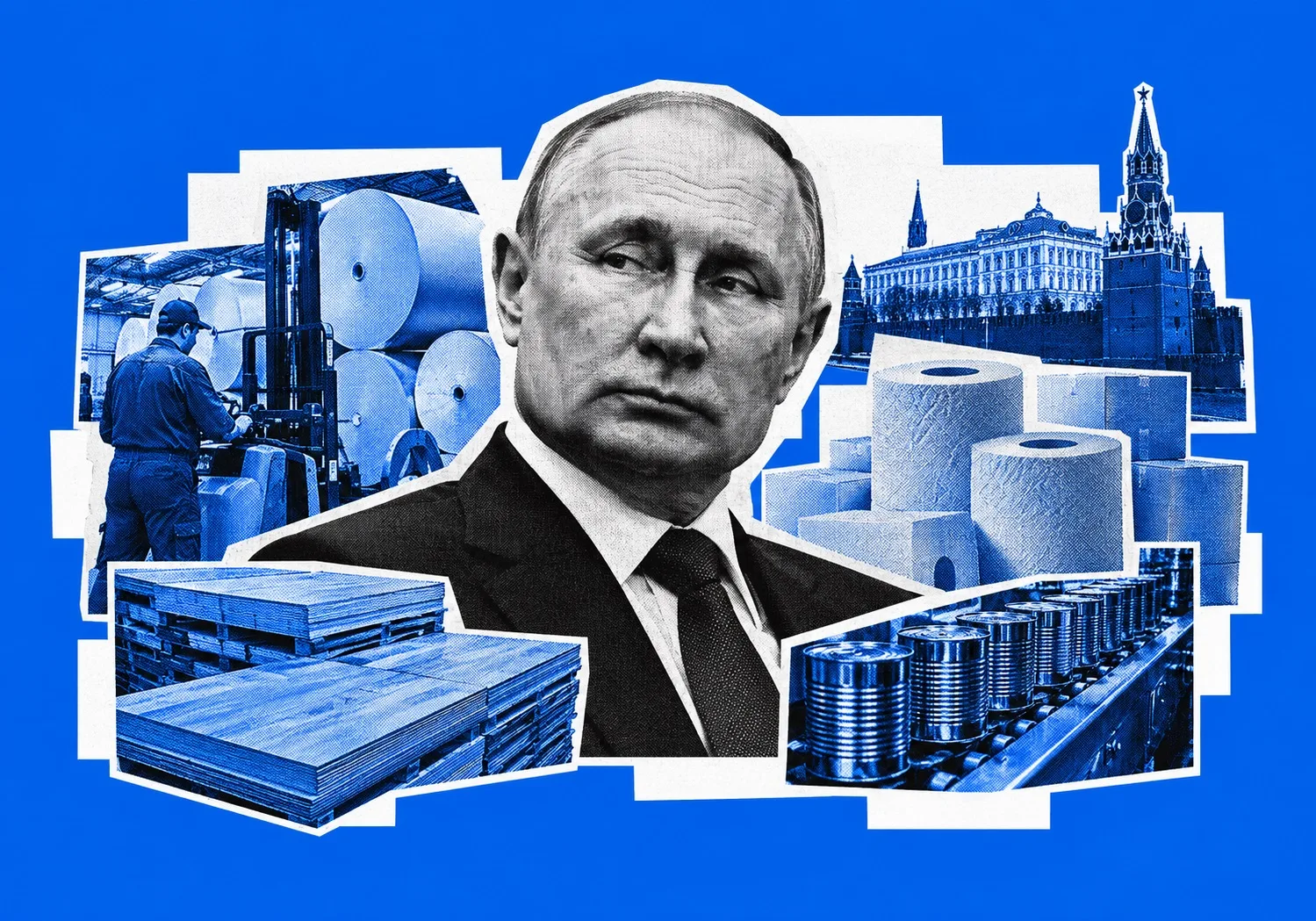
Russia has placed the local operations of five major European manufacturers - including France’s Tarkett and Belgium’s Ontex - under state control, expanding its seizure of foreign assets into consumer and industrial supply chains. Under an October 15 decree signed by Vladimir Putin, management of the businesses, which generated 53.6 billion roubles ($633 million) in 2025, has been handed to a Moscow firm owned by a Russian war veteran.
For the companies involved, the distinction between owning a business and controlling it has become painfully clear.
Along with Tarkett and Ontex, German packaging producer Menshen, Swedish-owned Kappa Rus, and metal-packaging company Eviosys have all been placed under external administration. Eviosys is held through a Dutch entity by US-based Sonoco.
The Kremlin has made little attempt to disguise the political motivation. Its spokesman, Dmitry Peskov, confirmed that the companies' countries of origin influenced their selection. Moscow regards the measures as retaliation for Western support for Ukraine and the freezing of Russian sovereign assets.
The factories are now part of a dispute that reaches well beyond their commercial activities.
Ownership Without Control
Russia's approach avoids the formal language of nationalisation. Under the system introduced in April 2023 and extended through Presidential Decree No. 738, foreign shareholders retain legal ownership of their Russian businesses. They cannot, however, determine how those businesses operate.
External administrators receive extensive managerial powers. They can direct operations and exercise corporate rights, although they cannot legally sell the underlying assets. Their expenses are paid from the revenues of the enterprises they control.
There is another important restriction: only a presidential decree can end the arrangement.
That leaves foreign owners in an unusual position. Their names remain attached to businesses over which they have no effective authority, while the Russian state decides whether management will ever be returned.
The Kremlin describes the system as reversible. Legally, that is correct. Politically, reversibility depends on the same authority that ordered the intervention.
For Tarkett, the largest company affected by the latest decree, the stakes are substantial. Its Russian business recorded revenue of 19.3 billion roubles in 2025. Kappa Rus, associated with Sverige International Holdings, generated another 16.5 billion roubles.
These are established industrial operations rather than marginal investments that can be abandoned without financial consequences.
Tarkett and Ontex have confirmed that they have lost operational control and are assessing their options. Ontex has also stressed the need to protect its assets and maintain business continuity at its factory in Noginsk, where it employs 350 people.
Employees remain dependent on production continuing, regardless of who controls the company. Foreign shareholders face a different problem: their financial exposure persists even after their authority has disappeared.
International investment arbitration offers one possible avenue for challenging such measures. Finnish energy company Fortum has already pursued that route following an earlier Russian intervention. Yet legal proceedings cannot themselves restore day-to-day control of a factory, and recovering its economic value presents a separate challenge.
A New Manager for Russia’s Foreign-Owned Industry
The identity of the administrator is perhaps the most revealing feature of the October decree.
All five businesses have been assigned to Center Capital, a Moscow management company established in February 2026. Its owner, 47-year-old Marat Mirkhaidarov, previously served as deputy governor of Zabaykalsky Krai and fought with the Akhmat unit in the war in Ukraine.
His appointment brings together two developments that are increasingly difficult to separate in Russia: the redistribution of Western commercial assets and the political advancement of people connected to the war.
Center Capital did not need to purchase the five businesses to acquire authority over them. Its position comes directly from the state.
That matters because the companies involved possess established factories, production systems, and revenue-generating operations. Control over such enterprises carries considerable economic influence even without formal ownership.
The arrangement also creates opportunities for a relatively new management company to establish itself across several industrial sectors simultaneously.
Mirkhaidarov's military background does not establish how he will manage the businesses or whether their performance will change. It does, however, illustrate the type of domestic figure now being entrusted with assets previously controlled by multinational groups.
Russia's corporate restructuring is therefore not simply a process of replacing foreign investors with domestic ones. It is also changing who receives access to industrial resources and on what terms.
The state decides which businesses lose their existing management, selects their replacements and retains the authority to reverse those decisions.
Commercial control increasingly follows political discretion.
Why Packaging and Flooring Matter
The latest selection of companies may initially seem less consequential than the earlier seizures of energy businesses or household consumer brands.
Yet packaging, hygiene products and flooring occupy important positions in the domestic economy. Their customers depend on manufactured goods and materials that must remain available regardless of international political disputes.
Keeping these operations running under Russian-appointed managers offers Moscow a way to retain industrial capacity while reducing the influence of foreign parent companies.
It also broadens the potential reach of asset seizures.
Previous interventions affected Fortum and Uniper in energy, Danone and Carlsberg in consumer goods, and, more recently, businesses associated with Nestlé, Auchan, Metro, FM Logistic and Leroy Merlin.
Those cases established that large international companies could lose control of valuable Russian operations. The October decree extends the same principle to industrial suppliers whose activities are less visible to the public.
The selection is significant precisely because these businesses are not central actors in the sanctions dispute. They manufacture products for commercial markets. Their vulnerability arises from their ownership structures and the geopolitical identity of their shareholders.
For companies still operating in Russia, that changes the calculation.
A profitable local business with functioning factories and an established workforce is not necessarily safer than one struggling financially. Its continuing commercial value may make it an attractive candidate for external administration.
Nor does remaining in the market guarantee that a foreign investor will retain the opportunity to arrange an orderly departure.
The alternatives are narrowing towards accepting a heavily discounted exit or risking the loss of managerial authority while retaining ownership on paper.
Europe’s Frozen Assets and Moscow’s Corporate Response
The timing of the decree places it within a wider financial confrontation between Russia and Europe.
Approximately €210 billion ($238 billion) in Russian sovereign assets remain frozen, while European governments are considering proposals to use those resources to support Ukraine.
Moscow has characterised Western actions involving Russian property as illegal expropriation. The Kremlin's latest intervention establishes a direct political connection between that dispute and the treatment of foreign-owned companies inside Russia.
There is an important asymmetry here.
European measures concern frozen Russian sovereign resources. Moscow's response targets private businesses whose shareholders are based in countries supporting Ukraine.
The companies affected do not control European sanctions policy or decisions about Russian reserves. Nevertheless, their assets have become instruments through which the Kremlin can impose costs on Western economies.
This gives Russia a form of leverage, although its effectiveness is uncertain.
Seizing operational control can impose immediate losses on individual investors. It does not necessarily persuade European governments to change policy, particularly when those governments are pursuing broader security objectives.
The Kremlin also faces an economic cost.
Putin acknowledged the drawbacks of taking Western assets when addressing Russian business leaders ahead of the decree. He warned companies against excessive dependence on international markets and encouraged them to seek financing domestically.
His remarks point to a tension within Russia's economic strategy.
The government wants to preserve productive capacity and maintain industrial activity while restricting the influence of foreign capital. Yet businesses that operate internationally depend on financial relationships, investment channels and commercial confidence that become harder to sustain when ownership rights can be overridden by presidential order.
Domestic financing may reduce exposure to foreign restrictions. It cannot necessarily replace every advantage of access to international capital.
The warnings also indicate that Moscow does not regard the redistribution of Western assets as economically cost-free.
The Limits of a Temporary Measure
Russia's external administration framework was introduced as a response to wartime economic pressure. Three years later, its repeated application has made it an established feature of the country's corporate environment.
The legal mechanism remains temporary in name, but its duration is undefined. There is no automatic timetable for returning businesses to their owners, and foreign shareholders cannot independently bring the arrangement to an end.
That uncertainty changes the meaning of investment risk.
Ordinarily, companies assess exposure to regulation, taxation, currency movements and market conditions. In Russia, Western investors must now also account for the possibility that political decisions concerning Ukraine or European sanctions will determine who operates their factories.
The consequences extend to domestic businesses as well. Russian suppliers, employees and customers may continue dealing with the same industrial facilities, but management decisions increasingly depend on administrators appointed through political channels.
The October decree illustrates how far this system has developed. Five companies from different industrial sectors have been placed under one newly established management firm whose owner has both government experience and military connections.
The arrangement concentrates considerable operational responsibility in an organisation with a short corporate history.
Whether Center Capital can maintain production, preserve existing commercial relationships and manage the companies effectively remains to be seen. Its authority, however, is already settled.
For European policymakers, the seizures complicate an already difficult argument over Russian sovereign assets. Moscow has shown that it can respond to financial pressure by targeting private European commercial interests, even when those businesses have no role in shaping the policies being contested.
For foreign companies, the more immediate difficulty is that formal ownership offers diminishing protection.
Their shares may remain legally intact, their factories may continue operating, and their employees may continue working. But the decisions governing those operations now belong to managers selected by the Kremlin.
The question is no longer simply whether Russia will seize more Western assets. It is how much of the country's remaining foreign-owned industrial economy can be brought under political management while still retaining the commercial capabilities that made those businesses valuable in the first place.
Sources: Reuters, The Moscow Times, Euronews, Le Monde