
Donald Trump Jr under Scrutiny Over Secret Mongolia Trip with Kremlin-Linked Boxing Boss Umar Kremlev

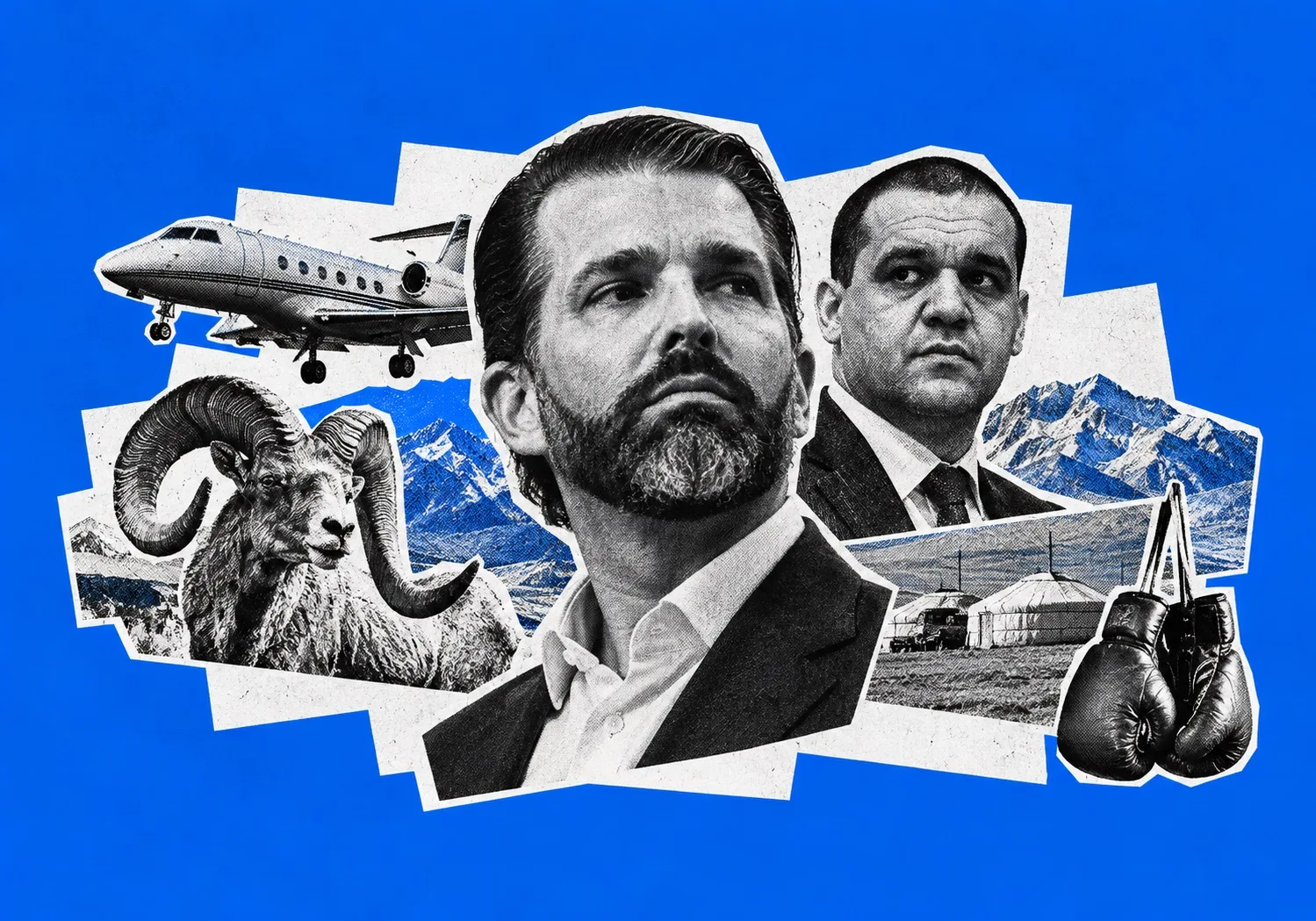
Donald Trump Jr. is facing intense scrutiny following a secret hunting trip in Mongolia with Umar Kremlev, a Kremlin-linked Russian boxing executive who helped fund Trump Jr.’s lavish wedding. The secret meeting with Kremlev and an associate tied to sanctioned Russian entities has sparked a congressional inquiry into foreign money, sanctions risks, and undisclosed access to the White House.
The relationship was publicly visible well before the Mongolia trip. At an International Boxing Association event in Istanbul in 2025, Trump Jr. described Kremlev as both a leader and a friend.
Kremlev is no ordinary sporting executive. He became head of the Russian Boxing Federation in 2017 and took charge of the International Boxing Association (IBA) in 2020. Under his leadership, the organisation received tens of millions of dollars from state-controlled Gazprom before losing its recognised governing status with the International Olympic Committee following disputes over governance and finances.
His proximity to Russian power extends beyond sport. Kremlev has documented connections to Vladimir Putin’s personal security circle and received Russia’s Order of Friendship from Putin in April 2026.
Those relationships matter because the friendship with Trump Jr. has involved more than shared recreational interests.
ProPublica previously reported that Kremlev contributed hundreds of thousands of dollars towards Trump Jr.’s May wedding on a private island in the Bahamas. The expenses included the island rental and fireworks costing approximately $70,000. Payments were channelled through IB Challenger, a Dubai-based entity affiliated with Kremlev’s boxing organisation.
President Donald Trump defended the contribution publicly, arguing that it was permissible, while saying his son would repay the money. Independent financial records establishing whether repayment occurred have not been made available.
The distinction between a personal favour and an attempt to cultivate political influence is difficult to establish without examining the underlying transactions and communications.

There is no evidence in the supplied reporting that Trump Jr. agreed to provide political assistance in return for the wedding payments. Nor does accepting financial support, by itself, establish an intelligence operation. But the size of the contribution, the donor’s political connections and the recipient’s proximity to the presidency create legitimate questions about access and potential obligations.
A financial relationship does not have to involve an explicit bargain to become useful to someone seeking influence. Repeated hospitality and substantial personal assistance can create expectations even when the participants insist that no business or political arrangement exists.
For a foreign businessman with access to Russia’s leadership, maintaining such a relationship may carry value independently of any immediate political outcome.
The Mongolia connection
The location of the August meeting adds another dimension.
Western Mongolia offered a setting far removed from the visibility of Washington, New York or the major European capitals. The gathering took place at a remote hunting camp rather than a conference, sporting event or business meeting.
The reported effort to avoid joint photographs is particularly relevant. It does not establish improper conduct, but it indicates an apparent preference for keeping the encounter out of public view.
Kremlev’s arrival with Martirosyan also introduces a separate sanctions-related question.
Martirosyan is a partner at Voskhod, whose management company, Voskhod Management Company LLC, appears on the US Treasury’s Office of Foreign Assets Control sanctions list under Executive Order 14024.
His presence does not establish that a prohibited transaction occurred. US sanctions apply according to specific rules governing designated entities, ownership, transactions, and the involvement of US persons. Simply attending the same gathering as someone associated with a sanctioned company is not, on its own, proof of a violation.
Nevertheless, the association gives investigators reason to examine whether any payments, services, or commercial arrangements connected to the trip involved sanctioned entities.

The available account does not establish who financed the hunting camp, charter arrangements or other expenses. Those omissions are important precisely because the relationship had already included substantial financial support.
Trump Jr.’s visit also brought him into contact with Mongolia’s political leadership.
After the hunt, he travelled to Ulaanbaatar and dined with President Ukhnaagiin Khurelsukh. A Mongolian official initially described the meeting on social media as involving bilateral relations and business opportunities, before deleting the post. Both sides subsequently characterised the dinner as unofficial.
The episode illustrates the ambiguity surrounding travel by politically connected private individuals. Trump Jr. holds no formal diplomatic role, yet his family position gives meetings with foreign leaders a significance that an ordinary business visitor would not enjoy.
A dinner can be described as private without necessarily being politically inconsequential.
The hunting expedition itself attracted a separate environmental concern. Trump Jr. killed an Altai argali, a mountain sheep classified as Vulnerable globally by the International Union for Conservation of Nature and Endangered Species within Mongolia.
That detail is not central to the foreign-influence allegations. It does, however, show the exclusivity of the recreational setting in which the relationships were maintained.
Washington’s oversight problem
The revelations have produced an unusually complicated political response in the United States.
Democratic Representative Robert Garcia initiated a congressional inquiry seeking documentation concerning Trump Jr.’s relationship with Kremlev, including correspondence and information relevant to security clearances.
Some Republican lawmakers have also called for congressional testimony, indicating that concern over the relationship is not confined entirely to the president’s political opponents.
The administration’s response has been markedly different. Attorney General Todd Blanche has publicly questioned whether the circumstances warrant a criminal investigation, while Trump has defended the wedding contribution.
These positions are not necessarily contradictory in legal terms. Congressional oversight can examine ethical and national security concerns even where prosecutors have not established grounds for criminal proceedings.

The political difficulty is that the two processes are increasingly treated as interchangeable.
An absence of demonstrated criminal wrongdoing does not answer every question about foreign influence. Equally, a suspicious-looking financial relationship cannot be treated as proof of unlawful conduct without supporting evidence.
Congressional investigators therefore face a narrower but more practical task: establishing the nature of the payments, the extent of the relationship and whether any political or commercial expectations accompanied Kremlev’s financial assistance.
Records of communications, the arrangements surrounding the wedding payments and documentation of any repayment could help distinguish a costly personal friendship from a relationship carrying broader political implications.
Security-clearance questions require similar care. Trump Jr.’s proximity to the president does not automatically establish that he possesses classified information or holds a government clearance. His informal political influence, however, raises a different concern: whether foreign actors can gain access to the president’s political environment without engaging directly with officials subject to established disclosure and security requirements.
The intelligence value of personal access
Former National Security Council counterintelligence chief Holden Triplett has warned that Russian intelligence services could seek to exploit personal relationships of this kind.
His warning concerns vulnerability rather than a proven espionage operation.
Traditional counterintelligence measures focus heavily on government personnel, classified information, financial exposure and contacts with foreign representatives. Presidential relatives who operate as private businesspeople while remaining politically influential occupy a less clearly defined position.
Their relationships may develop through commercial ventures, social events or leisure activities that do not resemble conventional diplomatic engagement.
Hunting trips are particularly suited to cultivating familiarity. Participants spend extended periods together, often in private settings, with fewer of the formal constraints that accompany official meetings.
The value to a foreign-connected participant may lie less in obtaining an immediate concession than in becoming a trusted presence within an influential personal network.
Kremlev’s position makes that possibility relevant. His international boxing role provides opportunities for contact beyond Russia, while his financial resources and political connections allow him to maintain relationships that might otherwise be difficult to establish.
The IBA’s loss of Olympic recognition has not prevented its president from cultivating international contacts. Indeed, a personal connection to the American president’s family may offer a form of visibility that formal sporting institutions can no longer provide.
None of this proves that Kremlev acted on behalf of Russian intelligence in Mongolia. The available facts do not support such a claim.
They do, however, expose a problem that cannot be addressed solely by asking whether espionage occurred.
When private relationships become public liabilities
The Trump Jr.–Kremlev relationship sits at the intersection of personal wealth, political access and international networks linked to state power.
It also reveals the limitations of safeguards designed primarily around formal public office.
Government officials generally operate within defined structures for financial disclosure, conflicts of interest and security oversight. A politically influential relative can move between private business, presidential politics and international social circles without fitting neatly into those categories.
For foreign actors, that ambiguity may be an opportunity. A relationship can be developed through personal generosity and shared interests rather than through an overt request for government assistance.
For American institutions, it creates a difficult oversight challenge. Investigators must establish what happened without assuming that every private encounter is improper, while recognising that personal relationships can carry consequences for national security even when no explicit agreement exists.
The congressional inquiry will therefore depend heavily on evidence that has not yet entered the public record.
Whether Kremlev’s wedding contribution was repaid remains unresolved. The financial arrangements surrounding the Mongolia trip have not been fully established. Nor is there evidence showing that either encounter produced a political commitment.
The harder institutional question is whether existing safeguards are capable of identifying foreign influence when access to the presidency is cultivated through people who exercise political influence without holding public office.
Sources: FT, The Moscow Times, NV, Babel