
Jared Kushner iPhone Hack Claims Reveal $1.75bn Gulf Money and Dutch Intelligence Role

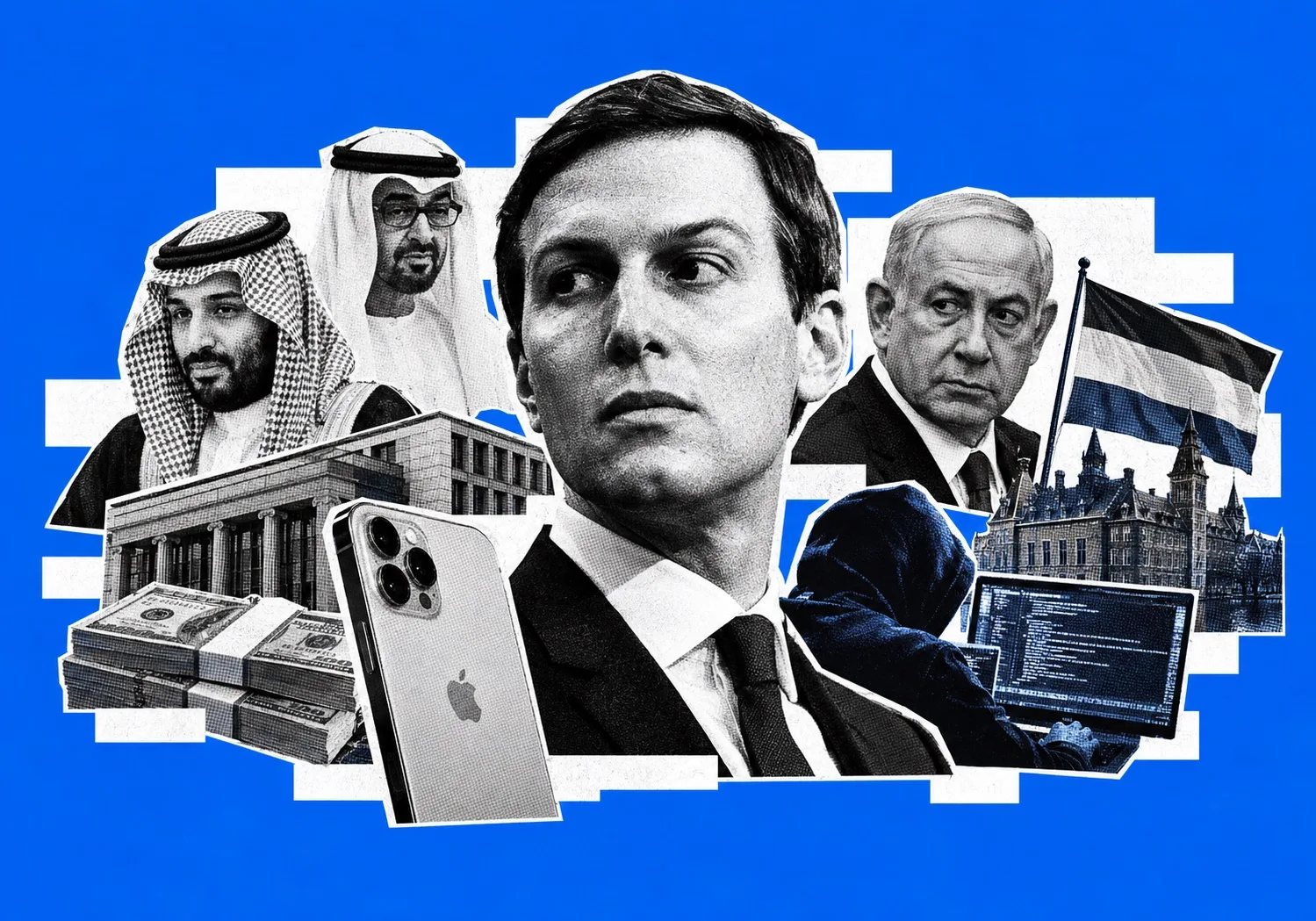
Allegations of Russian hacking and Dutch MIVD surveillance targeting Jared Kushner’s iPhone have exposed secret Middle Eastern bank accounts worth $1.75 billion. Details published by Vanity Fair from Matthew Cole’s upcoming book, Princes and Thieves, raise urgent questions about foreign intelligence, US diplomacy, and Gulf sovereign wealth, even as Kushner firmly denies the unverified claims.
Cole describes an intelligence operation that allegedly began with Russian military hackers and was subsequently exploited by the Netherlands' military intelligence service, the MIVD. According to the account, Dutch analysts obtained access to material from a Russian military intelligence server and discovered screenshots taken from Kushner's iPhone X.
By early 2018, the Dutch service had allegedly developed the ability to monitor the device's screen in real time.
The book claims that this surveillance revealed access to two accounts holding or receiving a combined $1.75 billion through financial arrangements involving the United Arab Emirates, Saudi Arabia, Azerbaijan and Israel.
Those are extraordinary assertions. They are not, however, facts.
Kushner has described the account as "completely insane", insisting the events never occurred. His lawyer, Chad Mizell, has said the alleged bank accounts do not exist. Neither the Dutch intelligence service nor the governments of Saudi Arabia and the UAE have confirmed the reported operations or transfers. The White House has issued no official response.
That leaves an important distinction between what Cole alleges happened inside government and intelligence networks, and what is already known about Kushner's subsequent financial relationships in the Middle East.
The intelligence story and its unanswered questions
The alleged espionage operation has an unusual starting point.
Cole's account says Dutch intelligence learnt in late 2017 that a hacker associated with Russia's GRU military intelligence agency was travelling to Britain. British authorities reportedly detained him after receiving information from the Netherlands.
Facing the threat of prosecution, the hacker allegedly cooperated with the MIVD and provided access to a classified GRU server in Rostov.
Dutch analysts examining its contents reportedly encountered screenshots originating from Kushner's phone. The account goes further, alleging that the MIVD subsequently exploited a vulnerability in the iPhone X to observe activity on the device.
If accurate, the sequence would raise uncomfortable questions for Washington. A senior presidential adviser conducting sensitive diplomacy would have been exposed first to an adversarial intelligence service and then to surveillance by an American ally.
The distinction matters. Intelligence cooperation between allied governments does not eliminate their separate national interests. Access to the private communications of an influential White House adviser could provide political and diplomatic insight unavailable through conventional channels.
But the published allegations do not establish the technical mechanism through independently examined evidence. Nor does the briefing identify publicly authenticated intelligence records or forensic findings confirming that Kushner's device was compromised.
The credibility of the account therefore depends substantially on the underlying reporting in Cole's book, rather than on evidence that outside investigators have been able to scrutinise.
There is also a difference between demonstrating that a phone was compromised and proving that financial information observed on its screen represented genuine accounts, accurately identified beneficiaries or completed transactions.
Each would require its own supporting evidence.
Two alleged accounts, two different questions
The financial claims are particularly sensitive because they concern the period when Kushner was helping direct American policy towards the Middle East.
The first alleged account, registered at First Abu Dhabi Bank through the UAE-based Watani Al Emarat Foundation, reportedly received approximately $750 million originating from Saudi Arabia and the UAE and routed through Azerbaijan.
Cole's account says Kushner could access the funds but did not own them. Their alleged purpose was to support unofficial diplomatic initiatives and covert financing.
The second account was purportedly held at the Central Bank of Israel and received approximately $1 billion from the UAE. The book alleges that the money was intended for Kushner's personal use and that Israeli Prime Minister Benjamin Netanyahu advised him to keep it at the central bank.
Neither account has been independently verified, and Kushner's legal representatives deny their existence.

The distinction between access and ownership would be central to any serious examination of the allegations. A person authorised to use funds for an official or unofficial initiative occupies a different financial and legal position from someone holding money for personal benefit.
Federal ethics rules require senior US officials to disclose specified financial interests, liabilities and outside positions. Whether a particular arrangement creates a reporting obligation depends on its legal structure and the individual's interest in it.
Cole alleges that Kushner failed to make legally required disclosures. The available briefing, however, identifies no formal charges or regulatory investigation substantiating that allegation.
The absence of corroboration should not be mistaken for a resolution of the underlying factual dispute. It does mean that claims of criminal or ethical misconduct cannot responsibly be treated as proven.
The Gulf relationships that are already documented
The more consequential political question may concern financial relationships that are not disputed.
Kushner was a central figure in Donald Trump's Middle East policy during his first administration. His diplomatic work included the Abraham Accords, which established normalised relations between Israel and several Arab countries, including the UAE and Bahrain, in 2020.
These agreements formed part of a wider realignment in regional diplomacy, in which American relationships with Gulf monarchies carried considerable strategic importance.
After leaving the White House in 2021, Kushner established Affinity Partners, a private investment firm that attracted substantial backing from foreign investors.
The Saudi Public Investment Fund committed $2 billion. Capital also came from Qatari and Emirati sovereign wealth funds, alongside Taiwanese entrepreneur Terry Gou.
By March 2024, approximately 99 per cent of the $3 billion managed by Affinity originated from foreign investors, according to figures examined in US Senate committee investigations.
That financial concentration is significant regardless of the new allegations.
Affinity has pursued major investments, including a role in a consortium seeking to acquire Electronic Arts and an investment in Israel's Phoenix Financial.
The business illustrates how relationships developed in international political circles can overlap with the world of private capital after government service.
There is no automatic impropriety in former officials establishing investment businesses or accepting capital from foreign institutions. Nor does the existence of Affinity's investments substantiate Cole's allegations about undisclosed accounts during Kushner's White House tenure.
The concern is more structural.
Sovereign wealth funds are commercial investors, but they are also institutions connected to governments with diplomatic, security, and economic interests. Their investment decisions cannot always be understood in precisely the same way as those of independent private investors.
When a former senior official raises billions from governments with which he previously worked on sensitive diplomatic matters, questions arise about the boundaries between political access, commercial opportunity and institutional accountability.
Such questions do not depend on evidence of an illegal transaction.
When diplomacy becomes personal
Kushner's career provides an unusually visible example of a broader change in the relationship between political influence and international finance.
Traditional diplomacy operates through ministries, embassies, formal negotiations and established reporting structures. Personal relationships have always mattered, particularly in dealings between powerful political leaders.
But the expansion of sovereign investment networks creates additional channels through which those relationships can acquire financial significance.
A political figure may negotiate with foreign governments while in office and later engage with institutions backed by those same governments as a private investor.
The legal identities and obligations involved are different. The relationships, however, may remain closely connected.
This presents a challenge for transparency systems designed primarily to examine financial interests during public service.
Disclosure requirements can identify certain assets, liabilities and outside positions. They are less effective at addressing the more diffuse value of relationships, access and influence that may persist long after an official leaves government.
For Gulf governments, investment partnerships offer opportunities beyond conventional financial returns. They can establish durable relationships with influential figures and organisations operating across international markets.
For former officials, such capital provides access to investment opportunities on a scale that would be difficult to assemble through smaller private investors.
Neither side needs to violate the law for the resulting arrangements to raise legitimate questions about political influence.
The difficulty for regulators and legislators is distinguishing ordinary commercial activity from arrangements that could compromise confidence in public decision-making.
A security problem that extends beyond one phone
The espionage element of Cole's account introduces a separate but related vulnerability.
Senior government officials carry sensitive information across devices that can become targets for sophisticated foreign intelligence operations.
An attacker with access to a device's screen might observe communications, financial information, or diplomatic activity without necessarily obtaining direct access to the systems where that information originated.
The alleged Kushner operation, if independently established, would illustrate how a personal device could become a source of intelligence concerning both official responsibilities and private financial relationships.
It would also raise questions about the ability of allied intelligence agencies to exploit vulnerabilities discovered through operations involving adversarial services.
Yet the precise capabilities attributed to the MIVD remain unconfirmed. It would be premature to treat the described exploitation of the iPhone X as a demonstrated operation rather than a claim requiring technical and documentary corroboration.
The larger security issue is nevertheless clear: the concentration of diplomatic authority in individuals creates attractive intelligence targets, particularly when those individuals also maintain extensive international personal and financial networks.
Information about private dealings may have intelligence value even when it reveals no misconduct.
That possibility complicates the separation between personal privacy, government security and international diplomacy.
The limits of financial oversight
The controversy arrives in a political environment where scrutiny of Kushner's foreign financial relationships already extends beyond the allegations in Cole's forthcoming book.
Senate committee investigations into Affinity's funding have established the scale of the firm's dependence on overseas investors. They have not, on the facts provided here, substantiated the newly alleged secret accounts.
That distinction is essential to evaluating the story.
The existence of large, documented sovereign investments provides a basis for examining the relationship between American political influence and Gulf capital. It does not establish that covert financial arrangements existed during Kushner's government service.
The more difficult institutional question concerns the reach of existing oversight mechanisms.
Financial disclosure regimes primarily examine identifiable interests held during a defined period of public responsibility. Private investment partnerships formed afterwards fall under a different regulatory regime, even when their investors have extensive dealings with the US government.
Intelligence oversight presents another problem. Foreign surveillance operations may remain classified, leaving public institutions unable to verify allegations that concern senior political figures and potentially sensitive diplomatic activity.
Cole's account brings those two limitations into the same controversy.
The alleged financial arrangements cannot currently be assessed against authenticated banking records available in the briefing. The claimed surveillance cannot be tested against independently verified intelligence evidence. Meanwhile, the documented sovereign investment relationships are sufficiently substantial to warrant continued examination on their own terms.
For Washington, the difficult issue is not simply whether one former adviser held accounts that he and his lawyer insist never existed. It is how effectively American institutions can scrutinise the financial interests and international relationships of powerful political figures when diplomatic influence, private investment and foreign state capital increasingly occupy the same space.
Sources: Newsweek, Vanity Fair, The Deep Dive