
Ukraine-South Korea Diplomatic Row Alarms Europe Over Defense Ties

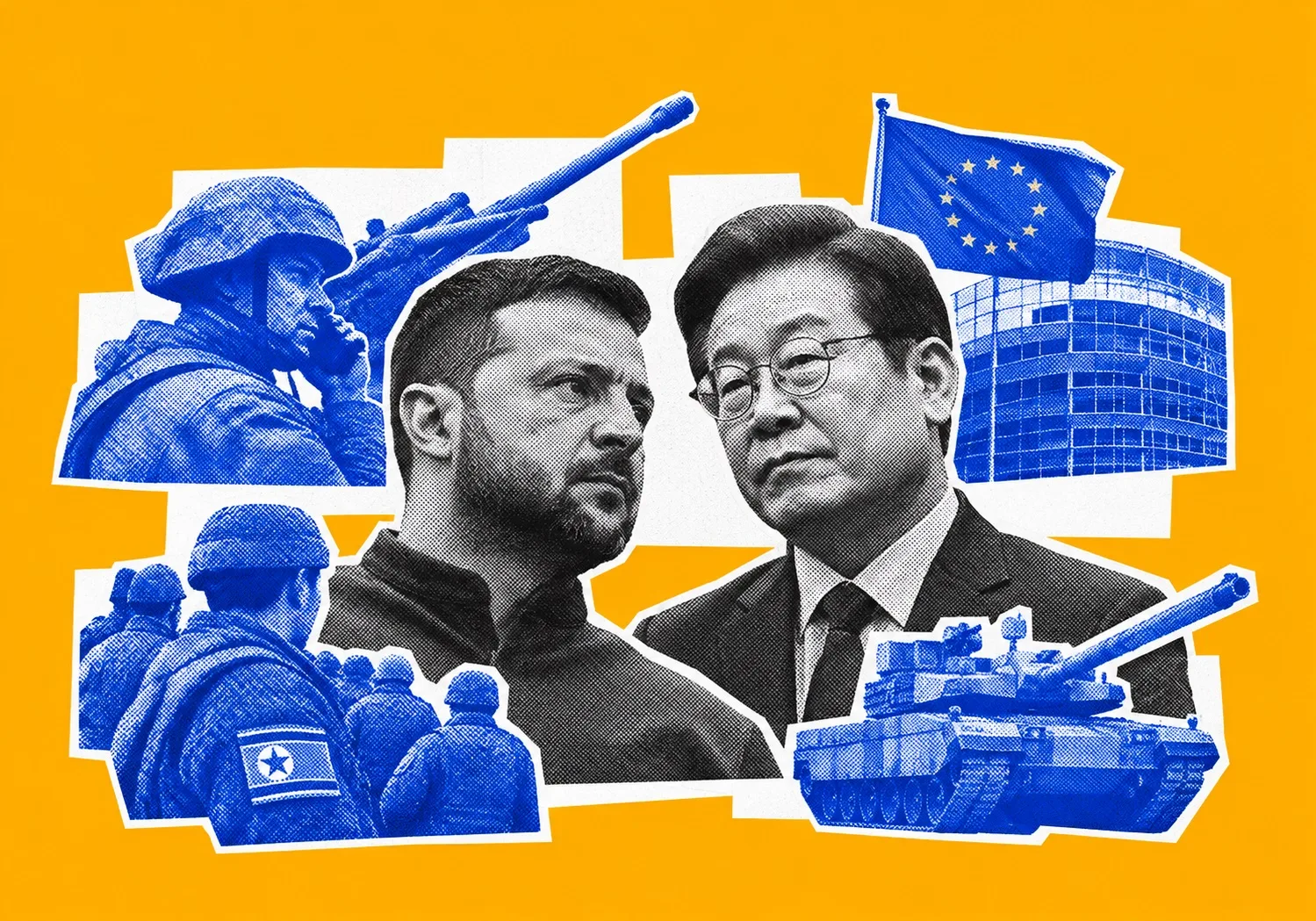
A growing diplomatic dispute between Kyiv and Seoul over North Korean POWs and a halted AI artillery project is worrying European governments. As South Korea becomes a crucial defense supplier for Europe, diplomats are stepping in to safeguard military cooperation against the Moscow-Pyongyang axis.
Newtype Industries developed Barbara, software intended to help artillery personnel process battlefield reports using artificial intelligence.
The program converts spoken messages into structured information for fire direction officers. It can also identify possible mistakes in coordinates and flag situations in which a reported target may be located in a civilian area.
The system does not independently decide whether to fire. That responsibility remains with military personnel.
According to The Diplomat, two Ukrainian units had been testing the technology, with the company hoping to complete its trials before the end of 2026.
The publication claimed that in mid-October a Ukrainian official coordinating the project informed the company that further cooperation had been stopped on instructions from higher authorities.
However, the company's response raised serious questions about the report.
As hromadske reported on November 6, Newtype Industries denied that its representatives had made the statements attributed to them.
The company did not provide enough publicly available information to establish precisely what stage the Barbara trials had reached.
There is also no confirmation that the Ukrainian government ordered the project to be terminated because of the diplomatic dispute.
For Ukraine's military, the immediate significance of the story should therefore not be exaggerated. Barbara was an experimental system, and there is no evidence that Ukrainian artillery units depended on it for regular combat operations.
Its potential value lies in reducing the time required to process information and helping operators detect errors before coordinates are passed through the chain of command.
Ukraine has already developed considerable experience with digital battlefield management. Foreign software projects offer additional tools for testing, but their usefulness depends on performance under combat conditions and successful integration into existing military procedures.
The question is whether the diplomatic confrontation could make such cooperation more difficult in the future.
Two Prisoners and a Dispute That Reached the Ambassador
The current disagreement began with the transfer of two North Korean soldiers captured by Ukrainian forces.
The men had been fighting alongside Russian troops. Their capture attracted attention in both Kyiv and Seoul because it offered an opportunity to obtain firsthand information about North Korea's participation in the war.
During his September 23 speech at the United Nations General Assembly, Ukrainian President Volodymyr Zelenskyy disclosed that the prisoners had been transferred to South Korea.
Seoul objected to the public announcement.
South Korean officials argued that the transfer was supposed to remain confidential, partly because publicity could put the soldiers' relatives in North Korea at risk.
Kyiv disputed Seoul's interpretation of the confidentiality arrangements.
The disagreement continued into October. South Korean President Lee Jae Myung demanded an apology, and on October 8 Seoul recalled its ambassador from Kyiv.
Ukraine subsequently expressed readiness to discuss the matter and restore normal diplomatic communication.
The dispute did not end there. On October 20, South Korea announced plans to reduce staffing at its embassy in Ukraine. Security concerns related to Russian attacks were also cited.
Despite the deterioration in relations, Seoul maintained that humanitarian and financial assistance to Ukraine would continue.
That distinction matters. Diplomatic relations have become strained, but there has been no announced comprehensive suspension of South Korean assistance.
The unresolved issue is whether the confrontation will remain confined to diplomatic channels or begin affecting other areas of cooperation.
European Diplomats Step In
The dispute has prompted concern among European countries that maintain close relations with both Ukraine and South Korea.
According to Korea JoongAng Daily, several European governments contacted Seoul in October to express concern about the worsening relationship.
South Korea's Foreign Ministry said three major European countries had offered assistance in resolving the disagreement. The governments were not officially named, although the report identified Britain, France and Germany as the countries believed to be involved.
Other European diplomats spoke more openly about the importance of continued cooperation.
Dutch Ambassador Peter van der Vliet drew attention to the connection between the war in Ukraine and security on the Korean Peninsula. Russia's cooperation with North Korea, he argued, has made developments in Europe relevant to South Korea's own security.
Representatives of Estonia and Latvia also urged Seoul to maintain its support for Ukraine. Norway delivered a similar message.
The European response has so far been diplomatic rather than military or economic.
There is no confirmed decision by the European Union or NATO to intervene in the Newtype Industries project, nor has Brussels announced any special measures connected to the artillery software controversy.
European governments appear primarily concerned with preventing a bilateral disagreement from damaging relationships that have become increasingly important since North Korea began supporting Russia's war.
Why Poland and the Rest of Europe Are Watching
South Korea's importance to European security is not limited to its position on Ukraine.
Its defense companies have become major suppliers to Poland, which has ordered large quantities of South Korean military equipment as part of its military modernization program.
The purchases include K2 tanks, K9 self-propelled howitzers and K239 Chunmoo rocket artillery systems.
These agreements have brought South Korean manufacturers into the European defense market on a substantial scale.
Poland's contracts are separate from Seoul's relations with Kyiv, and there is no indication that the diplomatic dispute has affected their implementation.
Still, the scale of this cooperation explains why European governments have an interest in stable relations with South Korea.
The European Union has also been developing its own security relationship with Seoul.
At their June 2026 summit, the EU and South Korea discussed closer cooperation on defense and security, including the protection of sensitive information and responses to common threats.
The two sides also advanced discussions concerning the exchange of classified information, an issue directly relevant to future cooperation between security institutions.
These initiatives predate the current dispute with Ukraine. They nevertheless show that Brussels increasingly views South Korea as a security partner rather than simply an important trading economy.
The practical lesson from the Newtype controversy is narrower than a wholesale reconsideration of European defense policy.
Military cooperation involving private technology companies needs clear agreements on access, testing, information security and responsibility for communication with government institutions.
Without those arrangements, even uncertainty over the status of a project can create confusion about whether cooperation is continuing.
Russia and North Korea Have Their Own Reasons to Watch the Dispute
Moscow and Pyongyang have developed a military relationship that affects both Ukraine and South Korea.
North Korea has supplied military assistance to Russia and deployed personnel in support of Russian operations. Its soldiers have consequently gained exposure to combat conditions very different from those encountered during training in North Korea.
For Seoul, this creates a security concern that extends beyond the war in Ukraine.
Experience acquired by North Korean troops could eventually influence how Pyongyang trains and equips its forces. South Korean authorities therefore have an interest in understanding how those troops operate and what they are learning.
Ukraine has access to information that could help answer some of those questions, including intelligence obtained from captured soldiers and battlefield observations.
South Korea, in turn, possesses extensive knowledge of North Korean military structures and equipment.
That makes cooperation useful to both countries.
A prolonged diplomatic confrontation could complicate such exchanges, although there is no public evidence that intelligence cooperation has already been suspended.
Russia could benefit if the disagreement reduced communication between Kyiv and Seoul or made defense cooperation harder to maintain.
But there is no verified evidence that Moscow organized the dispute or influenced the Newtype Industries controversy.
The distinction is important, particularly because the original report about Barbara has itself been challenged by the company concerned.
The strongest argument is not that Russia caused the crisis, but that tensions between Ukraine and South Korea could weaken cooperation between two countries facing different consequences of Russian-North Korean military ties.
Can Europe Help Repair the Relationship?
European governments have already made their immediate preference clear: they want Ukraine and South Korea to resolve the disagreement without allowing it to undermine wider cooperation.
Their involvement reflects the changing nature of the war's international consequences.
North Korean participation in Russia's military campaign has brought the security interests of Europe and East Asia closer together. Information collected on Ukrainian battlefields may be relevant to South Korea, while developments in North Korea's military capabilities have implications for the countries supporting Ukraine.
The European diplomatic response also suggests that governments recognize the value of keeping disputes between partners from spreading into unrelated areas.
There is no evidence that the Barbara project has become a formal subject of European mediation. Nor is there proof that the disagreement has caused measurable damage to Ukraine's artillery capabilities.
The immediate questions remain whether Kyiv and Seoul can resolve their dispute over the prisoners and whether Newtype Industries will clarify the current status of its work with Ukrainian military units.
For European governments, maintaining dialogue with both sides offers a way to protect existing security relationships without taking a public position on who bears responsibility for the diplomatic confrontation.
That approach may become increasingly important as cooperation between Russia and North Korea continues to connect the war in Ukraine with security concerns on the Korean Peninsula.
Sources: The Diplomat, hromadske, Korea JoongAng Daily, Deutsche Welle, Euronews, European External Action Service