
South Korea Recalls Ukraine Ambassador Amid POW Row and Russia Fuel Trade

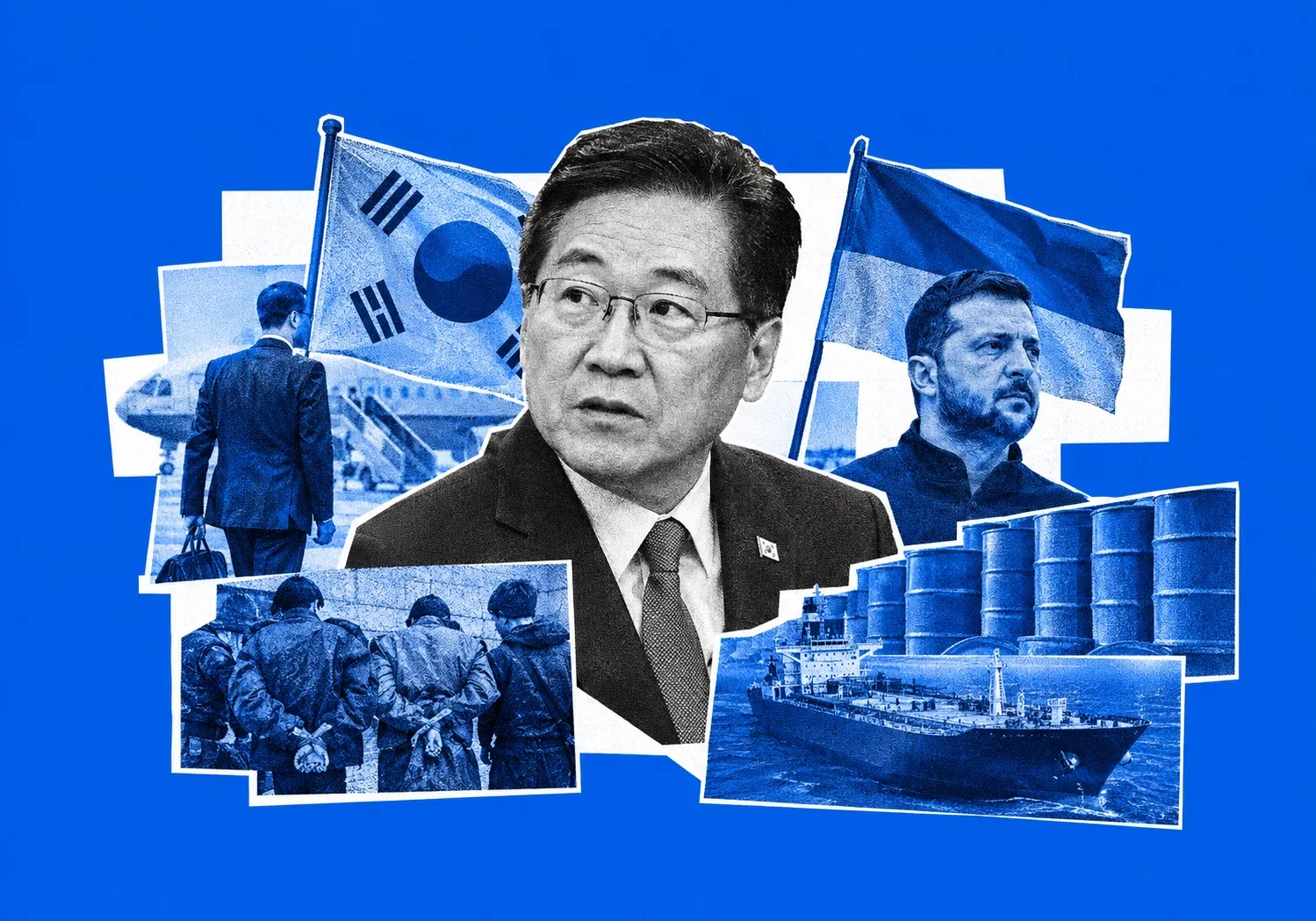
South Korea has recalled its ambassador to Ukraine following a row over North Korean POW transfers and allegations of fuel exports to Russia. The diplomatic crisis comes as Seoul faces a growing security threat from North Korean troops gaining real-world combat experience in Kursk.
The fighting is giving North Korean soldiers experience in the very conditions that could shape a future conflict on the Korean Peninsula. Yet Seoul and Kyiv have never turned their shared concerns about Pyongyang into a formal defence partnership.
The dispute over two prisoners has exposed how much remains unresolved between them.
A dispute over secrecy, with strategic consequences
Ukrainian special operations forces captured the two wounded North Korean servicemen in Russia’s Kursk region on 11 January 2025. Both subsequently expressed a wish to relocate to South Korea and were transferred there in mid-September 2026.
Zelenskyy announced the transfer during his address to the UN General Assembly on 23 September. Seoul objected, arguing that the two governments had agreed to keep the arrangement confidential to protect the soldiers and their families in North Korea from retaliation.
South Korean President Lee Jae-myung and the country’s foreign ministry criticised Kyiv’s handling of the matter. The ministry summoned Ukraine’s chargé d’affaires and demanded an explanation and an apology. When the Ukrainian response failed to satisfy Seoul, the ambassador was recalled.
Kyiv disputes Seoul’s account of the agreement. Representatives of Zelenskyy’s office said there had been no confidentiality commitment, while Foreign Minister Andrii Sybiha called the episode a diplomatic misunderstanding and signalled that Ukraine remained willing to discuss it.

The available information does not establish whether a binding non-disclosure agreement existed. Seoul says there was an explicit understanding; Kyiv denies it. That distinction matters, particularly when the dispute concerns the identities and safety of people who have defected from North Korea.
South Korea has a strong reason to insist on confidentiality. Under Article 3 of its Constitution, the country regards citizens of the Korean Peninsula as South Korean nationals. Protecting North Korean defectors is also a sensitive domestic issue, not least because relatives who remain in the North could face reprisals.
Ukraine had a different concern. The presence of North Korean soldiers in Russia’s war is evidence of military cooperation between Moscow and Pyongyang. Making that involvement public supports Kyiv’s efforts to draw international attention to the relationship.
The two positions are not necessarily irreconcilable. Ukraine could have reasons to publicise North Korean participation in the war without identifying individuals, while South Korea could protect defectors without preventing all discussion of their transfer. The breakdown appears to have centred on what the two governments believed they had agreed to, and what each considered acceptable once the men arrived in South Korea.
The consequences now extend beyond the original disagreement. Both countries have an interest in understanding North Korea’s role in the war, but the diplomatic dispute threatens the trust needed to pursue that work together.
The battlefield is changing North Korea’s army
The more serious issue for Seoul is what North Korean troops are learning in Russia.
Early in their deployment to Kursk, North Korean units suffered heavy casualties while relying on mass-infantry assaults. Their tactics subsequently began to change. Research by John Hemmings of the Royal United Services Institute, published in April 2026, describes a shift towards smaller fire teams, greater use of reconnaissance drones and closer integration between battlefield observation and artillery strikes.
The change in targeting speed is particularly important. According to the RUSI analysis, integrating drones into artillery operations reduced the time between detecting a target and striking it from hours to minutes. North Korean troops also began using Russian electronic-warfare equipment and adapting their logistics to make supplies less vulnerable to precision drone attacks.
These are practical skills acquired under combat conditions. Soldiers must learn how to coordinate small units, identify targets, operate when communications are disrupted, and protect their supply lines from persistent surveillance. Mistakes can be costly, but successful adaptations can be repeated and passed on to other units.
For Pyongyang, the experience offers something that exercises cannot fully reproduce: exposure to an opponent equipped with modern surveillance and precision-strike capabilities. Working alongside Russian forces may also give North Korean personnel access to operational methods and equipment they would struggle to evaluate in isolation.
That does not mean the entire North Korean military has already been transformed. The extent to which battlefield lessons have spread through its armed forces remains uncertain. Nor does experience in Kursk automatically translate into an ability to defeat South Korean forces.
But Seoul cannot afford to dismiss the changes. North Korea has long maintained a large military, and its conventional capabilities have often been assessed through the quality of its equipment, training and readiness. Combat experience adds another variable. Even a limited improvement in reconnaissance, targeting or small-unit coordination could affect how North Korean forces perform in a future confrontation.
The question is how quickly Pyongyang can turn the experience of troops returning from Russia into changes across its military.
Seoul saw the intelligence opportunity but held back
South Korea recognised the value of studying North Korean participation in the war well before the current diplomatic crisis.
In October 2024, the National Intelligence Service considered sending observers and intelligence officers to Ukraine to study North Korean tactics and take part in interrogations of prisoners. Seoul also considered changing its policy restricting lethal arms supplies to countries outside NATO involved in conflicts.
Those plans did not produce a public defence partnership. South Korean assistance remained focused on financial, humanitarian and non-lethal military support, alongside quieter intelligence exchanges.
There were reasons for caution. Lee Jae-myung’s government has sought to manage tensions with Pyongyang and maintain a careful approach to relations with Moscow. A more direct military commitment to Ukraine could complicate both objectives.
But North Korea’s deployment alongside Russian forces has made the distinction between the European war and East Asian security harder to sustain. Russia is gaining military cooperation from Pyongyang, while North Korean personnel are acquiring experience in a conflict involving drones, electronic warfare and precision weapons.

Ukraine, meanwhile, has first-hand access to the battlefield and to captured North Korean soldiers. That gives Kyiv a potentially valuable role in helping Seoul assess the changing capabilities of its principal military adversary.
The opportunity extends beyond interrogating individual prisoners. Ukrainian experience could help South Korean analysts understand how North Korean units behave under fire, how their tactics have evolved, and which weaknesses they have attempted to correct.
InformNapalm, a Ukrainian open-source intelligence group, also documented efforts to encourage North Korean soldiers in Kursk to defect to South Korea through Korean-language leaflets. The material was revised following feedback associated with the January 2025 captures. Such efforts show how the treatment of prisoners, psychological operations and intelligence gathering have become connected parts of the same problem.
A stronger relationship with Kyiv would not remove the need for Seoul to make its own assessments. Nor would it guarantee that intelligence gathered in Ukraine could be applied directly to the Korean Peninsula. But losing trust with a partner that has encountered North Korean forces at close quarters would make the task more difficult.
Russian fuel shipments raise another question
The diplomatic crisis coincided with fresh scrutiny of South Korea’s commercial links with Russia.
An investigation published by The Guardian on 6 October, based on port records and vessel-tracking data, found that more than 176,000 tonnes of petroleum products, mainly diesel, were shipped from South Korean ports to Russia’s Far East in July and August 2026. Seven tankers carried the shipments, three of which were under Western sanctions.
One vessel, the Layla, reportedly transported about 57,000 tonnes of fuel from Ulsan to Vladivostok while declaring Niigata, Japan, as its destination.
Ukrainian sanctions officials estimated that fuel originating from South Korean ports accounted for approximately 31 per cent of Russia’s total fuel imports in August. They said the supplies helped ease domestic shortages caused by Ukrainian strikes on Russian oil refineries.
South Korean authorities rejected allegations of deliberate sanctions evasion. They argued that the petroleum products were not covered by domestic export restrictions, while promising to investigate possible false reporting and violations of vessel-routing rules by private companies.
The distinction between suspicious trade and an established legal violation should not be overlooked. The reported shipments and discrepancies in declared destinations warrant investigation, but the available information does not establish that every shipment breached South Korean law or international sanctions.
The economic consequences are nevertheless relevant to the wider war. Russia has been dealing with pressure on its refining capacity, and continued access to imported fuel can help it manage shortages. Commercial shipments do not have to be organised by a government, or intended as support for Russia’s military campaign, to affect the conditions in which the Russian economy operates.
For Seoul, the issue is particularly uncomfortable. Its government has reasons to worry about Russia’s military relationship with North Korea, yet trade passing through South Korean ports may be helping Russia compensate for some of the damage caused by Ukrainian attacks. Whether the shipments were lawful and whether the controls were adequate are separate questions, but both require answers.
The controversy also illustrates the limits of sanctions when maritime trade depends on accurate cargo declarations, vessel tracking and enforcement across multiple jurisdictions. Restrictions can be weakened by gaps in oversight even when governments have not formally abandoned them.
The cost of keeping the two issues separate
Seoul now faces two problems that require different responses. It must resolve the disagreement with Kyiv over the handling of the prisoners, and it must establish what happened in the fuel trade. Neither issue should be treated as proof of wrongdoing beyond what the evidence supports.
The larger security concern, however, will not wait for either investigation to finish. North Korean troops have encountered modern combat conditions, adapted their tactics and worked alongside Russian forces. How much of that experience Pyongyang can retain and apply at home remains an open question.
South Korea has already considered using Ukraine as a source of intelligence on its northern neighbour. The prisoner transfer could have provided another opportunity for cooperation, but instead it has become a test of diplomatic trust.
The immediate dispute may be settled. The military knowledge North Korea is accumulating is harder to measure, and potentially harder to counter. For Seoul, the danger is that a disagreement over the handling of two soldiers becomes an obstacle to understanding the capabilities of the army they left behind.
Read also:
- A public dispute over two North Korean prisoners of war has triggered the most serious diplomatic crisis between Kyiv and Seoul since 2022. As President Lee Jae-Myung demands an apology, the rift exposes a fundamental clash between Ukraine’s public diplomacy and South Korea’s need for secret security cooperation - putting vital indirect military support at risk.***
Sources: Bloomberg, Reuters, NPR, The Kyiv Independent, DW, Inform Napalm