
Lithuania Returned Russian Anti-War Activist Who Was Later Sentenced to Six Years in Prison

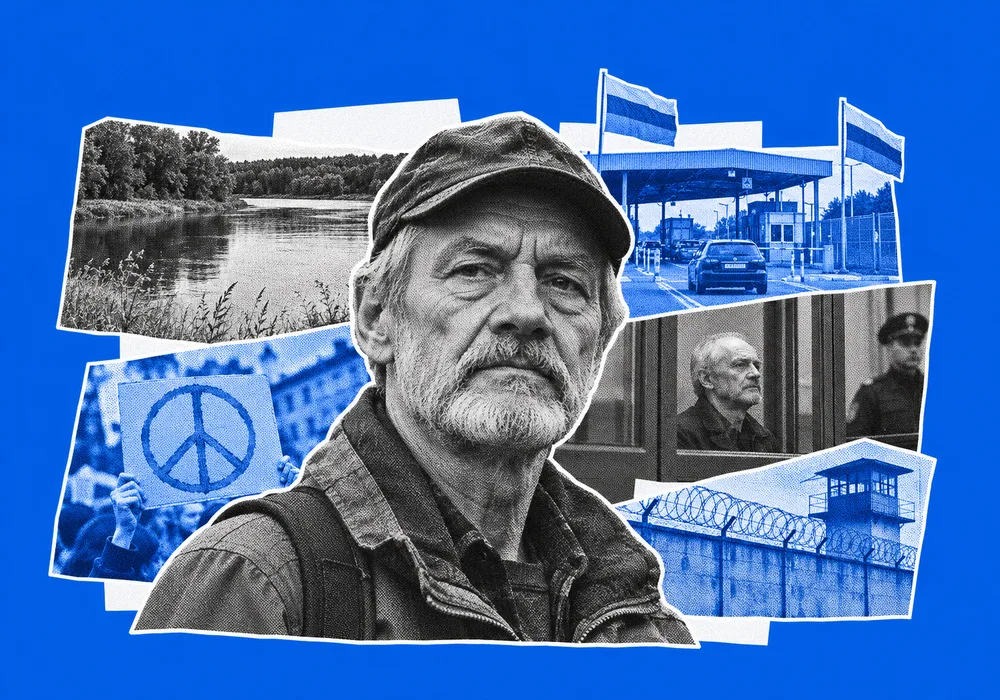
A 68-year-old Russian man who crossed the Nemunas River from Russia's Kaliningrad region to Lithuania in an attempt to escape persecution was handed back to Russian border guards within hours. He was subsequently sentenced to six years in prison for publications condemning Russia's war against Ukraine, raising serious questions about Lithuania's handling of asylum requests and the protection of people fleeing political persecution.
The case of Igor Odintsov, a 68-year-old Russian citizen from the town of Sovetsk in the Kaliningrad region, has brought renewed attention to the difficulties faced by Russian anti-war activists seeking protection in the European Union. In September 2026, Odintsov crossed the Nemunas River into Lithuania, attempting to escape the Russian authorities. However, his stay in Lithuania lasted only around five hours before he was returned to Russia.
Odintsov had reportedly opposed Soviet rule for decades and became openly critical of Vladimir Putin and the Russian government following the full-scale invasion of Ukraine. According to his friend, he had consistently supported Lithuanian independence and Ukrainian freedom. His political position eventually put him at risk of prosecution under Russia's increasingly repressive legislation targeting opponents of the war.
After his return, the consequences were swift. On 30 September, a Russian military court sentenced Odintsov to six years in a strict-regime penal colony. The charges concerned online publications that allegedly justified the ideology and practice of terrorism. Russian authorities linked the case to his opposition to the so-called special military operation, the Kremlin's official term for its war against Ukraine.
Conflicting accounts of the asylum request
The circumstances of Odintsov's return have become particularly controversial because he maintains that he explicitly requested political asylum from Lithuanian border guards. In a letter sent from a temporary detention facility and published through independent Russian journalists, he described arriving on Lithuanian territory barefoot and wearing only swimming trunks after walking approximately four to five kilometres from the river.
According to Odintsov, he informed the officers that he was seeking political protection and feared punishment under Article 205.2 of the Russian Criminal Code. He said that although Lithuanian officials questioned him for several hours and provided him with dry clothes, footwear and a blanket, they never offered him an opportunity to submit a written asylum application. He was eventually taken to the Panemunė border crossing and handed over to Russian authorities.
Lithuania's State Border Guard Service (VSAT) disputes his account. The service says that officers conducted an individual assessment of his circumstances but concluded that his statements did not constitute a sufficiently clear request for international protection. According to VSAT, Odintsov did not explicitly state that his life or freedom would be endangered if he returned to Russia.
The border service also maintained that the man had initially attempted to avoid contact with Lithuanian officers and had crossed the border illegally rather than approaching an official checkpoint. The assessment, which lasted more than five hours, reportedly included an examination of his legal status, health, personal circumstances and potential security risks.
UNHCR questions the handling of the case
The intervention of the United Nations Refugee Agency (UNHCR) has added an important legal dimension to the controversy. Renata Kulesh, the organisation's representative in Lithuania, emphasised that an asylum request does not have to be submitted in writing or follow a specific verbal formula. A person can request international protection simply by expressing fear of persecution or serious harm if returned to their country of origin.
Under the principle of non-refoulement, established by the 1951 Refugee Convention and reinforced by international human rights law, states are prohibited from returning individuals to countries where they face a risk of persecution, torture or other serious harm. Once an intention to seek asylum has been expressed, authorities are required to register the request and refer it to the competent institution for examination.
Kulesh stressed that cases involving conflicting accounts between applicants and border officials require independent investigation. The issue is particularly significant when the person concerned faces possible imprisonment because of political opinions or opposition to an ongoing war.
Lithuania's security concerns complicate asylum policy
Lithuania's Interior Ministry has defended the border guards' conduct, expressing confidence in their professionalism and stating that it does not intend to take action against the officers involved. The ministry argued that the decision to return Odintsov was made in response to the deteriorating security environment and the potential risks associated with unauthorised crossings from Russia.
Lithuanian authorities have repeatedly warned that Russia's activities against EU and NATO members extend beyond conventional military threats. Espionage, sabotage, cyberattacks and other hybrid operations have become central concerns for governments along the Alliance's eastern flank. The Interior Ministry therefore argued that individuals entering Lithuanian territory while bypassing border controls could potentially pose security risks.
This position reflects the increasingly difficult balance facing Baltic states. Lithuania must protect its external borders against potential Russian intelligence operations while ensuring that individuals genuinely fleeing political persecution retain access to international protection mechanisms. The challenge is particularly acute given the Kremlin's use of criminal legislation to prosecute critics of its war against Ukraine.
The controversy also has a broader regional context. Lithuania has previously faced criticism over restrictive asylum practices and pushbacks on its border with Belarus, where authorities have described irregular migration as part of a coordinated hybrid operation organised by the Minsk regime.
A case with wider implications for European protection standards
Odintsov's case raises questions extending beyond a single border incident. If an individual can be returned without a formal asylum procedure despite claiming to fear political persecution, the effectiveness of European protection mechanisms becomes dependent on how border officials interpret statements made during initial questioning.
The case is especially sensitive because the Russian authorities subsequently imposed a six-year prison sentence on Odintsov. His prosecution demonstrates the potential consequences of returning individuals to a country where opposition to the war can result in lengthy imprisonment. It also highlights the importance of distinguishing between legitimate national security concerns and the protection obligations established under European and international law.
For Lithuania and other EU member states bordering Russia and Belarus, the incident illustrates the growing tension between border security and humanitarian responsibilities. As Moscow continues to criminalise dissent and expand pressure on anti-war voices, European governments will face increasing scrutiny over how they identify and protect those seeking refuge from political persecution.
Sources: LRT English, [UNHCR](https://www.unhcr.org/ )