
Trump’s Russian Diesel Deal Weakens US Sanctions and Alarms EU Allies

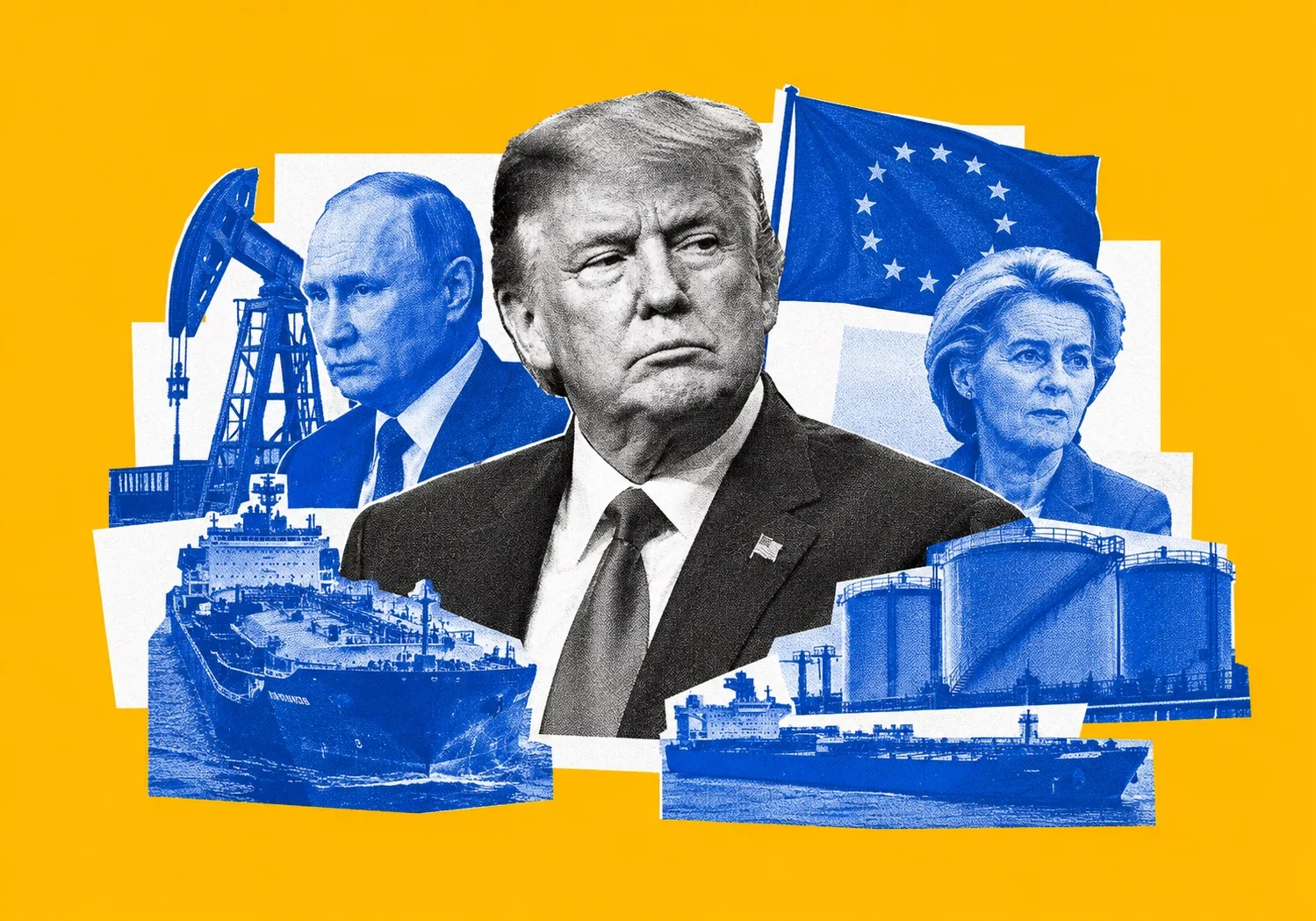
Donald Trump’s decision to suspend sweeping US sanctions on Russia in exchange for diesel imports has sparked intense pushback from Kyiv and European allies, while triggering a bipartisan battle in Congress. Signed on 16 October under Section 115 of the Lindsey O. Graham Sanctioning Russia Act - just two days before statutory restrictions were set to take effect - the waiver bypasses secondary tariffs on major Russian oil buyers. While Washington aims to lower domestic fuel prices, the move has forced the European Union to accelerate its own 22nd sanctions package to maintain pressure on Moscow, exposing deep transatlantic fault lines over Western energy strategy.
The scale of the suspended measures makes the decision particularly consequential. The package provided for tariffs of up to 500 per cent on Russian imports and tariffs of up to 100 per cent on the leading five purchasers of Russian oil and gas, including China and India. It also envisaged penalties against intermediaries helping Russia evade sanctions, alongside restrictions targeting Russian financial and energy sectors.
Congress had sought to make economic pressure on Moscow more difficult to reverse. Yet the legislation included a mechanism allowing the president to suspend its measures through a national-interest certification.
That provision has now become the central point of conflict. Trump did not simply abandon the sanctions framework or openly defy the statute. He used an authority written into the law itself, raising a more complicated institutional question: how effectively can Congress bind the executive when the legislation leaves the president substantial discretion over its implementation?
The distinction matters. A law may establish an extensive set of mandatory restrictions on paper while leaving the administration with considerable room to determine when those restrictions apply. In this case, the waiver has neutralised the immediate force of a framework intended to increase pressure on Russia and its trading partners.
The timing adds to the political tension. By acting two days before the statutory deadline, Trump prevented the package from taking effect as scheduled, turning a legislative instrument into the subject of a fresh contest over presidential authority.
Congressional opposition has consequently extended beyond the usual partisan divide over Russia policy. Representative Gregory W. Meeks, the senior Democrat on the House Foreign Affairs Committee, introduced the Prohibit Corrupt Russia Oil Deals Act, initially backed by 17 co-sponsors. The proposal would restrict the US International Development Finance Corporation from investing in Russian energy, invalidate general licences permitting Russian diesel transactions and mandate sanctions against Russian energy.
A bipartisan group of 12 senators, including prominent Republicans Mitch McConnell, John Cornyn, Thom Tillis, Susan Collins and Lisa Murkowski, also condemned the decision. Twenty-two House members, led by Jim Costa and Don Bacon, joined the criticism.
The breadth of the backlash suggests that the dispute is not confined to the merits of importing Russian fuel. It concerns whether the White House can use statutory flexibility to reverse the practical effect of a policy supported by members of both parties.
The price at the pump
The administration's immediate calculation is straightforward. American consumers face higher fuel costs, and additional supplies could help relieve pressure on the market.
The agreement provides for more than 300,000 metric tonnes of Russian diesel immediately, followed by 500,000 tonnes in November and potentially up to 1 million tonnes thereafter. For a White House facing domestic pressure over energy prices, the promise of additional physical supply offers a more immediate proposition than the uncertain effects of a sanctions regime that has yet to be implemented.
But the relationship between import volumes and retail prices is not automatic. The deal's stated objective is to lower domestic fuel costs; the available figures do not establish how much prices at American pumps would fall, or whether consumers would experience a meaningful reduction at all.
The distinction between a visible supply agreement and a structural change in fuel prices is politically important. The administration can point to incoming shipments as evidence of action. Its critics can question whether the benefits justify relaxing restrictions designed to limit Russia's ability to finance its war.
The arrangement also creates a direct link between American domestic economic concerns and the resources available to Moscow. Russian exporters stand to gain access to a market and revenue opportunities that the impending sanctions were designed to restrict. The suspension therefore gives Russia an immediate economic advantage in return for a prospective benefit to American consumers whose scale remains uncertain.
For Trump, the calculation favours a concrete short-term objective over the continued application of a broader strategic policy. Whether that trade-off proves worthwhile will depend not only on fuel prices but also on the cost of weakening the sanctions framework.
Europe cannot assume Washington will hold the line
The diplomatic consequences have emerged quickly. European Council President António Costa and European and British officials have condemned the decision, warning that a relaxation of sanctions undermines Western unity and Ukrainian security.
Their concern is structural. European governments have been pursuing the economic isolation of Russia as part of the broader response to its war against Ukraine. The US decision introduces uncertainty into that effort precisely where coordination between Washington and European capitals has been central to the strategy.
The European Commission is accelerating its 22nd sanctions package against Russia in response. That move signals an attempt to maintain pressure on Moscow despite the shift in American policy.
Yet European action cannot automatically reproduce the effect of a coordinated transatlantic approach. The suspended US measures were designed to reach beyond Russian imports and target major purchasers of Russian energy, including through secondary tariffs. Their potential reach depended on the ability to impose costs on third countries maintaining trade with Moscow.
If Washington steps back from that approach, Brussels faces a more demanding task: sustaining economic pressure while the United States offers a route towards continued Russian energy transactions.
This is not simply a disagreement over the appropriate severity of sanctions. It challenges the assumption that Western governments will maintain a common position when economic costs become politically inconvenient. European capitals must now consider how much of their strategy can remain effective if American enforcement becomes more dependent on the administration's immediate priorities.
The response also creates an uncomfortable asymmetry. European institutions are being pushed towards additional restrictions while Washington has suspended measures intended to increase the collective cost of doing business with Russia.
Moscow gains, Beijing and Delhi retain room to manoeuvre
The immediate beneficiaries extend beyond Russian energy exporters.
China welcomed the suspension of secondary tariffs that would have affected its trade with the United States, preserving room for continued purchases of Russian energy without the threatened additional costs on Chinese exports to the American market. India, another major purchaser of Russian oil and gas, also avoids the immediate prospect of tariffs of up to 100 per cent under the suspended framework.
The message to both countries is consequential. The threat of punitive trade measures can influence decisions only if the countries concerned believe those measures will actually be applied. A statutory framework that can be delayed through presidential discretion offers less certainty than one whose implementation is difficult to reverse.
That does not mean Beijing or Delhi will necessarily change their purchasing strategies. The available information does not establish such a shift. But the suspension preserves their freedom to continue energy transactions with Russia without facing the additional US trade penalties envisaged in the package.
For Moscow, the benefits are both financial and strategic. The diesel agreement provides an immediate commercial opportunity, while the wider suspension removes the imminent threat of a much more extensive sanctions regime. Even if the fuel deal produces only a limited effect on American retail prices, Russia can still benefit from the relief provided by delayed restrictions.
The decision also complicates the effort to distinguish between ordinary commercial exchange and economic activity that helps sustain the Kremlin's war effort. Washington had been preparing to use tariffs against Russia and its trading partners as leverage. It has now demonstrated that access to Russian energy can also become a reason to withhold that pressure.
Ukraine loses leverage before the next diplomatic test
For Kyiv, the implications are particularly serious because sanctions are not only an economic instrument. They are also a source of diplomatic leverage.
President Volodymyr Zelenskyy has criticised the diesel agreement, arguing that it does not compensate for global market pressures while removing pressure on Moscow. His objection goes to the heart of Ukraine's strategic position: the value of sanctions lies partly in the costs Russia expects to face if it refuses to change course.
Suspending the measures before they take effect removes a potential source of additional pressure at a moment when Ukraine continues to depend on Western support. It also introduces uncertainty about the durability of future commitments. If economic restrictions can be set aside in pursuit of a bilateral energy arrangement, Kyiv has less reason to assume that Washington will preserve them when other domestic priorities intervene.
The effect on future negotiations with Moscow is difficult to quantify. The suspension does not itself determine the outcome of any diplomatic process, nor does the available information establish that Russia will make concessions in response. But it changes the economic backdrop against which such negotiations would take place, reducing the immediate threat posed by a package that had been designed to target Russia and important trading partners simultaneously.
Ukraine must also contend with the possibility that European governments will have to shoulder more of the burden of maintaining economic pressure. Brussels' accelerated sanctions work is a response to that risk, but it cannot eliminate the underlying uncertainty over the direction of US policy.
Congress has a political weapon, but not an easy remedy
The legislative counter-offensive faces its own constraints. Meeks's proposed bill seeks to restrict the financial and licensing mechanisms that could facilitate Russian energy transactions, while bipartisan senators and House members have challenged the administration's decision publicly.
Such efforts could create new legal and political obstacles for the White House. But the existence of a proposed bill does not mean that Congress can quickly restore the suspended sanctions or guarantee that future measures will survive presidential opposition.
The central difficulty is that the administration has relied on authority already contained in the statute. Congress would therefore need to decide whether to revise the framework, restrict the circumstances in which the waiver can be used, or pursue other legislation capable of changing the policy's practical effect. Any confrontation over legislation would also have to account for the possibility of a presidential veto and the difficulty of assembling the two-thirds majorities required to override one.
The result is a contest in which both branches can claim a legal basis for their position, but their powers have different practical consequences. Congress can legislate and mobilise bipartisan opposition; the president controls the immediate implementation of the waiver authority invoked in this case.
That imbalance is now central to the credibility of American foreign policy. European governments and Ukraine are being asked to sustain a common strategy against Russia while Washington's own statutory commitments have proved vulnerable to an executive decision tied to domestic fuel prices. The question facing allies is no longer only whether Congress supports sanctions, but whether that support can reliably constrain the president when the next strategic trade-off arrives.
Sources: A Bill, Press Releases, Politico, AFP, The New York Times, The News and Observer