
Trump, Xi and Putin Hold Shenzhen Talks on Ukraine Without a Deal, Leaving Europe in the Dark

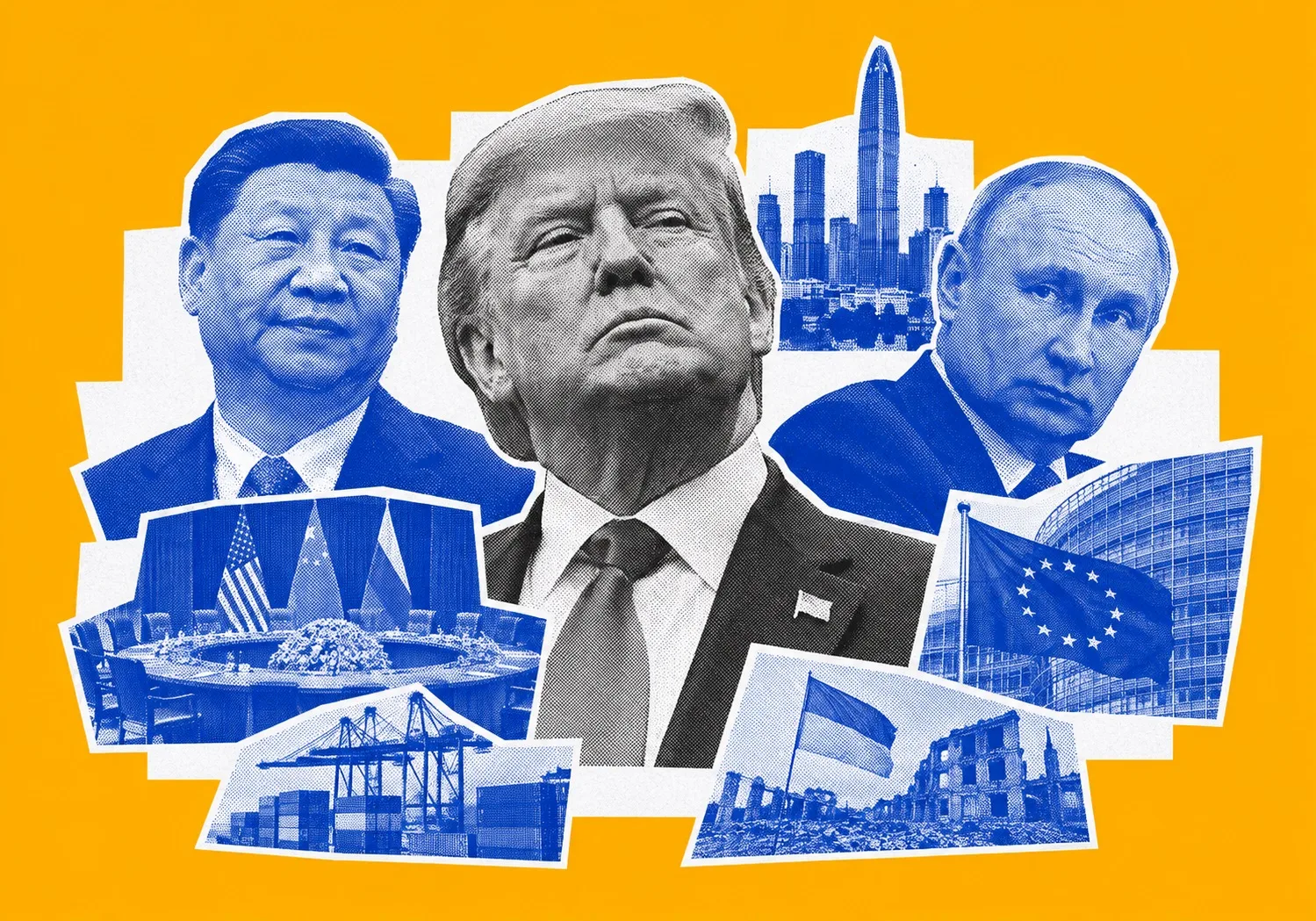
Donald Trump held more than three hours of talks with Xi Jinping and Vladimir Putin in Shenzhen on 19 November on the sidelines of APEC, putting the war in Ukraine, nuclear arms and trade on the agenda. Yet the meetings ended without a Ukraine peace plan or major breakthroughs, raising urgent questions in Europe about what was discussed behind closed doors.
The US president met Putin for approximately 42 minutes before holding an hour-long discussion with Xi. All three then joined a trilateral session lasting about 90 minutes.
Trump had welcomed the occasion as historic, praised his reception in China and referred to Putin as a "friend". For the Russian leader, the talks offered another opportunity for direct engagement with Washington. Xi, meanwhile, hosted discussions involving two countries central to China's diplomatic and economic interests.
Putin Leaves in a Good Mood, but Ukraine Gets No Peace Plan
Ukraine dominated the bilateral conversation between Trump and Putin, according to Kremlin adviser Yuri Ushakov.
The Russian official offered little detail about the substance of the exchange, although he said Putin emerged in a "great mood".
It was a revealing choice of words, but hardly an account of what had been negotiated.

Putin subsequently spoke of "numerous common interests" shared by Russia, China and the United States in resolving regional conflicts, including Ukraine. Trump also brought up the war in his meeting with Xi, urging American and Chinese efforts to help end it.
What remains unknown is whether either conversation produced a proposal that Ukraine could actually consider.
There was no public indication of agreed ceasefire conditions. Nothing was announced about territorial arrangements, the future of sanctions or the security guarantees Kyiv has sought in connection with a possible settlement.
Nor did the participants disclose whether they had discussed a timetable for further negotiations.
The distinction matters. Washington and Moscow can agree that a war should end without agreeing on the circumstances under which it should end. Beijing can support diplomatic efforts without committing itself to a particular settlement.
For Ukraine, those differences are fundamental.
A ceasefire without enforceable security arrangements would raise different questions from a negotiated settlement accompanied by guarantees. Territorial provisions would carry consequences that general statements about peace cannot capture.
The Shenzhen meeting provided no public answers to those questions.
It also took place without Ukrainian participation in the trilateral session, although the country's future featured in the discussions.
That does not establish that decisions were taken behind Kyiv's back. There is no published agreement to support such a claim. It does, however, explain why Ukrainian officials and their European partners had reason to seek a fuller account of Trump's conversations.
Nuclear Weapons: Agreement on the Danger, Silence on the Details
The nuclear discussions followed a similar pattern.
Trump said the United States, China and Russia were "uniquely positioned" to discuss reducing their nuclear arsenals and lowering the risk of nuclear confrontation.
According to Chinese state broadcaster CCTV, Xi called for a complete ban and eventual elimination of nuclear weapons.
The Kremlin's account placed greater emphasis on a shared acknowledgement that there could be "no winners in a nuclear war". It also referred to continued dialogue on nuclear risk reduction and non-proliferation.

There is a considerable distance between these declarations and a negotiated arms-control agreement.
Reducing nuclear arsenals would require governments to determine which weapons were covered, how reductions would be carried out and how compliance could be verified. None of those arrangements emerged from the public statements in Shenzhen.
The differences between the leaders' messages are also worth examining.
Xi's reported call for eliminating nuclear weapons set out a broad objective. Trump's remarks focused on the three countries' ability to negotiate reductions. Moscow's account concentrated on avoiding nuclear conflict and keeping discussions open.
Those positions leave room for further diplomacy, but they do not establish agreement on a common programme.
For European governments, the absence of a practical framework means there is no announced change to the nuclear security environment arising from the summit.
The discussions may become more consequential if the governments subsequently identify specific commitments. For now, they have agreed publicly on the importance of reducing danger without explaining how they intend to do so.
Did Xi Put Putin in His Place?
Beyond the formal agenda, the summit attracted attention for its choreography.
Xi received the visiting leaders in Shenzhen, and images of the proceedings prompted commentary about the relative positions of the American, Chinese and Russian presidents.
Particular attention fell on Putin.
Some commentators interpreted the seating arrangements and photographic positioning as evidence that the Russian leader had been relegated to a subordinate role. Others regarded the same images as a display of Xi's central position as host.
The claim that Putin had been deliberately humiliated is difficult to substantiate.
No participating government publicly described the arrangements as an intentional diplomatic insult. Nor has evidence emerged that Putin's placement during the proceedings affected the substance of the negotiations.
Photographs can reveal who stood where. They cannot, by themselves, establish what one leader conceded to another.
China's position in the talks is better understood through the issues Xi chose to address.

According to Xinhua, the Chinese president raised Taiwan with Trump and called for better communication on economic and trade matters.
Putin proposed discussion of global and regional economic relations, food security and energy security.
Trump, for his part, said Washington had already concluded more than 20 trade agreements and was negotiating additional deals with major economies. He portrayed American trade relations with China as having moved away from previously unequal terms.
Yet no new economic agreement involving the three countries was announced in Shenzhen.
Artificial intelligence and trade tensions were among the subjects reportedly discussed, but there was no public indication of new rules or joint commitments governing either.
China succeeded in hosting a meeting that attracted considerable international attention. Whether Xi obtained anything beyond diplomatic visibility is a different question, one the available accounts do not resolve.
Berlin's Parallel Diplomacy
As Trump, Xi and Putin met in China, Ukrainian President Volodymyr Zelenskyy joined European leaders in Berlin for discussions about the diplomatic situation.
Zelenskyy said the gathering offered an opportunity to discuss contacts involving Steve Witkoff and Jared Kushner and to hear details of Trump's meetings in China.
The timing brought two different approaches to the war into view.
In Shenzhen, the leaders of three major powers discussed Ukraine without Kyiv or European Union representatives at the trilateral table.
In Berlin, Ukraine and its European partners were trying to coordinate their positions and establish what had emerged from those conversations.
European governments have an obvious interest in the terms of any settlement. Decisions concerning Ukraine's security, sanctions against Russia or the wider regional security environment could have direct consequences for them.
Their absence from Shenzhen did not mean that all diplomatic contact had ceased. The Berlin meeting indicated that discussions with Ukraine continued through another channel.
But being briefed about negotiations is different from participating in them.
The European Commission's proposal for €45 billion in loan support for Ukraine provided another dimension to the European response.
The proposed financing was a specific potential commitment, although it had not yet become a completed disbursement. It also illustrated a distinction that can become important during peace negotiations: Europe may be expected to provide substantial financial assistance even when some of the diplomatic discussions take place elsewhere.

Money alone cannot settle questions of political representation. Nor does a meeting among Washington, Beijing and Moscow establish that those governments can implement an agreement affecting Ukraine without Ukrainian participation.
The practical significance of Europe's position will depend partly on whether the Shenzhen discussions develop into proposals requiring European cooperation.
What the Leaders Have Yet to Explain
Several details remain missing from the accounts of the summit.
There has been no published substantive agreement on Ukraine, no announced nuclear arms-reduction framework and no new trade accord. A joint Trump–Putin press conference was not confirmed in the initial reporting, although Ushakov indicated that Putin would provide further information about the trilateral discussions.
Those additional accounts may clarify whether the leaders went beyond exchanging established positions.
For Ukraine, the most important question is whether any specific settlement proposals were discussed and, if so, how Kyiv would be involved in considering them.
European governments will also need to establish whether Washington's conversations with Moscow and Beijing have produced expectations concerning sanctions, security arrangements or future financial support.
The summit offered each leader an opportunity to present his diplomatic priorities. It has yet to produce a public document showing where those priorities overlap in terms that could be implemented.
For Zelenskyy and the European leaders meeting in Berlin, the immediate task was therefore less about interpreting the photographs from Shenzhen than about obtaining the details that the three presidents had not made public.
Sources: [Reuters,](https://www.reuters.com/live/trump-xi-putin-live-leaders-hold-unprecedented-summit-shenzhen-2026-11-18/ ) [Associated Press,](https://apnews.com/article/3d0f8ed366d6084e1cfe12a4d8020c55 ) [CBS News,](https://www.cbsnews.com/news/trump-xi-putin-china-apec-summit/ ) [The Washington Post,](https://www.washingtonpost.com/world/2026/11/18/xi-personally-greets-trump-shenzhen-rare-gesture/ ) [Yonhap News Agency,](https://en.yna.co.kr/view/AEN20261118010300315 ) [Radio Free Europe/Radio Liberty,](https://www.rferl.org/a/trump-and-putin-hold-brief-apec-meeting/33901539.html ) [ABC News](https://abcnews.com/Politics/live-updates/trump-asia-trip-2026?entryId=138274801&id=138187702 )