
Andy Burnham Admits Brexit Has Failed as UK Seeks €20bn Trade Reset With EU

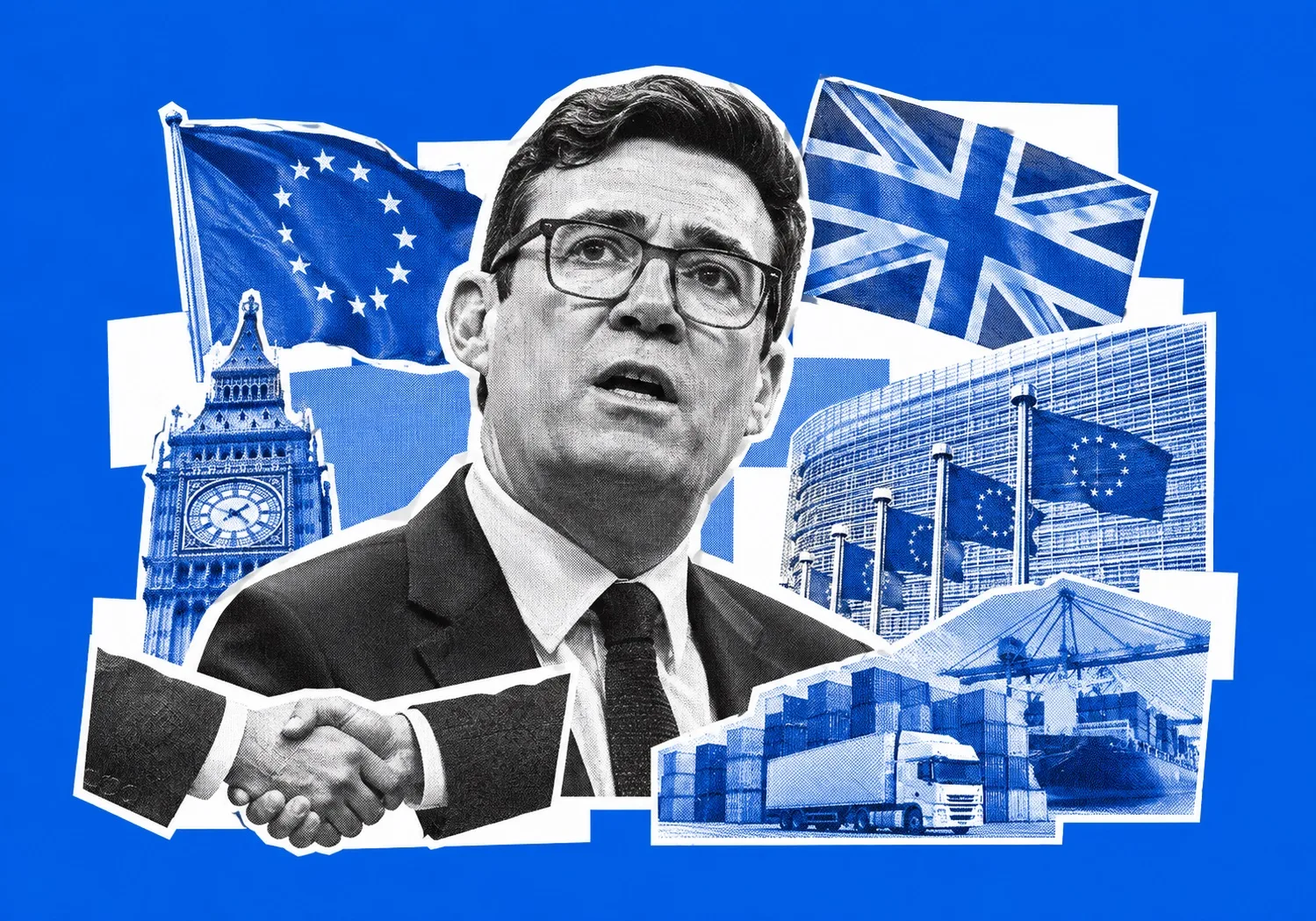
Ten years after the Brexit vote, British Prime Minister Andy Burnham has acknowledged that leaving the European Union damaged the UK economy. Ahead of a crucial UK-EU summit in Brussels, London is pushing for a new €20 billion (£17bn) deal covering food trade, emissions and youth mobility - but EU leaders are demanding strict regulatory alignment in return.
Speaking at the Lord Mayor's Banquet in London on Monday, 16 November, Burnham said Britain had paid a heavy price for the terms of its departure from the EU.
"The Brexit we were given has not worked. We have lost more than we gained," he told his audience.
He compared the political reluctance to admit Brexit's shortcomings to The Emperor's New Clothes, arguing that the damage had become too obvious to ignore.
His comments came four days before a planned summit with European leaders, where the government hopes to secure agreements on food trade, emissions trading and youth mobility.
Downing Street estimates that the measures could eventually increase British GDP by 0.4%, or approximately £17 billion. The figure is a forecast of additional economic activity rather than a direct financial payment from the EU.

The negotiations could mark a significant change in Britain's relationship with Brussels. Yet they also expose an awkward reality: removing the economic barriers created by Brexit may require Britain to accept European rules it no longer has a vote in shaping.
The cost of a harder Brexit
For British businesses, the consequences of leaving the EU single market have been felt in paperwork, border inspections and the cost of moving goods across the Channel.
Food producers have been particularly affected. Exporting meat, dairy products and other agricultural goods can involve health certificates, additional customs procedures and inspections that were largely unnecessary when Britain belonged to the single market.
These requirements have made trade more expensive and complicated, especially for smaller companies that cannot easily absorb additional administrative costs.
Burnham wants to negotiate an agricultural agreement that would reduce those obstacles. The proposed arrangement would bring relevant British standards closer to those of the EU, allowing many products to move with fewer checks.
European exporters would also benefit. The UK remains a substantial market for food producers across the bloc, while transport companies operating through Calais and the Channel Tunnel have had to adapt to the new border arrangements.
The issue is not simply the inconvenience of additional inspections. For companies transporting perishable goods, delays can affect delivery schedules, product quality and profitability.
Other parts of the proposed package would address regulatory differences in carbon emissions and create opportunities for young people to spend limited periods working or studying across borders.
London also wants closer cooperation on energy trading, although that issue involves separate negotiations and may not be resolved at the November summit.
The proposals follow agreements reached at the UK-EU summit in May 2025, when both sides committed to improving cooperation in several of these areas.
Burnham is now seeking concrete results from that process.
The £17 billion question
The government's projected economic gain is substantial, but it needs to be considered alongside the estimated cost of Brexit itself.
Britain's Office for Budget Responsibility expects the post-Brexit trading relationship to leave long-term productivity around 4% lower than it would have been if the country had remained in the European Union.
The independent fiscal watchdog also assumes that UK imports and exports will be approximately 15% lower over the long term compared with continued EU membership.
These are estimates relative to a hypothetical alternative, not figures showing that the economy has actually shrunk by those amounts.
Nevertheless, they suggest that the economic consequences of Brexit extend well beyond temporary border disruption.
A 0.4% increase in GDP would recover only part of the losses projected by the OBR. It would also take time to materialise, depending on the final agreements and how quickly businesses could benefit from them.
For Burnham, however, even a limited improvement could carry considerable political weight.
Britain has struggled with weak productivity growth for years, while successive governments have faced pressure to improve public services and household living standards.
A trade agreement that reduced business costs without reopening the question of EU membership could provide Labour with a relatively practical economic achievement.
The difficulty is that the concessions required to secure such a deal may prove politically contentious.
Brussels wants guarantees, not another Brexit dispute
The European Union has reasons to welcome closer economic cooperation with Britain. Easier trade would benefit European businesses, and London remains an important partner on security, energy and international diplomacy.
But Brussels is also determined to avoid arrangements that give Britain selective access to the single market without accepting corresponding obligations.
That concern is particularly relevant to agricultural trade.
If Britain wants fewer border checks, the EU is likely to insist on continued alignment with relevant European regulations. London would therefore have to follow certain rules developed in Brussels, despite no longer participating in EU legislative decisions as a member state.
UK minister for EU relations Hamish Falconer acknowledged that Britain might have a voice in discussions on food standards without obtaining a formal vote.
For Brexit supporters, that would revive one of the central arguments of the referendum campaign: whether Britain should be subject to rules made outside its own Parliament.
There is also the question of what happens after the next British election.
European negotiators are concerned that a future Conservative or Reform UK government could abandon the agreements, forcing businesses to adjust once again to different trading arrangements.
A possible exit provision, sometimes described as the "Farage clause", has been discussed as a way of managing the consequences of such a reversal.
The debate reflects a wider problem in UK-EU relations. Businesses need predictable rules that remain in place for years, while British governments want the freedom to change their policies.
Finding an arrangement that satisfies both sides may prove harder than agreeing that existing trade barriers are costly.
Johnson challenges Burnham's approach
Burnham's criticism has already reopened familiar political divisions in Britain.
Former prime minister Boris Johnson, whose government negotiated the country's post-Brexit trading relationship, rejected the suggestion that Britain should reconsider its departure from the EU.
Speaking to the Telegraph, Johnson warned that making Brexit a political priority again would be a mistake and insisted that voters would choose to leave if another referendum were held.
His intervention highlights the political risks facing Burnham.
Although the prime minister has criticised the economic settlement, his government has not proposed returning Britain to the EU single market or customs union.
Instead, he has set three conditions for new agreements: they must respect Labour's manifesto commitments, improve the existing Brexit deal and deliver visible benefits to the public.
He has called the final requirement the "Makerfield test", a reference to the constituency through which he returned to Parliament.
It allows Burnham to present closer cooperation with Europe as an attempt to improve daily life rather than reverse the referendum result.
Whether that distinction will satisfy Brexit supporters remains uncertain.
A relationship neither side can ignore
The economic negotiations come as Britain and the European Union are already rebuilding cooperation in other areas.
Russia's war against Ukraine has reinforced the importance of coordination between London and European capitals on defence, sanctions and intelligence.
Britain remains one of Europe's principal military powers, and its role within NATO has continued despite Brexit.
The UK and EU established a security and defence partnership in May 2025, creating a framework for closer cooperation on regional security, maritime threats and cybersecurity.
These arrangements do not depend on Britain returning to the European Union. They do, however, demonstrate how closely British and European interests remain connected.
For Brussels, cooperation with London can strengthen Europe's ability to respond to external threats. For Britain, working alongside European partners remains important to its international influence.
Burnham has argued that Brexit weakened that influence and left the country less able to shape events beyond its borders.
His government is now attempting to rebuild some of those connections without reopening the full debate over membership.
The November summit will provide an indication of how far that approach can go.
An agreement on agricultural standards or emissions trading would not restore the economic relationship Britain enjoyed before Brexit. Nor would it settle the broader argument over sovereignty.
But it could begin removing some of the barriers that businesses have faced since leaving the single market.
Ten years after the referendum, the immediate question is no longer whether Britain can leave the European Union. It is how much economic cooperation London can recover while remaining outside it.
Sources: The Guardian, Office for Budget Responsibility, Council of the European Union, Council of the European Union, The Guardian