
Todd Boehly Consortium Eyes Lukoil’s $22B Foreign Assets in Frozen-Share Deal: What It Means for Europe

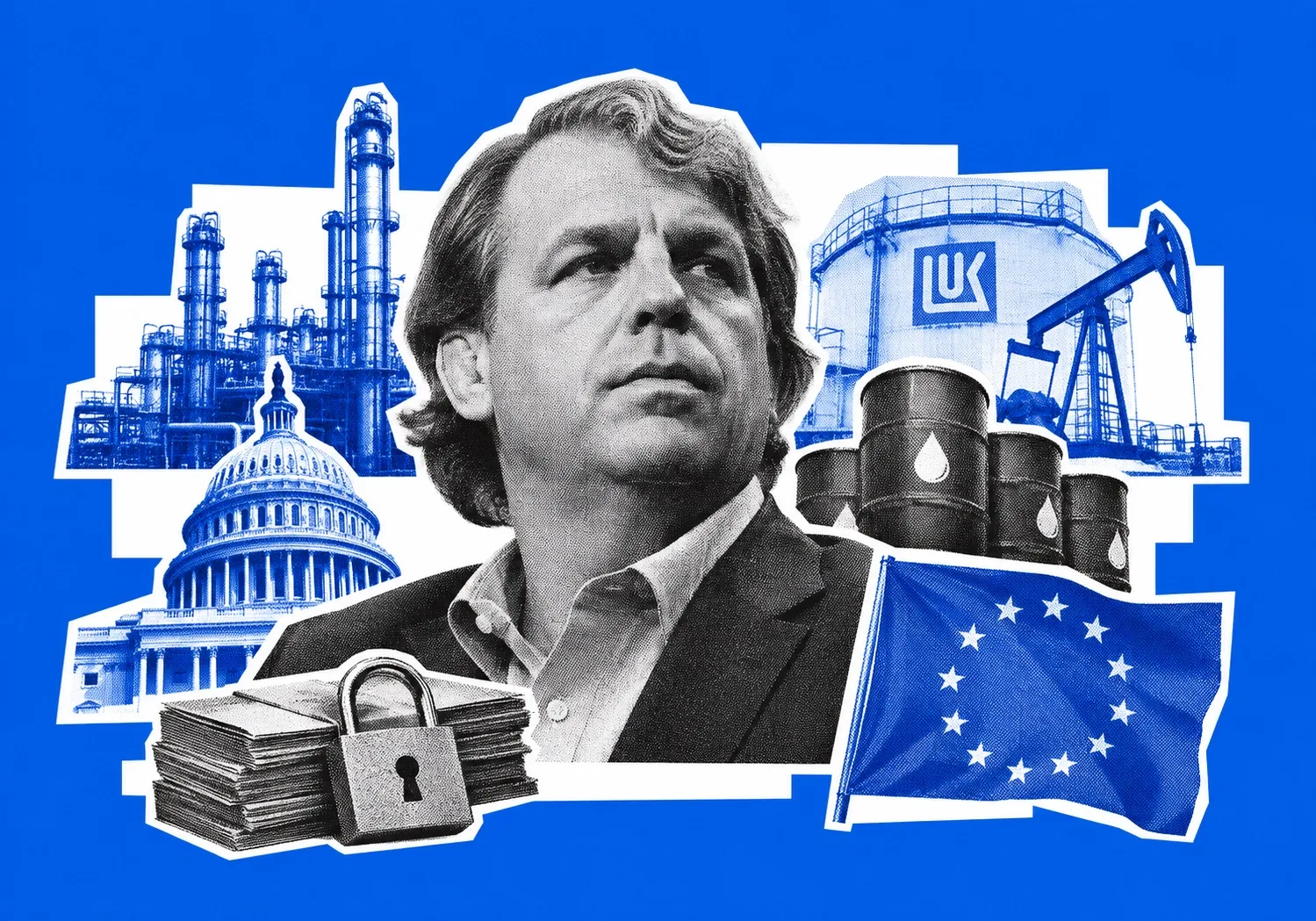
Russia’s second-largest oil producer, Lukoil, is nearing a deal to dispose of its international business through a novel frozen-securities exchange led by American investor Todd Boehly. The proposed transaction - covering European refineries, petrol stations, and global infrastructure - raises critical questions for Western regulators over sanctions enforcement, energy security, and whether Moscow could retain a future financial claim.
For Lukoil, the sale is no longer simply a question of portfolio management. The company is attempting to restructure its international operations under restrictions imposed by Washington in October 2025.
For potential buyers, however, those restrictions have created an opportunity to acquire substantial energy infrastructure at a reduced valuation. And for European governments, the negotiations highlight the increasingly complicated relationship between sanctions enforcement, energy security, and the commercial interests of Western investors.
How the Frozen-Share Exchange Would Work
The most unusual aspect of the proposed acquisition is that the consortium would not simply transfer billions of dollars to Lukoil in exchange for its overseas operations.
Instead, a bank acting on behalf of the buyers has reportedly been purchasing frozen Lukoil securities from Western investment funds and depositary institutions.
According to Reuters, the securities were acquired at approximately 30 cents for every dollar of their nominal value.
That means investors holding securities with a nominal value of $1 billion could receive roughly $300 million under the reported pricing arrangement.
The discount reflects the severe restrictions imposed on trading and accessing Russian financial assets following Moscow's full-scale invasion of Ukraine in February 2022.
Before the invasion, major Western investment funds held significant positions in Russian energy companies. Those securities were subsequently removed from leading emerging-market indices, frozen or substantially written down.
The Boehly-led consortium is now attempting to transform these impaired financial instruments into ownership of operating energy assets.
Under the proposed structure, the frozen securities would be exchanged for Lukoil's international holdings. However, rather than being transferred directly to the Russian corporation, they would be placed in an escrow account.
This distinction is central to the negotiations.
An escrow arrangement would restrict Lukoil's immediate access to the securities, potentially allowing the transaction to proceed without delivering an immediate financial windfall to the sanctioned company.
Nevertheless, the Russian corporation could eventually recover access to the securities if the relevant restrictions were removed and the conditions governing the account permitted their release.
The proposal therefore separates immediate ownership and financial access from the possibility of future economic benefit.
Why Washington Previously Blocked a Similar Proposal
The escrow mechanism appears designed to address concerns that derailed an earlier attempt to purchase Lukoil's foreign assets.
In December 2025, the US Treasury Department rejected a proposal involving American bank Xtellus Partners.
According to Reuters' reporting on the earlier negotiations, American officials were concerned that the proposed structure could allow Lukoil to benefit financially from the sale.
The latest consortium has reportedly advanced further by proposing to hold the securities in escrow instead of transferring them directly to the company.
That does not mean the transaction has received final regulatory approval.
The distinction matters because a technically compliant transaction could still produce economic consequences that policymakers did not originally intend.
If Lukoil loses control of its overseas facilities but retains a contingent claim to valuable securities, the company may preserve a potential source of future financial recovery.
Conversely, if sanctions remain in place indefinitely, those securities could remain inaccessible.
The arrangement effectively makes the future value of part of the transaction dependent on political decisions concerning Russia.
American and Gulf Investors Enter the Negotiations
The consortium combines American financial interests with investment groups from the Middle East.
Alongside Boehly, the participants reportedly include the United Arab Emirates-based International Holding Company and Al Hail Holding.
The Syrian-Qatari billionaire brothers Ramez and Moutaz Al-Khayyat are also involved, while the US International Development Finance Corporation is reportedly backing the bid.
The presence of investors from Gulf states adds a geopolitical dimension to the negotiations.
Moscow has maintained economic relationships with several Middle Eastern countries despite extensive Western sanctions. Their participation could make the proposed transaction more politically acceptable to Russian decision-makers than a sale involving exclusively Western investors.
The consortium's connections also extend into American political circles.
According to an October report by The New York Times, subsequently covered by Reuters, business groups involved in the proposed acquisition have ties to the families of Steve Witkoff and Jared Kushner, both of whom have participated in the Trump administration's negotiations with Moscow.
The report indicated that the potential oil transaction had become part of broader discussions between Washington and Russia.
Such connections do not establish that the deal has been improperly influenced. They do, however, demonstrate how the disposal of sanctioned Russian assets has become intertwined with diplomatic negotiations and politically connected international investment networks.
Why Europe Has a Direct Stake in the Outcome
Although the transaction is being negotiated primarily through American financial and regulatory channels, its consequences could extend across Europe's energy sector.
Lukoil's international portfolio includes refining facilities, fuel distribution networks and other infrastructure that serve regional energy markets.
Romania is among the European countries potentially affected by the proposed change in ownership, according to Romania Insider's November 4 report.
The identity of the eventual owners matters because energy infrastructure cannot always be treated like ordinary financial investments.
Refineries and distribution networks depend on operating licences, access to financing, supply agreements and regulatory approvals.
A prolonged period of ownership uncertainty can complicate investment decisions and operational planning.
At the same time, transferring Russian-owned infrastructure to international investors could reduce Moscow's direct commercial presence in strategically important markets.
The challenge for European authorities is to distinguish between a genuine transfer of control and a transaction that leaves meaningful economic benefits available to the former Russian owner.
The proposed escrow arrangement makes that distinction particularly relevant.
If the assets change hands while Lukoil retains a potential financial claim, European regulators may need to examine not only who owns the infrastructure today, but also who could benefit from the transaction in the future.
Sanctions Have Already Reduced Lukoil's Bargaining Power
The prolonged sale process illustrates how restrictions on Russian energy companies have affected the value and liquidity of their international businesses.
More than a dozen potential buyers initially expressed interest in Lukoil's assets, including major American oil corporations Exxon Mobil and Chevron.
However, the negotiations have repeatedly encountered regulatory and political obstacles.
In October 2026, American private equity firm Carlyle withdrew from the competition.
According to a Reuters report published on October 9, Carlyle had previously pursued an acquisition involving parts of Lukoil's overseas portfolio but was no longer actively seeking the deal.
Its withdrawal strengthened the position of Boehly's consortium.
Meanwhile, the underlying assets have become less valuable.
Some facilities have stopped operating, and the uncertainty surrounding their ownership has continued for more than a year.
This creates a difficult commercial situation for Lukoil.
The company cannot freely sell its international business under normal market conditions, yet delaying the sale may further reduce the portfolio's value.
Potential buyers, meanwhile, can negotiate against the background of sanctions-related restrictions and operational difficulties.
The reported acquisition of frozen securities at a 70% discount illustrates the financial opportunities created by that imbalance.
The Ukraine War Remains Central to the Deal
The negotiations cannot be separated from Washington's broader strategy toward Russia's war against Ukraine.
In February 2026, Reuters reported that the United States had slowed the disposal of Lukoil's international assets partly to preserve leverage over Moscow during negotiations aimed at ending the conflict.
The decision demonstrated that sanctions were being used not only to restrict Russian commercial activity but also as an instrument of diplomatic pressure.
The latest proposal introduces a potentially sensitive trade-off.
Allowing international investors to acquire Lukoil's assets could accelerate the removal of Russian ownership from strategically important infrastructure.
But permitting the company to retain securities that might become accessible after sanctions relief could also create an incentive for Moscow to seek an eventual relaxation of restrictions.
That possibility is particularly relevant as the Trump administration continues discussions with Russia over the war and the future of bilateral economic relations.
The timing of the negotiations also coincides with renewed attention to the political balance in Washington following the November 2026 US midterm elections.
However, no publicly confirmed evidence establishes that the proposed Lukoil transaction is conditional on the election results.
A Test of Whether Sanctions Can Deliver Lasting Economic Pressure
The proposed acquisition exposes a fundamental tension in Western sanctions policy.
Restrictions are intended to reduce the financial resources and international commercial influence available to sanctioned Russian companies.
Yet the same restrictions can create opportunities for investors willing to purchase distressed assets or securities at substantial discounts.
In Lukoil's case, the two effects are unfolding simultaneously.
The company faces the prospect of losing a major international portfolio whose value has already declined. Western investors may recover part of the money tied up in frozen securities, while the purchasing consortium could gain control of energy assets across several regions.
The unresolved issue is whether Lukoil would retain a future economic benefit through the escrow structure.
That question ultimately depends on the precise contractual terms, regulatory approvals and future sanctions decisions.
As of November 4, the reported transaction remains a proposal rather than a completed acquisition. Reuters' sources expect progress within weeks, but neither final approval nor the eventual release of the frozen securities has been established.
For European policymakers, the case illustrates why the effectiveness of sanctions cannot be measured solely by whether Russian companies sell their foreign assets.
It also depends on what those companies receive in return, when they can access it and whether the financial restrictions remain effective over time.
Sources: Reuters, Romania Insider, Reuters, Reuters