
Europe Wanted to Remove Russia From Its Energy Infrastructure. Lukoil’s Burgas Refinery Has Become the Problem

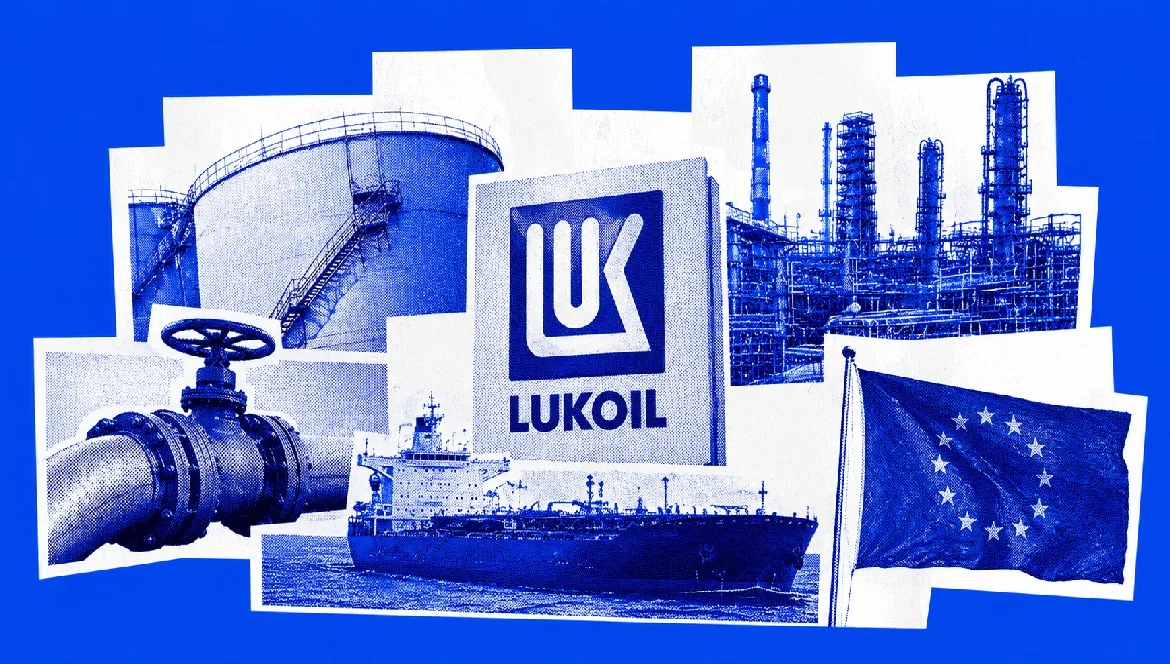
The failed sale of Lukoil’s Burgas refinery exposes a problem Europe has not fully solved. Sanctions can isolate Russian energy assets faster than governments can find new owners for them — leaving strategic infrastructure caught between geopolitical pressure, state intervention and the need to keep the fuel flowing.
The deadline for negotiations over the sale of Lukoil’s international assets has expired without a buyer for Neftohim Burgas, the largest refinery in the Balkans. The immediate problem is Bulgarian. The underlying one is European: what happens when a strategic energy asset is no longer politically acceptable under Russian ownership, but remains too important, too complicated and too risky for anyone else to acquire quickly?
The answer, so far, is that ownership does not disappear simply because sanctions make it politically toxic.
The US licence that allowed negotiations over Lukoil’s foreign assets to continue expired on 25 July. The sale process had been extended several times as potential buyers struggled to navigate the legal, financial and political complications surrounding the Russian oil giant’s international portfolio. Burgas became one of the most difficult assets in that portfolio because it is simultaneously a commercial refinery, a critical piece of Bulgaria’s fuel infrastructure and a symbol of Moscow’s remaining economic presence in southeastern Europe.
For Sofia, the absence of a deal is not simply a failed transaction. It leaves the country in the uncomfortable position of having to manage a Russian-owned refinery while trying to remove Russian influence from its energy system.
The refinery is too important to simply wait
Neftohim Burgas is not an ordinary industrial asset. With a capacity of roughly 190,000 barrels per day, it is the largest refinery in the Balkans and Bulgaria’s only refinery. Its importance extends far beyond the balance sheet of its owner. The plant is connected to the country’s fuel supply, storage infrastructure and distribution network, making any disruption a potential national energy-security problem.

That is what has made the Lukoil case so politically difficult.
Bulgaria has spent years attempting to reduce the Russian company’s position. It moved to end the refinery’s reliance on Russian crude, imposed significant financial pressure on the business and eventually created a legal mechanism for state intervention. In November 2025, Sofia transferred the management of Lukoil’s Bulgarian entities to an external administrator, while lawmakers later limited the administrator’s powers. The result was an unusual arrangement in which the state could exert increasing control over an asset it did not own, while the formal ownership problem remained unresolved.
This is the central contradiction of Europe’s sanctions era. Governments want to eliminate Russian control over strategic infrastructure. But the process of doing so can create a second problem: who is actually willing to take the asset?
The sanctions created a buyer’s market with no obvious buyer
Washington’s sanctions were designed to make a clean break possible. Potential buyers were allowed to negotiate with Lukoil, but any transaction had to sever the assets’ ties to the Russian company and prevent sale proceeds from reaching Lukoil while it remained sanctioned. In theory, this created a controlled route towards divestment. In practice, it made every potential transaction a complex geopolitical exercise.
Lukoil’s international portfolio is large and geographically fragmented. Its assets include refineries, oil fields, fuel stations and stakes in major international energy projects. A buyer is not simply purchasing an industrial company. It is acquiring a network of assets that can involve multiple jurisdictions, sanctions regimes, pre-emption rights, joint-venture partners and politically sensitive infrastructure. Reuters previously reported that the international portfolio was valued at around $22 billion, while potential buyers included major energy companies, private-equity firms and state-linked investors.

Burgas is particularly difficult because its strategic importance raises the political stakes while its Russian ownership raises the sanctions risk.
A potential buyer must therefore answer several questions at once. Can the refinery operate without Russian crude? Can it maintain access to alternative supplies? Will the transaction receive US approval? Will the Bulgarian government accept the buyer? Can the refinery remain profitable under the changing European sanctions regime? And what happens if the geopolitical environment changes again?
The result is a transaction that is commercially attractive only if the political risks can be contained. At the moment, that has proven difficult.
Europe has removed Russian crude faster than Russian ownership
The failure to sell Burgas exposes a broader weakness in the way Europe has approached energy decoupling from Moscow.
The European Union has made substantial progress in reducing direct dependence on Russian energy. It has banned seaborne Russian crude, introduced restrictions on refined products made from Russian crude and continued to expand sanctions aimed at reducing the revenues available to the Russian state. The European Commission’s current guidance makes clear that the EU is moving towards a system in which Russian-origin energy is increasingly difficult to import, trade and finance.
But supply chains can change faster than ownership structures.
A refinery can stop processing Russian crude. A country can diversify its suppliers. A company can lose access to European financial markets. Yet the legal ownership of the refinery may remain unchanged for years.
That gap matters. It means that sanctions can reduce the economic value of a Russian asset without necessarily transferring the asset into Western or European ownership. In some cases, the result is a kind of strategic limbo: the Russian company is politically isolated, the host government is increasingly involved and potential buyers remain cautious.
Burgas has become a particularly clear example of this problem.
Bulgaria is trying to prevent an energy crisis while dismantling a Russian foothold
The Bulgarian government has had to balance two objectives that do not naturally fit together.
The first is to ensure that the country has enough fuel. The second is to ensure that the company controlling a critical part of that fuel system is no longer an instrument of Russian economic influence.
That tension has already forced Sofia into extraordinary measures. Bulgarian lawmakers created the possibility of state intervention and later adjusted the authority of the special manager overseeing Lukoil's operations. The government has also had to coordinate with Washington over the sanctions regime and exemptions necessary to keep the refinery functioning.
This is precisely the kind of situation that European energy policy has traditionally tried to avoid. Critical infrastructure is supposed to be reliable, commercially viable and governed by predictable rules. The Lukoil case has instead turned the refinery into a permanent intersection of sanctions, national security, domestic politics and energy markets.

The longer the sale process continues without a buyer, the more difficult that intersection becomes.
A temporary solution can easily become a permanent arrangement. A state-appointed manager can remain in place longer than expected. Emergency legal powers can become part of normal governance. The government can gradually assume responsibility for the asset without fully assuming ownership. And the original objective — a clean transfer to a new owner — can become less immediate with every extension.
The end of the sale window does not end the problem
The expiration of the US negotiation licence therefore does not mean that Lukoil’s presence in Bulgaria has suddenly disappeared. It means that one of the mechanisms intended to produce a solution has reached its limit without delivering one.
That may force Sofia and Washington to choose between several imperfect options.
The first is another extension or a new legal mechanism that allows negotiations to continue. This would preserve the possibility of a commercial sale, but it would also prolong uncertainty.
The second is a more direct state-led solution. Bulgaria could seek to consolidate control over the refinery and attempt to arrange a future sale from a position of greater authority. That could reduce the immediate risk of disruption, but it would also expose the government to the financial and legal consequences of managing a major refinery.
The third is to accept a prolonged period in which the refinery operates under special arrangements while the ownership question remains unresolved.
None of these options is particularly attractive.
The problem is also becoming more urgent because the European energy environment is less forgiving than it was before the full-scale invasion of Ukraine. The EU is trying to reduce Russian energy dependence while global oil markets remain vulnerable to geopolitical shocks. The European Commission has repeatedly stressed the importance of maintaining sufficient refining capacity and coordinated oil-supply security, particularly during periods of international disruption.
A refinery can therefore be politically undesirable and strategically indispensable at the same time.
That is the trap in which Burgas now finds itself.
The strategic lesson is bigger than Lukoil
Europe’s energy transition has often been described as a process of replacing Russian molecules with non-Russian molecules. But the Burgas case shows that the harder question is not always where the oil comes from.
It is who controls the infrastructure through which energy enters the European economy.
Ownership, management, financing, supply contracts and political influence are separate layers of the same problem. Removing one does not automatically remove the others. A refinery may stop processing Russian crude while remaining owned by a sanctioned Russian company. A government may take operational control without becoming the full owner. A Western investor may be willing to buy the asset but unwilling to accept the legal uncertainty surrounding it.
This is why the Lukoil sale process has become more than a corporate transaction.
It is a test of whether Europe can convert sanctions pressure into a durable change in strategic ownership.
So far, the answer is incomplete. Washington has created the conditions under which a sale can happen. Bulgaria has created mechanisms to prevent the refinery from becoming hostage to its Russian ownership. The European Union has continued to tighten restrictions on Russian energy. But none of these measures has yet produced the final outcome that would resolve the underlying contradiction.
The refinery remains too important to shut down, too politically sensitive to leave untouched and too complicated to sell quickly.
For Bulgaria, that means the Lukoil problem is entering a new phase. The question is no longer simply whether Russia will sell its largest remaining energy foothold in the Balkans.
It is whether Europe can actually find a way to take strategic infrastructure out of Russian hands without creating a new form of dependence on emergency state control.
That may prove to be the more difficult transition.
Sources: EURACTIV, Associated Press, Reuters, BTA, Lukoil, Bulgarian Ministry of Economy