
Thousands Protest in Slovakia Against PM Robert Fico’s Russia Ties

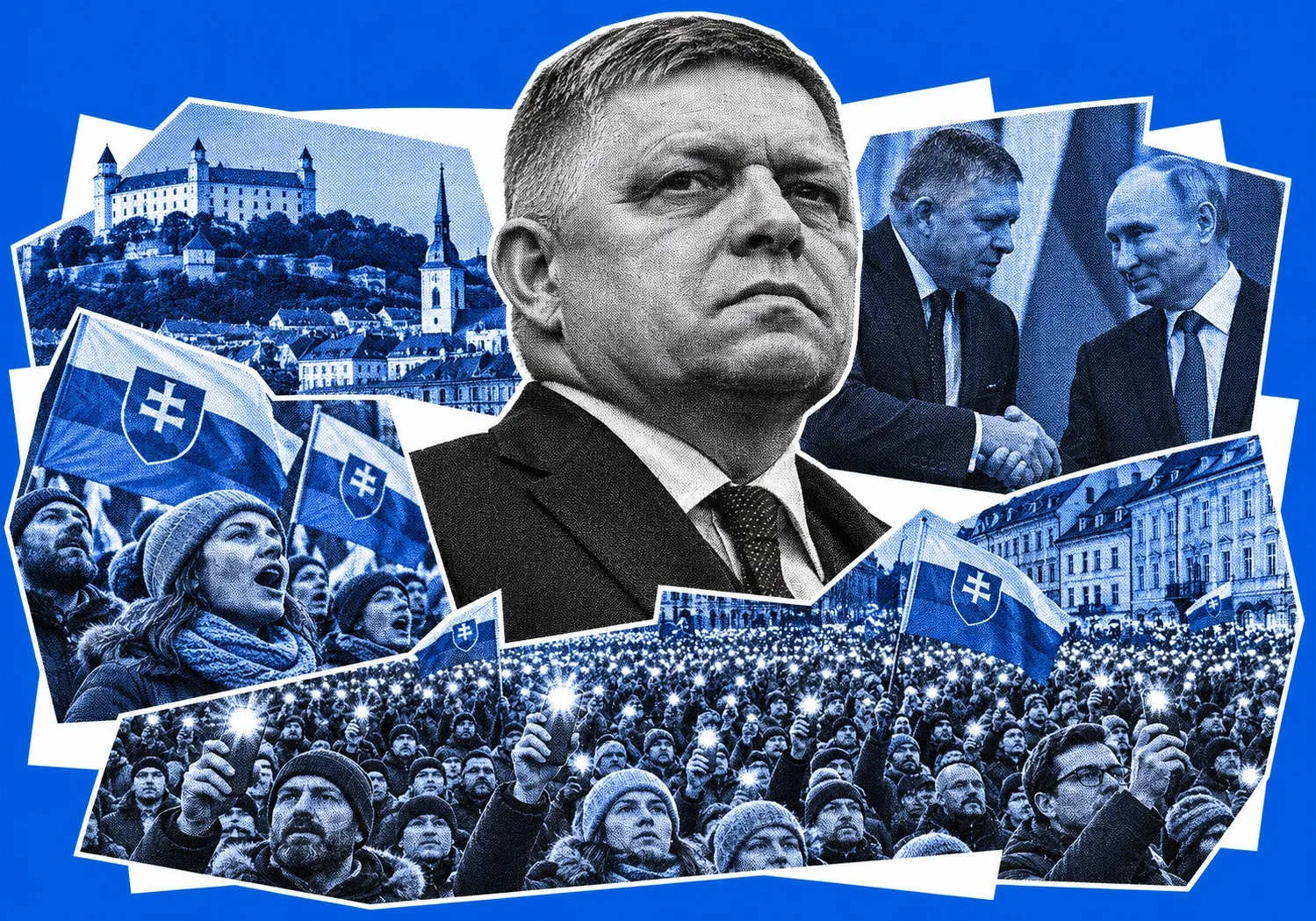
Around 25,000 people gathered in Bratislava alone on 17 November, organisers said, as demonstrations spread across Slovakia on the anniversary of the 1989 Velvet Revolution. Opposition parties united against Prime Minister Robert Fico’s growing cooperation with Moscow and his decision to halt state military donations to Ukraine. In the capital’s SNP Square, a focal point of the 1989 protests that helped end communist rule in Czechoslovakia, crowds chanted that they had had enough of Fico.

Further rallies took place in Košice, Banská Bystrica and other communities.
The rallies followed Foreign Minister Juraj Blanár’s October visit to Moscow for talks through a revived Russian-Slovak intergovernmental commission. The government moved its discussion of the visit’s results forward to the day of the demonstrations, angering opponents of closer cooperation with Russia.
“Russia isn’t a partner we should have, after all, they attacked Ukraine,” Jan Ducho, a 15-year-old student, told AFP in Bratislava.
“Just as in 1989, what unites us must be stronger than what divides us,” said Michal Šimečka, leader of Progressive Slovakia.
Liberal, conservative and ethnic Hungarian opposition groups hope to defeat the governing coalition in the parliamentary election expected in 2027, despite their differences over domestic policy.

\## Fico’s Long Return
Fico, 62, is serving his fourth term as prime minister. A lawyer who joined the Communist Party before the collapse of communist rule, he founded Smer in 1999 and first took office in 2006. He built his appeal around social protection and promises to defend living standards, later combining that message with conservative positions on migration and increasingly hostile language towards liberal opponents.
His relationship with the EU has changed considerably. Slovakia adopted the euro under his first government in 2009, and he subsequently argued that the country should remain close to France and Germany at the heart of European integration. His more recent campaigns have attacked Brussels, NATO and Western policy towards Russia, appealing to voters who distrust those institutions.
“Fico is a technician of power, by far the best in Slovakia,” sociologist Michal Vašečka of the Bratislava Policy Institute told Reuters ahead of his 2023 comeback. His career has involved repeated changes of emphasis, allowing him to reach voters on both the economic left and the nationalist right.
In 2018, the murders of investigative journalist Ján Kuciak and his fiancée, Martina Kušnírová, prompted mass protests over corruption and forced Fico to resign. After Smer lost power in 2020, he rebuilt support by attacking the government’s pandemic policies and its military assistance to Ukraine. Victory in September 2023 returned him to office in a coalition with Hlas and the Slovak National Party.
Fico survived an assassination attempt in May 2024, when he was shot after a government meeting in Handlová. His return to work took place against a backdrop of continuing disputes over criminal justice, public broadcasting and civil society. Critics say his government has weakened safeguards against abuses of power; European Commission concerns over several reforms have added to the confrontation with Brussels.
An Open Door to Moscow
Fico argues that engagement with Russia protects Slovak interests and offers a route towards ending the war. He has criticised sanctions as ineffective and accused Western governments of prolonging the fighting by supplying weapons. In October 2024, he appeared on Russian state television to set out that position, offering Moscow an audience with the leader of an EU and NATO member.
Two months later, on 22 December, he met Vladimir Putin at the Kremlin. The visit came shortly before the expiry of the agreement allowing Russian gas to transit Ukraine, an arrangement Slovakia wanted to preserve. It was a rare trip to Moscow by an EU leader since the full-scale invasion and drew criticism from opponents at home.
Fico returned on 9 May 2025 for Russia’s Victory Day celebrations, becoming the only EU national leader to attend the military parade. He defended commemorating the defeat of Nazism. Critics objected to the political setting: Putin was welcoming a European prime minister while Russian troops continued their invasion of Ukraine. Fico met Putin again in Beijing in September that year and in Moscow on 9 May 2026.
The relationship has since moved beyond meetings between the two leaders. Reporting by EUobserver and Slovak newspaper Denník N described plans for cooperation covering energy, culture, tourism and agriculture. Blanár’s October visit advanced the revival of bilateral machinery that had been suspended following Russia’s 2022 invasion.
Russian energy remains central to Fico’s case. Slovakia has sought continued oil deliveries through the Druzhba pipeline and supplies of Russian nuclear fuel. He presents those purchases as necessary to keep energy affordable. Opponents argue that preserving dependence on Moscow leaves Slovakia exposed to further disruption and undermines European efforts to reduce the revenues available to Russia.
Pressure on Ukraine
Fico ended military donations from Slovak state stocks after returning to office in 2023, reversing the policy of governments that had supplied Ukraine with fighter jets and air-defence equipment. He allowed commercial arms sales to continue, however, leaving Slovak manufacturers able to supply Ukraine under contract. His opposition to government aid has therefore coexisted with an expanding defence business.
His administration also sought investigations into earlier weapons donations, alleging that the transfers had compromised Slovakia’s own defences.
In February 2026, a prosecutor closed investigations involving MiG-29 aircraft and air-defence systems, saying no crime had been established. The dispute made support for Ukraine part of a wider battle over the previous government’s record.
Within the EU, Fico has joined Hungary in holding up sanctions and has threatened to obstruct financial support for Kyiv. In March 2026, he said Slovakia could take over Hungary’s blocking of a €90 billion Ukraine loan if Viktor Orbán lost the forthcoming Hungarian election and Russian oil supplies through Druzhba remained suspended.
The pipeline had been damaged in a Russian attack. Fico and Orbán accused Ukraine of delaying repairs for political reasons; Kyiv said continued Russian strikes made the work dangerous. Their demands linked Ukraine’s access to European funding with the restoration of a route carrying Russian oil to two EU countries.
EU sanctions require unanimous agreement, giving Slovakia influence beyond its size. In March, Bratislava and Budapest resisted both the renewal of restrictions on individuals and entities and a new package of economic measures. Such objections can delay decisions even when they eventually give way to a compromise.
The loan was ultimately agreed, with Slovakia, Hungary and the Czech Republic opting out of financial participation. Fico has also backed Ukraine’s eventual EU membership while opposing its entry into NATO. These differences matter: his government has challenged important elements of European support for Kyiv without rejecting every form of cooperation with Ukraine.
Orbán’s Ally
Orbán was Fico’s closest partner inside the EU. Despite coming from different political traditions, they shared opposition to sanctions, defended Russian energy imports and accused Brussels of intruding on national sovereignty. Their cooperation gave each an ally when disputes over Ukraine reached European summits.

Orbán’s departure from power after Hungary’s April 2026 election changed that relationship. Fico lost a fellow EU leader prepared to challenge the bloc’s Russia policy, having already offered to continue Hungary’s obstruction of the Ukraine loan if the election removed Orbán from office.
His wider contacts include Serbia’s Aleksandar Vučić, who described a meeting with Fico in Moscow in May 2025 as brotherly. Bosnian Serb leader Milorad Dodik also attended the celebrations. Those relationships place Fico among European politicians willing to maintain close contact with Moscow, but neither Serbia nor Bosnia and Herzegovina has a vote in EU decisions.
Sources: Euronews, Associated Press, Reuters, AP/PBS, EUobserver