
Albania’s NATO Summit Delayed as Alliance Struggles to Agree on Its Next Meeting

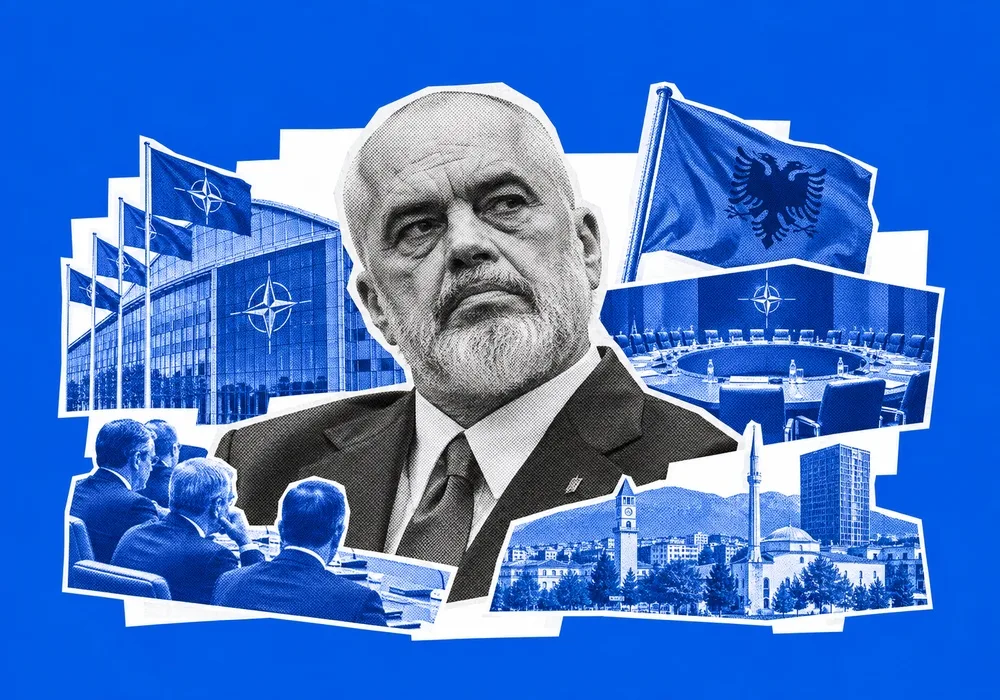
Albania will not host a NATO summit in 2027, despite previously being designated as the next host country, Prime Minister Edi Rama announced on 12 November. Speaking in Dublin ahead of the ninth European Political Community summit, Rama said NATO members had not reached a common position on when their next meeting should take place. He ruled out 2027 and indicated that Tirana would host the gathering in 2028 if the alliance decides to hold a summit that year.
The announcement clarifies months of uncertainty surrounding Albania's preparations to host one of NATO's most important political and strategic gatherings. Although the country remains designated as the future host, the timetable has become a subject of disagreement among allied governments. A NATO official confirmed that the next summit would be held in Albania but said that a decision on the date had yet to be made. The postponement therefore does not amount to a withdrawal of Albania's hosting role, but demonstrates that the alliance has yet to settle its broader meeting schedule.
The uncertainty had become particularly visible in June 2026, when reports emerged that plans for a 2027 summit in Albania were facing resistance from the administration of US President Donald Trump. Concerns were also raised about Albania's defence expenditure, which some NATO members considered insufficient. The issue has acquired additional political significance as Washington continues to press European allies to assume greater responsibility for the alliance's collective defence.
Defence Spending Adds to the Political Pressure
Defence expenditure has become an increasingly important measure of political credibility within NATO. At the 2025 Hague summit, allied leaders agreed to a new commitment to invest 5% of GDP annually in defence and security-related expenditure by 2035. This includes 3.5% for core defence requirements and up to 1.5% for broader security priorities, including critical infrastructure, cybersecurity and resilience. The agreement has intensified expectations that every member state should demonstrate tangible progress towards strengthening its military capabilities.
Albania has sought to adjust its spending trajectory to meet these expectations. Its government has previously indicated that defence and defence-related expenditure would increase, reflecting the new alliance-wide commitments. Nevertheless, the country's spending levels have remained a source of scrutiny among some allies. Hosting a NATO summit is not merely a diplomatic responsibility: it provides an opportunity for governments to demonstrate their strategic priorities, present their defence commitments and influence the alliance's collective agenda. Questions over national contributions can therefore create additional political pressure for the host government.
The dispute also reflects broader tensions over burden-sharing between the United States and European members. Trump's administration has repeatedly argued that European allies should contribute more to their own security rather than rely disproportionately on American military capabilities. In this context, defence spending has become closely connected to political influence within NATO, with governments under pressure to demonstrate that their commitments are reflected in actual military investment.
A Shift in NATO’s Summit Schedule
Another important factor is NATO's reconsideration of its recent practice of holding annual summits. The alliance's leaders have met every year since 2021, but the frequency of these gatherings has increasingly become a subject of internal debate. Some members favour holding summits every two years or reducing the number of high-level meetings to allow more time for implementation of existing commitments and longer-term strategic planning.
The discussion is also influenced by the political difficulties surrounding transatlantic relations. Disagreements over defence spending, military assistance to Ukraine and the distribution of responsibilities have complicated coordination between Washington and European capitals. Fewer summits could reduce the pressure to produce immediate political announcements and limit the risk of high-profile disagreements overshadowing substantive discussions. However, less frequent meetings would also require NATO to maintain effective political coordination through other channels.
The alliance's own diplomatic calendar has already reflected this uncertainty. At the June 2025 summit in The Hague, NATO leaders said they looked forward to meeting in Türkiye in 2026, followed by a gathering in Albania. However, the declaration adopted at the July 2026 Ankara summit referred only to the next meeting without specifying its date or location. The omission was an early indication that the previously anticipated timetable was no longer certain.
Albania’s Strategic Ambitions in the Western Balkans
For Albania, hosting a NATO summit would represent an important opportunity to strengthen its position within the alliance and increase its diplomatic visibility in Europe. The country joined NATO in 2009 and has consistently presented its membership as a central pillar of its foreign and security policy. A summit in Tirana would also provide an opportunity to highlight the strategic importance of the Western Balkans, a region where political instability, unresolved disputes and external influence continue to complicate European security.
The Western Balkans remains relevant to NATO's broader security calculations because developments in the region can have consequences for European stability. Political tensions between Serbia and Kosovo, institutional challenges in Bosnia and Herzegovina and the continuing vulnerability of regional governments to external influence require sustained attention from European and transatlantic institutions. Albania has sought to position itself as a reliable NATO member and an advocate of deeper Euro-Atlantic integration across the region.
A high-level gathering in Tirana would have offered an opportunity to reinforce NATO's presence in Southeast Europe and demonstrate the alliance's commitment to regional security. Although postponement does not remove Albania from the hosting arrangements, the delay means that the government will have to wait longer to translate its diplomatic ambitions into a major international event.
Domestic Political Stakes for Rama’s Government
The timing also carries domestic political implications for Rama's government. Albania has experienced months of anti-government protests, with demonstrators raising concerns about corruption, governance and the country's political direction. The government has faced additional scrutiny over its handling of domestic challenges, while Rama has rejected calls for his resignation. In this environment, the prospect of hosting a major NATO gathering could have served as an important demonstration of international recognition and Albania's standing among its Western allies.
The postponement may therefore carry reputational consequences for Tirana, even if it does not represent a formal diplomatic setback. Hosting an international summit of this scale would have strengthened the government's position as a regional partner and provided an opportunity to showcase Albania's strategic importance. The uncertainty surrounding the date, however, highlights the limits of national ambitions when decisions depend on consensus among all NATO members.
Rama has publicly rejected suggestions that Albania's hosting role has been withdrawn, emphasising that the remaining question concerns the timing of the summit. His remarks in Dublin were intended to distinguish between the country's designation as host and the alliance's unresolved decision on its schedule.
What the Postponement Means for NATO
The postponement has significance beyond the organisation of a diplomatic event. It highlights the difficulty of maintaining a predictable political calendar within an alliance facing growing strategic and internal pressures. NATO must balance the need for regular high-level coordination with the political sensitivities of its members, particularly as defence spending, transatlantic relations and the future of European security remain central issues.
For European members, the debate over summit frequency also raises questions about how the alliance will maintain political cohesion while adapting to a more demanding security environment. Russia's war against Ukraine, the security of NATO's eastern flank, military readiness and the expansion of European defence capabilities require sustained coordination rather than occasional political declarations. The effectiveness of the alliance will ultimately depend on whether its members can translate existing commitments into practical capabilities and maintain a common strategic direction.
Albania's hosting role has not been cancelled, and 2028 remains a possibility rather than a confirmed date. The final decision will depend on agreement among NATO members and the alliance's assessment of its future summit schedule. For Tirana, the immediate challenge is to maintain its position as a reliable ally while continuing to address questions about defence investment. For NATO, the delay is another indication that internal political coordination has become increasingly difficult at a time when collective security demands greater unity.
Sources: Albanian Government, Al Jazeera