
Populist Babiš Defeated in Czech Senate Elections as Pro-Western Opposition Wins Big

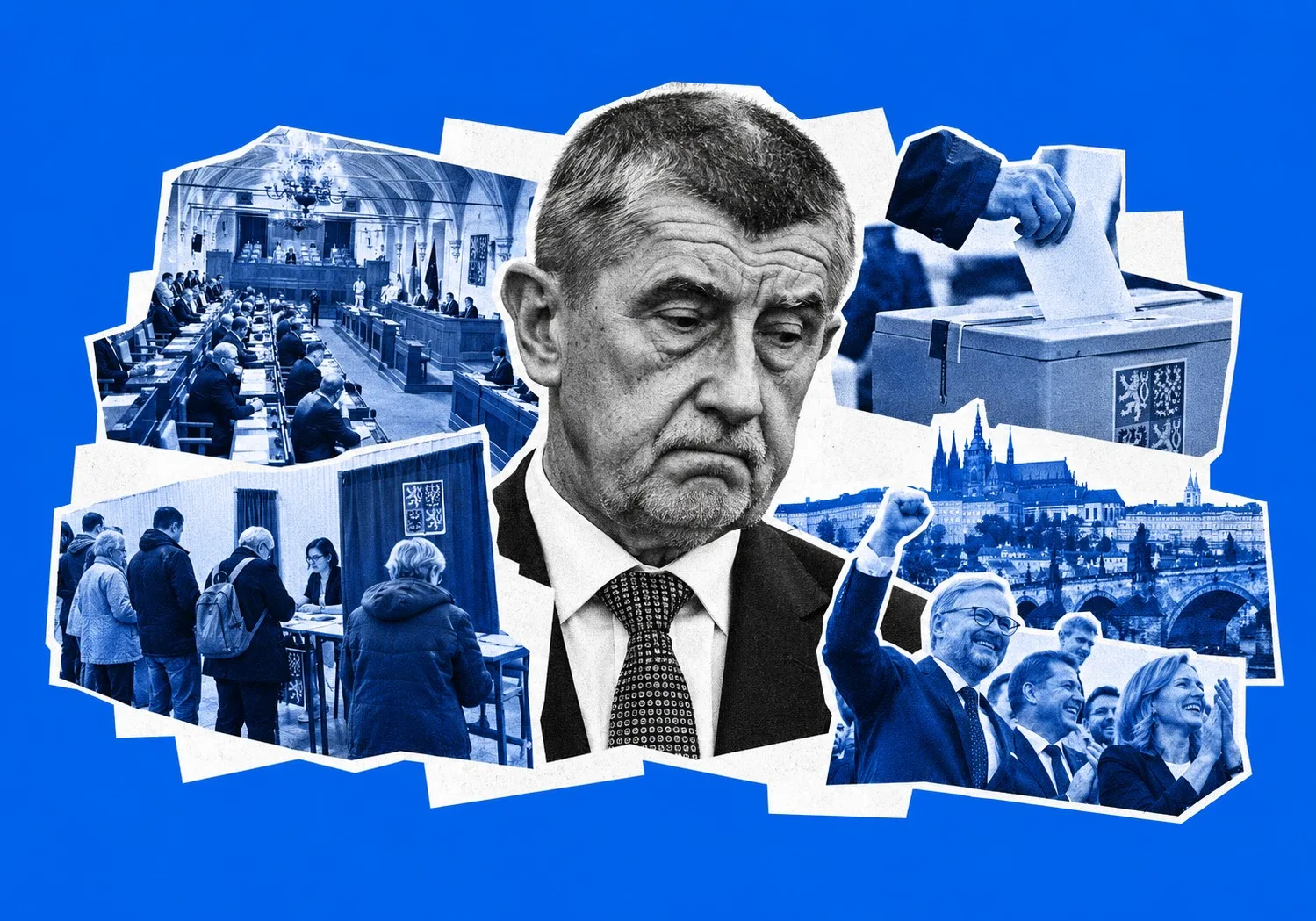
Czech Prime Minister Andrej Babiš has suffered a severe electoral setback after his ruling ANO movement failed to win a single seat in the country’s Senate elections. Official results released by the Czech Statistics Office confirmed that pro-Western opposition parties secured 22 of the 27 contested seats in the 81-member upper house, preserving their majority and erecting a formidable constitutional barrier against the populist government's eurosceptic agenda.
The ballot concluded on Saturday, October 17, 2026, following a two-stage election process that began with a first round on October 9–10 and ended with decisive runoffs on October 16–17.
Turnout in the second round stood at approximately 25 per cent of registered voters.
 The outcome marks the first major electoral test for Babiš since his return to power following the October 2025 parliamentary election, when his centrist ANO movement formed a three-party coalition with the far-right, anti-EU Freedom and Direct Democracy (SPD) party and the Motorists for Themselves party.
The Mayors and Independents (STAN) party emerged as the primary victor of the contest, winning ten of the 14 seats it contested, including two secured outright in the first round.
The Civic Democratic Party (ODS) captured seven seats, while other pro-Western opposition groups and independent candidates secured five seats.
Conversely, all candidates put forward by ANO and its coalition partners were defeated in the second-round runoffs, leaving the ruling coalition with zero victories across the entire election cycle.
Speaking after the final vote tally was confirmed, a visibly disappointed Babiš acknowledged the scale of the electoral defeat during a public address: "We certainly didn't expect that we wouldn't win a single Senate seat in this election," Babiš stated, describing the performance as "catastrophic."
Nevertheless, the prime minister insisted that his administration intended to proceed with its scheduled legislative programme through its working majority in the lower house of parliament.
Opposition figures immediately framed the outcome as a direct public rejection of the government's ten-month tenure and policy trajectory.
"Andreji Babiši, this is another message from the voters and a total debacle for ANO," posted Danuše Nerudová, a STAN Member of the European Parliament, on X.
"Your unfulfilled promises, blaming others, constant scandals, and shame simply aren’t enough. People aren’t living better, and they’ve had enough of your government!" ODS chairman Martin Kupka expressed satisfaction at maintaining his party's Senate presence.
KDU-ČSL chairman Jan Grolich noted: "The opposition clearly won; it showed that it can negotiate. The campaign is not over; it will last three years."
Hitting a Constitutional Wall
The Czech Parliament operates under a bicameral structure composed of the 200-seat Chamber of Deputies and the 81-seat Senate.
Members of the lower house are elected every four years under a proportional system and hold primary responsibility for initiating standard legislation, managing tax policy, and passing the national budget.
One-third of the Senate is renewed every two years through a single-member district system requiring an absolute majority in the first round or a simple majority in a two-candidate runoff.
Under Article 40 of the Constitution of the Czech Republic, the adoption of constitutional amendments, electoral laws, and international treaties requires explicit approval from both parliamentary chambers.
Furthermore, Article 84 specifies that judges of the Constitutional Court are appointed by the President subject to the formal consent of the Senate.
While the Chamber of Deputies maintains primary authority over ordinary statutory legislation and can override Senate legislative vetoes by an absolute majority of 101 votes, the Senate retains an absolute veto over constitutional revisions, modifications to electoral frameworks, state of emergency declarations, and presidential nominees to the Constitutional Court.
Because opposition parties maintain their numerical majority in the upper house through at least 2028, the Babiš administration cannot enact constitutional changes or reshape the highest judicial bench without cross-party consensus.
Breaking the Atlantic Anchor
Since taking office in December 2025, the Babiš cabinet has introduced fundamental shifts to state security policies and international defense commitments.
The government ended direct financial and military equipment transfers to Ukraine from the national budget, while questioning the continuation of the Czech-led artillery ammunition procurement initiative that previously procured large-calibre ammunition internationally.
During his appointment process in December 2025, Prime Minister Babiš outlined his framework for European policy, stating: "We will be proposing the EU also should resolve other things, not only aid for Ukraine but also issues around energy, value-added tax and tariff leaks. The EU too much takes care about spending and too little about revenue."
Defense spending within the annual budget was reduced, prompting sharp criticism from opposition foreign policy spokespersons.
In February 2026, MEP Alexandr Vondra, deputy chairman of the Civic Democratic Party, commented on the government's foreign policy approach, stating that the administration "could inflict damage on the Czech Republic's defence capabilities" and criticized decisions regarding economic aid to Ukraine.
Critics of Babis have compared his moves to those of populist governments in Slovakia under Prime Minister Robert Fico and in Hungary under former Prime Minister Viktor Orban.
Conflict with the Pro-Western President
These domestic and international policy shifts have intensified institutional friction between the government and President Petr Pavel.
A former army general who previously served as Chairman of the NATO Military Committee—the highest military office ever held by a Czech citizen within the alliance—Pavel represents a staunchly pro-European, Atlanticist vision for Czech foreign policy and remains a prominent advocate of military and economic support for Ukraine in its defense against Russian invasion.

This ideological rift culminated in June 2026, when Prime Minister Babiš announced the official Czech delegation to the NATO summit in Ankara, comprising himself, Defence Minister Jaromír Zuna, and Foreign Minister Petr Macinka.
And excluding President Pavel.
This decision marked a departure from established historical precedent, as Czech delegations to NATO summits had been led by the head of state in 19 out of 20 previous summits.
Addressing the delegation decision following a cabinet meeting on June 22, 2026, Prime Minister Babiš stated that the composition was determined by budgetary discussions held at the NATO defense ministers' meeting regarding national military spending levels, arguing that representation by the prime minister was appropriate due to executive oversight of defense spending.
President Pavel subsequently filed a legal petition before the Constitutional Court challenging the government's determination of delegation leadership.
The Constitutional Court granted an interim ruling in favor of the president pending a final verdict on the distribution of executive powers regarding state representation at international summits.
Battle for the Airwaves
In June 2026, the government introduced a legislative proposal to alter the funding mechanism for Czech public television and radio services.

Under the draft legislation, direct license fees paid by households and businesses are scheduled to be replaced by central state budget allocations starting in 2027.
The proposed restructuring includes a projected 15 per cent reduction in total public broadcaster funding compared to 2026 budget allocations, alongside the removal of statutory indexing guarantees for future annual funding levels.
Media management representatives stated that the funding cut would require personnel redundancies affecting hundreds of staff members within public broadcasting organizations.
On June 21, 2026, demonstrations organized by civic group Million Moments for Democracy took place in Prague outside the offices of Czech Public Television.
During the demonstration, organizer Mikulas Minar stated: "The media don't belong to politicians. They belong to us all and we won't allow them to be stolen from us."
Prime Minister Babiš rejected assertions that the legislation compromised public broadcasting independence, stating during a press conference that "most taxpayers don't want to pay for the service and that it needs to save money," while arguing that coverage across public and private outlets exhibited systematic bias against his administration.
The Legal Shadows Ahead
Compounding these political friction points is Prime Minister Babiš’s ongoing legal exposure in the Stork's Nest affair, involving an alleged 2 million euro European Union subsidy fraud for a conference centre outside Prague.
Following a previous acquittal that was subsequently overturned by an appellate court, the case was remanded for retrial.
Under Czech parliamentary procedure, the continuation of court proceedings against an active member of parliament requires a vote by the Chamber of Deputies on whether to lift parliamentary immunity.
The Senate election results establish an immovable political framework for the remainder of the parliamentary term.
With the upper house locked in opposition hands until at least 2028—coinciding with the end of President Pavel’s current term and the next scheduled presidential election in January 2028—any attempt by the executive to institutionalize its populist agenda or curb judicial independence will face an unyielding constitutional wall.
Read also: At first glance, the next presidential election in the Czech Republic seems far away—voters aren't scheduled to head to the ballot boxes until January 2028. Yet, behind the heavy wooden doors of Prague Castle and the government offices on the Vltava riverbank, a fierce power struggle is already underway. At the center of this storm sits President Petr Pavel, the former high-ranking NATO general whose staunchly pro-Western and pro-Ukrainian stance has made him a pillar of security in Central Europe. Facing off against him is Prime Minister Andrej Babiš and his governing coalition—a populist-led alliance that appears increasingly determined to strip Pavel of his influence or unseat him altogether.
Sources: DW, European Pravda