
Mississippi voters hand Democrat Scott Colom a historic Senate victory

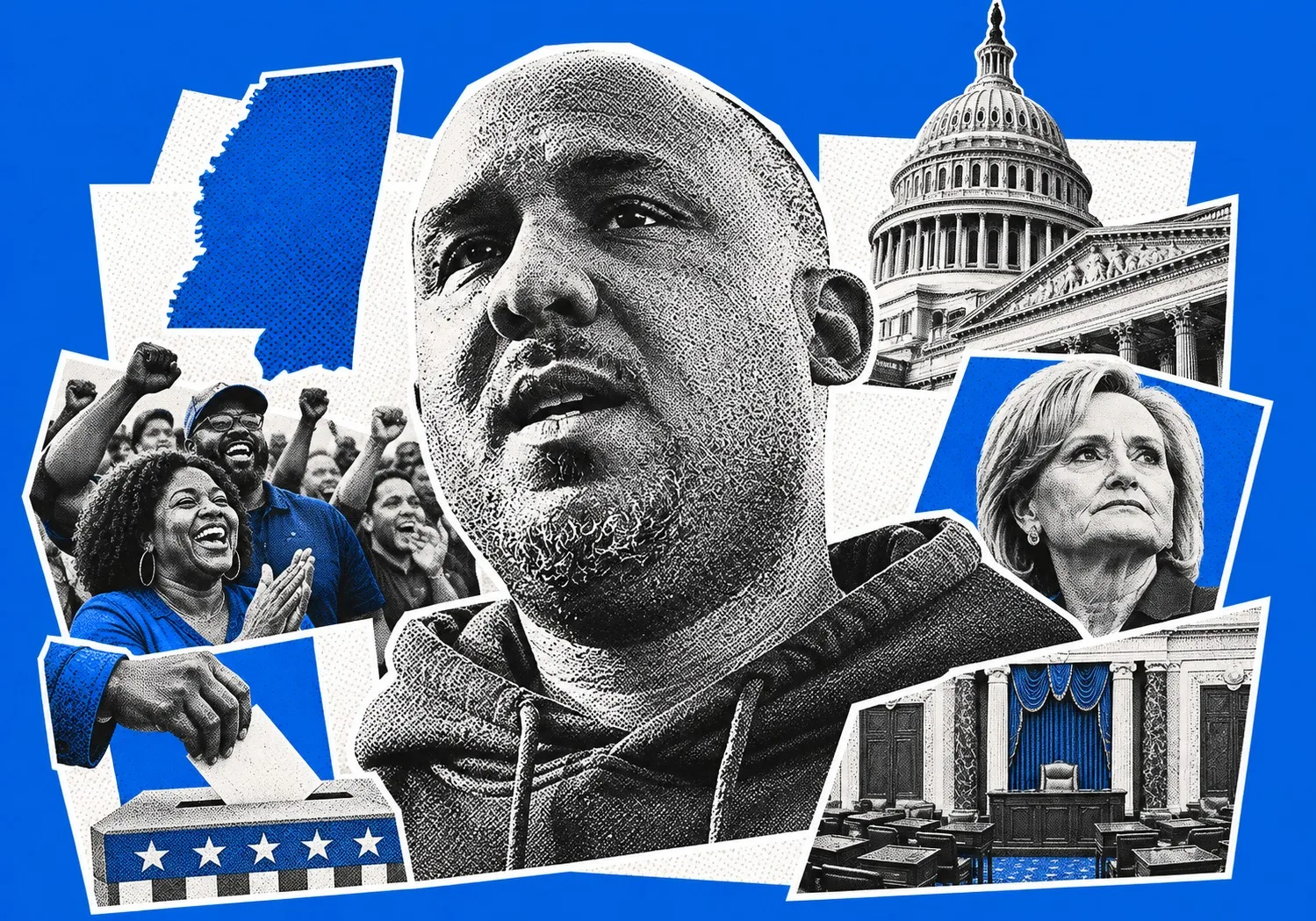
Democrat Scott Colom has defeated Republican incumbent Cindy Hyde-Smith in Mississippi, giving the state its first Democratic US senator since 1982 and its first Black senator since Reconstruction. His victory brings the Democratic Senate caucus to at least 55 seats after the party captured eight Republican-held seats in the 2026 midterm elections. Alaska is the only Senate race still undecided, with Democrat Mary Peltola narrowly ahead of incumbent Dan Sullivan. Democrats have also won control of the House of Representatives, leaving President Donald Trump facing an opposition-controlled Congress for the remaining two years of his presidency.

Eight days after Americans went to the polls called the Mississippi race for Colom on Wednesday, 11 November. The Democrat led the Republican Hyde-Smith by 4,669 votes out of 962,237 counted, securing 49.2% against her 48.7%. Independent candidate Ty Pinkins received about 2%.
The contest had been almost impossibly close on election night. Colom led by just 43 votes, but his advantage grew as officials worked through thousands of absentee and provisional ballots. He gained ground even in Republican-leaning counties where Hyde-Smith needed to recover votes.
The incumbent, who had held the seat since 2018, conceded on Wednesday evening and called Colom to congratulate him.
"While this is not the outcome we worked for or hoped for, I respect the decision of Mississippi voters," she said in a video statement.
Few had expected Mississippi to elect a Democrat. Trump carried the state by nearly 23 percentage points in the 2024 presidential election, and Hyde-Smith's seat had been considered safely Republican for much of the campaign.
Colom, 43, will also become the state's first Black senator since Blanche K Bruce, whose term ended in 1881. Bruce and Hiram Revels, Mississippi's two previous Black senators, served during Reconstruction, when state legislatures chose senators rather than voters electing them directly.
A district attorney in north-eastern Mississippi since 2016, Colom initially struggled to raise money and attract national attention. He travelled through rural towns and Republican strongholds, talking to voters in diners, barbershops, colleges and workplaces.
His campaign concentrated on food prices, healthcare and the cost of living. An unlikely turning point came when Hyde-Smith suggested that people struggling with rising beef prices could choose other sources of protein.
Colom responded with an advertisement showing Mississippians mocking the advice.
"I'd rather pick another senator instead," one voter declared.
The video spread widely online. Democratic organisations, which had previously devoted most of their resources to more competitive states, increased their spending. Senators Raphael Warnock and Cory Booker visited Mississippi in October, followed by former Vice-President Kamala Harris and former President Bill Clinton during the closing weeks.
Strong Black voter turnout was central to Colom's win, alongside support from white voters who had previously backed Republicans. Mississippi has the highest proportion of Black residents of any US state, but Democrats have struggled for decades to win statewide elections.
The Democrat also challenged federal tariffs and the economic effects of the Iran war, particularly higher fuel costs.
"There were times that I couldn't get donors to answer the phone," Colom told supporters after the result was called. "They did not believe a moment like this was possible. But I kept the faith."
There was a personal history between the two candidates. In 2023, Hyde-Smith blocked Colom's nomination to a federal judgeship after President Joe Biden selected him for the US District Court for the Northern District of Mississippi.
Mississippi counties have until Friday, 13 November, to submit their certified election returns. The AP projected Colom's victory before formal certification after concluding that the remaining ballots could not realistically overturn his lead.
Alaska's race goes down to the wire
More than 4,000 miles away, Alaska is still counting ballots in the last unresolved Senate contest.
Former Democratic congresswoman Mary Peltola held 48.7% of first-choice votes against Republican Senator Dan Sullivan's 47.1% in the latest results released on Wednesday, 11 November.
Her lead had narrowed from 4,250 to 3,975 votes after officials added about 5,600 ballots, mostly from Republican-leaning areas. Tens of thousands more remain uncounted.
Alaska's ranked-choice voting system adds another complication. Voters can rank up to four candidates. If nobody wins more than half of first-choice votes, the lowest-placed candidates are eliminated and their ballots redistributed according to subsequent preferences.
Republican Gerald Heikes and independent Daniel J Sullivan Jr received more than 9,000 first-choice votes between them. Where those voters placed Peltola and the incumbent Sullivan on their ballots could determine the winner.
Preliminary calculations have not produced a clear answer. FairVote, an organisation specialising in electoral systems, found that Sullivan could narrowly overtake Peltola after preferences were redistributed in a partial dataset. An Alaska Beacon analysis incorporating additional rural results suggested Peltola would retain her lead.
Neither is an official result.
The campaigns have also become embroiled in legal disputes. On Wednesday, Alaska Superior Court Judge Thomas Matthews rejected Peltola's request for records identifying voters whose absentee ballots had been disqualified.
Her lawyers had sued election officials on 6 November, arguing that access to the records would help establish whether eligible votes had been wrongly excluded. State authorities objected, citing voter confidentiality and the difficulty of preparing redacted records while counting continued.
Matthews found the request unreasonable at this stage. His ruling concerned access to information, not the validity of individual ballots.
A separate federal case involves independent candidate Daniel J Sullivan Jr, whose name closely resembles that of the Republican incumbent.
The US Justice Department sought to prevent certification if the incumbent lost a close race in which confusion between the two names might have affected the result. A federal judge dismissed the lawsuit on 1 November, but the department has appealed.
Alaska expects another substantial results update on Friday, 13 November. Eligible overseas absentee ballots can arrive until 18 November, when the state also plans to conduct its ranked-choice tabulation if needed. Certification is scheduled for 25 November.
Peltola, the first Alaska Native elected to Congress in 2022, lost her House seat in 2024 and is now seeking a Senate term. Sullivan has represented Alaska since 2015.
A Peltola victory would give Democrats 56 Senate caucus members. If Sullivan wins, they will have 55.

Democrats leave Republicans in the minority
Mississippi was the eighth Republican-held Senate seat to fall to Democrats. The others were in Texas, Kansas, South Carolina, North Carolina, Ohio, Iowa and Maine.
The party entered the elections with 47 Senate caucus members, including independents, against 53 Republicans. It needed four gains for a majority and has secured twice that number.
Texas delivered one of the biggest surprises. Democratic state representative James Talarico defeated Republican Ken Paxton, ending a run of Republican Senate victories stretching back to 1988.
In Kansas, Adam Hamilton defeated incumbent Roger Marshall, becoming the first Democrat elected to the Senate from the state since 1932.
Annie Andrews won in South Carolina, while former North Carolina governor Roy Cooper defeated Michael Whatley. Maine's veteran Republican Senator Susan Collins lost to Troy Jackson. Former Democratic senator Sherrod Brown returned to the chamber after beating Jon Husted in Ohio, and Josh Turek captured a Republican-held seat in Iowa.
Democrats also defended Jon Ossoff's seat in Georgia, while Abdul El-Sayed won Michigan's open Democratic-held seat.
Rising household costs ran through many of these campaigns. Democratic candidates criticised Trump's tariffs, healthcare policies and the economic consequences of the Iran war, particularly higher fuel prices. Vice-President JD Vance identified the conflict as one factor behind the Republican defeats, while Trump acknowledged the damage caused by rising energy costs.
Republicans also lost control of the House of Representatives.
By 11 November, Democrats had secured 255 seats against 168 for Republicans, according to The Washington Post, with 12 races still uncalled. They had captured 41 Republican-held constituencies, including districts Trump won in 2024.
Several of those losses came despite efforts by Republican-controlled states to redraw congressional boundaries before the midterms.
The defeat has already changed the party's House leadership. Speaker Mike Johnson will remain a Louisiana representative but will not seek another leadership post. On 10 November, Republicans elected Ohio congressman Jim Jordan as their next minority leader. He defeated Steve Scalise by 106 votes to 73.
Jordan, a close Trump ally and co-founder of the House Freedom Caucus, is expected to lead Republican opposition to congressional investigations planned by Democrats.
Hakeem Jeffries is expected to become House speaker when the new Congress convenes on 3 January 2027. He has named living costs and government accountability among his priorities.
Democratic control of both chambers will allow the party to block much of Trump's legislative programme, chair congressional committees and investigate his administration's use of executive powers and federal funds. The Senate majority will also give Democrats influence over judicial appointments and senior administration confirmations.
Trump can still veto legislation passed by Congress. Overriding a presidential veto requires a two-thirds majority in each chamber, which Democrats do not have.
They will face another obstacle in the Senate, where most contested legislation needs 60 votes to overcome a filibuster. Even with their expanded majority, Democrats will need Republican support to pass bills that face determined opposition.
Sources: Reuters, The Associated Press, Alaska Beacon, The Washington Post