
Storm Austen Disrupts Power and Transport Across France and Britain

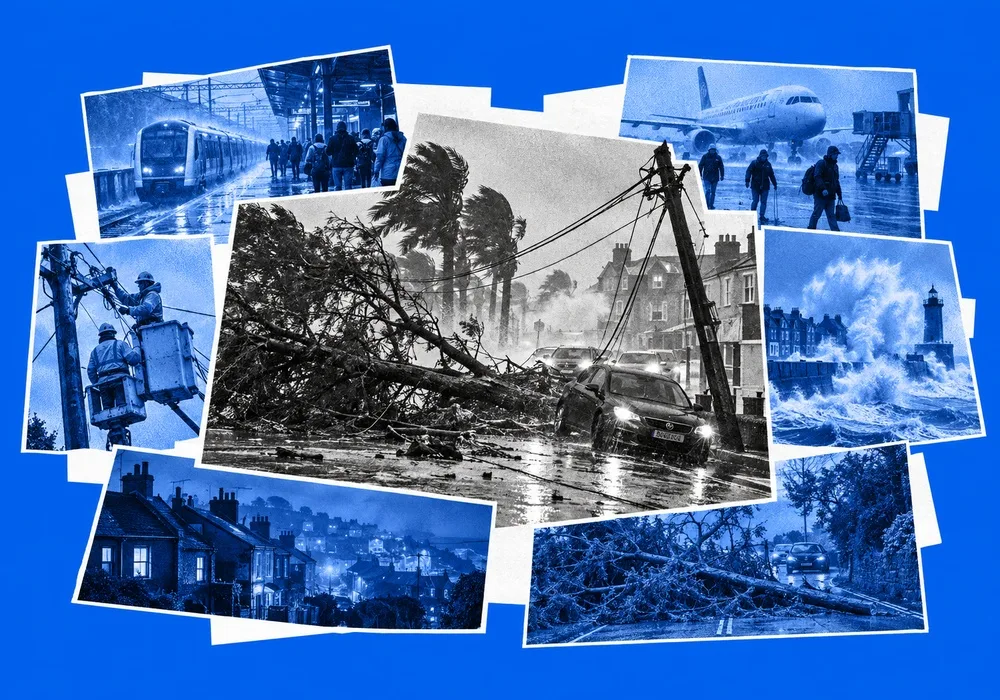
Storm Austen has left hundreds of thousands of households without electricity in France and disrupted rail and air transport across France and Britain. With another storm forecast to hit the British Isles over the weekend, the successive weather systems are putting pressure on energy networks and transport infrastructure as autumn storms intensify across western Europe.
Storm Austen brought powerful winds and heavy rain to France and Britain on Friday, disrupting electricity supplies, rail services, road traffic and aviation. The storm affected communities across western Europe, with fallen trees, damaged infrastructure and hazardous travel conditions complicating efforts to maintain essential services.
Wind gusts reached 179 km/h in some locations, according to reports on the storm. Such conditions can cause extensive damage even when the strongest gusts are confined to relatively small areas, particularly where trees fall across roads or railway lines and where overhead power lines are exposed to falling branches and debris.
The disruption demonstrated how quickly severe weather can affect several interconnected systems at once. Electricity failures can interrupt communications and business operations, while blocked roads delay emergency services and repair crews. Rail cancellations and flight diversions can then affect passengers far beyond the areas directly exposed to the strongest winds.
For households, the immediate consequences include power cuts, difficulties travelling and uncertainty over when normal services will resume. For businesses, interruptions can affect staff attendance, deliveries and the movement of goods, particularly when disruption coincides with the end of the working week.
France Faces Widespread Electricity Outages
France was among the countries most severely affected by the storm. Electricity network operator Enedis reported that nearly 300,000 customers had lost power, with Brittany and Normandy among the hardest-hit areas. Restoration work required crews to identify damaged sections of the network, clear obstructions and repair equipment under difficult weather conditions.
The scale of the outages illustrates the exposure of regional electricity distribution systems to extreme wind events. While national electricity generation and transmission can continue functioning, damage to local distribution lines may still leave large numbers of households without power. This distinction is important because restoring electricity requires repairs at the precise locations where the network has been damaged, rather than simply ensuring sufficient electricity is available nationally.
Storm-related outages also create secondary risks. Households may lose heating, refrigeration and internet access, while businesses can face interruptions to production, payment systems and customer services. The effects are particularly disruptive when outages last for extended periods or coincide with damage to roads and other infrastructure that repair teams need to access.
The restoration effort therefore depends not only on the scale of the damage but also on the ability of emergency and utility personnel to reach affected sites safely. Strong winds can prevent crews from working at height or handling exposed electrical equipment, delaying repairs until conditions improve.
Britain Also Reports Power Cuts and Transport Problems
The storm also affected Britain, where more than 12,000 homes were reported to be without electricity. Although the reported number of affected households was lower than in France, the disruption added to the pressure on local electricity providers and transport operators dealing with severe weather.
Fallen trees and debris created hazards on roads, while strong winds complicated travel in exposed areas. Such conditions can disrupt local journeys even where major transport routes remain open, as authorities must assess the safety of roads, clear obstructions and respond to incidents caused by falling branches and damaged infrastructure.
The effects on electricity supplies also underline the importance of local network resilience. Power distribution systems must withstand not only direct wind damage but also the secondary consequences of trees falling onto lines and equipment. The reliability of supplies during severe weather consequently depends on maintenance, vegetation management, rapid fault detection and the availability of repair crews.
The successive storms expected to affect the region make the timing of restoration particularly important. If another period of strong winds arrives before damaged infrastructure has been repaired, electricity providers and local authorities may face overlapping demands on personnel and equipment.
Rail Services and Roads Face Disruption
Transport networks in France experienced significant disruption as the storm moved through the country. Rail traffic in Normandy was suspended, while services around Paris faced interruptions. Fallen trees and debris affected railway operations and road travel, forcing transport operators to prioritise passenger safety and the inspection of exposed infrastructure.
Railways are particularly vulnerable to severe winds when trees fall onto tracks, overhead electrical equipment is damaged or debris obstructs signalling systems. Even after the immediate danger has passed, operators may need to inspect tracks and associated infrastructure before services can safely resume. As a result, the end of the storm does not necessarily mean an immediate return to normal timetables.
Road transport faces a similar problem. Clearing a blocked road may be relatively straightforward, but damaged trees, unstable structures and fallen power lines can require specialist teams and safety inspections. Disruptions on major routes can also redirect traffic onto smaller roads, increasing congestion and complicating access for emergency services.
For commuters, these interruptions can turn short journeys into lengthy trips or leave passengers without viable alternatives. For freight operators, delays can affect delivery schedules and the coordination of road, rail and port connections. The economic consequences depend on how quickly key routes reopen and whether transport services can recover before further adverse weather arrives.
Flight Diversions Add to the Disruption
Aviation was also affected by the storm. Flights were diverted from Paris Charles de Gaulle Airport to Orly, while further diversions to other French and European airports were possible as operators responded to changing weather conditions.
Strong winds and thunderstorms can complicate take-offs and landings, reduce operational flexibility and require aircraft to use alternative airports. These decisions are made primarily on safety grounds, but they can create additional operational difficulties for airlines, airports and passengers.
A diversion affects more than the individual flight. Aircraft and crews may end up at locations different from those planned, disrupting subsequent departures and arrivals. Passengers can face missed connections, extended waiting times and additional travel arrangements, while airlines must reorganise aircraft rotations and crew schedules.
The impact can extend across European aviation networks because major airports serve as connecting hubs for international travel. Disruption at one airport may therefore affect passengers travelling between countries that are not themselves experiencing severe weather. The longer the adverse conditions persist, the more difficult it can become to restore normal schedules.
A Second Storm Raises the Risk of Further Disruption
The immediate effects of Storm Austen came as another weather system was forecast to affect parts of the British Isles over the weekend. The UK Met Office warned that Storm Boelo could bring further strong winds and heavy rain to Northern Ireland, Scotland and parts of northern England, with gusts potentially reaching 113–129 km/h in exposed areas.
The prospect of another storm creates a more complicated operational situation for electricity providers, transport operators and local authorities. Repair work following the first event may still be under way when conditions deteriorate again. In that scenario, crews could be required to respond to new damage while continuing to restore services in areas already affected.
Successive storms can also increase the cumulative burden on infrastructure. Ground saturated by heavy rain may become more vulnerable to flooding and fallen trees, while repeated high winds can expose weaknesses in buildings, transport equipment and overhead electricity networks. The extent of these risks varies by location, but the timing of the weather systems makes preparedness particularly important.
French weather authorities also issued orange alerts across much of the country's north-west, warning of strong winds and thunderstorms. These warnings allow local authorities, infrastructure operators and the public to take precautionary measures, although the effectiveness of those measures depends on the accuracy of forecasts, the speed of communication and the ability to act before conditions deteriorate.
Sources: Agence France-Presse, Euronews