
At Least Four Dead as Flooding Devastates Eastern Spain

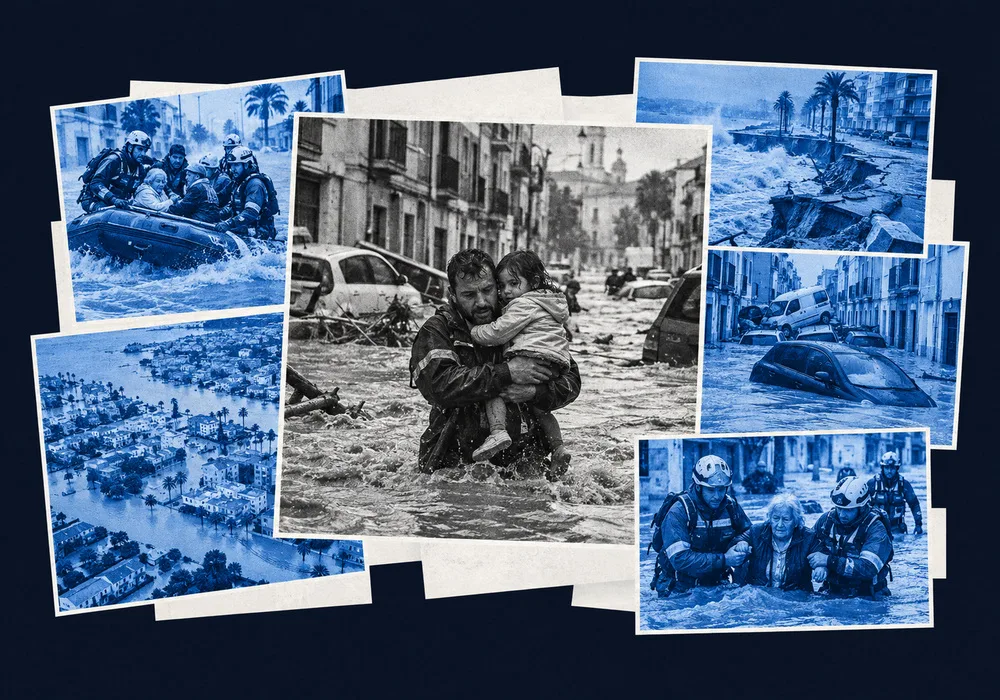
Torrential rain has killed at least four people in eastern Spain, triggered mass evacuations and overwhelmed communities across the Mediterranean coast. The disaster highlights the growing pressure on European emergency services, infrastructure and climate adaptation systems as extreme rainfall becomes an increasingly serious threat.
At least four people have died after torrential rain caused severe flooding across eastern Spain, with the worst-affected areas concentrated in the Valencia and Alicante regions. The storm, known as Adam, brought exceptional rainfall to Spain’s Mediterranean coast, inundating streets, submerging roads and leaving residents trapped in homes, vehicles and other buildings. Emergency services rescued more than 450 people, including residents who had taken refuge on rooftops as floodwaters rose around them. Some were evacuated by helicopter, while others were brought to safety by boat.
The human toll reflects the speed with which extreme rainfall can turn into a major emergency. In Oliva, two people died, including a 79-year-old woman found in her home and a man who suffered a fatal cardiac arrest at a campsite. Other deaths were reported in Sagunto and Catalonia. The storm also affected the Balearic Islands, where flooding disrupted transport, forced school closures and caused flight cancellations or delays. More than 2,000 people were evacuated, while local authorities introduced temporary restrictions and urged residents to remain indoors in areas at immediate risk.
The scale of the rainfall was particularly striking. Some parts of the Valencia region recorded hundreds of litres of rain per square metre within a short period, causing rivers and waterways to overflow and cutting off access to several communities. In some locations, the volume of water exceeded what drainage systems and local infrastructure could manage. Even after the heaviest rainfall began to ease, the danger remained because of flooded roads, saturated ground and the possibility of further flooding in vulnerable areas.
Emergency Preparedness Under Pressure
The flooding has renewed scrutiny of Spain’s capacity to respond to extreme weather, almost two years after the devastating October 2024 floods in Valencia killed more than 220 people. That disaster exposed serious weaknesses in emergency communication and coordination, prompting wider debate about the responsibilities of regional and national authorities and the need to warn residents before conditions become life-threatening.
During Storm Adam, authorities used emergency alerts to instruct people in threatened municipalities to avoid unnecessary travel, stay away from rivers and ravines, and move to higher floors or safer locations. The government also deployed military emergency personnel to support rescue operations. These measures demonstrate the importance of combining weather forecasting with rapid public communication and the ability to move personnel and equipment into affected areas.
However, effective emergency management involves more than issuing warnings once a storm is approaching. Local authorities must be able to identify vulnerable neighbourhoods, maintain evacuation routes, ensure that rescue teams can reach isolated communities and provide assistance to older people and residents with limited mobility. The deaths and large number of rescues in eastern Spain underline how difficult these tasks become when floodwaters rise rapidly and roads are rendered impassable.
The immediate challenge is to restore essential services, assess damage and ensure that residents can safely return to their homes. The longer-term question is whether the lessons of previous disasters are being translated into lasting changes in infrastructure, land-use planning and civil protection.
Climate Adaptation Becomes a Security Concern
Spain’s latest floods also illustrate a broader challenge facing European countries exposed to increasingly severe weather. Climate change does not make every individual storm inevitable, and the precise contribution of global warming to this particular event requires scientific assessment. Nevertheless, a warmer atmosphere can hold more moisture, increasing the potential for intense precipitation when weather conditions are favourable. For Mediterranean countries, where periods of heat and drought can be followed by concentrated rainfall, this creates a difficult combination of environmental and infrastructure risks.
Flood damage depends not only on the amount of rain but also on where it falls, how quickly it accumulates and whether the surrounding landscape can absorb or redirect the water. Urban development, construction on floodplains, inadequate drainage and the loss of natural water-retention areas can all increase the consequences of heavy rainfall. As a result, climate adaptation requires a combination of improved forecasting, stronger infrastructure, better planning and the preservation of landscapes that help manage excess water.
The implications extend beyond Spain. Floods can disrupt road and rail networks, damage homes and businesses, interrupt local supply chains and place sudden financial demands on public authorities. Repeated disasters can also increase insurance costs and leave smaller municipalities struggling to fund reconstruction while maintaining essential services. For European governments already facing pressure on public budgets, preparing for extreme weather is increasingly a question of economic resilience as well as environmental policy.
The European Dimension of Civil Protection
Storm Adam reinforces the need for European countries to treat flood preparedness as a long-term public investment rather than a response activated only after a disaster. National emergency services remain central to rescue operations, but cross-border cooperation can provide additional personnel, specialised equipment, transport capacity and technical expertise when local resources are stretched. European civil protection mechanisms can support this cooperation, particularly when emergencies affect large areas or several regions simultaneously.
The priorities extend from improving early-warning systems to strengthening critical infrastructure and ensuring that local authorities have the resources to act on forecasts. Investment in drainage, flood barriers and resilient transport networks must be accompanied by measures that reduce exposure, including restrictions on unsafe development and better protection for communities located near rivers and coastlines. Emergency plans also need to account for people who may struggle to receive, understand or act on warnings without assistance.
For Spain, the immediate focus remains on rescue operations, recovery and the assessment of damage. For Europe more broadly, the disaster highlights a growing gap between the ability to forecast dangerous weather and the challenge of limiting its consequences. As extreme rainfall places greater pressure on settlements and infrastructure, the effectiveness of public institutions will increasingly depend on whether preparedness measures are implemented before the next emergency begins.
The latest flooding is a reminder that resilience cannot be measured solely by the speed of a rescue response. It also depends on whether communities have been protected in advance, whether critical services can continue operating during a crisis and whether reconstruction reduces future vulnerability rather than restoring the same risks.
Sources: Ministerio del Interior, RTVE