
Russia’s Novaya Gazeta Announces Closure After Three Decades Under State Pressure

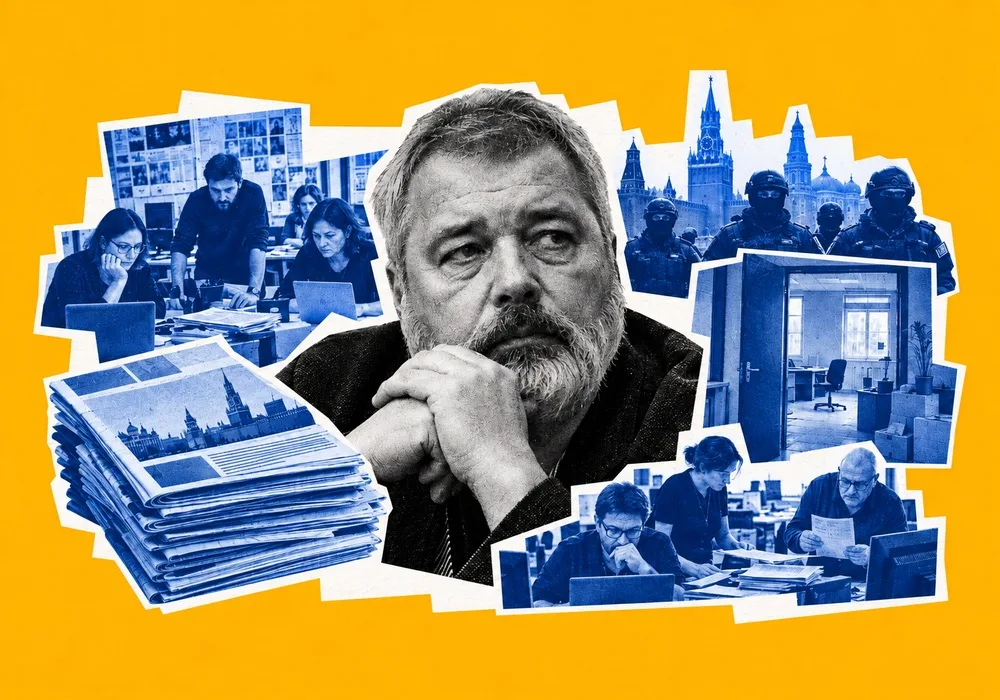
One of Russia’s most prominent independent newspapers will cease operations on 9 November after losing its Moscow headquarters, access to reader donations and the ability to publish freely. Its closure marks another stage in the dismantling of independent journalism inside Russia, following years of censorship, criminal investigations and pressure on journalists critical of the Kremlin.
Russia’s independent newspaper Novaya Gazeta has announced that it will cease operations on 9 November, bringing an end to more than three decades of investigative journalism covering political corruption, human rights abuses and abuses of power. In a statement published on 30 October, the editorial team said Russian authorities and security services had forced it to stop working by systematically depriving the publication of the resources and conditions necessary to continue operating.
Under the title We Have Been Killed, the newsroom announced that it would leave its Moscow headquarters, switch off its servers and publish one final issue before ending its operations. The editorial team described the decision as the culmination of a coordinated campaign that had left the newspaper without an office, financial support or effective legal protection.
Founded in 1993 with the support of former Soviet leader Mikhail Gorbachev, Novaya Gazeta became one of Russia’s most recognisable independent publications. Its reporting frequently examined corruption within state institutions, political repression, human rights violations and the activities of security services. Under former editor-in-chief Dmitry Muratov, the newspaper developed an international reputation for investigative journalism and received the 2021 Nobel Peace Prize alongside Philippine journalist Maria Ressa.
The final measures that made closure inevitable
The immediate circumstances surrounding the announcement involved two developments that effectively deprived the newspaper of its remaining operational infrastructure. The editorial team received an eviction notice requiring it to leave its premises in Potapovsky Lane, central Moscow, where journalists had worked for nearly three decades. At the same time, the system through which readers could financially support the publication was shut down.
The loss of its headquarters also means the closure of the newspaper’s internal museum dedicated to investigative journalist Anna Politkovskaya, who was murdered in 2006. Photographs and portraits of journalists killed in connection with their work were being removed from the newsroom as staff prepared to leave.
The newspaper said that financial institutions had withdrawn their services, leaving it unable to receive donations from readers. Although the immediate measures involved landlords and financial organisations, the editorial team attributed the broader campaign to the Russian state apparatus and security services.
The combination of financial isolation and eviction left the publication without the basic infrastructure required to maintain its operations. Its management also reportedly feared that the newspaper could be designated an extremist organisation, potentially exposing its remaining journalists to further legal consequences.
Years of censorship and legal pressure
The closure follows a prolonged campaign against independent media in Russia, which intensified after the full-scale invasion of Ukraine in February 2022. New legislation criminalising the dissemination of information about the war that authorities consider false, as well as reporting deemed to discredit the Russian armed forces, sharply narrowed the space available for independent journalism.
In March 2022, Novaya Gazeta suspended its print edition after receiving warnings from Roskomnadzor, Russia’s media regulator. Later that year, a court revoked its media registration, while Russian authorities blocked the newspaper's online resources and seized its printing infrastructure. These measures prevented it from continuing its traditional publishing operations inside the country.
Nevertheless, the newsroom continued working online for several years, despite restrictions on its website, journalists and editorial activities. A substantial number of its staff eventually left Russia and established Novaya Gazeta Europe, an independent publication operating from Latvia.
The pressure continued in 2026. In April, investigators conducted a lengthy search of the newspaper's editorial offices as part of a criminal investigation concerning alleged unlawful access to computer information and the use of personal data. Investigative journalist Oleg Roldugin was arrested and subsequently placed under house arrest.
In September, Russia's Ministry of Justice designated the newspaper's entire editorial team as foreign agents, adding another layer of legal and financial restrictions. The designation affected more than 100 journalists and contributors, further complicating the publication's relationships with financial institutions, advertisers and readers.
A newsroom increasingly exposed to repression
The newspaper's history also reflects the personal risks associated with investigative journalism in Russia. Six journalists and contributors associated with Novaya Gazeta were murdered in connection with their professional activities, including investigative journalist Anna Politkovskaya, who was shot dead in Moscow in October 2006, and human rights activist Natalia Estemirova, who was abducted and murdered in 2009.
Other journalists faced physical attacks, intimidation and prosecution. In 2023, columnist Elena Milashina was abducted and severely beaten in Chechnya. Dmitry Muratov was attacked with paint containing an irritating chemical substance in 2022, suffering injuries that threatened his eyesight.
The pressure on the current editorial leadership has also intensified. In October 2026, security officers searched the home of editor-in-chief Sergei Sokolov in connection with the investigation involving Roldugin. The investigation and subsequent restrictions have further weakened the newsroom's ability to operate.
These developments illustrate how the pressure on independent media extends beyond censorship of individual articles. Legal proceedings against journalists, restrictions on financial transactions, the withdrawal of media licences and the disruption of editorial infrastructure can collectively make continued publication practically impossible.
The consequences for Russia's independent media landscape
The disappearance of the Moscow-based Novaya Gazeta represents a significant loss for independent journalism inside Russia. For more than three decades, the newspaper provided a platform for investigations that were frequently absent from state-controlled television and other major Russian media. Its journalists documented corruption, political violence and human rights violations, preserving information that might otherwise have remained outside public scrutiny.
Its closure also demonstrates how restrictions on independent journalism can operate through several mechanisms simultaneously. Rather than relying exclusively on direct censorship or the prosecution of individual reporters, authorities can undermine a publication's ability to function through legal designations, website blocking, financial restrictions, criminal investigations and pressure on its physical premises.
The distinction between the Moscow newsroom and its European counterpart remains important. Novaya Gazeta Europe, established by journalists who left Russia after the invasion of Ukraine, continues to operate outside the country. However, its presence cannot fully replace the institutional access and reporting capabilities that the original newsroom maintained inside Russia.
The final issue of Novaya Gazeta is expected on 9 November. Its departure leaves another gap in Russia's already diminished independent media environment, where the institutions capable of scrutinising state authorities have increasingly lost the legal, financial and organisational conditions required to operate.
For the editorial team, the announcement marks the end of a 33-year publication history. For Russia's media landscape, it represents another stage in the contraction of independent journalism and the disappearance of one of the country's most prominent platforms for investigative reporting.
Sources: Novaya Gazeta