
Russia Considers AI-Powered VPN Crackdown as Internet Censorship Deepens

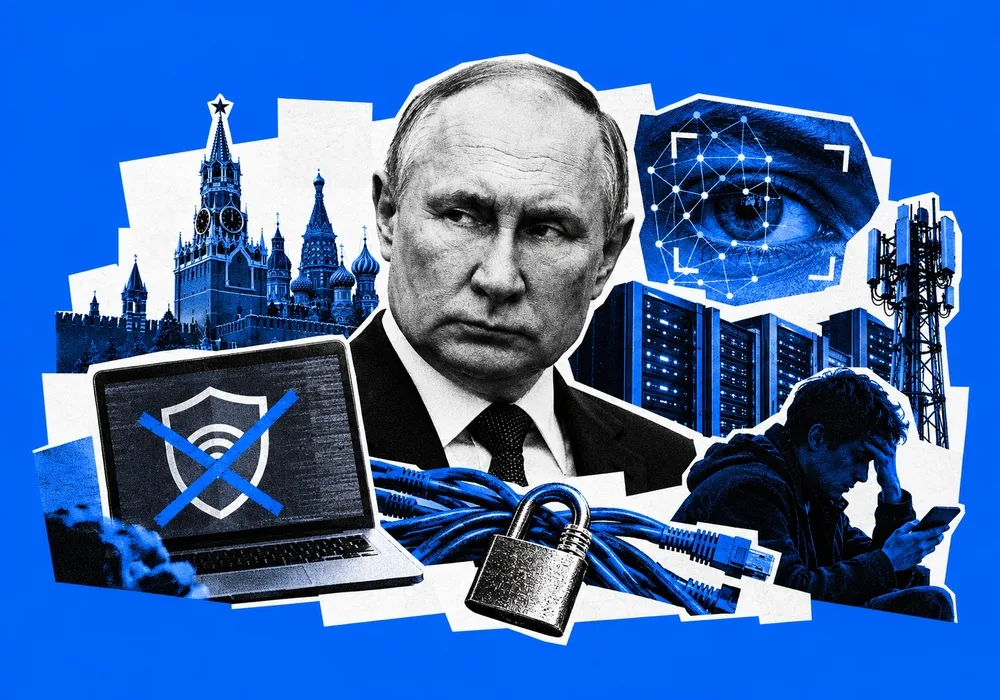
Russia has explored using artificial intelligence to identify and block up to 95% of VPN services, adding a new technological dimension to the Kremlin’s efforts to control online access. Although the proposal is reportedly absent from the latest draft of the national AI plan, existing traffic-filtering measures and increased spending indicate that restrictions on internet freedom remain a government priority.
Russia has considered deploying artificial intelligence to improve the detection and blocking of virtual private networks (VPNs), tools widely used to bypass government-imposed internet restrictions. The proposal appeared in a draft version of the country’s national plan for implementing artificial intelligence technologies through 2030, according to reporting by the Russian business newspaper Kommersant on 16 October. The document envisaged using AI to analyse the characteristics of VPN services, with the stated objective of achieving a blocking effectiveness of up to 95%.
The Ministry of Digital Development, Communications and Mass Media subsequently told Kommersant that the measure was not included in the current version of the draft plan. The distinction is important: the reported proposal should not be treated as an adopted government policy or a confirmed deployment programme. Nevertheless, the discussion reflects the direction of Russia’s wider internet-control strategy, in which authorities are seeking increasingly sophisticated ways to identify and restrict tools that allow users to access blocked websites and services.
According to sources cited by Kommersant, some forms of intelligent traffic analysis are already being used by Russian authorities, although these systems are not necessarily based on artificial intelligence. AI could expand those capabilities by analysing patterns in network connections, server behaviour, hosting arrangements and other technical characteristics to identify VPN infrastructure that conventional blocking methods have failed to detect.
From Blocking Websites to Identifying How People Connect
VPN services create encrypted connections that can help users circumvent geographical restrictions and government censorship. In Russia, demand for these tools has increased as access to international platforms, messaging services and independent information has come under mounting pressure. Rather than relying exclusively on lists of prohibited websites or known VPN server addresses, authorities are pursuing methods that could identify suspicious network activity and adapt more quickly when services change their infrastructure.
Machine-learning systems could make this process more responsive by combining multiple technical indicators to detect previously unidentified VPN servers. Instead of waiting for a service to appear on a blocking list, a filtering system could flag infrastructure whose behaviour resembles that of known circumvention tools. This would potentially make it more difficult for providers to maintain uninterrupted access by switching servers or modifying their technical configurations.
However, more aggressive detection would not necessarily translate into reliable or comprehensive censorship. Industry sources cited by Kommersant warned that AI-based identification could produce substantial numbers of false positives, particularly during the initial training phase. Corporate VPNs, cloud services and other legitimate network connections may share characteristics with traffic associated with circumvention tools. Blocking those connections could disrupt ordinary business operations and access to essential digital services.
The effectiveness of such systems would also depend on the quality of available network data, the infrastructure supporting the models and the ability of service providers to adapt. AI could make censorship more flexible, but it would not eliminate the technical limitations of internet filtering.
A Wider and More Expensive Internet-Control Programme
The VPN proposal forms part of a broader expansion of Russia’s censorship infrastructure. On 8 October, Meduza reported that Russia’s budget plans allocated a record 60 billion roubles for traffic filtering over the following three years. The funding is intended to support systems used to restrict online traffic, while other reported initiatives have focused on making VPN use more expensive and tightening oversight of corporate networks.
These measures point to a strategy that extends beyond individual platform bans. By investing in network-level filtering and improving the capacity to identify circumvention tools, the state can seek to limit access across multiple services simultaneously. This approach could also reduce the effectiveness of new VPN providers before they become widely used, forcing users to search repeatedly for alternatives as restrictions evolve.
The financial commitment is significant because it suggests that internet filtering is being treated as a long-term infrastructure priority rather than a temporary response to particular websites or applications. At the same time, the existence of a proposed budget or draft initiative does not guarantee that every measure will be implemented as originally envisaged. The final scope and effectiveness of the programme will depend on technical execution, regulatory decisions and the continuing ability of users and service providers to adapt.
The Consequences for Information Access and Business
The implications extend beyond access to social media or entertainment. VPNs can provide a route to independent journalism, international news, research resources and services that are unavailable or restricted within Russia. More effective blocking could make it harder for citizens to compare official narratives with information published outside the country, further narrowing the space for independent access to information.
Businesses could face a different but related set of risks. International companies and domestic organisations rely on VPNs and encrypted network connections to support remote work, connect offices and access cloud infrastructure. If filtering systems mistakenly classify legitimate connections as circumvention tools, disruptions could affect communications, operations and data access. Companies operating in Russia may consequently face greater uncertainty over the reliability of their digital infrastructure, as well as additional costs associated with maintaining compliant and functional connections.
The wider concern is that increasingly automated censorship can make restrictions less dependent on visible, individual decisions to block specific websites. Systems that analyse traffic continuously could allow authorities to respond more rapidly to emerging services and changing user behaviour. At the same time, errors may become harder for ordinary users to identify or challenge, particularly where there is limited transparency about how filtering decisions are made.
Implications for Europe: Information Security and Cross-Border Connectivity
Russia’s efforts to strengthen internet censorship could have consequences beyond its borders. As Moscow develops more sophisticated methods of identifying circumvention tools, the same infrastructure could affect how Russian citizens access European journalism, communicate with contacts abroad and obtain information from organisations operating across the continent. More restrictive access would further weaken the remaining channels through which independent reporting and alternative perspectives reach Russian audiences, complicating Europe’s efforts to counter disinformation with credible, accessible information.
The changes could also create practical difficulties for European companies, media organisations and civil society groups maintaining digital links with Russia. Businesses with employees, partners or technical operations in the country may face disruptions if filtering systems interfere with legitimate encrypted connections. Independent media outlets and organisations supporting journalists or human rights defenders could encounter additional obstacles when communicating securely with people inside Russia. These risks would not be limited to VPN providers: they could extend to the wider digital infrastructure that enables cross-border work and information exchange.
For European policymakers, the development reinforces concerns about Russia’s increasingly restrictive digital environment and the growing divide between European approaches to internet governance and Moscow’s model of state control. The European Union places emphasis on fundamental rights, access to information and an open internet, while Russia’s expanding filtering capabilities point towards tighter state supervision of online communications. This divergence may make digital freedom a more prominent component of Europe’s broader policy towards Russia, alongside sanctions, support for independent media and measures to counter foreign information manipulation.
There is also a strategic communications dimension. If Russian authorities make it harder for people to reach independent sources, European institutions and media organisations could find it increasingly difficult to communicate directly with Russian-speaking audiences. This would reduce the reach of alternative reporting and make it harder to challenge official narratives circulating inside Russia. At the same time, the effectiveness of any AI-based blocking system remains uncertain, and there is no evidence that the proposal itself has been adopted or that it would directly affect European internet infrastructure.
The central concern for Europe is therefore not that Russia’s proposed system would automatically spread censorship across the continent, but that it could further isolate Russian society from independent information and make cross-border communication more difficult. As digital restrictions become more adaptive, European governments may need to place greater emphasis on protecting secure communication channels, supporting independent Russian-language media and preserving access to reliable information for audiences inside Russia.
Digital Isolation as a Long-Term Policy Direction
Russia’s exploration of AI-assisted VPN blocking illustrates how the technologies associated with digital transformation can also be used to strengthen state control. Artificial intelligence is not inherently a censorship tool, but its capacity to analyse large volumes of data and identify patterns could make existing filtering systems more adaptable and difficult to circumvent.
The reported proposal remains subject to an important qualification: Russia’s Digital Development Ministry said the measure was absent from the latest draft of the national AI plan. Yet the broader investment in traffic filtering and the continuing restrictions on access to online services indicate that the government is maintaining pressure on the infrastructure used to reach information beyond its control.
For Russia, the challenge is no longer simply to block a fixed list of websites. It is to make the technical means of bypassing those restrictions increasingly difficult to sustain. Whether AI can deliver the reported level of effectiveness remains uncertain, but the policy direction points towards a more extensive system of digital control, with consequences for information access, commercial connectivity and the ability of Russian users to communicate freely with the outside world.
Sources: Meduza, [Kommersant](https://www.kommersant.ru/doc/9027535 )