
Russia’s Wartime Election: Putin’s Duma Vote Proceeds with No Opposition Allowed

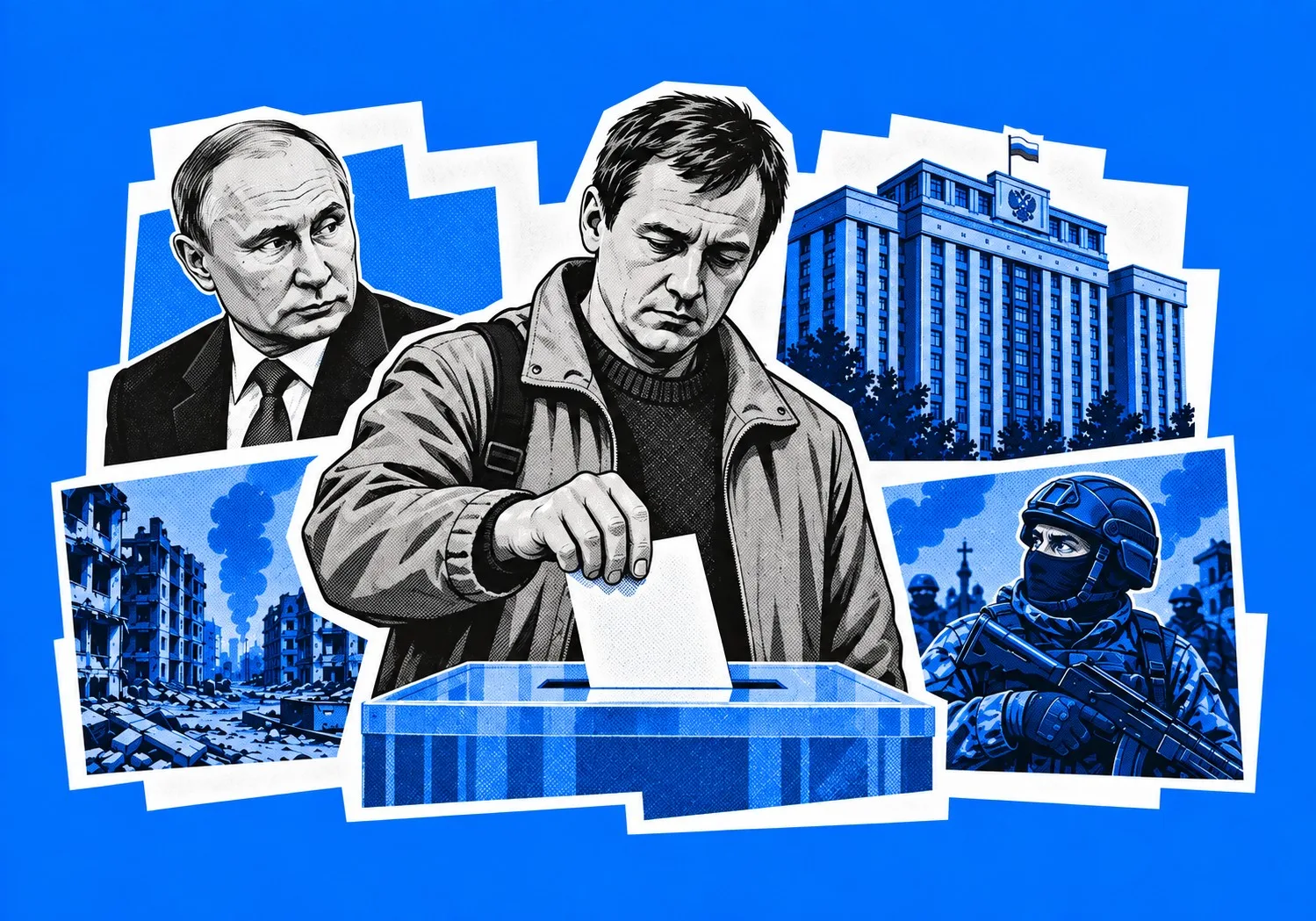
As the war in Ukraine enters its fifth year, the Kremlin bars anti-war candidates and demands a showcase of total unity Polling stations are open across Russia for the first parliamentary vote since the February 2022 invasion of Ukraine. The outcome is already locked. With the anti-war Yabloko party barred from the ballot, opposition leaders dead or in prison, and foreign critics exiled, the 450 seats in the State Duma will be split strictly among four Kremlin-approved factions. Vladimir Putin treats this three-day exercise as a loyalty check rather than an election.
Turnout is what matters to Moscow. The presidential administration has turned standard voting procedures into a compulsory metric for state workers, regional governors, and factory directors. This turnout drive comes as frontline casualties grow and the domestic economy hits hard structural limits.

Silence is now mandatory. Electoral officials disqualified anti-war Yabloko party monthe before voting began. On August 17, Russian Supreme Courts sentenced Lev Shlosberg, one of the party’s few remaining regional figures, to 11 years and one monthe in prison for criticizing the war. Alexei Navalny died in an Arctic prison colony two years ago. The state has thoroughly cleared the board.
Voters can choose only between Kremlin-sanctioned alternatives. United Russia shares the ballot with the Communists and the Liberal Democrats. All four parliamentary factions back the invasion. Their campaigns differ only on minor details of domestic execution, such as how quickly combat veterans should be placed in secondary school classrooms or how to reassign seized Ukrainian real estate to Russian buyers.
Anti-war figures outside the country disagree on tactics. Yulia Navalnaya has called on voters to show up at polling sites at noon on Sunday to cast votes for any non-government candidate. Yabloko’s leadership in Moscow advocates a complete boycott. They argue that entering a polling site gives the authorities the turnout figures they need.
Passive neutrality is no longer an option. The presidential administration demands explicit, documented participation from public institutions. By filtering out any candidate who questions the war, the regime ensures that the incoming Duma will offer unanimous consent for whatever legislative measures the security services require.
This uniformity extends through every level of the campaign. Regional candidates from the ruling party are running almost entirely on security platforms. They promise social benefits for combatants, military training in universities, and strict oversight of domestic compliance. Municipal infrastructure, healthcare access, and road repairs have dropped off the agenda.
For the Kremlin, the main point of the exercise is to show that the administrative machine still works. Holding a vote on schedule, across eleven time zones and under wartime conditions, is meant to signal control. The actual political preferences of the population do not enter into the equation. Moscow simply wants a set of turnout figures it can cite as evidence of order.
Three Days, Digital Servers, and Forced Turnout
Voting mechanics have been reworked since 2020. Extending polling over three days removes oversight during the night. Ballot boxes sit unmonitored in precincts staffed by state-salaried workers. Golos, the independent monitoring group, has been dismantled by law enforcement.

Electronic Distance Voting handles the rest. Operating in Moscow and dozens of industrial regions, the digital system gives state managers direct leverage over employees. Staff at municipal utilities, state banks, and public schools are ordered to submit electronic ballots from their workplaces on Friday morning. System administrators at the Central Election Commission process these votes on servers overseen by the security services. Independent verification is impossible.
Management sets the numbers. Factory directors receive target quotas from regional governors and track participation through workplace check-ins. In regions where public interest in the war is low, this administrative network extracts the necessary turnout figures regardless of voter intent.
Digital voting has changed the nature of election monitoring in Russia. Independent observers used to stand in precincts, count voters, and record procedural violations. With electronic voting, the entire process takes place within closed database architectures managed by state contractors. Physical polling stations now account for only a fraction of the votes cast in major urban centers.
State-sector employees face direct pressure to vote early. Department heads across municipal ministries order staff to register for electronic voting weeks in advance. On the first morning of balloting, managers monitor internal dashboards that track who has voted. Those who delay receive follow-up calls from human resources.
This system operates with particular force in large industrial enterprises that rely on state contracts. Management uses access control systems and corporate network portals to check that workers have voted. The threat of lost bonuses or missed promotions ensures compliance. The regime gets its turnout without needing visible physical force on the streets.
Drone Strikes, Fuel Queues, and a 14% Interest Rate
The demand for a show of unity coincides with rising physical and financial disruption inside Russia. Over the summer, Ukrainian long-range drones struck oil refineries, transport hubs, and logistics warehouses across the Urals and Siberia. The resulting fuel shortages produced long queues at filling stations in several industrial regions. Domestic summer travel fell six percent. Shipping bottlenecks in the Black Sea left harvested grain sitting in southern storage facilities.
Growth has slowed to a crawl. Gross domestic product is projected to expand by 0.6 percent this year, down from 1.0 percent in 2025. Inflation remains above six percent. To stop price increases from accelerating, the Central Bank has held its key interest rate at 14 percent, raising borrowing costs for non-military businesses.
A severe labor shortage now constrains basic output. Driven by military recruitment and long-term demographic decline, national unemployment stands at two percent. Factories, farms, and logistics firms are competing for workers.
State spending on defense production keeps factory output numbers positive, but it drains resources from the rest of the economy. Private companies cannot match the signing bonuses offered by the Ministry of Defense or state arms manufacturers. Municipal bus networks in several cities have cut routes because of driver shortages. Commercial construction projects have stalled.
Household budgets are under steady pressure from rising prices for basic goods. While defense spending boosts wages in regions with heavy military manufacturing, service sectors and non-defense industries are struggling to keep up. Food prices, transport costs, and utility rates have risen across the provinces. Commercial banks, constrained by the high central bank rate, have sharply cut mortgage lending and consumer credit.
Small and medium-sized enterprises face a hard operating environment. Cut off from cheap credit and short of manual and technical labor, many private businesses are scaling back or closing. The shift of capital toward military production has created a two-tier economy. Defense-linked firms operate with guaranteed state contracts, while the rest of the commercial sector deals with high overheads, broken supply chains, and falling consumer demand.
Damage to logistics and energy infrastructure has introduced new volatility into regional supply chains. Drone strikes on fuel storage facilities have forced local authorities to introduce rationing for commercial transport in parts of European Russia. These localized shortages drive up freight rates. Higher transport costs feed directly into retail prices, creating an inflationary pressure that monetary policy cannot easily fix.
Coerced Voting in Occupied Ukrainian Territories
The Kremlin is using this election to assert administrative control over occupied parts of Donetsk, Luhansk, Zaporizhzhia, and Kherson. Officials dispatched from Moscow have set up regional election commissions to run the vote under military oversight.

Locals face immediate legal and physical pressure. Ukraine’s Security Service issued warnings on September 14, reminding residents that assisting or organizing illegal elections carries penalties of up to ten years in prison under Article 111-1 of the Criminal Code. On the ground, mobile election teams guarded by armed soldiers conduct door-to-door ballot collection.
Kyiv has asked foreign governments to reject the results. The Verkhovna Rada passed a resolution on September 17 calling on international bodies and foreign parliaments to declare the vote invalid. Ukrainian lawmakers urged foreign governments to deny recognition to anyone claiming a Duma seat from occupied Ukrainian land.
Occupation administrators rely on coercion to meet turnout targets. Residents who have refused Russian passports are denied medical care, municipal employment, and pension payments. Mobile voting patrols move through residential areas with transparent ballot boxes, gathering votes under the supervision of masked soldiers.
Setting up Russian administrative structures in the occupied zones remains a priority for Moscow's interior ministry and the security services. Organizing elections is designed to create a paper trail of administrative integration, linking local municipal offices directly to ministries in Moscow. Local officials who deliver high turnout numbers keep their budgetary allocations. Those who fail are replaced by staff brought in from Russian regions.
For the civilian population in these areas, neutrality is no longer possible. Refusing to participate in mobile balloting marks a household as disloyal. It exposes family members to background checks, phone inspections, and potential detention. Because a Russian passport is now required to access healthcare, register property, or receive a pension, voting has become part of basic daily survival under military occupation.
The international legal position is straightforward. United Nations resolutions and international legal bodies maintain that elections organized by an occupying power on foreign territory have no legal standing. Moscow ignores this, using its own legal framework to treat these areas as standard voting districts and assigning parliamentary seats based on local vote tallies.
Post-Election Expectations: The Threat of a Second Draft
The State Duma does not set policy. It functions as a clearance house for executive decisions, passing defense budgets, tax adjustments, and security bills without amendment.
Public attention is focused on what follows the close of polls on Sunday evening. In September 2022, the Kremlin announced a mobilization of 300,000 reservists shortly after regional balloting ended. That decision triggered immediate flight, with hundreds of thousands of men leaving the country over the following weeks.
The government states that no new draft is necessary. However, Ukrainian defense officials and Western military analysts point to steady frontline personnel losses and recruitment shortfalls as indicators that a new call-up is being prepared. With the new parliament seated, the administrative framework for a second mobilization will bein place.
The political system is built to contain public discontent before it can turn into organized protest. Laws governing public assembly, online speech, and civic groups have been tightened steadily over the past four years. Regional governors hold emergency powers to ban gatherings, restrict communications, and deploy internal security forces, ensuring that any reaction to post-election policy decisions can be shut down quickly.
The economic trade-offs facing the government will become sharper after the vote. Maintaining high defense spending while trying to stabilize the ruble and curb inflation requires tougher intervention from financial authorities. The government may need to raise corporate taxes, impose capital controls, or cut non-essential domestic spending to keep military procurement funded. That will put further pressure on a population that has endured four years of falling living standards.
The 2026 parliamentary election marks another step in Russia's transition into a fully mobilized wartime state. By eliminating legal opposition, automating the vote through unmonitored digital systems, and enforcing compliance across domestic regions and occupied territories, the regime has built a legislative framework that functions independently of public opinion. The incoming State Duma will spend its term implementing the executive orders required to sustain a long war.
Sources: Euractiv,Reuters, BBC, RBC-Ukraine, Meduza