
How an Investigative Assignment in Vienna Triggered a Flawed Austrian Espionage Probe

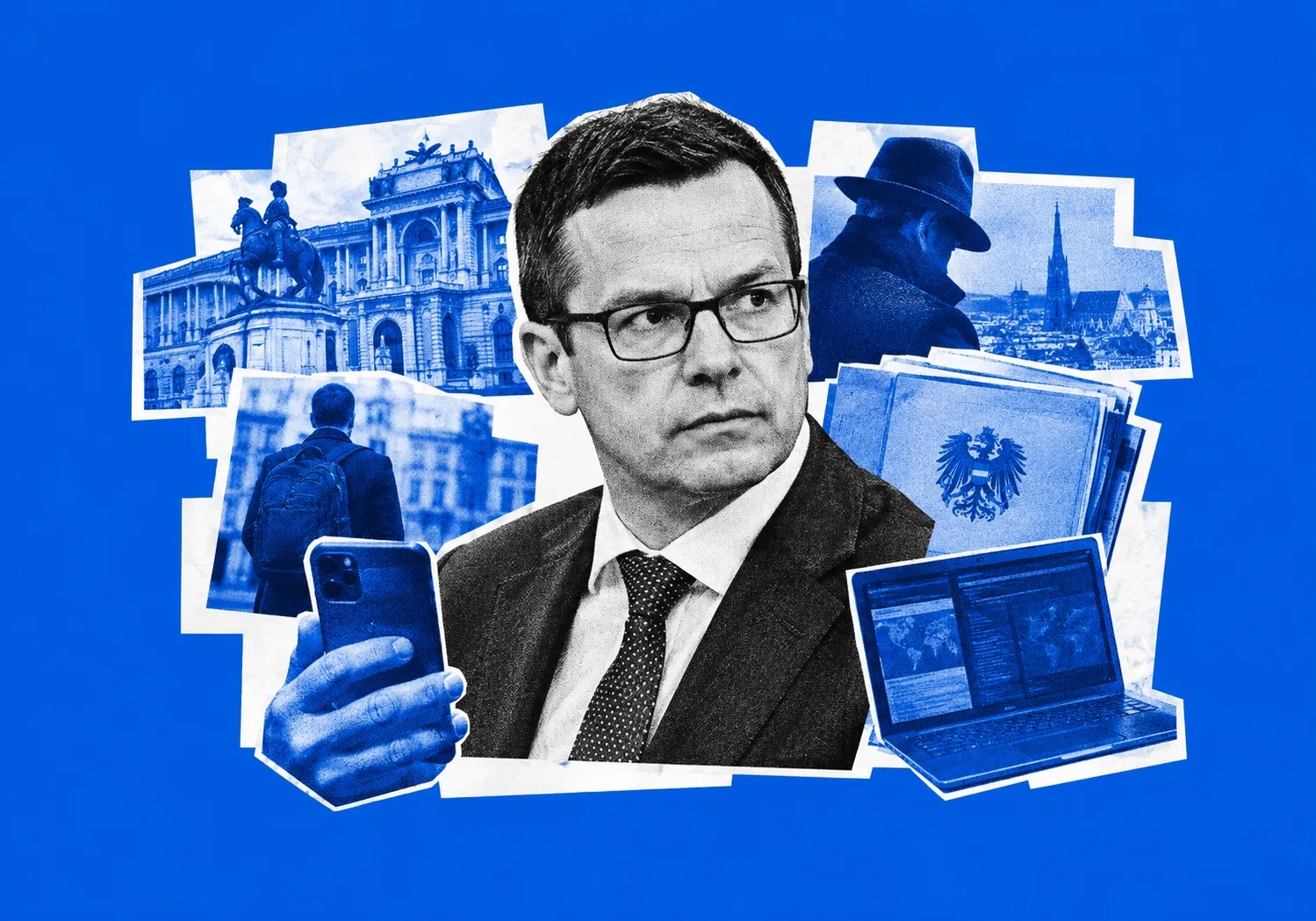
The detention of two Ukrainian journalists tracking a former official in Vienna has exposed a growing tension in Central Europe: how rapidly a routine investigative reporting assignment can be misconstrued by security services as foreign espionage.
Tkach and Bondarenko were among four Ukrainian citizens detained in Vienna during the week. Two others were detained on 5 October, although their cases are separate and the available information does not establish a connection with the journalists’ work.
Karner publicly linked the arrests to suspicions of espionage. Nina Bussek, a spokesperson for the Vienna Prosecutor’s Office, subsequently told the APA news agency that the suspicions against the two journalists had arisen during related proceedings but were not substantiated. Tkach was released, and the proceedings concerning Bondarenko likewise indicated that the suspicion did not hold.
The sequence leaves important details unanswered. Austrian authorities have not explained, in the information available, what specifically prompted officers to suspect the journalists of espionage. There is also no detailed account of the evidence considered by investigators or of why it proved insufficient.

That makes it difficult to judge the original decision to detain them. It does not, however, justify treating the arrests as evidence that the journalists were involved in intelligence activities.
The assignment, according to Ukrainska Pravda, was editorial. The publication’s chief editor, Sevgil Musaeva, demanded the journalists’ release and called for legal and consular access, as well as an official explanation from Austrian law enforcement.
Bondarenko was injured during the arrest and required hospital treatment before being questioned overnight. Tkach was held for approximately 12 hours. A Ukrainian consul gained access to him during the night of 8–9 October following intervention by Ukraine’s Foreign Ministry, embassy in Austria and consular service. Tkach was released at around 4 am on 10 October.
The physical circumstances of Bondarenko’s arrest remain another unresolved issue. The available information does not establish the legal grounds for the force used against him or whether Austrian authorities will review the incident.
The problem with declaring an espionage suspicion
Espionage investigations often begin with uncertainty. Security services may have reasons to examine activity before they possess enough evidence to establish a criminal offence. In cases involving possible foreign intelligence operations, waiting too long can carry its own risks.
But an initial suspicion and a substantiated allegation are not the same thing. The Vienna case shows how the distinction can become blurred when political statements about a security operation reach the public before the prosecutorial assessment is clear.
Karner’s comments placed the arrests within a broader counter-intelligence investigation. The prosecutor’s account was narrower: the suspicions against these particular individuals had not held.
There is no evidence in the available information that the minister deliberately misrepresented the case. The two statements may have reflected different stages of the proceedings. Nevertheless, the public effect is significant. An official reference to espionage can leave a lasting impression even after prosecutors determine that the suspicion cannot be substantiated.
That creates a problem for both the rule of law and the reputation of those detained. Release without charge does not automatically reverse the consequences of an arrest, particularly when the allegation involves a crime associated with national security.
The authorities have a responsibility to explain what they can about the basis for an intervention, while respecting the confidentiality of legitimate investigations. Where a suspicion falls away, the public should also be able to distinguish the initial grounds for action from the conclusions reached afterwards.
When reporting looks like surveillance
The journalists’ assignment concerned a former senior Ukrainian official. Investigative reporting of this kind can involve establishing a person’s whereabouts, filming locations and observing movements. Depending on the circumstances, some of those activities may resemble methods used for intelligence gathering.
The resemblance alone tells authorities little about the purpose of the work. Journalists and intelligence operatives may observe the same place or person, but their objectives and legal status are different. Establishing that distinction requires evidence about the activity in question, not simply an assumption based on its appearance.
Vienna presents a particularly sensitive environment. The city hosts international organisations and diplomatic missions and has long been an important centre for intelligence activity. Austrian security services therefore have reasons to take possible espionage seriously. Yet the same environment also attracts journalists investigating political figures and international affairs.
The challenge is to distinguish the two without allowing the sensitivity of a location to become a substitute for evidence. The information available about Tkach and Bondarenko does not reveal what officers saw or which particular actions triggered their intervention. Without those details, it is impossible to determine precisely how the journalists came under suspicion.
For reporters working abroad, that uncertainty has practical consequences. An assignment that would be routine in one setting may attract scrutiny in another, particularly when it involves a politically sensitive figure. Even if a detention ends quickly, it can interrupt an investigation, expose staff to physical risk and force an outlet to divert time and money towards legal assistance.
Newsrooms may respond by documenting assignments more carefully, arranging local legal support and establishing procedures for contacting consular officials. Such measures can help clarify a journalist’s purpose, but they cannot prevent every mistaken interpretation by law enforcement.
Europe’s security priorities meet the press
Austria is dealing with security concerns shared by other European countries. Poland, Germany and the Czech Republic have also conducted investigations involving foreign nationals suspected of gathering intelligence or assisting activities that threaten national security. European governments are increasingly concerned about espionage, sabotage, cyber operations and covert recruitment.
These are genuine policy challenges. Security agencies need the ability to investigate suspicious activity, including when the available information is incomplete. The difficulty lies in ensuring that the powers used to address those threats do not sweep up people whose activities have a legitimate civilian purpose.
The earlier detention of two other Ukrainian citizens in Vienna should not be taken as proof of a wider case involving the journalists. The available information establishes that four Ukrainian nationals were detained during the week, but does not provide a basis for treating their cases as one operation against a connected group.
That distinction is important in an atmosphere where the word espionage can encourage speculation beyond what the evidence supports. It is equally important for authorities to explain the outcome of investigations without leaving the initial allegation to define the people involved.
The immediate response from Kyiv focused on securing access to the journalists and establishing what had happened. Ukraine’s Foreign Ministry spokesperson, Heorhiy Tykhyi, confirmed that official enquiries had been sent to Austrian counterparts. The government said the two men had been in Vienna for editorial work.
Diplomatic intervention was necessary to establish contact and seek answers. But the longer-term issue is how journalists can carry out legitimate investigations in European countries without facing disproportionate consequences when their work attracts security scrutiny.
What Austria still needs to explain
The prosecutor’s assessment answers one question: the suspicions against Tkach and Bondarenko were not substantiated. It does not explain why they were detained in the first place, what prompted the use of force against Bondarenko, or whether the handling of the case will be examined by the relevant authorities.
Those are not minor details. They concern the decisions made before prosecutors reached their assessment, when the journalists were deprived of their freedom, and one of them was injured.
For European governments, the temptation to intervene early in suspected intelligence cases is unlikely to disappear. Nor should every unsuccessful investigation be treated as proof of misconduct. But when an operation results in the detention of journalists and the suspicions against them subsequently fail, the authorities should be prepared to account for the process.
The unanswered question in Vienna is not whether Austria should investigate espionage. It is what safeguards ensure that the urgency of such investigations does not become sufficient reason to detain people before there is a sound basis for suspecting them of a crime.
Read also:
- Mikhail Zvinchuk, founder of the Rybar Telegram channel, detained in joint security operation alongside key operatives in Risan as European authorities step up enforcement against Kremlin-backed hybrid cells.
Sources: Kleine Zeitung, DW, OE24, Facebook Sevgil Hayretdın Qızı Musaieva