
Russian Missile Strike on Dnipro Destroys Hospice and Damages Hospitals

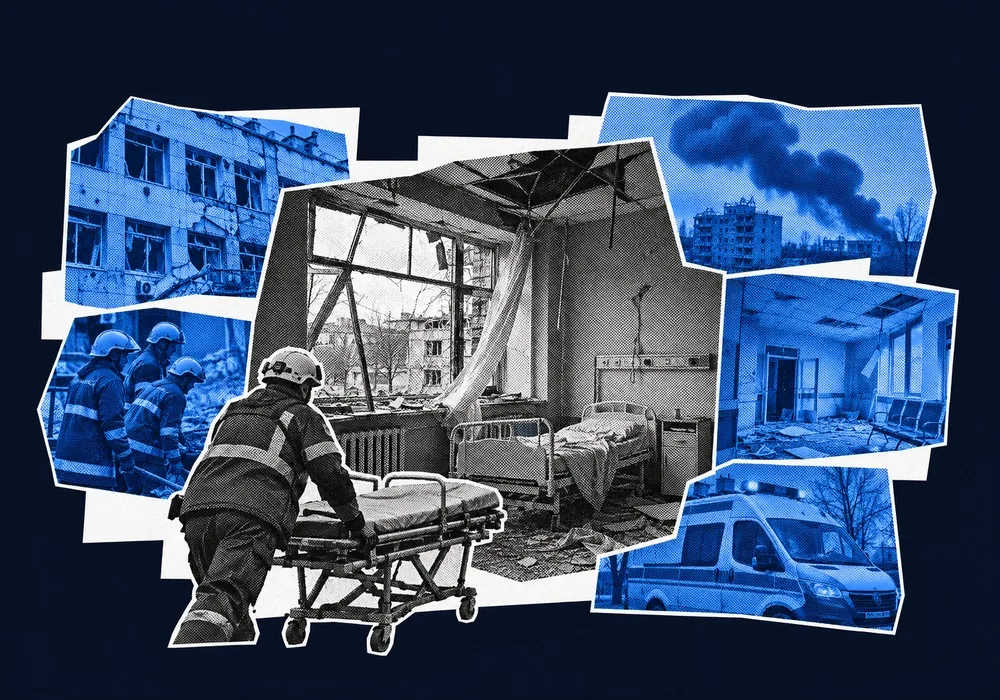
A Russian missile attack on Dnipro on 3 November killed at least one person and injured 17, while destroying a hospice housing terminally ill elderly patients. The strike also damaged residential buildings, medical facilities, schools and critical infrastructure, highlighting the continued exposure of civilian and healthcare facilities to Russia’s long-range attacks.
A Russian missile strike on Dnipro in the early hours of 3 November caused extensive damage to civilian infrastructure, including medical facilities, and left at least one person dead and 17 injured. Emergency crews continued search and rescue operations throughout the day, extracting nine people from the rubble. Among those rescued was a woman found alive beneath the debris.
The attack partially destroyed an administrative building and several residential properties, triggering fires across the affected areas. Two medical facilities, including an outpatient clinic and a municipal hospital, also sustained damage. The incident forced local authorities to organise the evacuation and relocation of patients while emergency services worked to assess the structural condition of damaged buildings.
The consequences were particularly serious for the city's healthcare system because one of the buildings destroyed was a hospice accommodating terminally ill elderly people. Nearly 50 patients were being transferred to other medical facilities following the strike. The oldest patient was 90 years old.
The hospice had recently undergone renovations, with the city investing in improvements to its wards and other premises. It was also one of the relatively few facilities in Dnipro providing specialised palliative care to both local residents and internally displaced people. Its destruction removes an important part of the city's capacity to support patients requiring continuous medical supervision and end-of-life care.
Hospitals Forced to Relocate Patients
The attack also affected a municipal hospital where almost 100 patients were present when the missile struck. According to Ukraine's Ministry of Health, neither patients nor medical personnel were injured there. Nevertheless, the damage to the facility required the transfer of patients to other hospitals to ensure continuity of treatment and prevent further risks.
The evacuation places additional pressure on medical institutions that must accommodate patients from damaged facilities while maintaining their existing services. Unlike the temporary closure of an administrative building, the loss of hospital and hospice infrastructure creates immediate logistical and medical challenges, particularly for elderly people and those with serious illnesses who cannot easily be moved.
The destruction of the hospice is also significant beyond the immediate casualty figures. Palliative care facilities require specialised equipment, trained personnel and an environment adapted to patients with limited mobility and complex medical needs. Replacing such capacity involves more than repairing a damaged building, as patients must be transferred to suitable facilities capable of providing comparable care.
Damage Extends Across Residential Neighbourhoods
The missile strike affected a much wider area of Dnipro than the medical facilities alone. Approximately 20 residential buildings were damaged or partially destroyed. The impact also reached a gymnasium, kindergarten, music school, library and the Enerhetyk Palace of Culture.
More than 1,000 windows were shattered in affected buildings, while some properties sustained damage to doors, heating radiators and other essential internal infrastructure. The scale of destruction indicates that the consequences will extend beyond the immediate emergency response, requiring extensive repairs to residential and public buildings.

Critical infrastructure was also affected. Damage to a water intake facility disrupted water supplies in the older part of Prydniprovsk. Municipal services were working to identify a technical solution to restore the supply, while the full extent of the damage remained under assessment.
The disruption adds another layer of pressure on residents already dealing with damaged homes and disrupted public services. Water supply interruptions can also complicate emergency operations, sanitation and the functioning of nearby institutions, particularly when several facilities have been affected simultaneously.
Part of a Wider Russian Attack on Ukraine
The strike on Dnipro took place during a large-scale Russian aerial assault against Ukraine overnight on 3 November. President Volodymyr Zelensky said Russia had launched 289 attack drones, 17 ballistic missiles and 59 cruise missiles.
The scale and composition of the attack demonstrate the continued use of combined aerial strikes involving different weapons systems. Such attacks place substantial pressure on Ukraine's air defence network, emergency services and civilian infrastructure, particularly when several regions are targeted within the same operational window.

Dnipro's experience illustrates the consequences of these attacks for cities that function as major civilian, medical and logistical centres. The destruction of a hospice, damage to hospital buildings and disruption of water infrastructure affect not only those directly injured but also vulnerable patients, displaced people and residents dependent on public services.
The immediate priority remains the rescue of people trapped beneath debris, the treatment of the injured and the relocation of patients from damaged medical facilities. However, the longer-term consequences will include the reconstruction of healthcare capacity, repairs to residential neighbourhoods and the restoration of essential municipal services.
For Dnipro, the destruction of the hospice represents a particularly serious loss: a specialised institution serving some of the city's most vulnerable residents has been removed from the healthcare network at a time when medical services are already operating under the pressures of Russia's continued war against Ukraine.
Sources: National Police of Ukraine, Ukrinform