
Russian Drone Strike Kills Ukrainian TV Producer in Odesa as Media Workers Remain Exposed to Attacks

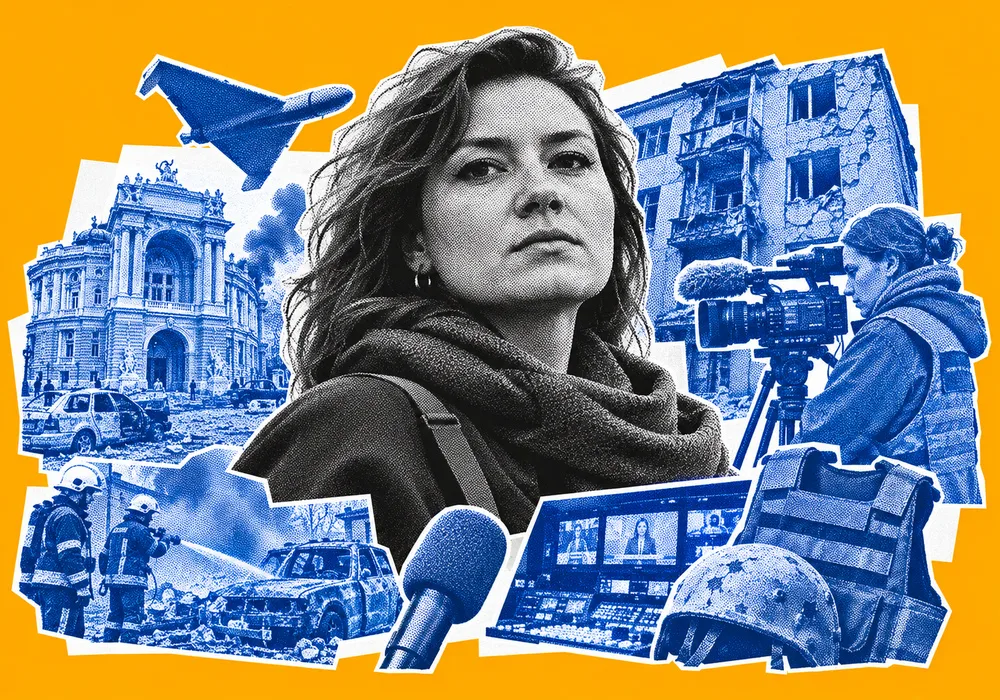
The death of Khrystyna Lysenko in a Russian drone strike on central Odesa highlights the growing risks faced by Ukrainian media workers beyond the front line. Press freedom organisations are calling for an independent investigation and accountability as attacks continue to threaten the country's media infrastructure and civilian population.
Ukrainian television producer Khrystyna Lysenko was killed in a Russian drone strike on Odesa on 18 November, becoming another media professional to lose her life during Russia's full-scale invasion. The attack took place in the city centre while she was walking to work along Yevropeiska Street, approximately three blocks from the newsroom of Pershyi Miskyi, where she had worked for more than two decades.
According to the Committee to Protect Journalists (CPJ), the strikes on central Odesa that morning killed four people and injured nine others, citing Ukraine's public broadcaster Suspilne. Lysenko was killed at approximately 10 a.m., before reaching her workplace. Her death illustrates how Russia's expanding drone campaign places civilians and essential urban services at risk even in areas far removed from active ground combat.
Lysenko had spent 23 years at Pershyi Miskyi, working as a producer, coordinator and administrator. Her responsibilities extended beyond individual television productions: she coordinated newsroom activities, organised schedules and camera crews, and helped maintain the daily operations of the broadcaster. Her colleagues described her as a central figure in the organisation, whose presence held the newsroom together.
The television channel's staff paid tribute to Lysenko following her death, recalling her strong character, generosity and commitment to helping people who had been abandoned or treated unfairly. She was also known for her affection for animals and her efforts to rescue cats. One of them, Mavka, had been rescued during a Russian attack in July and was waiting for Lysenko at the television station when she was killed.
Growing risks for journalists beyond the front line
Lysenko's death adds to the mounting toll among Ukrainian media professionals since the beginning of Russia's full-scale invasion in February 2022. CPJ reported that at least 21 journalists and media workers had been killed while performing their professional duties in Ukraine during this period. The organisation has also documented repeated attacks on media offices, journalists' homes and vehicles used by reporting teams.
The threat has increasingly extended beyond journalists covering military operations directly. In 2025, Russian drones killed French photojournalist Antoni Lallican and Ukrainian media workers Yevhen Karmazine and Alyona Hramova in the Donetsk region. In 2026, further incidents have demonstrated that editorial staff and local media employees remain vulnerable even when working in civilian environments.
The growing use of drones has made this threat particularly difficult to contain. Short-range unmanned aerial vehicles have become one of the most dangerous weapons for civilians in Ukraine, according to the UN Human Rights Monitoring Mission in Ukraine. Their ability to strike specific locations, combined with the repeated targeting of urban areas, has significantly increased the risks for people working in public spaces, including journalists, emergency personnel and humanitarian workers.
The circumstances of Lysenko's death also underline the vulnerability of local media organisations. Unlike national broadcasters with larger resources, regional television stations often operate with limited personnel and infrastructure. The loss of an experienced producer or coordinator can therefore affect not only individual colleagues but also the organisation's ability to maintain regular news production and serve its audience.
International organisations demand accountability
The Committee to Protect Journalists condemned Lysenko's killing and called for a thorough, independent investigation into the strike. Dunja Mijatović, CPJ's senior adviser for Europe and Central Asia, stressed that Russia must comply with its obligations under international humanitarian law to protect civilians, including journalists and other media workers.
The International and European Federations of Journalists also condemned the attack, joining Ukraine's National Union of Journalists and the Independent Media Trade Union in demanding that the circumstances of her death be documented and investigated. The federations emphasised that journalists must be protected regardless of whether they are reporting from the front line or carrying out routine newsroom responsibilities.
Reporters Without Borders (RSF) similarly condemned the strike, describing Lysenko's death as another example of the human cost of Russia's attacks on civilian areas. The organisation has filed multiple complaints with the International Criminal Court and Ukrainian prosecutors concerning attacks on media professionals, including cases it considers potential war crimes and crimes against humanity.
The organisations' demands come amid continuing concerns about the effectiveness of international mechanisms for investigating attacks on journalists in conflict zones. Although international humanitarian law provides protections for civilian media workers, establishing responsibility and securing prosecutions remain difficult, particularly when attacks occur during ongoing hostilities.
Implications for Ukraine's media resilience
The killing of Lysenko has implications beyond the loss of an individual journalist. Regional media outlets play an important role in maintaining access to local information, documenting the consequences of Russian attacks and communicating developments to communities under threat. Their ability to continue operating is therefore part of Ukraine's broader civilian and institutional resilience.
Repeated strikes affecting media personnel and infrastructure also increase the operational burden on already vulnerable newsrooms. Broadcasters must maintain production while dealing with staff losses, physical damage, security concerns and the psychological consequences of working under persistent attack. For smaller outlets, replacing experienced personnel and maintaining normal operations can be particularly challenging.
The case also reinforces the importance of documenting attacks on media workers as part of broader efforts to establish accountability for violations of international humanitarian law. Investigations must distinguish between the circumstances of individual strikes while preserving evidence that could support future legal proceedings.
Lysenko was not reporting from a battlefield when she was killed. She was walking to her workplace in the centre of a major Ukrainian city, continuing a professional career that had lasted 23 years. Her death demonstrates that Russia's drone campaign continues to expose civilians and the institutions they sustain to lethal risks, while the protection of journalists remains a significant challenge for Ukraine and its international partners.
Sources: Committee to Protect Journalists, International Federation of Journalists, Reporters Without Borders