
Russian Strikes Kill Three Civilians in Kharkiv as Debris Damages Homes in Lviv Region

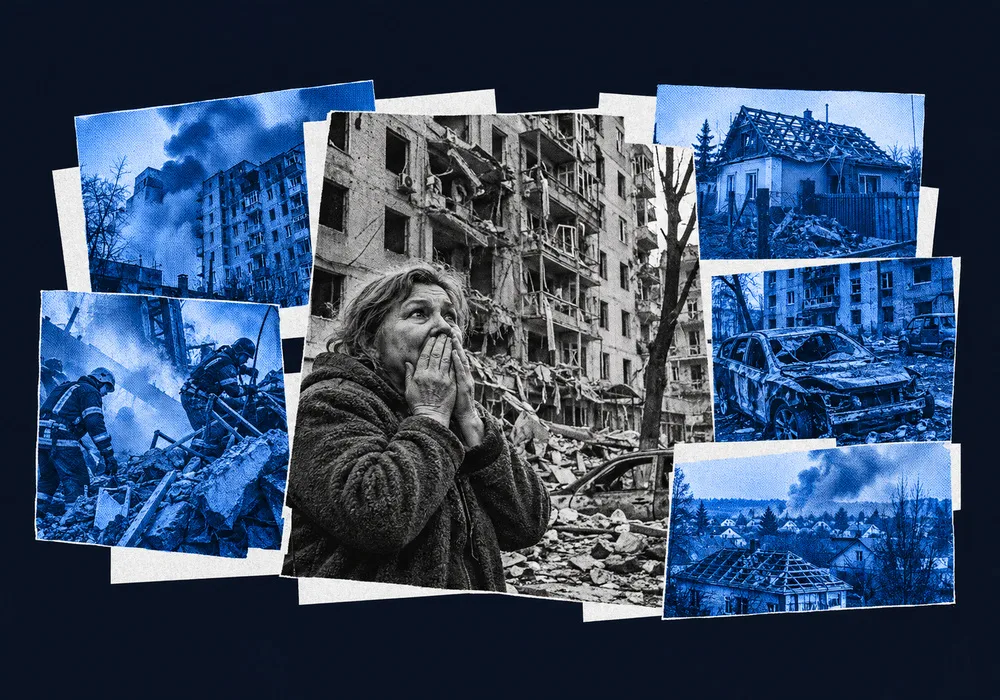
Russian attacks killed three civilians and injured 37 in Kharkiv, while debris from a downed Russian drone damaged three homes and three cars in the Lviv region. Ukraine’s Air Force reported that Russia launched 108 attack drones, five ballistic missiles and nine loitering munitions overnight.
Russian missile and drone attacks killed three people in Kharkiv and injured 37 others, while a downed Russian drone damaged residential buildings in the Lviv region on 13 October. The overnight assault involved ballistic missiles, attack drones and loitering munitions, with Ukrainian air defences intercepting or suppressing dozens of incoming drones.
The attacks highlight the continued vulnerability of Ukrainian cities far beyond the front line. Residential buildings, vehicles and civilian infrastructure remain exposed to Russian aerial strikes, placing sustained pressure on Ukraine’s air-defence network and emergency services.
Kharkiv residential building destroyed
The most severe damage was reported in Kharkiv, where a Russian attack destroyed an entire section of a four-storey residential building in the city’s Kholodnohirskyi district. Three people were killed and 37 injured in the city during the attacks, according to the Kharkiv Regional Military Administration.
The assault also struck a five-storey residential building in the Shevchenkivskyi district. A fire broke out in a bank on the ground floor and spread to six cars, while windows in three apartment buildings were damaged. At least 10 private houses were also affected across the city.
The regional administration said Russian forces had used multiple types of weapons against Kharkiv and surrounding communities. The damage extended beyond residential areas to civilian businesses, railway infrastructure and other facilities.
Emergency services continued working at the impact sites, searching damaged buildings and providing assistance to residents. Authorities warned that people could still be trapped beneath the rubble during the initial rescue operation.
The attacks also affected other parts of the Kharkiv region. Four people were killed across the region during the reporting period, including a 71-year-old woman in Lozova. In total, 51 people were injured, among them four children, according to the regional administration’s update on Tuesday morning.
Downed drone damages homes in Lviv region
In western Ukraine, a separate incident damaged residential property in Murovane, a village in the Lviv district. According to the Lviv Regional Military Administration, Ukrainian air defences were operating in the region during the first air-raid alert of the night, and a downed Russian drone subsequently fell in the area.
Three residential houses caught fire and three cars were damaged. No deaths or injuries were reported in the incident.
Drone debris was also found on a street in Lviv itself. Regional authorities warned residents not to approach or touch suspected drone fragments because they could still detonate.
The distinction is important: the damage in Murovane resulted from the fall of an intercepted drone, rather than a confirmed direct hit on the houses. Nevertheless, the incident demonstrates that air-defence interceptions can also create risks for civilians and property in areas targeted by Russian aerial attacks.
Ukraine intercepts dozens of drones
Ukraine’s Air Force said Russia launched 108 attack drones, five Iskander-M/S-400 ballistic missiles and nine loitering munitions during the overnight assault, which began at 18:00 on 12 October.
Ukrainian air defences shot down or suppressed 88 drones. The attack involved several types of unmanned aircraft, including Shahed drones, 74 of which were reported to be jet-powered, as well as Gerbera drones and decoy drones.
The figures illustrate the demands placed on Ukraine’s air-defence system by large-scale attacks involving different weapons. Ballistic missiles and drones require different interception capabilities, while the use of decoys can complicate detection and force defenders to allocate resources across multiple threats.
Even when a substantial proportion of incoming drones is intercepted, attacks can still cause significant casualties and destruction. The Kharkiv strikes demonstrated the consequences of weapons reaching densely populated neighbourhoods, while the incident in the Lviv region showed that intercepted drones can also cause damage when they fall.
Civilian infrastructure remains exposed
The latest attacks underline the geographical reach of Russia’s aerial campaign. Kharkiv, close to the Russian border, faces repeated strikes, but western regions such as Lviv remain exposed to long-range attacks and the risks associated with air-defence operations.
For Ukrainian authorities, protecting civilians requires more than intercepting incoming weapons. It also involves maintaining warning systems, ensuring that emergency crews can respond quickly and repairing damaged housing and infrastructure.
The consequences extend beyond the immediate death toll. Damaged homes can leave families without safe accommodation, while repeated attacks on urban infrastructure place additional demands on local authorities and emergency services.
The 13 October assault again demonstrated that distance from the front line does not guarantee civilian safety. Ukraine’s ability to limit the human cost of future attacks will continue to depend on the availability of effective air defences and the capacity of emergency services to respond to strikes across the country.
Sources: Kharkiv Regional Military Administration, Lviv Regional Military Administration