
Russia Turns Occupied Ukrainian Resorts into Russian Tourist Destinations

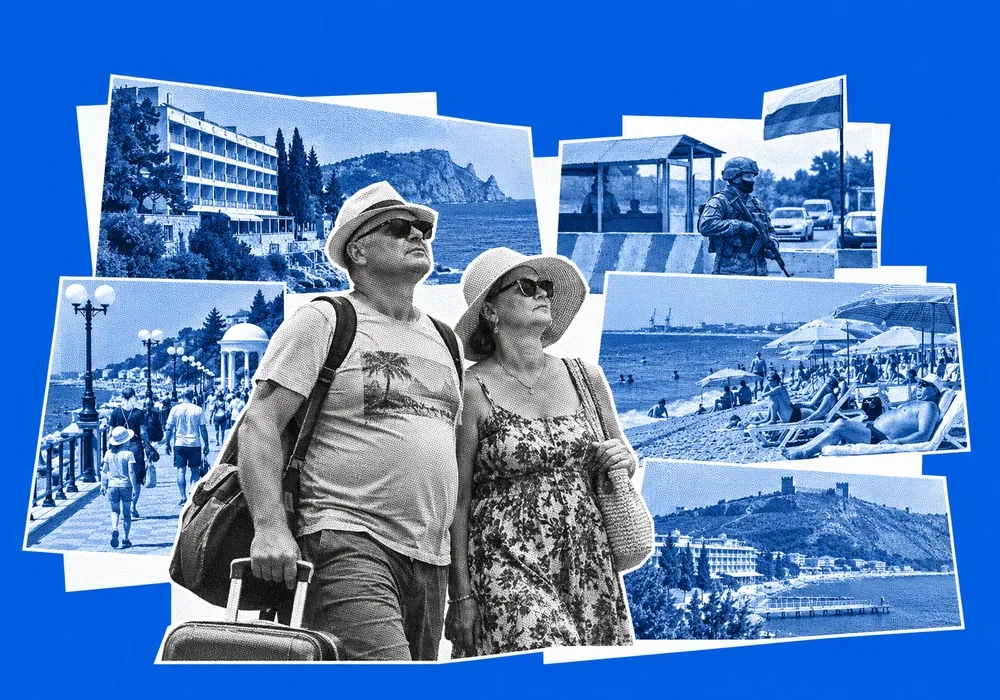
Russia is systematically transforming coastal resorts in occupied southern Ukraine, replacing Ukrainian symbols, language and businesses with Russian equivalents. The campaign extends beyond tourism, using the region's leisure infrastructure to consolidate Moscow's control over occupied territory and reinforce its claims of sovereignty.
Russia is systematically taking over Ukraine's occupied coastline along the Sea of Azov, transforming Ukrainian-owned resorts into assets managed by Russian businesses and occupation authorities. Hotels, holiday complexes and recreational facilities that once served Ukrainian tourists are being incorporated into a new tourism system designed to present the occupied territories as part of Russia.
A Reuters investigation published on November 2 found that Russian occupation authorities had designated at least 521 hotels and holiday facilities along the Ukrainian coast of the Sea of Azov as "ownerless". At least 77 of these properties had subsequently come under the control of Russian businesses, while no fewer than 20 had been taken over by a Russian state entity.
The investigation examined occupation administration orders, corporate and property registers, tourism development plans, and hundreds of photographs and videos documenting changes along the coastline. The findings reveal a process extending beyond the appropriation of individual buildings. Ukrainian businesses are being removed from the local economic landscape, their properties transferred to Russian operators, and the public identity of entire resort areas rewritten.
The physical transformation is visible in the replacement of Ukrainian signs with Russian-language branding and the removal of Ukrainian flags from hotels and other buildings. Russian symbols and commercial identities are being introduced in their place, presenting the resorts as destinations within Russia rather than businesses located on internationally recognised Ukrainian territory.
The legal mechanism behind the seizures
The appropriation process relies on regulations introduced by the Russian occupation authorities after the invasion. In 2022, Ukrainian property owners were reportedly given just three days to appear personally before occupation administrations, provide documentation proving ownership and present Russian passports. Properties whose owners failed to meet these requirements could be classified as "ownerless".
The procedure created an especially difficult situation for Ukrainians who had fled the occupied territories. Many owners were unable to return because of security risks, restrictions on movement and the danger of passing through Russian-controlled checkpoints. Others refused to obtain Russian documents or recognise the legitimacy of the occupation administration.
Their absence was subsequently used as grounds for taking control of their businesses and property. The classification of an asset as ownerless allowed occupation authorities to place it under new management and facilitate its transfer to Russian companies or state structures.
This mechanism is consistent with a wider property seizure policy documented across occupied Ukraine. In May 2026, Human Rights Watch reported that Russian authorities were using similar procedures to take over civilian property in occupied areas. Its investigation documented cases in which identifiable Ukrainian owners lost their homes despite evidence of ownership, because they had not registered their property under Russian law or could not appear personally before occupation authorities.
Human Rights Watch identified approximately 8,000 court cases involving property seizures between March 2024 and January 2026 in 25 courts operating in occupied territories. The organisation also found that Russian authorities routinely disregarded evidence demonstrating that properties had legitimate owners. In practice, the absence of registration in Russian databases could be treated as sufficient grounds for declaring an asset ownerless.
The resort seizures therefore form part of a broader system through which Russia is attempting to replace Ukrainian property rights with its own administrative and legal arrangements. The classification creates an appearance of bureaucratic legitimacy while allowing the occupation authorities to redistribute assets belonging to people who have been displaced by the war.
Hotels transferred to Russian-linked businesses
The resort town of Kyrylivka in the occupied part of Zaporizhzhia region illustrates how the system operates in practice. Several properties previously owned by Ukrainian entrepreneurs have been taken over and incorporated into Russian business structures.
Among the properties examined by Reuters are the Admiral and Pearl of Tavria hotels. Their ownership and subsequent management arrangements demonstrate how the designation of assets as ownerless can create opportunities for businesses connected to the Russian-installed administration.
The Ukrainian owners of Pearl of Tavria told Reuters that they had neither transferred management rights to the occupation authorities nor authorised other parties to operate the hotel. Nevertheless, Russian corporate records indicate that between 2023 and 2025 the company managing the property belonged to the son of Yevgeny Balitsky, the Moscow-installed head of the occupied part of Zaporizhzhia region.
The connection is significant because it illustrates how assets taken from Ukrainian owners can subsequently enter the business networks of individuals associated with the occupation administration. The process is not limited to the physical occupation of buildings: it also creates commercial opportunities for Russian-linked companies and individuals.
The case of Denys Katyukha, whose properties included the Admiral hotel in Kyrylivka, further illustrates the personal consequences of the seizures. Having fled Ukraine and relocated to Germany, he has found himself separated from businesses he had developed along the coast. The properties have since been taken over by Russian authorities, leaving their original owner unable to exercise control over them.
For Ukrainian entrepreneurs who invested years building tourism businesses, the loss involves more than the value of the real estate. It also means losing established customer networks, employees, equipment and the commercial relationships that supported their operations.
Russia is turning seized resorts into tourist destinations
The occupation authorities are attempting to give the appropriated properties a new commercial life by promoting them to Russian tourists. Hotels and holiday facilities are appearing on Russian booking platforms, travel websites and social media channels. Russian bloggers and tourism operators are also helping advertise the occupied coastline as a domestic holiday destination.
Reuters identified ten hotels in the offers of one Russian tour operator that had previously appeared on occupation authorities' lists of ownerless properties. This demonstrates how the seizure of Ukrainian assets is being followed by their incorporation into Russia's tourism distribution networks.
However, promotional activity does not necessarily mean that the facilities are operating normally. In July 2026, Reuters journalists attempted to book accommodation at the Admiral hotel in Kyrylivka but were informed that it had not opened for the summer season.
This gap between advertising and actual operations highlights the difficulties facing the emerging tourism industry. The war has damaged infrastructure, disrupted established business networks and created security risks that continue to affect the region. The occupation authorities may be able to transfer ownership and change the branding of a hotel, but they cannot automatically recreate the economic conditions that previously supported the Ukrainian tourism sector.
The attempt to attract Russian holidaymakers nevertheless serves a political purpose. By presenting the occupied coastline as an ordinary domestic destination, Moscow seeks to normalise its control and encourage the perception that the territories have been permanently incorporated into Russia.
Tourism as an instrument of territorial integration
The Sea of Azov coastline has considerable economic and strategic importance. Before the full-scale invasion, resorts in the region attracted Ukrainian holidaymakers and supported a network of private businesses, seasonal employment and related services. Kyrylivka was among the established seaside destinations, with hundreds of accommodation facilities, restaurants and recreational businesses.
Taking control of these properties allows Russia to appropriate part of the economic infrastructure that previously belonged to Ukraine. It also gives Russian companies access to valuable coastal real estate while removing Ukrainian owners from the local market.
The process is taking place alongside the broader integration of occupied territories into Russia's administrative, financial and legal systems. Occupation authorities have introduced Russian regulations, corporate registration procedures and property databases, while businesses are being encouraged or compelled to operate within the new framework.
Tourism is particularly useful in this context because it provides a visible way to demonstrate economic activity. Hotels, restaurants and beaches can be presented in promotional campaigns as evidence that the region is developing under Russian administration. The replacement of Ukrainian signs and flags reinforces the same message at street level.
Yet the economic benefits of this transformation remain inseparable from the circumstances under which the assets were acquired. The original owners have been displaced, property has been reclassified without their consent, and Russian companies are operating in territories that remain internationally recognised as part of Ukraine.
The legal consequences extend beyond the occupation
Under international humanitarian law, an occupying power does not acquire sovereignty over the territory it controls and cannot freely dispose of private property. Article 46 of the Hague Regulations protects private property from confiscation, while Article 53 of the Fourth Geneva Convention prohibits the destruction of property by an occupying power except where absolutely necessary for military operations.
The systematic transfer of private assets into the hands of Russian businesses and occupation administrations raises serious questions about violations of these obligations. The introduction of Russian administrative procedures does not make the occupation authorities' actions lawful under international law.
The consequences will also extend into any future process of restoring Ukrainian control. Reclaiming the coastline will require identifying properties that were unlawfully transferred, establishing the original ownership records, investigating subsequent transactions and determining how assets can be returned to their legitimate owners.
The longer these arrangements remain in place, the more complicated the process becomes. Properties may change operators, undergo renovations, accumulate new commercial liabilities or be transferred between companies. Ukrainian owners may also face difficulties obtaining documentation from Russian-controlled registries or challenging transactions conducted under occupation regulations.
For the displaced entrepreneurs, the situation is already a form of economic dispossession. They have lost access to businesses that may continue operating or being advertised under new management, while the value generated by those assets can benefit Russian companies and individuals connected to the occupation administration.
Russia's takeover of the Sea of Azov resorts demonstrates how territorial occupation is being extended into the economic sphere. The transformation involves not only military control and administrative integration but also the redistribution of private wealth, the removal of Ukrainian businesses and the creation of commercial structures designed to serve Russia.
The beaches and hotels may continue to exist, but the economic system built around them is being deliberately redirected. What was once Ukrainian tourism infrastructure is being turned into another instrument through which Moscow seeks to establish the appearance of permanent control over occupied Ukrainian territory.
Sources: Reuters, Human Rights Watch, National Resistance Centre (Ukraine)