
Russia Seizes Control of Japan Tobacco Assets: Kremlin Insider Linked to JTI Takeover

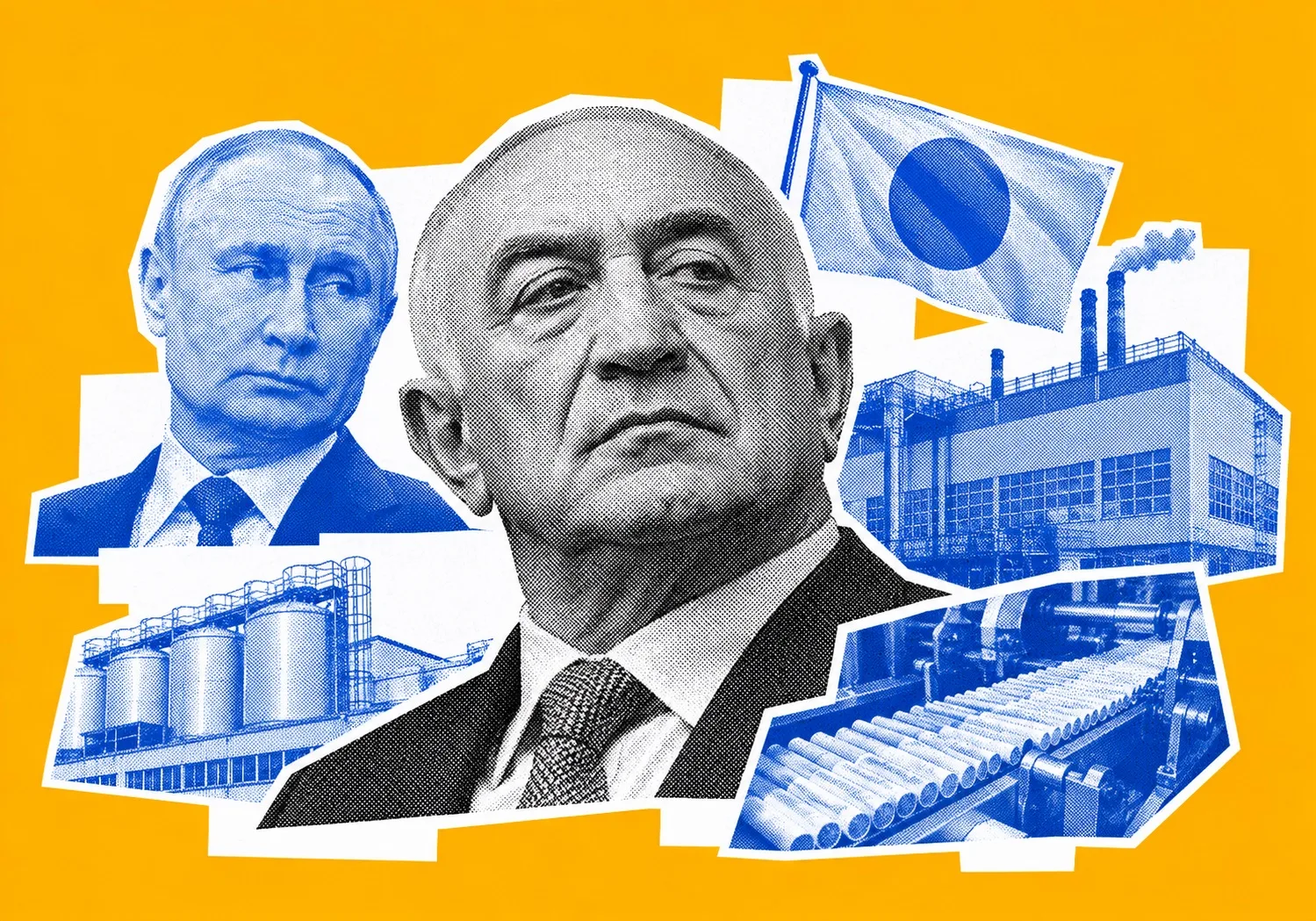
Russia has placed four subsidiaries of Japan Tobacco International (JTI) under temporary state control, assigning management to an entity linked to a long-time associate of Vladimir Putin. Tokyo has formally protested the decision, signaling a dangerous precedent for foreign companies remaining in Russia.
The November 5 decree signed by Vladimir Putin transferred management of four Russian manufacturing companies to a little-known entity called Promyshlennye Aktivy, or Industrial Assets. According to Russian business newspapers, the company may be connected to Taymuraz Bolloev, the founder of the Baltika brewery and a businessman whose relationship with Putin dates back more than three decades.
The development comes amid deteriorating relations between Moscow and Tokyo. Japan has formally demanded that Russia reverse the decision, while JTI, one of the country's largest tobacco manufacturers, is assessing its options.
Russia Transfers Control of Four Japan Tobacco Businesses
According to Kommersant, the presidential decree covers four JTI-related companies operating across Russia.
Two manufacture finished tobacco products: Petro in St. Petersburg and JTI Donskoy Tabak in Rostov-on-Don. The other two, JTI Yelets in the Lipetsk region and Kres Neva in the Leningrad region, process tobacco materials.
The measure does not cover all of JTI's Russian legal entities. Its trading operations and certain other subsidiaries remain outside the decree.
This distinction matters because the Kremlin has not formally transferred ownership of the affected companies. Instead, it has assigned management authority to a Russian administrator, effectively depriving the foreign owners of operational control over important production assets.
The four companies generated combined revenue of approximately 93.22 billion rubles and net profit of 15.9 billion rubles in 2023, the latest available figures cited by Kommersant.
An investment-market source quoted by the newspaper estimated the value of the businesses placed under external management at around 60 billion rubles, while valuing JTI's entire Russian operation at between 250 billion and 300 billion rubles.
The identity of the new administrator has become one of the central questions surrounding the decision.
Who Controls Industrial Assets?
The decree identifies the administrator only as Industrial Assets, without providing sufficient registration details to distinguish it from several Russian companies operating under the same name.
However, Kommersant reported, citing a source in a federal government agency, that the administrator is believed to be a company close to Taymuraz Bolloev.
RBC subsequently reported that one company registered under the Industrial Assets name in 2018 in the Leningrad region owns BTK Textile, a business associated with Bolloev's BTK Group.
Corporate database SPARK also links Industrial Assets executive Mikhail Bocharov to BTK Development, where he previously served on the board of directors.
The connection is significant because BTK Group operates in Russia's textile and clothing industry, including the production of uniforms and specialized garments. The business has previously supplied clothing to the Russian Ministry of Defence.
Nevertheless, the exact legal identity of the administrator remains an important unresolved issue.
On November 6, BTK Group publicly denied involvement in the transfer.
In a statement reported by RBC, the company said it had no connection with the transfer or management of JTI's assets and would not comment on the activities of third parties.
The denial does not independently establish which Industrial Assets entity has been appointed, nor does it conclusively resolve the reported links to Bolloev.
Taymuraz Bolloev: A Business Relationship Dating Back to Putin's Rise
Bolloev's business career is closely connected to St. Petersburg during the period when Putin was building his political network.
He founded Baltika, which became one of Russia's largest brewing companies, and developed contacts with Putin in the early 1990s.
In a 2000 interview with Nezavisimaya Gazeta, Bolloev described how their relationship developed through their shared interest in judo. He also recalled Putin helping arrange a meeting with Anatoly Sobchak, then the mayor of St. Petersburg, in 1991.
Their association extended beyond business.
Bolloev served as one of Putin's authorized representatives during the 2000 and 2004 presidential election campaigns. He also played a prominent role in the celebrations marking Putin's 48th birthday, according to a contemporary Kommersant account.
After leaving Baltika in 2004, Bolloev expanded his interests into textiles and industrial production.
Between 2009 and 2011, he headed Olympstroy, the state corporation responsible for major infrastructure projects associated with the 2014 Winter Olympics in Sochi.
His career illustrates the long-standing overlap between politically connected business figures, government projects and major Russian industrial enterprises.
Yet his most relevant recent business episode concerns Baltika itself – another foreign-owned company that lost operational control of its Russian assets following a Kremlin intervention.
From Carlsberg to Japan Tobacco: A Familiar Pattern
In July 2023, Russia placed the local operations of Danish brewing group Carlsberg under temporary state management.
The decision deprived Carlsberg of control over Baltika, the Russian brewing business it had previously acquired.
Bolloev subsequently returned to lead the company, nearly two decades after leaving its management.
In December 2023, he went further, publicly proposing that Russia nationalize Baltika rather than maintain temporary external administration.
His position was reported by Vedomosti.
The Baltika dispute eventually developed into a change of ownership.
In December 2024, the Russian government approved the sale of Baltika to VG Invest, ending Carlsberg's direct involvement in the Russian brewing business.
According to an investigation by Alexei Navalny's Anti-Corruption Foundation (FBK), structures associated with billionaire Gennady Timchenko, a long-standing Putin associate, provided financing connected to the acquisition.
The foundation's findings, published through Navalny's investigative platform, raised questions about the ultimate financial interests behind the transaction.
These allegations should be distinguished from the formally disclosed ownership arrangements, and they do not establish that the same financing structure is involved in the JTI case.
Following the Baltika sale, Bolloev left his executive position in December 2024.
The similarities between the two cases nevertheless attract attention: foreign-owned Russian assets are placed under temporary management, and a business figure with longstanding Kremlin connections is subsequently associated with the new management arrangements.
The outcomes are not identical, and no evidence currently establishes that JTI's Russian business is destined for the same ownership structure as Baltika.
The LLCInvest Network and Putin’s Hidden Business Empire
Bolloev's business interests have also appeared in investigations into a network of companies associated with valuable assets allegedly connected to Putin and his associates.
In 2016, Bolloev became a founder of Agronova, an agricultural company involved in vegetable production in Labinsk, southern Russia.
The company's subsequent ownership is difficult to establish from publicly available information.
According to an investigation by the Organized Crime and Corruption Reporting Project (OCCRP), Agronova was among the businesses associated with LLCInvest, a network linked to assets connected to Putin's circle.
The investigation, conducted with media partners including Meduza, identified 86 companies and nonprofit organizations sharing corporate infrastructure, personnel or email addresses associated with the llcinvest.ru domain.
Together, these entities controlled assets worth at least $4.5 billion, according to the investigators.
The network included properties and businesses associated with Bank Rossiya, whose shareholders and executives have longstanding ties to Putin.
Among the assets linked to companies in the network was the luxury estate near Gelendzhik widely described as Putin's palace.
The investigation did not establish that Putin personally and legally owned all the assets identified. Rather, it documented an interconnected corporate structure involving people close to the Russian leader.
Agronova's reported presence within that network adds another dimension to Bolloev's business background, although it does not demonstrate that the JTI takeover is being coordinated through LLCInvest.
Japan Protests as a Major Source of Profit Comes Under Threat
The economic importance of the Russian market makes the decision particularly consequential for Japan Tobacco.
According to Reuters, Russia accounts for approximately 10% of Japan Tobacco Group's revenue but contributes roughly 25% of its operating profit.
That imbalance highlights the profitability of the Russian business and the potential financial consequences of losing management control.
JTI has operated in Russia since 1999 and has maintained a substantial market presence despite international sanctions imposed following Russia's full-scale invasion of Ukraine in 2022.
Its brands include Winston, Camel, LD, Sobranie and Mevius.
According to Kommersant, JTI estimated its share of the Russian tobacco market at 36.9% at the end of 2025.
Japan's response to the decree has been unusually direct.
As reported by The Japan Times, Japanese Economy Minister Ryosei Akazawa called on Moscow to withdraw the measure and emphasized the need to protect Japanese corporate interests.
Finance Minister Satsuki Katayama also confirmed that Tokyo had lodged a diplomatic protest.
The Japanese government's involvement is particularly significant because the Ministry of Finance owns approximately 37.55% of Japan Tobacco's shares.
The dispute therefore affects not only a private multinational company but also an enterprise in which the Japanese state holds a substantial financial interest.
JTI has said it is reviewing the decree, gathering information and considering possible responses, with employees and business partners among its priorities.
The company's shares came under heavy selling pressure following the announcement, reflecting investor concerns over the future of its Russian operations.
A Takeover Amid Deteriorating Russia–Japan Relations
The intervention comes against a backdrop of worsening diplomatic relations between Moscow and Tokyo.
Japan has supported sanctions against Russia following the invasion of Ukraine, while longstanding territorial disagreements over Russian-controlled islands claimed by Japan remain unresolved.
Tensions increased further in October 2026 when Russian authorities detained Yuki Imai, a journalist working for the Japanese newspaper Hokkaido Shimbun, on espionage allegations.
Russia has also criticized Japanese involvement in supplying technology and equipment to Ukraine.
The timing of the JTI decision has consequently raised questions about whether Moscow is using foreign commercial assets as an instrument of political pressure.
However, the Kremlin has not publicly established a direct connection between the tobacco company's takeover and the detention of the journalist or any particular Japanese government decision.
The decree itself did not specify the reason for transferring management.
Russia has previously justified similar interventions as responses to actions by countries it designates as unfriendly.
What the JTI Case Means for Foreign Investors in Russia
The Japan Tobacco case illustrates a broader shift in the risks facing international businesses that retain substantial operations in Russia.
Following the 2022 invasion of Ukraine, some multinational corporations sold their Russian subsidiaries, while others suspended investment but continued operating.
Companies that remained now face a different challenge: the possibility that the Kremlin may transfer management rights to domestic entities without completing a conventional purchase or nationalization.
The distinction between ownership and control is especially important.
A foreign company may remain the legal shareholder while losing the ability to appoint management, determine production strategy or control the use of its assets.
The precedent established by Baltika demonstrates how temporary administration can precede a more permanent restructuring of ownership. But the JTI case has not yet reached that stage.
For European and Japanese companies, the implications extend beyond tobacco manufacturing.
The possibility of losing control over profitable subsidiaries introduces additional political uncertainty into investment decisions, asset valuations and potential exit negotiations.
The involvement of businessmen with longstanding ties to Russia's political leadership also raises questions about how new administrators are selected and whether the economic benefits of these arrangements become concentrated within established domestic networks.
In JTI's case, the reported connection to Bolloev remains disputed, and the ultimate identity of the administrator requires further clarification.
What is already clear is that one of Japan's most important corporate investments in Russia has been placed under management chosen by the Kremlin, despite objections from Tokyo.
For international investors, the episode underscores how corporate ownership rights in Russia can remain formally intact even as effective control over valuable businesses changes hands.
Sources: Kommersant, RBC, Vedomosti, Nezavisimaya Gazeta, Forbes, OCCRP, Anti-Corruption Foundation (FBK), Reuters, The Japan Times