
Russia-Iran Partnership Adds a New Dimension to Hybrid Threats Against Europe

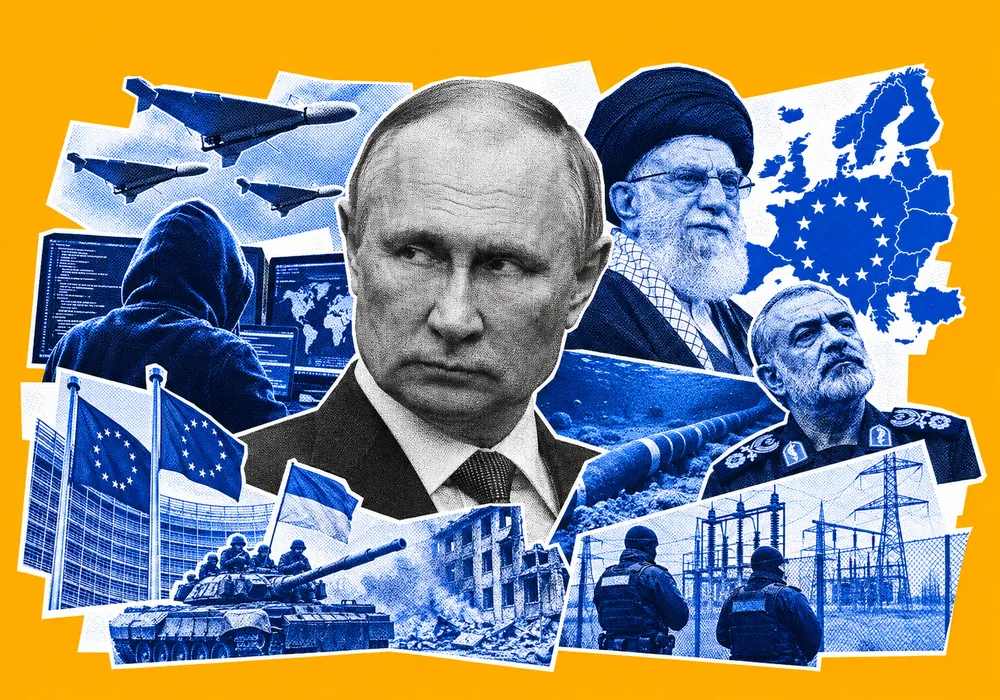
Iran's expanding campaign of cyberattacks, espionage and intimidation across Europe is unfolding alongside a deepening strategic partnership with Moscow. Although there is no established evidence that Russia directs Tehran's operations on European soil, intelligence-sharing arrangements, military cooperation and technological exchanges between the two countries are creating a broader network of pressure against Western interests.
Iran's growing willingness to conduct covert operations against European targets is adding another dimension to the security challenges facing the continent. Cyberattacks against civilian infrastructure, surveillance of political opponents and threats against Western military installations demonstrate that Tehran is increasingly prepared to extend its confrontation with the United States and its allies beyond the Middle East. For European governments, however, the developments also raise questions about the implications of Iran's increasingly close relationship with Russia, which has its own established record of hybrid operations against European countries.
Moscow and Tehran have expanded their cooperation across military, intelligence and technological sectors, particularly since Russia launched its full-scale invasion of Ukraine. Their partnership is driven by overlapping opposition to Western sanctions and US influence, as well as a growing need to exchange military capabilities and expertise. While the two governments retain separate strategic objectives, their cooperation provides both with additional opportunities to challenge Western interests.
Moscow and Tehran Strengthen Their Security Partnership
The institutional foundations of this relationship were reinforced in January 2025, when Russian President Vladimir Putin and Iranian President Masoud Pezeshkian signed a comprehensive strategic partnership treaty. The agreement established a framework for closer military and security cooperation, including intelligence-sharing and exchanges of operational experience between their respective security agencies.
The treaty is particularly significant because it formalises cooperation between two governments that increasingly regard Western security policies as a common threat. Its provisions envisage closer coordination between intelligence services, military exchanges, joint exercises and expanded military-technical cooperation. Although the agreement does not establish a mutual defence obligation, it provides an institutional basis for further collaboration in areas relevant to European security.
The relationship has become more important as Iran faces growing military pressure from the United States and Israel. Diplomatic contacts between Moscow and Tehran intensified in autumn 2026, with Iranian President Pezeshkian visiting the Kremlin on 27 October. Russia has reportedly provided Iran with intelligence on American military positions and satellite imagery that could assist its targeting capabilities. Military and technological exchanges have also continued despite Moscow's own resource constraints caused by the war in Ukraine.
A report published by the Center for a New American Security on 17 November, examining a decade of Iranian-Russian military cooperation, highlights the growing importance of knowledge transfers alongside direct weapons supplies. The relationship has evolved beyond the exchange of equipment, with both countries benefiting from lessons learned through their respective military operations. Russia's large-scale production of Iranian-designed Shahed drones is one of the clearest examples of how technological cooperation can produce capabilities that extend beyond the original supplier.
Iran's Operations Expose Europe's Vulnerability to Hybrid Pressure
Against this background, Iran's expanding covert activity in Europe illustrates how hostile state actors can use methods that remain below the threshold of conventional military confrontation. In France, authorities attributed a cyberattack against refrigeration systems at approximately 700 supermarkets to Iran's Islamic Revolutionary Guard Corps. The operation, which caused losses of perishable goods and fires, demonstrated the potential consequences of targeting civilian infrastructure through remotely conducted cyber operations.
The British authorities have also exposed Iranian intelligence activity directed against individuals living in Europe. On 12 November, two men were convicted of assisting Iranian intelligence by conducting surveillance on journalists working for the Persian-language broadcaster Iran International. One of the defendants was additionally found guilty of preparing acts of serious violence. The case highlighted Tehran's use of local contacts and surveillance networks to monitor and intimidate opponents abroad.
These activities bear similarities to methods already associated with Russia's hybrid campaign against European countries. Moscow has repeatedly relied on cyber operations, sabotage, espionage, intimidation and intermediaries to undermine security and generate political pressure without engaging in direct military confrontation. The use of civilian infrastructure as a target, the exploitation of local networks and the difficulty of establishing state responsibility are recurring features of this broader threat environment.
However, similarities in operational methods should not be confused with evidence of joint command or coordinated planning. Iran has its own intelligence structures and established record of overseas operations. Its activities in Europe are primarily driven by Tehran's confrontation with Western governments, while Russia's hybrid campaign is connected to its wider strategic objectives, particularly weakening European support for Ukraine and undermining NATO cohesion.
The Limits and Potential of Russian-Iranian Cyber Cooperation
The cyber dimension of the partnership deserves particular attention. Both governments have invested in digital surveillance, censorship and offensive cyber capabilities, while their security institutions have developed channels for exchanging expertise. Russian companies have also supplied Iran with digital surveillance and censorship technologies, strengthening the Iranian authorities' ability to monitor domestic opponents and restrict access to information.
Nevertheless, the extent of direct cooperation in offensive cyber operations remains difficult to establish. Analysts at the Center for Strategic and International Studies have cautioned against overstating claims of a joint Russian-Iranian cyber campaign. While evidence of intelligence-sharing and technological exchanges exists, reports of extensive operational coordination between Russian and Iranian hacking groups have not been sufficiently substantiated.
This distinction is important for European security assessments. Even without a unified operational structure, the two countries can benefit from each other's experience, technical developments and intelligence capabilities. Their separate activities also place additional demands on European governments, which must identify and respond to multiple hostile actors operating through overlapping methods.
The possibility of closer cooperation nevertheless remains a concern. The strategic partnership treaty provides a framework for intelligence and security agencies to exchange information and experience, while growing military and technological ties create further opportunities for cooperation. As both governments face pressure from Western sanctions and security measures, incentives to strengthen these arrangements are likely to persist.
European Security Faces a Wider Network of Hostile Actors
Iranian threats against American military installations in Europe further demonstrate how developments in the Middle East can affect the continent's security environment. In October, the United States withdrew B-1 bombers from RAF Fairford following reported concerns about possible Iranian attack plans. In November, additional American aircraft were relocated from British bases to facilities elsewhere in Europe. Tehran has also openly threatened US military installations on the continent if they are used in operations against Iran.
For European NATO members, these developments create an additional layer of exposure. Military facilities supporting American operations could become potential targets, while civilian infrastructure and individuals opposed to authoritarian governments remain vulnerable to covert attacks. The combination of these risks makes it increasingly difficult to separate regional conflicts from Europe's own security environment.
The wider implications extend beyond Iran itself. Russia's partnership with Tehran provides Moscow with an additional strategic relationship through which it can challenge Western influence, exchange military expertise and maintain pressure on the United States and its allies. At the same time, Iran's independent operations demonstrate that Europe's security challenges are no longer limited to Russian intelligence networks and state-directed sabotage.
European governments therefore face the task of addressing two distinct but increasingly connected security relationships. Strengthening intelligence-sharing, protecting critical infrastructure, exposing foreign intelligence networks and improving coordination between NATO members will be essential to limiting the potential consequences. The principal risk is not necessarily the emergence of a single coordinated Russian-Iranian campaign, but the possibility that cooperation between hostile states will expand their individual capabilities and make the European security environment more difficult to defend.