
Paldiski’s Cold War Legacy: Inside the Soviet Nuclear Submarine Base Still Sealed in Estonia

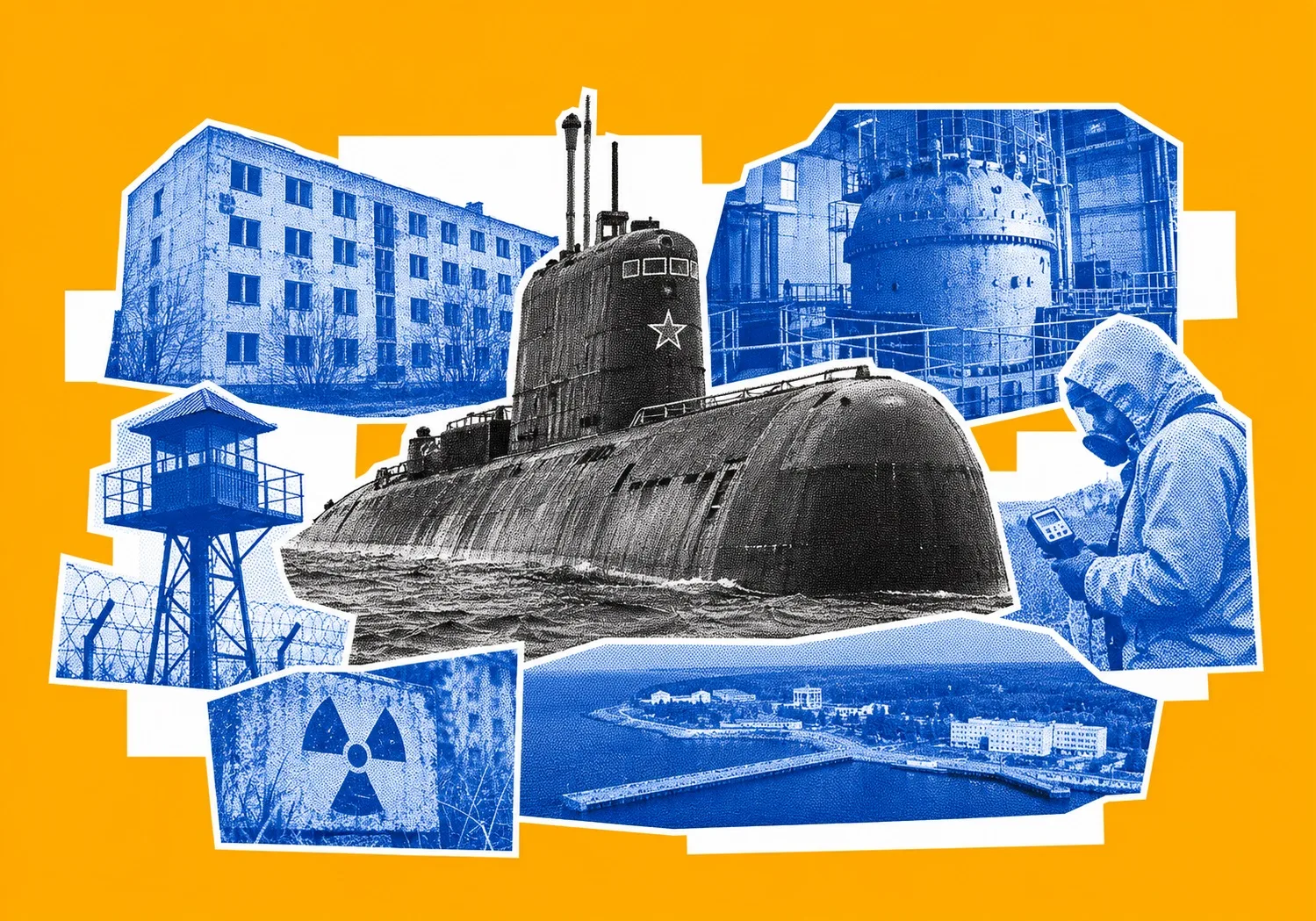
Decades after Soviet forces withdrew, two radioactive submarine reactor compartments remain concrete-sealed at Paldiski on Estonia’s Baltic coast. As the independent nation tackles a multimillion-euro clean-up spanning until 2040, the site stands as a lingering environmental and financial reminder of Moscow’s military past.
Estonian President Lennart Meri regarded the handover as the real end of Soviet occupation. He hoped Paldiski would become an ordinary Estonian port, according to a Radio Free Europe/Radio Liberty report published the following day.
Yet the Soviet departure did not mean that everything the military had built could be removed.
The nuclear fuel had been shipped to Russia, and much of the training infrastructure had been dismantled. Two reactor compartments, however, remained inside reinforced concrete structures. Their radioactive components would require decades of monitoring, maintenance and, eventually, dismantling.

More than thirty years after the Soviet Union disappeared, Estonia is still managing the consequences of a nuclear submarine programme that was never its own.
A secret city built for the Soviet nuclear fleet
Paldiski occupies the Pakri Peninsula on Estonia's northern coast, roughly 40 kilometres west of Tallinn. Its position on the Gulf of Finland gave it strategic importance long before the nuclear age. But the Soviet military transformed the town into something fundamentally different.
In the early 1960s, construction began on a specialised training centre for crews of nuclear-powered submarines. The installation became part of the Soviet Navy's system for preparing personnel to operate the increasingly complex vessels carrying nuclear propulsion systems and, in many cases, strategic missiles.
The town was placed under strict military controls. Access was restricted, and its economy, infrastructure and population became closely tied to the naval establishment.
Paldiski was not simply a harbour where submarines occasionally docked. Its most important nuclear installations were on land.
At the centre of a 29-hectare military nuclear site stood a building approximately 200 metres long, containing two training installations built around actual submarine reactor systems. The complex also included radioactive waste facilities, liquid-waste treatment equipment, ventilation systems, specialised laundry facilities and supporting infrastructure.
According to Estonia's nuclear-site operator AS A.L.A.R.A., each training installation incorporated a functioning reactor and equipment associated with submarine propulsion and control.
The distinction matters. Soviet sailors were not merely studying diagrams or practising on conventional simulators. They could learn to operate nuclear propulsion equipment under conditions designed to reproduce those aboard real submarines.
A 1994 Washington Post report from Paldiski described a training establishment through which more than 2,000 sailors could pass at a time. One building contained more than 700 classrooms.
The scale reflected the importance of nuclear submarines to Soviet military planning.
During the Cold War, the ability to keep ballistic-missile submarines at sea was central to Moscow's strategic deterrent. Their crews needed to understand propulsion systems that could operate for extended periods underwater, far from immediate technical assistance.
Paldiski helped prepare them for that responsibility.
Two working reactors, not two mock-ups
The nuclear centre's first reactor entered service in April 1968. Known as VM-A, it was a pressurised-water reactor with a thermal capacity of 70 megawatts.
It represented an earlier generation of Soviet submarine propulsion technology and remained in operation until January 1989.
By then, it had accumulated 20,821 operating hours. It underwent refuelling in 1980.
The second reactor, a 90-megawatt BM-4 installation, entered service in February 1983. It represented a newer generation of submarine reactor technology and operated until December 1989, accumulating 5,333 hours without refuelling.
These figures, documented in ALARA's preliminary studies of the Paldiski site, show how differently the two installations were used.
The first reactor operated for more than two decades. The second had only a relatively short service life before political and safety concerns brought the programme to an end.
The training centre supported crews associated with several generations of Soviet nuclear submarines. These included vessels from Project 658, known to NATO as the Hotel class, and the wider Project 667 family, which encompassed the Yankee and Delta classes. Other Soviet submarine types were also associated with Paldiski's training activities.
The technology inside the training centre was closely related to the machinery that allowed nuclear submarines to remain submerged for long periods. Estonia's national report to the International Atomic Energy Agency describes full-sized pressurised-water reactors installed in submarine mock-ups, with propulsion systems and equipment designed to reproduce operational conditions.
This made the site technically valuable to the Soviet Navy. It also made its eventual closure much more complicated than abandoning an ordinary military academy.
A classroom can be emptied. A reactor that has operated for thousands of hours leaves behind radioactive materials and components that must be characterised, controlled and ultimately managed as waste.
Chernobyl, independence and the end of training
The Chernobyl disaster in April 1986 changed the political and technical environment surrounding nuclear installations throughout the Soviet Union.
At Paldiski, subsequent safety assessments contributed to the temporary shutdown of both reactors in 1989. The intention was to improve their safety.
The reactors were not restarted.
As Estonia moved towards the restoration of independence, the future of the Soviet naval complex became increasingly uncertain. Training continued for a time without practical reactor operation, but the nuclear centre's original purpose was disappearing.
Estonia restored its independence in August 1991. Russian forces, however, did not immediately leave the country.
Their withdrawal required prolonged negotiations, culminating in agreements reached in July 1994. According to the Estonian Ministry of Foreign Affairs, more than 40,000 Russian military personnel and family members eventually departed Estonia, leaving behind hundreds of military sites.
Paldiski presented a particularly difficult problem.
Unlike an abandoned barracks or airfield, its nuclear installations could not simply be handed over without arrangements for the fuel and radioactive equipment.
A separate agreement provided for the work necessary to transfer the site. Russia removed the nuclear fuel and dismantled parts of the training installations, while Estonia would assume responsibility for the remaining facility after the handover.
The final stage took another year after the general troop withdrawal.
By September 1995, the immediate question of who controlled Paldiski had been settled. The longer question of what to do with its nuclear legacy had only begun.
The city that emptied when the military left
For people who lived in Paldiski, the end of Soviet military control was not simply a diplomatic event. It disrupted the structure of everyday life.
Roman Starapopov, a journalist who was born and raised in the town, recalled the Russian withdrawal in an interview with Estonian public broadcaster ERR in August 2014.
On the day Russian troops departed in 1994, he said, the streets were empty. Residents had been forbidden to go outside, and patrols enforced the restriction.
There was also anxiety about the nuclear installations. Starapopov remembered residents joking nervously that an explosion at the reactor might affect Tallinn as well.
His recollection is evidence of how people perceived the danger, not evidence that such an explosion was technically likely.
The withdrawal also triggered a demographic and economic shock. Military personnel left with their families, sharply reducing the town's population. Buildings that had once supported a large military community were suddenly without their original purpose.
Starapopov remembered that the Russians had left many buildings in good condition, but that several deteriorated or were demolished in subsequent years. He described a period when residents had little idea what the town's future would look like.
That account adds an important distinction to Paldiski's history.
The physical condition of civilian buildings at the time of the withdrawal was one question. The condition of the nuclear installation, including radioactive contamination and the long-term integrity of its structures, was another.
Both shaped the town's recovery, but they required very different responses.
For Paldiski's residents, the Soviet departure brought an abrupt end to the economic system around which the town had developed. For the Estonian state, it created a technical responsibility that could not be resolved through ordinary redevelopment.
What Russia removed, and what Estonia inherited
Before transferring the nuclear site, Russian specialists removed spent fuel from the two reactors and transported it to Russia.
They also dismantled auxiliary equipment, drained reactor systems where possible, sealed sections of the installations and reinforced their structures. Concrete protective enclosures were constructed around the remaining reactor compartments.
The purpose was to place the installations into long-term safe storage rather than dismantle every radioactive component immediately.
According to ALARA's account of the decommissioning process, the work left Estonia with two enclosed reactor compartments and substantial residual contamination elsewhere on the site.
The distinction between nuclear fuel and radioactive waste is essential.
Removing the fuel eliminated a major source of nuclear hazard. It did not remove radioactive substances that had accumulated in equipment, piping, filters and other components during years of operation.

Some materials had become radioactive through exposure to neutron radiation. Others were contaminated through contact with radioactive substances during routine operation.
Consequently, the installations could no longer function as nuclear reactors, but they still required radiological protection and controlled waste management.
Between 1995 and 2011, Estonia undertook extensive conservation, clean-up and reconstruction work. Contaminated buildings were treated or demolished, and a modern interim radioactive waste storage facility was established.
Today, only three of the original 39 buildings and structures remain on the former nuclear site, according to ALARA.
One is the renovated main building containing the reactor compartments and interim waste storage facilities.
The Soviet military complex has largely disappeared from the landscape. Its most difficult components have not.
Why the reactors were not dismantled immediately
The decision to preserve the reactor compartments rather than dismantle them in the 1990s was not simply an attempt to postpone an inconvenient problem.
Radioactive materials become easier to handle as certain radionuclides decay. Delayed dismantling can therefore reduce some occupational radiation exposure and simplify parts of the work.
But waiting creates its own obligations. Structures must remain stable, protective systems must be maintained, environmental conditions must be monitored and adequate funding must remain available.
In 1999–2001, an EU-supported assessment examined options for managing the Paldiski reactor enclosures. Its experts considered delayed dismantling after approximately 50 years of storage an appropriate approach.
That decision established the long-term framework for dealing with the site.
Subsequent assessments, however, identified shortcomings in the original storage arrangements. ALARA acknowledges that the conditions initially established for the reactor compartments fell well short of internationally accepted safety criteria.
The problem was addressed through further work, including an EU PHARE project launched in 2005 to improve the long-term storage conditions of the reactors and radioactive waste.
The structures were upgraded, and the main building and associated storage systems were renovated.
This history is significant because the concrete enclosures were not a permanent solution that could simply be forgotten. They formed part of a managed storage strategy requiring periodic assessment and intervention.
The expected end of that strategy has generally been placed around 2040, although the date is a planning milestone rather than an unconditional commitment.
Radioactive traces, but no evidence of an ongoing Baltic contamination crisis
Paldiski's location near the Gulf of Finland makes environmental protection an obvious concern.
Radioactive contamination at a coastal site raises questions about groundwater movement, drainage systems, contaminated soil and the possibility of pollutants eventually reaching the marine environment.
There is evidence that the former nuclear installation continues to leave measurable traces in its surroundings.
ALARA reports that tritium has been detected in groundwater samples from monitoring wells at Paldiski. The company also monitors wastewater, drinking water, soil, vegetation and background gamma radiation.
But the presence of a radioactive substance is not, by itself, evidence of a dangerous exposure level.
In its published environmental monitoring information, ALARA states that its monitoring has not identified exceedances of the applicable reference levels at Paldiski or the former Tammiku radioactive waste repository.
The 2024 monitoring report provides a more specific picture. Drinking-water measurements for tritium, cesium-137, strontium-90 and cobalt-60 were below the laboratory's detection or reporting limits.
The findings do not mean the former nuclear site is free of radioactive material. They mean that the monitored environmental conditions have not demonstrated the kind of uncontrolled release that would justify describing Paldiski as an active radiological crisis.
There is also no verified basis in the reviewed evidence for claiming that the reactor compartments are currently contaminating the Baltic Sea at dangerous levels.
The challenge is therefore one of sustained containment, environmental surveillance and eventual disposal, rather than an established nuclear emergency.
That may sound less dramatic than warnings about a looming catastrophe. It is also a more accurate description of why Paldiski remains a public responsibility.
The multimillion-euro cost of closing a Soviet facility
The work required to manage Paldiski has involved successive Estonian and European programmes.
One of the most substantial recent initiatives was RAJALA, implemented between 2019 and 2023.
According to ALARA's project description, the programme had a budget of €8.355 million. The EU Cohesion Fund covered 85% of the cost, with the remaining 15% provided through Estonia's Environmental Investment Centre.
The project covered engineering and radiological investigations, preparations for handling contaminated metal waste, environmental impact assessments and planning for a final radioactive waste disposal facility.
It also contributed to the rehabilitation of 1.18 hectares of land.
These expenditures are only part of the wider financial picture.
Preliminary studies have produced different estimates for dismantling the reactor compartments, including €19.47 million in 2015 and €25.544 million in a later assessment from 2023.
Those figures should not be interpreted as a straightforward increase in the price of an identical project. The scope, assumptions and technical methods behind the estimates require careful comparison.
Neither amount represents a final, guaranteed cost for the entire process of dismantling, waste treatment, transportation and disposal.
The broader issue is that a military installation built to serve Soviet strategic objectives now requires resources from Estonia and European institutions to complete its closure.
The original operator no longer exists. The infrastructure remains.
The next challenge: where to put the waste
Dismantling the reactors is only one part of the problem. The resulting radioactive material must have somewhere to go.
Estonia's existing facilities provide interim storage, but a permanent disposal solution is needed before the final stages of reactor decommissioning can proceed.
A 2019 International Atomic Energy Agency ARTEMIS review described a proposed disposal system combining a near-surface repository for short-lived low-level radioactive waste with an underground silo-type facility for other waste categories.
The concept included approximately 2,160 cubic metres of near-surface disposal capacity and 960 cubic metres of underground capacity, with the latter provisionally located 30–50 metres below ground.
The proposed timetable envisaged operation beginning around 2040 and reactor decommissioning being completed around 2050.
Those dates remain dependent on planning decisions, licensing, construction, technical assessments and financing.
This is why the year 2040 must be treated carefully. It is not a guaranteed date when workers will begin cutting apart the reactor compartments, nor a promise that the radioactive legacy will have disappeared.
It is a target around which Estonia has organised a complex sequence of projects.
Any significant delay in developing a disposal facility could affect the dismantling programme. Conversely, advancing dismantling without sufficient waste-management capacity would create additional storage difficulties.
The technical challenge is not simply to open the concrete enclosures. It is to characterise the materials inside them, separate waste streams, reduce unnecessary waste volumes, protect workers and ensure that radioactive material remains controlled after removal.
A new nuclear future beside an unfinished Soviet past
Paldiski's history has acquired a new dimension as Estonia considers developing civilian nuclear power.
The country's interest in small modular reactors is driven by questions of energy security, electricity supply and the long-term replacement of fossil-fuel generation.
But the experience of Paldiski demonstrates why nuclear policy cannot be confined to the construction and operation of reactors.
Decommissioning, radioactive waste management, regulatory capacity and financing must be considered from the beginning.
Estonia's national nuclear energy working group's final report explicitly addresses this issue.
The report recommends that any future nuclear power operator contribute to a dedicated waste-management and decommissioning fund, helping ensure that the financial burden does not simply pass to the state and future generations.
That recommendation has particular resonance in a country still managing nuclear equipment installed by a foreign military power more than half a century ago.
The comparison has limits. A modern civilian nuclear power programme would operate under a different legal, regulatory and institutional framework from the secret Soviet naval installation at Paldiski.
The technologies, waste streams and responsibilities would also differ.
Nevertheless, Paldiski offers a concrete illustration of what happens when the operational life of a nuclear facility ends long before the responsibilities associated with it.
A reactor can stop operating in a single day. Its dismantling and waste disposal may require decades.
The Cold War installation that outlived its mission
Paldiski no longer resembles the closed Soviet naval town that trained generations of submarine crews.
The military establishment has gone. Much of its physical infrastructure has been demolished. Civilian life has returned, and the town has developed new economic functions.
Yet the former nuclear training centre remains a controlled site, with two reactor compartments awaiting the final stages of decommissioning.
Their continued presence is not evidence that Estonia has failed to manage the installation. The country has removed contaminated infrastructure, established monitoring arrangements, upgraded storage facilities and undertaken technical studies for the work still ahead.
Nor is Paldiski proof of an imminent nuclear threat to the Baltic Sea.
Its significance lies elsewhere.
The Soviet Union built the installation to prepare crews for submarines capable of operating far beyond Soviet territorial waters. Those vessels were instruments of a global military confrontation that ended decades ago.
The nuclear infrastructure supporting them has proved much harder to retire.
In September 1995, Estonia regained control of the site. By the time its reactor compartments are finally dismantled, that handover may be more than half a century in the past.
The Soviet Navy left Paldiski in the 1990s. The responsibility for what it built will extend far into the twenty-first century.
Sources: AS A.L.A.R.A., International Atomic Energy Agency, AS A.L.A.R.A., ERR, Radio Free Europe/Radio Liberty, Estonian Ministry of Climate,