
Koalicja 2026: Europe Prepares Ukraine Peacekeeping Exercise Ahead of Peace Talks

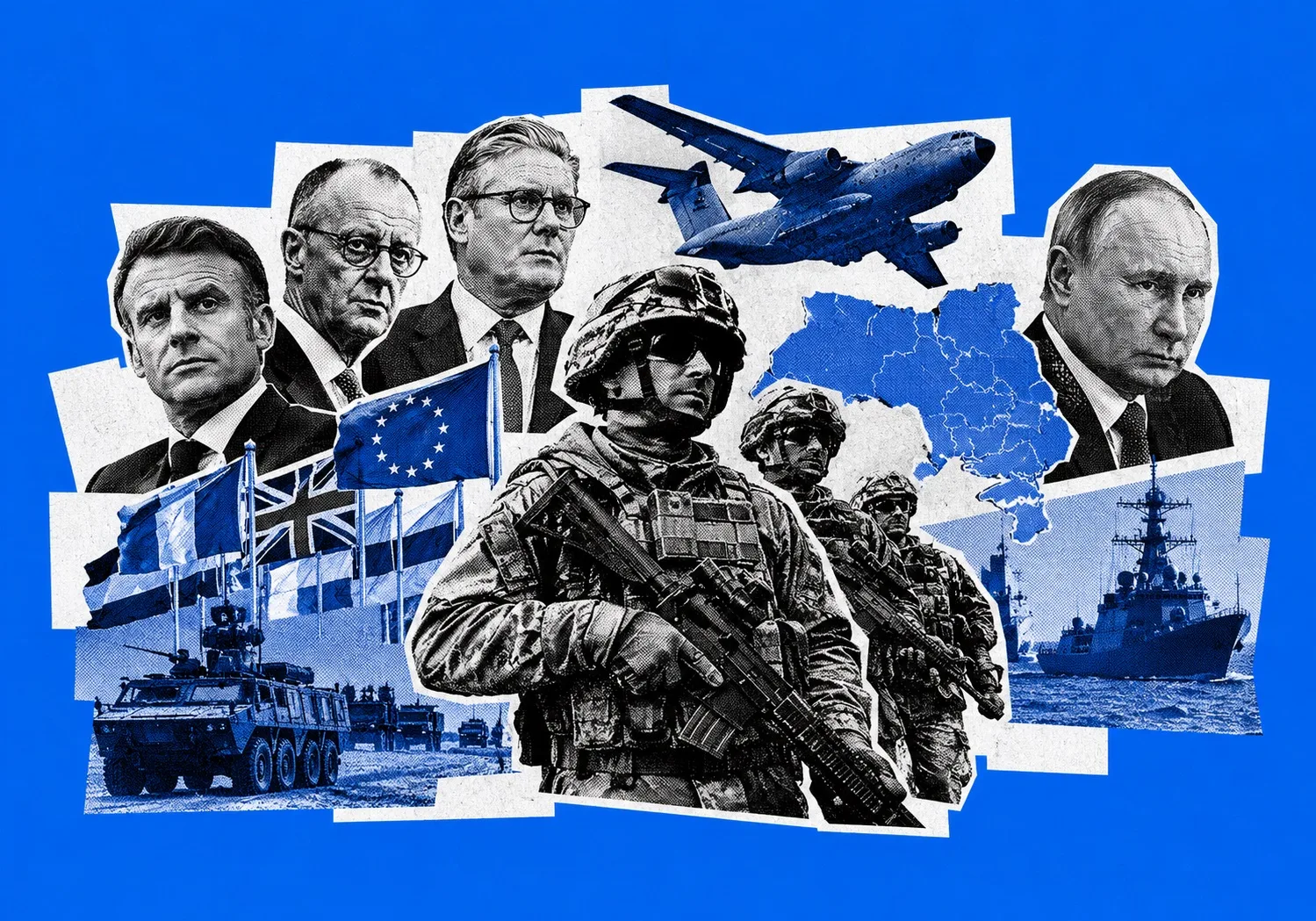
As Ukraine peace talks approach in Abu Dhabi, Europe’s "Coalition of the Willing" is preparing for its first joint military exercise. Operation Koalicja 2026 will deploy 1,500 UK- and French-led troops across Poland, Romania, and the Black Sea to test how European forces could enforce a future ceasefire, sending a clear signal to both Washington and Moscow.
The exercise comes as the United States prepares to bring Russian and Ukrainian representatives to Abu Dhabi on 10 November. European governments want a direct role in those discussions, arguing that any arrangement governing Ukraine's security will also determine the continent's defence responsibilities for years to come.
Moscow has already rejected the prospect of European troops operating inside Ukraine. Russian officials have warned that foreign contingents would become legitimate military targets, raising the stakes for governments considering participation.
The exercise will therefore test more than military logistics. It will expose how far European capitals are prepared to go in supporting security commitments that Russia has explicitly threatened to challenge.
Building a Force Before There Is a Peace
The Coalition of the Willing emerged in early 2025 as European governments searched for ways to strengthen Ukraine's long-term security. At a Berlin summit that December, participating states agreed to establish a multinational force capable of supporting a future ceasefire.
French President Emmanuel Macron declared the force operational in July 2026 and announced plans for autumn exercises. November's manoeuvres will provide the first practical assessment of whether the coalition can translate that commitment into a functioning military operation.
The distinction matters. Political agreement on deploying troops is one thing; moving personnel, aircraft and equipment across several countries under a common command is another.
Koalicja 2026 will concentrate on the latter.
Ground forces will train in southeastern Poland, while aviation and naval activities will take place over Romania and the western Black Sea. The scenario excludes active combat operations. Instead, participating forces will practise rapid deployment, supply arrangements, air support and coordination between national commands.
Such preparations are essential to any credible ceasefire-monitoring mission. A multinational deployment would need reliable transport routes, functioning communications and a command structure capable of making decisions across different national contingents.
The coalition is trying to establish those arrangements before a political settlement exists.
That gives London and Paris an advantage in the diplomatic debate. Rather than presenting a theoretical proposal for post-war security, they can point to a force whose deployment procedures are being tested.
Yet operational readiness does not settle the more difficult question of what European troops would be authorised to do if a ceasefire collapsed.
Germany Joins, but Keeps Its Options Open
Germany's decision to participate gives the exercise greater political weight, even though its military contribution will be limited.
Following initial hesitation and domestic debate, Berlin has confirmed that the Bundeswehr will provide approximately ten officers for the multinational command structure. Germany will also make available up to two A400M transport aircraft for aerial refuelling operations and help facilitate allied troop movements through German territory.
These contributions place Germany at the centre of the coalition's logistical network without committing German combat units to deployment inside Ukraine.
For Chancellor Friedrich Merz, that distinction is important.
He has insisted that European governments must participate directly in negotiations over the continent's security. But German military involvement remains subject to domestic political and legal constraints, including the role of the Bundestag in authorising deployments.
Berlin's approach offers a way to influence the emerging security arrangements while limiting its immediate exposure to the risks associated with stationing troops in Ukraine.
Poland is drawing a similar distinction between supporting the coalition and deploying combat forces.
Warsaw will host the ground exercises and provide infrastructure needed to move and assemble allied units. Its territory is central to the coalition's ability to deploy forces eastwards. Nevertheless, the Polish government has made clear that it does not currently intend to send its own combat troops into Ukraine.
The resulting division of responsibilities is revealing. Britain and France are leading the multinational force, Germany is providing command personnel and logistical capabilities, and Poland is supplying the geographical infrastructure required to support deployment.
Each government is contributing to the same security project while retaining control over the extent of its involvement.
That flexibility has helped the coalition advance. It may also complicate decisions if its forces eventually face a military confrontation.
Abu Dhabi and the Battle for a Seat at the Table
The military preparations are unfolding alongside an American diplomatic initiative that could determine whether the proposed European mission ever takes place.
US envoy Steve Witkoff's discussions with Vladimir Putin in Moscow have helped prepare the ground for talks scheduled in Abu Dhabi. Earlier American-Ukrainian consultations in Miami and Oslo formed part of the diplomatic process.
European leaders now face a familiar problem: Washington has the central negotiating role, while European states would be expected to carry significant responsibility for implementing any resulting security arrangements.
Merz and other leaders are pressing for direct European participation.
The coalition's military exercise strengthens that demand by giving European governments a practical role that cannot easily be separated from the negotiations themselves.
A ceasefire arrangement involving European monitors would require decisions about deployment areas, command authority, logistical access and the circumstances in which troops could respond to violations. Those decisions would affect the governments providing the personnel and equipment.
Europe's argument is therefore not simply that it deserves representation because the war affects European security. It is that the proposed settlement may depend on military commitments only European governments can authorise.
There is, however, no guarantee that the Abu Dhabi format will accommodate those demands.
Washington could pursue an agreement with Moscow and Kyiv before European states have secured a formal negotiating role. The coalition's preparations are intended partly to make that approach harder by demonstrating that Europe is already organising the means of enforcing a future ceasefire.
The exercise is leverage, not a substitute for diplomatic access.
Moscow's Threat Changes the Calculation
Russia's response has been unequivocal.
Foreign Minister Sergey Lavrov and Foreign Ministry spokesperson Maria Zakharova have condemned the prospect of European troops operating in Ukraine. Moscow has warned that such forces would be treated as legitimate military targets and that their deployment could lead to direct confrontation between Russia and European states.
Those threats create a fundamental difficulty for the coalition.
Its planned mission is designed for the period after a ceasefire, not for participation in the ongoing war. Yet Russia has indicated that it may not recognise the distinction between European troops monitoring an armistice and foreign forces intervening militarily.
A monitoring operation would therefore require more than agreement among participating European governments. Its viability would depend heavily on the terms of the ceasefire and the behaviour of Russian forces.
Without an accepted framework governing the presence of foreign troops, even a limited deployment could become a source of renewed confrontation.
This is where the coalition's separation from NATO's formal command structures becomes significant.
London and Paris are constructing a multinational arrangement outside the alliance's unified military command, allowing willing countries to proceed without securing agreement from every NATO member.
The model offers greater flexibility. It also leaves important questions about collective responsibility and military escalation unresolved.
A European force operating under its own coalition arrangements would not automatically carry the same institutional implications as a NATO deployment. Participating governments would have to determine how they would respond to attacks on their personnel.
Moscow's warnings make those questions immediate rather than theoretical.
A European Security System Takes Shape
For Britain and France, Koalicja 2026 represents an opportunity to establish leadership over a security arrangement that could outlast the present diplomatic negotiations.
The coalition now includes roughly 35 states, although the extent of individual military commitments varies. Its development marks a move towards European-led security operations that do not depend on the full machinery of NATO.
That does not mean Europe is abandoning the alliance or excluding the United States. American diplomatic efforts remain central to the prospective ceasefire, while European governments are seeking a more substantial role in determining what follows.
The two processes are proceeding on different tracks.
Washington is attempting to bring the belligerents towards an agreement. London and Paris are preparing the military structures that could support its implementation.
Germany's participation broadens the political foundation of that effort, while Poland's hosting role gives it a practical base on Europe's eastern flank.
For Ukraine, the preparations offer evidence that European security guarantees are beginning to acquire an operational dimension. A force with tested transport arrangements and an established command structure would be more credible than a commitment expressed solely through diplomatic declarations.
But credibility will also depend on the mission's mandate, the willingness of participating governments to sustain it and their response to any Russian challenge.
Those questions cannot be answered through exercises alone.
The November manoeuvres will show whether the coalition can move and coordinate its forces. The Abu Dhabi negotiations may determine whether there is a political agreement under which those forces could operate.
The most difficult decision lies between the two: whether European governments would still deploy their troops if Moscow refused to accept their presence, and what military authority those troops would have once they arrived.