
Europe Plans Ukraine Security Guarantees Without US Troops

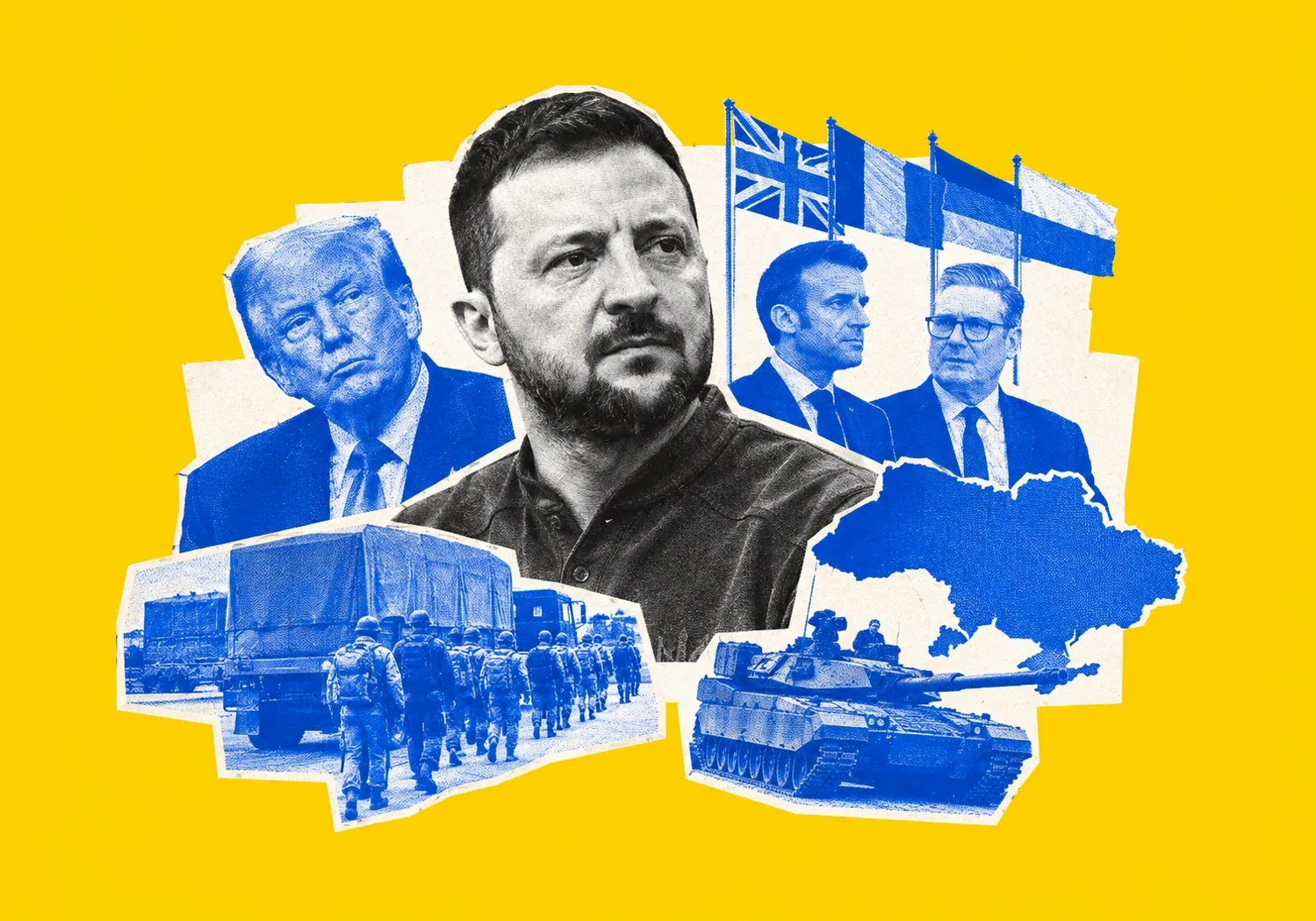
European allies are moving to secure Ukraine’s future without relying on Washington. In November, 1,500 troops from Britain, France, Germany, and Poland will gather for major drills to test a potential post-war peacekeeping presence. Agreed by the 35-nation "Coalition of the Willing," the exercises highlight a growing challenge: how can Europe deliver credible deterrence without a U.S. commitment on the ground?
The timing is significant. No ceasefire agreement has been secured; the terms of any future settlement remain uncertain, and Moscow has rejected the prospect of foreign forces on Ukrainian soil. Yet European governments are moving from discussions about what a post-war security arrangement might look like towards testing whether they could actually deliver one.
That shift reflects a changing calculation in European capitals. A security guarantee cannot rest on diplomatic declarations alone. If it is intended to deter another Russian attack, it must be backed by forces that can deploy, operate and sustain themselves under difficult conditions. November’s exercises in Poland will test part of that capability.
They will not, by themselves, establish the political or military framework for a deployment. But they will help expose the distance between promising to defend a future peace and possessing the means to do so.
The difficult business of making a guarantee credible
According to The Times, the exercises will focus on the practical demands of moving multinational forces across borders, transporting essential supplies, including fuel and food, and coordinating units from different countries operating on the same territory.
These tasks may appear mundane beside the diplomatic negotiations surrounding Ukraine. They are, however, central to the credibility of any military commitment.
A force that cannot arrive in time, maintain its supplies or coordinate its national contingents will struggle to deter an adversary, regardless of the strength of the political declaration behind it. The more countries involved, the more complicated the task becomes. Different national units must operate within a common plan while relying on transport routes and supply arrangements that cross national boundaries.
Poland occupies a particularly important position in this calculation. As the location of the November exercises, it provides the setting in which participating governments can test the movement of forces towards Ukraine without waiting for a settlement to define their eventual mission. Its role as a logistical hub also reinforces its importance to any European security arrangement focused on the region.
The exercise is therefore best understood as a test of readiness rather than evidence that a deployment has been agreed in full. The participating governments are rehearsing elements of a possible operation while the political conditions for that operation remain unresolved.
That distinction matters. The ability to move troops is not the same as agreement on when they should be sent, what they would be authorised to do or how they would respond if the ceasefire they were meant to protect came under pressure.
Those questions will determine whether military preparations translate into a credible guarantee.
Europe is planning for an uncertain Washington
The November drills also take place against a widening divergence between European and American approaches to ending the war.
During his inaugural trip to Washington, British Defence Secretary Wes Streeting presented the exercises as part of broader preparations to support military training, post-war reconstruction and potential security guarantees for Kyiv. The emphasis was on developing the practical capacity to support a future settlement.
Donald Trump has articulated a different immediate priority. Before a campaign rally in Georgia, the US president said his principal concern was ending the war and described Ukrainian President Volodymyr Zelenskyy as more difficult to deal with than Vladimir Putin. He also declined to assign Putin responsibility for launching the 2022 invasion and maintained that American troops would not be deployed to Ukrainian soil.
The contrast is not simply rhetorical. It concerns the distribution of risk in any future settlement.
Washington’s position leaves European governments preparing for a security role without a commitment to direct American participation on the ground. European forces could potentially provide a presence intended to deter renewed Russian aggression, but the political and military weight behind that presence would depend on the commitments their governments were prepared to make.
For Britain and France, the initiative offers an opportunity to shape European security policy rather than leave the future arrangement dependent on decisions taken in Washington. Germany’s and Poland’s participation brings additional military and logistical capacity to the planning effort.
Yet the absence of a US ground commitment creates a difficult question for the coalition: how much deterrence can European countries generate independently, and what would happen if a future crisis demanded capabilities or political support beyond those they had agreed to provide?
The exercises cannot answer that question. They can, however, establish whether the participating countries can perform some of the basic tasks that any credible deployment would require.
The Coalition of the Willing faces its defining test
The Coalition of the Willing was formed to coordinate support for Ukraine and develop a framework for post-war security guarantees. Its 35 members extend beyond Europe to include countries such as Australia, Japan and New Zealand. The July agreement on the Polish exercises has given that broader political initiative a concrete military task.
Its challenge is to turn a diverse group of governments into a functioning security arrangement.
Coalitions can agree on the need to prevent another war while disagreeing over the risks involved in preventing one. A commitment to training Ukrainian forces or supporting reconstruction is not equivalent to a commitment to deploy troops. Nor does agreement to participate in logistical preparations necessarily establish agreement on the rules governing a future mission.
The coalition must eventually confront the scope of its intended presence, the conditions under which forces would be deployed and the responsibilities participating states would assume. It must also establish how a multinational force would operate if the security situation deteriorated.
The distinction between preparation and commitment is especially important because the political purpose of a deployment would extend beyond its physical presence. A force intended to support a ceasefire would have to convince Moscow that renewed aggression carried risks, while reassuring Kyiv that the settlement did not leave it exposed once the fighting subsided.
If the countries involved cannot agree on the consequences of a breach, even a well-equipped force could struggle to provide the deterrence Ukraine seeks.
Britain and France are emerging as central architects of this effort. Their leadership gives the initiative direction, but it also places responsibility on them to reconcile the ambitions of the coalition with the willingness of individual governments to accept operational risks.
November’s exercises will test interoperability. The harder test will be political: whether the coalition can turn a shared objective into commitments sufficiently precise to survive a crisis.
Moscow’s objection is part of the strategic calculation
Russia has already rejected the prospect of foreign military forces in Ukraine. Its Foreign Ministry has described such a presence as entirely unacceptable, while Russian state media has portrayed the planned exercises in Poland as provocative preparations by NATO.
That response points to a fundamental tension in the proposed security architecture. European governments see military preparations as a way to make a future settlement more durable. Moscow treats the prospect of foreign troops as a challenge to its position and a potential extension of Western military involvement.
The two sides therefore approach the same question from opposing assumptions. For European capitals, a post-war presence could help prevent renewed fighting. For the Kremlin, that presence is itself an objectionable outcome.
The Polish exercises do not resolve this conflict. They are preparations for a possible future arrangement, not evidence that Russia has accepted its terms or that the coalition has decided how to overcome Moscow’s opposition.
Indeed, the absence of a settled mandate makes the distinction between military readiness and political feasibility particularly sharp. European governments can practise moving forces and supplying them, but they cannot use those exercises alone to establish the conditions under which such forces would enter Ukraine or the response they would make to Russian resistance.
The prospect of a European deployment is thus both a deterrence initiative and a potential point of confrontation. Its effectiveness will depend not only on the capabilities assembled by participating countries but also on the credibility of the commitments attached to them.
Kyiv needs more than a military presence
For Ukraine, the central issue is whether a post-war arrangement would provide lasting protection rather than a temporary pause in hostilities.
Kyiv has insisted that security guarantees should be legally binding, ratified by partner parliaments and the US Congress, and include land, sea and air defence components. That position reflects the difference between a political assurance and a commitment designed to withstand a future challenge.
A multinational force could form part of such an arrangement, but its presence would not automatically satisfy Ukraine’s requirements. Its mandate, the obligations of participating governments and the relationship between an international deployment and Ukraine’s own defence would all shape the level of protection it offered.
The US position makes this problem more acute. Without American ground troops, European governments would need to establish what their own forces could credibly deliver and what additional commitments, if any, would support them. Washington’s refusal to deploy troops does not by itself rule out other forms of American support, but it leaves a clear gap between European preparations and the US president’s stated approach to ending the war.
There is also a question of timing. European governments are beginning to test deployment logistics before the terms of a ceasefire, the political conditions for a foreign presence and the final security mandate have been settled. That is a rational response to the time required to prepare multinational forces. It also means that operational planning is advancing of the political agreement needed to give it purpose.
The November exercises in Poland will offer an early indication of whether Britain, France, Germany and Poland can coordinate the movement and sustainment of a multinational force. They will not establish whether the coalition is willing to use that force, or under what circumstances.
For Kyiv, that gap remains decisive. A security guarantee is only as strong as the commitments behind it, and Europe is beginning to test its military capacity before it knows precisely what those commitments will require.
Sources: The Times, CBN, NewsShopper, RBC, Tass