
Israel Election 2026: Votes Open as Netanyahu Faces Political Survival Test

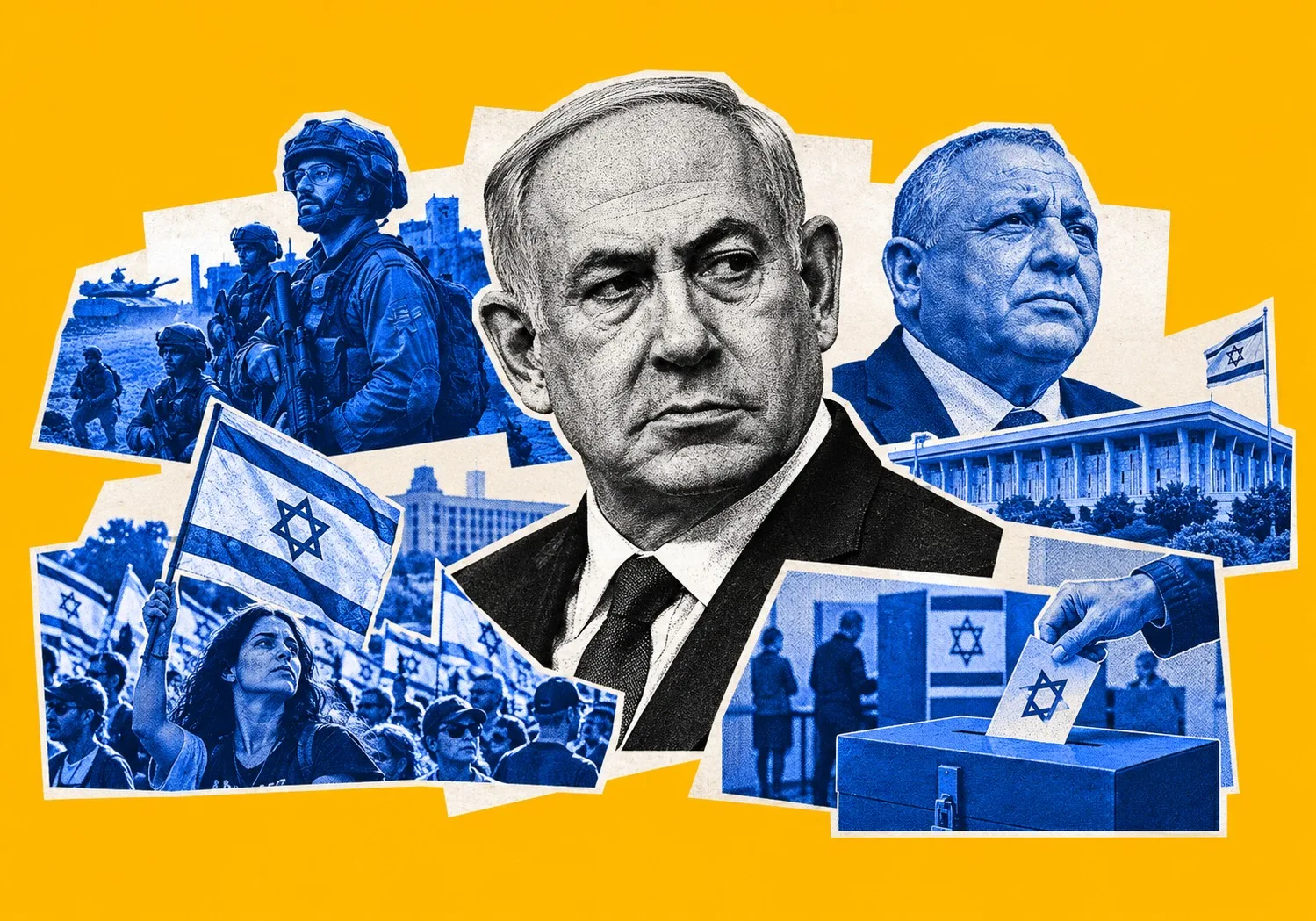
By 07:00 on Tuesday morning, polling stations had opened across Israel for what voters and politicians alike frame as one of the most consequential general elections in the nation's history. On paper, this is an election to fill the 120 seats of the Knesset. In practice, it is a referendum on Prime Minister Benjamin Netanyahu’s survival after three years of unprecedented crisis. Across the country, 7.3 million eligible voters are walking into polling booths under the heavy shadow of the October 7, 2023 attacks, the destruction in Gaza, direct warfare with Iran, and an unprecedented fracture within Israeli society itself.
Yet, as the first ballots drop, the central arithmetic of Israeli politics points not toward clarity, but toward stagnation.
Pre-election polling suggests that neither Netanyahu’s ruling right-wing coalition nor the opposition "change bloc" led by former military chief Gadi Eisenkot can comfortably claim the 61 seats required to form a majority government.
Unless exit polls at 22:00 local time reveal a massive late surge, Israel appears headed straight back into the coalition deadlock that brought five inconclusive elections between 2019 and 2022.

The human scale of this election is vast.
Roughly 330,000 young Israelis are voting for the first time.
An estimated 70,000 citizens have flown home from abroad specifically to drop their ballots into the boxes.
Hundreds of thousands of active-duty soldiers and reservists are voting from military posts, their ballots sealed and held for a separate tally that begins on Wednesday.
They are deciding the fate of a country deeply changed by three years of war. The October 7 attacks by Hamas left nearly 1,200 people dead and 251 taken as hostages into Gaza.

The military response that followed has claimed more than 74,000 Palestinian lives, according to Gaza health authorities whose figures are recognized by the United Nations.
Israel’s diplomatic posture has deteriorated sharply alongside this campaign, leaving the country increasingly isolated among its traditional Western allies.
For Netanyahu, who has spent 19 cumulative years at the helm of Israeli politics, the stakes could not be higher.
Facing an ongoing criminal trial on corruption charges—which he denies—the 76-year-old prime minister is fighting both for his political office and his personal freedom.
His opponents view this vote as a long-overdue moment of accountability for the systemic failure of October 7.
Netanyahu, however, continues to brand himself as "Mr. Security," leaning heavily on his wartime record and his alliance with US President Donald Trump. Trump has openly endorsed Netanyahu, even going so far as to write to Israeli President Isaac Herzog advocating a pre-emptive pardon for the prime minister.
Still, the opposition’s primary attack line remains sharp: Netanyahu spent three years resisting an independent national commission of inquiry into October 7 because he fears its political consequences.
The Arithmetic of Deadlock
Understanding why an Israeli election so rarely delivers a clear winner requires a look into the peculiar mechanics of its parliamentary system.
Israel does not have regional constituencies for national elections. Instead, the entire nation functions as a single district of 120 seats. Voters choose party lists rather than individual candidates, and seats are distributed through strict proportional representation.

The system relies on a relatively low entry threshold of 3.25%. Any party that crosses this mark gets a minimum of four seats in the Knesset.
Because the landscape is so fragmented, no single party in Israel’s history has ever won an outright majority of 61 seats.
Governments are always coalitions, built through weeks of intense, often cynical post-election bargaining.
This dynamic hands extraordinary leverage to small, single-issue, or extremist factions.
In this election, the balance of power could turn on two micro-parties hovering right around the 3.25% line.
On the far right is Amcha Yisrael, led by former general Ofer Winter, who has pledged his four potential seats to Netanyahu. On the other side sits The Reservists, a Zionist party prioritizing universal conscription whose leaders refuse to back any government supported either by ultra-Orthodox parties or by Palestinian-led factions.
If these tiny parties fail to cross the threshold, their votes are discarded, dramatically shifting the coalition math for the major players.
Red lines drawn by mainstream Jewish leaders further narrow the path to a working government.
Palestinian citizens of Israel make up about 20% of the country’s population—roughly 1.7 million people within pre-1967 borders.
Their political representatives, split between the Islamist Ra’am party headed by Mansour Abbas and the Joint List alliance, are forecast to win between 12 and 15 seats.

In theory, these seats could make them kingmakers. In practice, almost every major Jewish party leader, including Eisenkot and his key right-wing ally Avigdor Lieberman, has publicly ruled out bringing Arab parties into a formal ruling coalition.
Eisenkot’s supporters quietly hope Arab factions might informally prop up a minority government to oust Netanyahu, but Lieberman has already rejected even that arrangement.
The friction surrounding minority voting was visible from the moment polls opened. Ra’am filed a formal complaint with the Central Elections Committee on Tuesday morning, alleging that police had arrested party activists in the Negev region before dawn without justification. The party also reported a widespread shortage of Arabic-language ballot slips in northern cities such as Nazareth and Shfaram.
As Amotz Asa-El, a political analyst at the Shalom Hartman Institute, observed while watching early turnout: "My expectation is that we will have only a slight majority either way. No landslide."
Personal Survival vs Institutional Inquiry
The contrast between the two main contenders highlights the fundamental divide in Israeli society.
Netanyahu’s campaign has relied on high-stakes drama and international alliances.
He spent the final days of the race reminding voters of his close ties to Donald Trump, claiming the US president was prepared to act decisively against Iran’s nuclear program—but only if Netanyahu stayed in power.
Reports emerged over the weekend that Netanyahu had pushed his military chief, Eyal Zamir, for a pre-election military strike to trigger a confrontation with Iran, a proposal Zamir reportedly resisted. Similar reports indicated Netanyahu tried to persuade Trump to greenlight new strikes on Iranian nuclear infrastructure, though Washington declined.
Netanyahu denied both accounts, but his campaign kept the pressure high. Days before the vote, he posted an AI-generated image of a nuclear bomb detonating over Tel Aviv, warning that only he could protect the nation from an Iranian strike.
Eisenkot dismissed the post as "hysterical."
The former IDF chief, who co-founded the Yashar Party just last year, represents a very different leadership style.
Eisenkot actually joined Netanyahu’s emergency war cabinet immediately after October 7, but he walked out eight months later, publicly accusing the prime minister of putting personal political survival ahead of national strategy.
Eisenkot now leads a heterogeneous "change bloc." It brings together hardline right-wing figures like former prime minister Naftali Bennett and Avigdor Lieberman alongside left-leaning former generals like Yair Golan.
They agree on almost nothing ideologically except the urgent need to remove Netanyahu from office and establish an independent commission of inquiry into October 7.
On the ground, party volunteers spent Tuesday morning chasing every uncommitted vote. Pre-election surveys indicated that 13% of voters were undecided as they walked into the booths.
Outside a Jerusalem polling station, Eldad Shaaltiel was hanging campaign posters for Eisenkot's party, hoping to sway voters at the final moment. Nearby, Nilli Mor, volunteering for Golan’s Democrats party, framed her work in broader terms: "We are trying to bring a new day to Israel, a better day with hope and great change for this country."
Draft Crises and Civic Fractures
Beyond the immediate battle for premiership, this election has laid bare long-standing institutional and social fractures that will outlast the current vote.
One of the most explosive issues of the campaign has been military conscription. A recent Supreme Court ruling mandated that ultra-Orthodox Jewish men studying full-time in religious seminaries must be drafted into the military. Netanyahu’s governing coalition, heavily reliant on ultra-Orthodox parties, quietly refused to enforce the ruling.
This failure has enraged secular Israelis and reserve soldiers, hundreds of thousands of whom have been repeatedly called up for extended combat tours over the past three years.
To maintain power, Netanyahu has been forced to align himself with the most extreme right-wing elements in Israeli political history.
Key figures in his coalition, such as National Security Minister Itamar Ben-Gvir and Finance Minister Bezalel Smotrich, represent a radical settler movement that advocates unchecked territorial expansion. Both men have drawn explicit condemnation and targeted sanctions from traditional Western allies for inciting violence against Palestinians in the occupied West Bank.
Casting his vote early Tuesday in the West Bank settlement of Kiryat Arba, Ben-Gvir remained defiant, telling reporters that his party would serve as the "right-wing anchor" of Netanyahu’s next government.
Eisenkot’s platform offers a stark contrast in tone, though not necessarily a total break in strategy.
On military matters in Gaza, Eisenkot’s stance is firm: he pledges to end Hamas rule within 18 months, whether through a US-backed arrangement or continued military action. On the West Bank, he supports existing Israeli settlements but promises to crack down on extremist settler violence, which has reached historic highs according to UN figures.
Critically, the traditional two-state solution has all but disappeared from mainstream political debate. Eisenkot himself rejects a fully sovereign Palestinian state, speaking instead of creating conditions for Palestinian "autonomy or a state-minus" under permanent Israeli security oversight.
Security Limits and Diplomatic Friction
Whoever emerges from this election will inherit a country facing severe diplomatic isolation and economic strain.
Three years of continuous regional warfare have battered Israel’s international standing. The sheer scale of destruction in Gaza, coupled with air campaigns in Lebanon and direct military exchanges with Iran, has transformed Israel's image abroad. UN commissions and international legal bodies have issued devastating assessments of the war, leaving Israel increasingly treated as a pariah state by former diplomatic partners.
This isolation extends to the economy. Extended military mobilizations have pulled hundreds of thousands of citizens out of the workforce, placing severe strains on state finances.
Yet, the election results themselves may remain unclear for days.
While exit polls will offer an initial picture at 22:00 on Tuesday, the final outcome will likely depend on the "double envelopes"—the votes cast by soldiers, reservists, diplomats, and hospital patients.
Because military personnel tend to lean further to the right than the general public, their ballots, counted throughout Wednesday and Thursday, could easily tip close races in favor of Netanyahu’s nationalist bloc.
If neither leader can stitch together a 61-seat coalition in the weeks of negotiation that follow, Israel will remain in political limbo.
Under Israeli law, if no government can be formed, parliament dissolves, and new elections are called. In that scenario, Benjamin Netanyahu will remain in power as interim prime minister—extending his reign once again despite an electorate desperate for resolution.
Sources: The Guardian, BBC, Reuters