
Eurovision Boycott: Netherlands Withdraws Over Israel Dispute as EBU Crisis Deepens

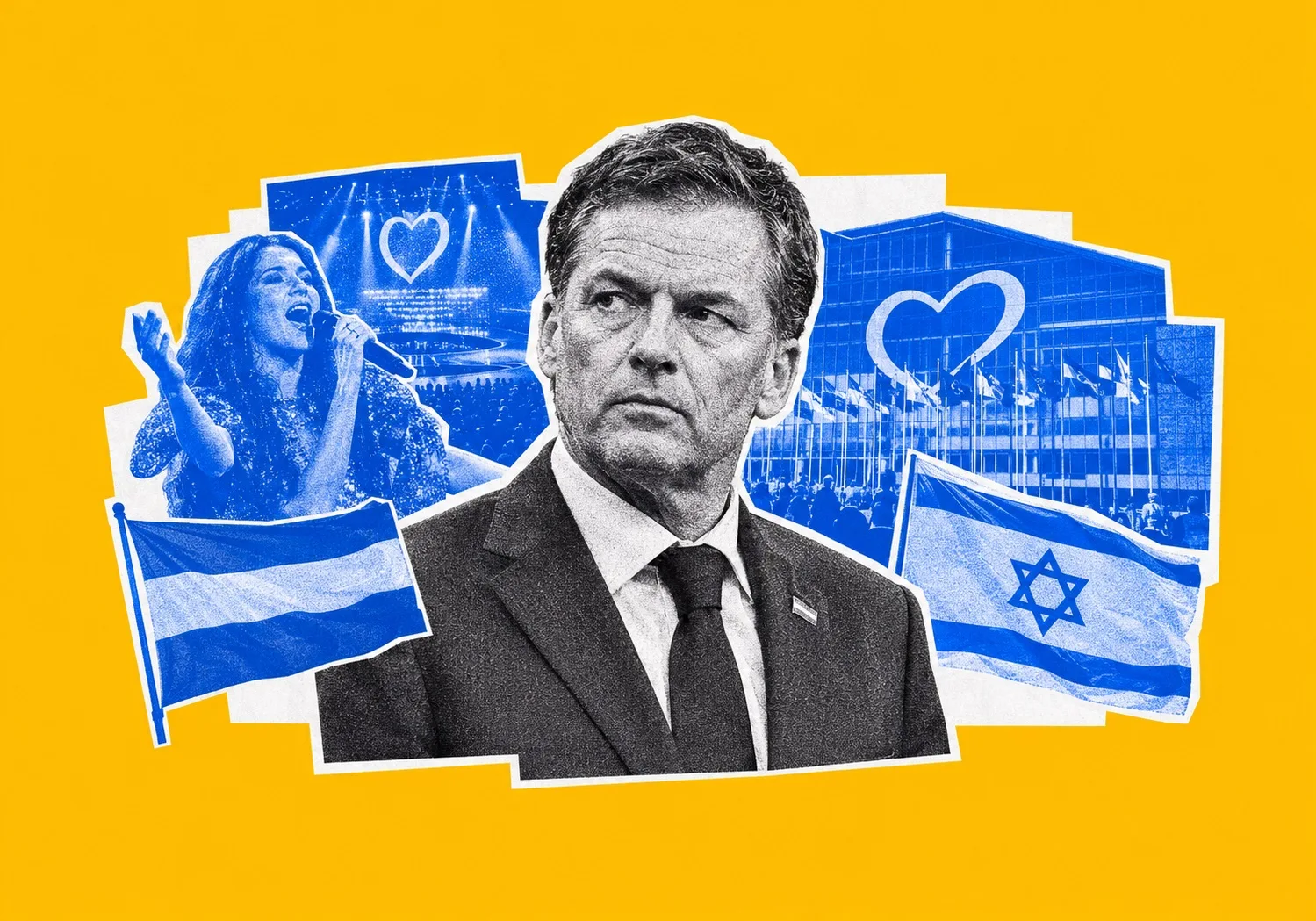
The Netherlands has officially withdrawn from the Eurovision Song Contest over Israel's ongoing participation, reversing its previous decision to return. Announced by public broadcaster NPO, the move highlights a deepening political rift within the European Broadcasting Union (EBU) and leaves the future of the contest increasingly uncertain.
NPO Media Director Jurre Bosman identified Israel’s continued involvement as a source of substantial social division. The resulting tensions, he argued, made it impossible to guarantee Dutch performers and production staff the collective backing necessary to participate in an event built around cultural exchange and inclusion.
For the European Broadcasting Union (EBU), which organises Eurovision, the difficulty is no longer persuading one broadcaster to reconsider. It is maintaining a common set of rules when its members face sharply different political pressures at home.
When neutrality becomes a political decision
Eurovision has long depended on an understanding that broadcasters, rather than governments, participate in the competition. That distinction allows the event to present itself primarily as a celebration of music, even when the countries represented are involved in diplomatic disputes.
The war in Gaza has made that separation increasingly difficult to sustain.
Israel’s military campaign following the Hamas-led attacks of 7 October 2023 has generated international condemnation over civilian casualties and humanitarian conditions. Human rights organisations, including Amnesty International, have pressed cultural institutions to consider sanctions or suspensions comparable to those imposed on Russia.

Israel’s public broadcaster KAN, however, remains eligible to compete and has confirmed its participation in the 2027 event.
The EBU consequently faces two competing interpretations of its responsibilities. Maintaining Israel’s participation can be defended as adherence to established broadcasting membership principles. For broadcasters supporting a boycott, allowing the entry to proceed amounts to ignoring the political and humanitarian circumstances surrounding the contest.
Neither position can be reconciled simply by insisting that Eurovision is not a political event.
Indeed, the Dutch decision reveals a weakness in that argument. NPO did not withdraw because Eurovision had formally adopted a political position. It withdrew because participation itself had become politically contentious among the institutions responsible for delivering a national entry.
The distinction matters. A contest can prohibit political messaging on stage, but it cannot prevent audiences, performers and broadcasters from attaching political significance to the countries appearing there.
A boycott that has survived its first year
The Netherlands was among five countries that boycotted Eurovision in 2026, alongside Spain, Ireland, Iceland and Slovenia. The dispute has now carried into a second contest, with Ireland and Iceland confirming that they will again stay away.
Spain and Slovenia have until December to decide whether to participate, following an extension granted by the EBU.
Their decisions will be closely watched because they offer a measure of whether the boycott is becoming an enduring feature of Eurovision rather than a temporary reaction to events in Gaza.
The Netherlands provides an important precedent. Its September decision to return indicated that the dispute might be manageable within the existing institutional framework. The October reversal showed how fragile such a compromise could be when national broadcasters were unable to reach a consensus.
For Spanish and Slovenian broadcasters, the extended deadline creates additional time for deliberation but does not remove the underlying dilemma. Returning risks criticism from those demanding action over Israel’s participation. Withdrawing means surrendering national representation in a prominent international cultural event.
The pressure is particularly awkward for public broadcasters. They are expected to serve broad national audiences, maintain editorial independence and uphold public-service values. Those obligations do not necessarily point towards the same decision when foreign policy controversies enter cultural programming.
Campaigners favouring a boycott have discovered that this institutional structure provides considerable leverage. They do not need to persuade the EBU collectively to exclude Israel if they can convince individual broadcasters that participation is untenable.
That makes the dispute harder to resolve centrally. Even a stable EBU position on eligibility cannot guarantee that its members will continue competing.
The commercial cost of a fractured contest
The implications extend beyond Eurovision’s reputation.
The competition depends on the involvement of national broadcasters to sustain its audience reach, commercial appeal and international profile. When established participating markets withdraw, the consequences can extend to viewing figures, advertising opportunities and the financial arrangements supporting the event.
Those effects should not be overstated. A withdrawal does not automatically mean that viewers in the affected country lose access to Eurovision, nor does it establish a corresponding fall in revenue.
The Netherlands illustrates the distinction.
Although it will not send an artist to Burgas, Dutch public broadcaster NOS intends to televise the semi-finals and final with Dutch commentary. Viewers will still be able to follow the competition, even without a national entry.
For NOS, broadcasting Eurovision preserves access to a major cultural event without requiring the Netherlands to compete. For the EBU, it potentially retains an audience in a country whose participating institutions have rejected involvement on stage.
This creates an unusual separation between the competition as an entertainment product and participation as an institutional endorsement.
Dutch viewers can remain Eurovision consumers while their broadcasters decline to become Eurovision competitors.
Such arrangements may soften the immediate commercial consequences of boycotts. They also expose the limits of measuring institutional support through television audiences alone. Strong viewing figures would not necessarily indicate renewed political or organisational confidence in the contest.
For Bulgaria, the host country, uncertainty among participating broadcasters complicates preparations for an event already requiring substantial coordination. Burgas is preparing to welcome the contest in May, with the current confirmed lineup numbering 36 countries.
The host has maintained a neutral position in the dispute. Yet the operational burden of delivering Eurovision falls partly on organisers whose ability to resolve the controversy is limited.
The EBU changes the rules, but not the argument
The EBU has responded to the increasingly difficult geopolitical environment with changes to Eurovision’s governance.
Among the new measures are mandatory independent security assessments that can prevent a winning country from hosting the following contest if armed conflict or geopolitical instability creates unacceptable safety risks.
This is a significant adjustment to one of Eurovision’s defining traditions: the expectation that the winning nation will host the next edition.
The change acknowledges that security considerations can override the competition’s usual procedures. It gives organisers a formal mechanism for dealing with situations in which hosting becomes impractical or dangerous.
Yet security and political legitimacy are different questions.
Independent assessments may determine whether a country can safely host an international event. They do not establish whether another country should be permitted to compete during a controversial military campaign.
That distinction leaves the central dispute over Israel largely untouched.
The EBU has expressed deep regret over the Dutch withdrawal, but its continued acceptance of KAN has not persuaded the broadcasters that have chosen to boycott.
Nor is excluding Israel an administratively simple solution. Such a decision would require the organisation to confront questions about consistency, membership rights and the circumstances under which political conduct should affect participation by a public broadcaster.
The more frequently those questions arise, the harder it becomes for the EBU to present itself as merely administering a musical competition.
It is increasingly being asked to make decisions with diplomatic consequences, despite being structured primarily as an association of public media organisations.
Canada's arrival complicates Eurovision's identity
Against this backdrop, Canada’s planned debut offers a striking contrast.
CBC/Radio-Canada will participate in Eurovision for the first time in 2027 following its transition to full EBU membership. The move expands the contest’s geographical reach beyond its traditional European centre.
For the EBU, welcoming Canada offers an opportunity to broaden the competition’s international profile at a time when established European participants are withdrawing.
But expansion also raises questions about the meaning of Eurovision’s identity.
The contest has never been defined exclusively by geographical borders. Its institutional framework rests on broadcaster eligibility rather than a simple map of Europe. Canada’s entry makes that principle particularly visible.
The same membership-based logic that enables a North American broadcaster to join also informs the EBU’s approach to maintaining Israel’s participation.
There is an institutional consistency in that position. Whether it commands sufficient political acceptance among national broadcasters is another matter.
Canada’s arrival may strengthen Eurovision’s international appeal and create new opportunities for cultural exchange. It cannot, by itself, repair divisions among existing members.
Indeed, the juxtaposition is revealing: the organisation is expanding the geographical boundaries of participation while struggling to preserve agreement within its established European constituency.
The limits of cultural diplomacy
Eurovision’s predicament belongs to a wider problem confronting international cultural institutions.
Such organisations were designed to facilitate cooperation across political differences. Their credibility traditionally depended on maintaining a degree of separation between cultural activity and government policy.
But public broadcasters operate within societies where audiences increasingly expect institutions to take positions on humanitarian crises and international conflicts.
That expectation creates competing claims to legitimacy.
For the EBU, legitimacy rests partly on predictable rules and the equal treatment of eligible members. For broadcasters such as NPO and AVROTROS, it also depends on retaining the confidence of domestic audiences, artists and professional communities.
Neither institution can simply disregard the other.
The Dutch decision is particularly consequential because it emerged from internal consultations rather than a direct EBU ruling. It shows how international cooperation can weaken without any formal change to the organisation’s membership rules.
The contest may retain its regulations, its participating broadcasters and its commercial arrangements while losing the domestic consensus needed to make those arrangements function.
For KAN, continued eligibility guarantees a place in the competition but not acceptance by every participating broadcaster. For the EBU, maintaining consistent rules does not guarantee institutional cohesion.
As Spain and Slovenia approach their December decisions, Eurovision faces a question that cannot be settled through changes to security procedures or an expanded participant list: how much disagreement can a cultural institution accommodate before its members no longer share an understanding of what participation represents?
Вам подобається цей стиль спілкування?
Sources: NPO, BBC, AP, La Repubblica, Reuters