
Israel Election Results: Netanyahu Short of Majority as Arab Parties Hold Balance of Power

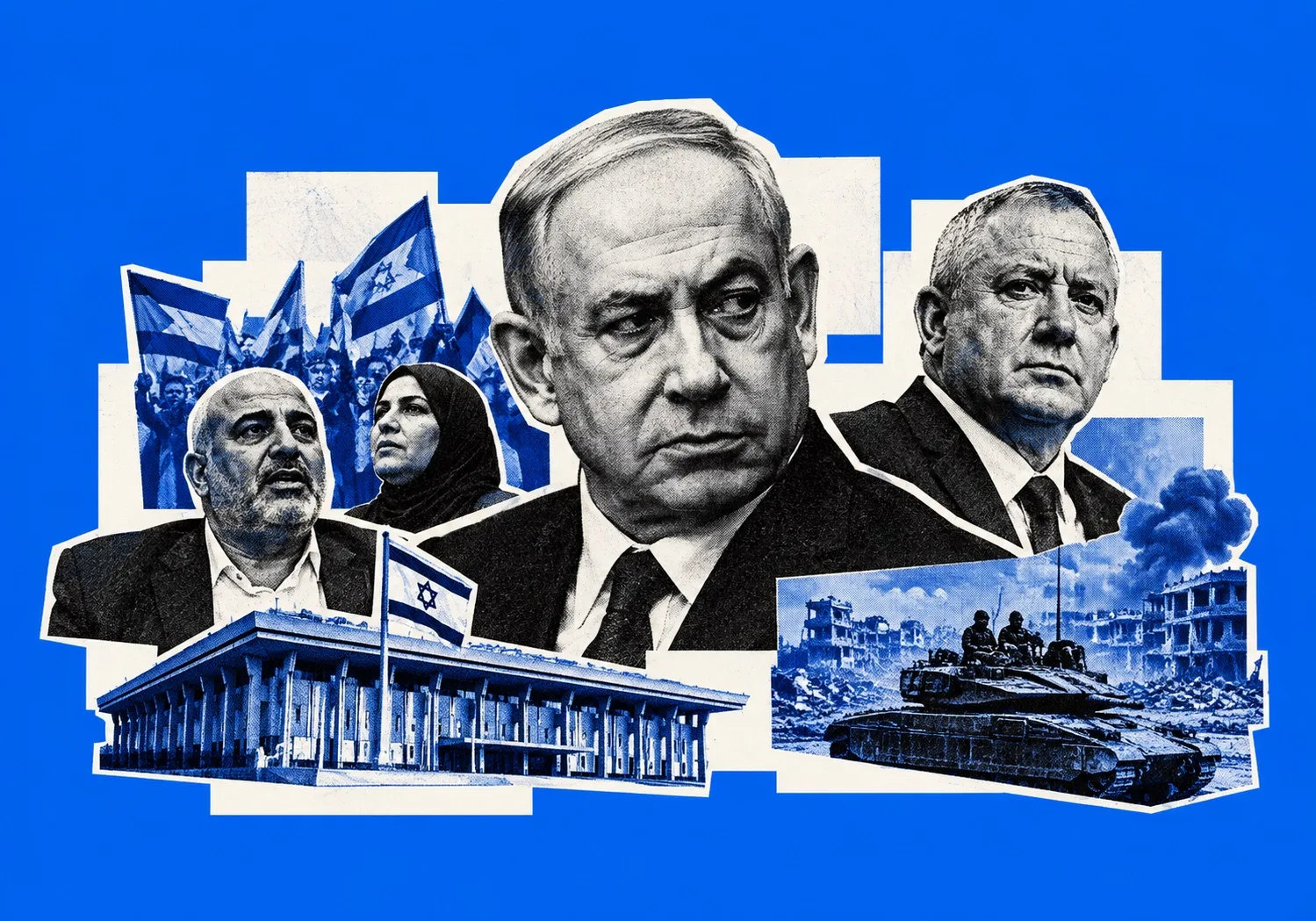
Benjamin Netanyahu has retained the premiership in Israel's post-October 7 election, but failed to secure the 61-seat majority required to form a government. With main challenger Gadi Eisenkot also falling short, a parliamentary deadlock has unexpectedly left Arab parties with decisive influence over the country’s political future.
His right-wing bloc is projected to secure 53 to 54 seats in the 120-member Knesset, against 48 to 49 for Eisenkot's opposition alliance. A majority requires 61.
The figures may still move. Around 600,000 ballots cast by soldiers and diplomats have yet to be included in the final count, which is due to be certified on November 4. But the emerging result has already exposed a problem that another round of coalition bargaining may struggle to solve.
Netanyahu's survival is not a victory
Likud remains Israel's largest party, attracting roughly 21.45% of the vote. After the political damage inflicted by the October 7 security failures, that is a considerable demonstration of Netanyahu's remaining support.
It is also insufficient.
His traditional allies cannot currently deliver the parliamentary majority he needs. Nor is there an obvious group of lawmakers outside his bloc prepared to supply the missing seats.
Eisenkot has his own difficulties. His Yashar! party has established a substantial centrist alternative, drawing support from voters who want a different government without abandoning Israel's established security priorities.
As a former chief of staff of the Israel Defense Forces, Eisenkot is hardly an outsider challenging the military establishment. His differences with Netanyahu lie less in the objectives of Israeli security policy than in the leadership responsible for carrying them out.
Both men support dismantling Hamas's military infrastructure. Neither advocates a softer approach to Iran's regional ambitions.
Eisenkot has instead concentrated on the question Netanyahu has repeatedly resisted: an official state commission of inquiry into the failures surrounding the October 7, 2023 attacks.
That demand carries considerable political weight. It also helps explain why a seemingly straightforward coalition between the two leading camps would be difficult to negotiate.

Eisenkot has built his challenge around the argument that Israel needs a different form of political leadership and greater accountability. Joining Netanyahu in government could leave him defending the very arrangement he has spent the campaign opposing.
For Netanyahu, meanwhile, the election has offered a reprieve. He remains prime minister, retains control of the transitional government and has time to explore possible agreements.
The price is uncertainty about how long that arrangement can last.
The voters neither camp can ignore
The most striking change in the new Knesset is the size of the Arab parliamentary representation.
Turnout among Palestinian citizens of Israel is estimated at 80%, helping Arab parties win between 17 and 19 seats. The Joint List is projected to take approximately 12, with Mansour Abbas's Ra'am holding around seven.
For years, the main coalition calculations have centred on combinations of Jewish parties. The latest figures make that approach increasingly difficult to sustain.
Eisenkot's bloc cannot reach 61 seats on its own. Netanyahu's alliance is also short. Arab lawmakers consequently find themselves in a position to influence who governs, who remains in opposition and whether another election becomes necessary.

There is, however, an important distinction between possessing decisive votes and being invited to exercise power.
Some opposition leaders remain reluctant to form a government that formally includes Arab parties or depends on their support. The objections are political rather than mathematical, rooted in disagreements over national identity, security and the acceptable boundaries of governing alliances.
Abbas, whose Ra'am party has adopted a more pragmatic approach to parliamentary cooperation, could provide part of a solution.
One option under discussion is a minority government supported by Arab lawmakers from outside the coalition. Eisenkot could seek to govern without offering Ra'am cabinet positions, relying instead on its votes to keep his administration functioning.
Such an arrangement would require careful negotiation. External support might be sufficient to establish a government, but maintaining it through contentious decisions would be another challenge.
Israel's military operations and its policies towards Gaza could quickly expose disagreements between a centrist security-minded administration and the Arab parties sustaining it.
The alternative is hardly more comfortable for the opposition: reject those votes and risk leaving Netanyahu in office or sending the country back to the polls.
The surge in Arab participation has therefore created a problem for politicians who previously had greater freedom to exclude Arab parties from their coalition plans.
Their votes now matter too much to dismiss.
A government that can act, but cannot plan with confidence
Israel has experienced this kind of political uncertainty before. Between 2019 and 2022, repeated elections and unsuccessful coalition negotiations made government formation a recurring national preoccupation.
The difference today is the security environment.
Netanyahu's transitional administration remains responsible for running the country. The military and security services continue their work, and the absence of a newly formed coalition does not prevent the state from responding to immediate threats.
But governing through a prolonged political impasse becomes harder when decisions require sustained parliamentary backing.
Israel must manage the consequences of the Gaza conflict while confronting continuing regional tensions. Some choices will involve military priorities. Others will concern diplomacy, public spending and the longer-term arrangements needed after the fighting.
A prime minister negotiating for his political survival may have less room to make commitments that could alienate prospective coalition partners.
An opposition leader hoping to replace him faces a comparable problem. Eisenkot would need to reconcile parties whose positions on domestic politics and Palestinian representation may differ considerably, even where they agree on Israel's security interests.
Neither arrangement promises an easy legislative programme.
The disagreement over an inquiry into October 7 adds another complication. For Eisenkot, investigating the failures is an essential part of restoring accountability. Netanyahu's resistance makes it difficult to separate that issue from the question of who should lead the next government.
It is possible for two political camps to agree on the threats facing their country and still be unable to agree on a government capable of addressing them.
Israel's election has produced precisely that predicament.
Herzog has few easy options
President Isaac Herzog has called for open-minded coalition consultations, hoping to avoid another period of political paralysis.
His immediate responsibility is to oversee the process through which a party leader receives a mandate to form a government.
That process provides opportunities for negotiation, but it cannot guarantee an agreement. A candidate must persuade enough lawmakers to support a governing arrangement. If successive attempts fail, another election becomes a possibility.
A unity government bringing together Likud and Eisenkot's centrist allies might appear attractive on paper. It could reduce dependence on smaller factions and offer broader parliamentary support during a period of regional insecurity.
Yet the personal and political disagreements are substantial.
Netanyahu would have to reach an accommodation with opponents demanding scrutiny of the failures that occurred under his leadership. Eisenkot would have to explain why joining forces with the incumbent represented a meaningful change.
The president can press both sides to negotiate. He cannot make those contradictions disappear.
There is also the unresolved question of the final vote count.
Shin Bet has alerted the Central Election Commission to possible foreign interference and vote-buying in the Arab sector. The commission's chairman has ordered an investigation.
The allegations have not been established, and it remains unclear whether the inquiry will affect any results or the certification process. Given the unusually high Arab turnout and the importance of those seats to coalition negotiations, the investigation is likely to receive close scrutiny.
Until the remaining ballots are counted and the results certified, politicians will be negotiating against figures that are still provisional.
Another election may settle very little
Failure to form a government could send Israelis back to the polls by spring 2027.
A further campaign would consume public resources and political attention at a time when the country faces demanding security and economic choices. It would also extend the uncertainty surrounding the government's ability to pursue a consistent domestic programme.
There is no assurance that another election would produce a more workable parliament.
Netanyahu's supporters have remained numerous enough to keep him politically relevant, despite the controversies surrounding his leadership. Eisenkot has attracted substantial opposition support without securing a majority. Meanwhile, the mobilisation of Arab voters has introduced a parliamentary force that cannot easily be absorbed into either camp's preferred coalition.
These are not problems that a fresh ballot would automatically resolve.
A minority government might offer a way forward, although its survival would depend on agreements vulnerable to disputes over security policy. A unity coalition could provide greater stability, but only if its participants accepted compromises that currently cut against their political positions.
For Netanyahu, prolonging negotiations preserves his position in the short term. For Eisenkot, the challenge is to turn electoral gains into a viable administration without abandoning the accountability demands that distinguish him from the prime minister.
Arab parties face a different calculation. Their increased representation gives them bargaining power, but exercising it may require supporting a government whose security policies they do not fully endorse.
The central difficulty is no longer simply finding 61 lawmakers. It is finding 61 lawmakers willing to accept the same government's legitimacy, including the role played by Arab representatives in bringing it to power.
Israel may discover that its next coalition can be assembled only by crossing a political boundary that much of its leadership has spent years refusing to cross.
Sources: AP, The Times of Israel, Reuters, The New York Times