
UK Greens Vote to Class Zionism as Racism, Triggering European Rift and Israeli Sanctions

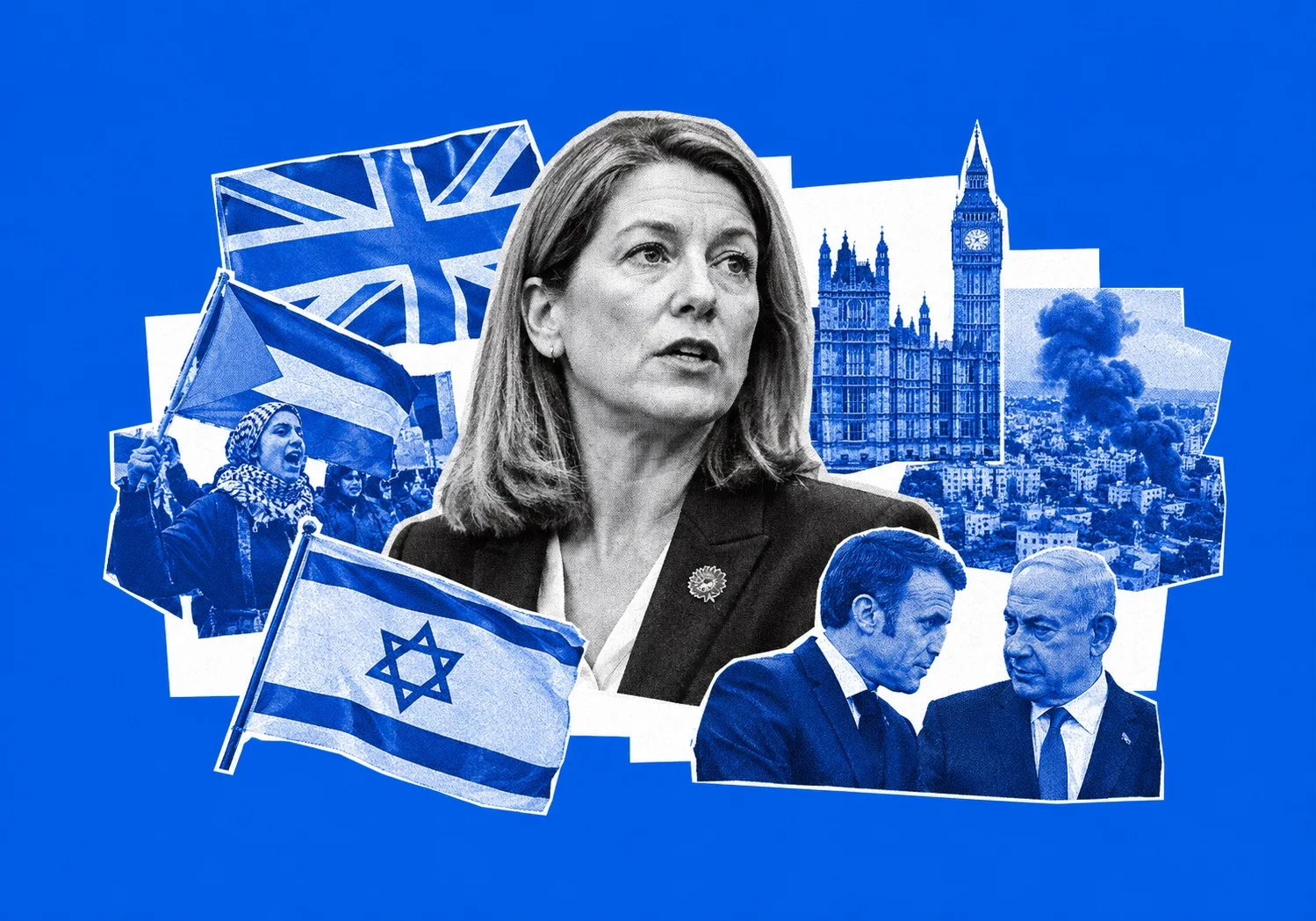
The Green Party of England and Wales has officially designated Zionism a form of racism, becoming the first mainstream European parliamentary party to adopt the position. The landmark vote has exposed a deep ideological rift with European allies—most notably Germany’s Greens - and prompted Israel to bar UK Green leader Zack Polanski from the country, highlighting growing friction between grassroots party activists and elected representatives.
Four of the five Green MPs - Adrian Ramsay, Siân Berry, Carla Denyer and Caroline Lucas - opposed the motion. Party leader Zack Polanski, who is Jewish, abstained while campaigning in London ahead of a parliamentary by-election.
The result exposes a structural problem that extends well beyond the British Greens: in movement-based progressive parties, the authority of elected politicians can be weaker than that of organised grassroots activists when formal party democracy gives the latter the decisive vote.
The parliamentarians lost the party
The Brighton vote is striking because the parliamentary wing did not merely lose a close argument. It was overwhelmingly outflanked by its own conference.
That distinction matters. Green parties have traditionally combined electoral politics with a strong movement culture, allowing members to exercise unusually direct influence over policy. That can be an asset when it keeps elected representatives tied to grassroots concerns. It can become a liability when an organised activist campaign turns a complex foreign-policy question into a test of ideological identity.
The Palestine debate has become precisely such a test.

The resolution's supporters, including Deputy Leader Mothin Ali, presented the war in Gaza and the Palestinian death toll following the October 7, 2023 Hamas attack as the central reason for their position. They described Israel's actions as ethnic cleansing and genocide. The motion then moved beyond criticism of the Israeli government to a categorical rejection of Zionism and of Israel's current state model.
That is a much larger political step.
It places the Greens outside the diplomatic position maintained by Labour, Conservatives and Liberal Democrats, all of which support a negotiated two-state solution. It also puts the party in direct conflict with its own parliamentary representatives, who must operate within Britain's existing political and institutional framework.
The conference therefore did something more consequential than adopt a controversial foreign-policy position. It demonstrated that the party's centre of gravity can sit somewhere other than Westminster.
From environmental movement to ideological coalition
The transformation is not entirely about Israel.
The Green Party's original political identity was built around environmentalism, but its activist culture has always provided space for broader critiques of capitalism, imperialism and inequality. The Brighton resolution shows how foreign policy can become the organising principle around which those strands converge.
That creates an unusual political proposition. A party can remain electorally associated with climate and environmental concerns while increasingly defining itself through positions on international conflicts.
For activists, the attraction is obvious: Palestine provides a framework connecting colonialism, racial discrimination, human rights and international power. For elected politicians, the calculation is harder. Foreign policy positions that mobilise highly committed members can simultaneously alienate voters whose priorities are domestic.
The Greens' growing support makes that tension more consequential. They won 6 per cent of the vote at the July 2024 general election and secured five Commons seats. Current polling puts their support at about 10 per cent.
A party at that level of support can no longer treat its internal ideological battles as politically insignificant.
The question is whether the Brighton vote expands the coalition or narrows it.
A European green fault line
The British Greens' decision has already exposed how differently green parties across Europe understand the same conflict.
Felix Banaszak, co-leader of Germany's Bündnis 90/Die Grünen, described the resolution as intolerable and unacceptable. That response is more than an awkward disagreement between allied parties.
Germany's Green movement operates within a political culture profoundly shaped by the country's history and the Holocaust. Questions of Jewish security, Israel and state legitimacy therefore occupy a different political space from that of parts of the British activist left.
The result is an unusual rupture inside a European political family.
For decades, green parties have benefited from their ability to combine national electoral politics with transnational cooperation. Yet there is no automatic agreement on how ecological politics should translate into foreign policy. The British vote makes that divide explicit.
The question for European Greens is no longer whether members can disagree over Israel. They clearly can. It is whether a party can remain part of a coherent European political family after formally adopting a position that another major Green party considers unacceptable.
That problem is likely to be harder to resolve than an ordinary policy dispute because the disagreement concerns first principles: national sovereignty, self-determination, colonialism and the legitimacy of Israel as a Jewish state.
The two-state consensus is no longer universal on the British left
The most consequential element of the resolution may be its rejection of the two-state model.
The Green Party is not merely calling for greater pressure on Israel. It is endorsing a single democratic state covering historic Palestine, described in the resolution as extending "from the river to the sea".
That puts a parliamentary British party outside the diplomatic framework shared by the country's three largest political traditions represented in Westminster: Labour, Conservatives and Liberal Democrats.
It also changes the domestic debate.
Until now, Britain's argument over Gaza could largely be conducted within the boundaries of competing interpretations of how to reach Palestinian statehood and Israeli security. The Green position introduces a fundamentally different endpoint. It asks whether the political objective should be two states at all.
That makes the party's policy harder to reconcile with the established British diplomatic position, regardless of how much electoral support it ultimately attracts.
The historical sensitivity of the language is also unavoidable. The UN General Assembly adopted Resolution 3379 in 1975, declaring Zionism a form of racism and racial discrimination, before revoking it in 1991. The Green Party has now revived essentially the same political formulation inside a contemporary Western parliamentary system.
That does not make the two resolutions politically identical. The historical circumstances are different. But the comparison explains why the wording carries such unusual weight.
The antisemitism question is now unavoidable
The British Greens' new position also brings the party into confrontation with mainstream Jewish organisations.
The Board of Deputies of British Jews, the Jewish Leadership Council, the Community Security Trust, Chief Rabbi Sir Ephraim Mirvis and the Movement for Progressive Judaism have all condemned the resolution, arguing that it is inherently antisemitic and warning about its implications for the security of Britain's Jewish community.
The dispute cannot be reduced to whether criticism of Israel is permissible. It concerns the boundary between opposition to a government's policies and rejection of Zionism as the political basis of Jewish national self-determination.
The International Holocaust Remembrance Alliance working definition of antisemitism, adopted by the UK government and major political parties, includes denying the Jewish people their right to self-determination, including claims that Israel's existence is a racist endeavour.
That creates a politically and potentially institutionally difficult environment for the Greens. The IHRA definition is not itself British criminal law, and the briefing does not establish that the party's adoption of the resolution automatically creates liability under equality legislation. But the overlap between the party's language and an established definition used across British public life guarantees a prolonged argument over where legitimate political advocacy ends, and discrimination begins.
For a party seeking broader electoral legitimacy, that is a significant vulnerability.
Israel has escalated the diplomatic cost
Israel's response has been unusually direct. Its Foreign Ministry has classified the Green Party as an entity that gives legitimacy to terrorism and accused it of adopting Hamas ideology. Foreign Minister Gideon Sa'ar has barred Polanski from entering Israel, while President Isaac Herzog condemned the Brighton vote as a disgrace.
The decision to target the party's leader personally adds another layer to the dispute.
Polanski did not vote for the resolution. He abstained because of campaigning commitments in London, yet he now represents a party whose official position has triggered Israeli sanctions.
That illustrates the weakness of party leaders when conference democracy produces a policy they did not personally endorse. The parliamentary leadership must defend, implement or explain a position it did not choose.
And Israel's decision turns what might otherwise have remained a domestic British party dispute into an international diplomatic confrontation.
The unresolved question is electoral
The Greens have gained something tangible from Brighton: a formal political home for activists who regard the existing British consensus on Israel and Palestine as inadequate. The BDS movement and pro-Palestinian campaigners now have a parliamentary party whose national policy explicitly supports their position.
But the same decision may make the Greens less attractive to voters who see environmental politics as their primary concern rather than an entry point into a broader ideological programme.
The party's internal democratic machinery has proved capable of producing a decisive policy shift even when its elected MPs oppose it. That is a strength if the objective is to remain a movement party. It becomes a weakness if electoral growth requires the parliamentary leadership to control its own political direction.
The German Greens have already drawn the line. Britain's Jewish organisations have drawn another. Westminster's other major parties stand on the opposite side of the diplomatic divide.
The British Greens now have to operate with a contradiction at the heart of their political model: the activists have won control of the party's position, while the politicians elected to represent it have largely rejected that position.
Sources: Reuters, France24, ITV, The Business Standarad